Follow Us for Free:


About the episode
“We have accepted making health decisions with only 20% of the data.”
Hospitals can save a life in a crisis. They can stabilize, diagnose, intervene, and provide exceptional care in our most vulnerable moments, but we need more than hospitals can provide. By the time most people need that level of care, they’ve already spent years under the influence of other forces shaping their wellbeing.
The future of healthcare can’t be only inside clinics, hospitals, or electronic records. It has to include the realities of daily life. It also has to acknowledge that more data doesn’t automatically mean better care. Information is useful when it’s connected, interpreted thoughtfully, and applied in ways that honor each person’s unique context, values, and capacity for change.
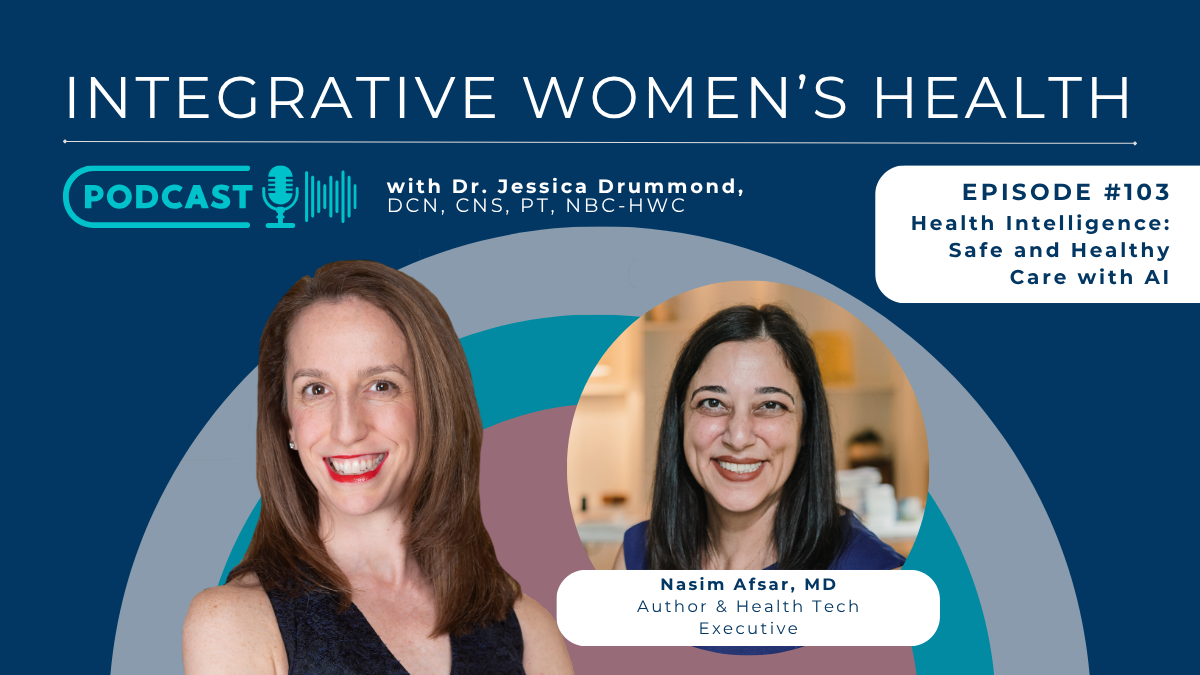
In today’s episode, I’m joined by Nasim Afsar, MD, MBA, physician executive and author of Intelligent Health, to explore what it would take to redesign healthcare around prevention, personalization, and true consumer ownership. We talk about why clinical care represents only one piece of the health equation, how AI and predictive tools could help identify risk earlier, why fragmented data limits progress, the true costs of emerging technologies, misaligned financial incentives in healthcare, and why clinicians must have a voice in shaping the systems being built around our patients and communities.
Enjoy the episode, and let’s innovate and integrate together!
Highlights
- Dr. Afsar’s journey from hospital medicine to leading innovation in healthcare
- Why healthcare systems still function as “sick care”
- How combining clinical data with lifestyle data could transform decision-making
- Why consumer ownership of health data is critical to the future of care
- The real challenges of data ownership, trust, and corporate control in healthcare systems
- What AI still gets wrong and why context matters so much in healthcare decisions
- How AI could become especially valuable for managing complex chronic illness
- The financial barriers to shifting from reactive care to a prevention-focused model
- How Dr. Afsar is using technology to move disease prevention further upstream
- Why clinicians need to help shape the future of AI
Learn more about Nasim Afsar, MD, MBA
- Dr. Nasim Afsar’s Website | NasimAfsarMD.com
- Dr. Nasim Afsar’s Book | Intelligent Health: The Movement to Unify Data, Harness AI, and Empower People to Thrive
- Dr. Nasim Afsar on LinkedIn
About Nasim Afsar, MD, MBA
Nasim Afsar, MD, MBA, is a global healthcare executive with nearly two decades of leadership experience transforming health and care. She has served as Chief Health Officer at Oracle, led billion-dollar health systems as Chief Operating Officer at UCI Health, and advanced population health management and value-based care as an Associate Chief Medical Officer and Chief Quality Officer at UCLA Health. Dr. Afsar has worked with healthcare delivery systems, payers, pharmaceutical and medical device companies, and technology firms. She has partnered with the White House and global health agencies and serves on multiple boards. She brings a powerful combination of clinical expertise, operational leadership, and technological insight—rare experience that grounds her commitment to reimagining the future of health and care.
Learn more about The Integrative Women’s Health Institute’s Programs
- Perimenopause and Menopause Certificate Program
- The Integrative Women’s Health Membership
- Endometriosis Certificate Program
Ready to revolutionize your career and grow your practice?
- Integrative Women’s Health Institute on Instagram | @integrativewomenshealth
- Integrative Women’s Health Institute on YouTube
Click here for a full transcript of the episode.
Dr. Jessica Drummond 00:00:03 Hi and welcome to the Integrative Women’s Health Podcast. I’m your host, Doctor Jessica Drummond, and I am so thrilled to have you here. As we dive into today’s episode, as always innovating and integrating in the world of women’s health. And just as a reminder, the content in this podcast episode is no substitute for medical advice, diagnosis, or treatment from your medical or licensed health care team. While myself and many of my guests are licensed healthcare professionals, we are not your licensed healthcare professionals, so you want to get advice on your unique circumstances. Diagnostic recommendations treatment recommendations from your home medical team. Enjoy the episode. Let’s innovate and integrate together. Hi, everybody. Welcome back to the Integrative Women’s Health Podcast. I’m your host, doctor Jessica Drummond, and I’m thrilled to have with me today, Doctor Nasim Afsar. And her bio is so impressive that I’m going to put the glasses on and read it to you. Nasim Afsar, MD, MBA is a visionary healthcare executive dedicated to transforming health and care across the globe through innovative technologies, strategic partnerships and scalable solutions.
Dr. Jessica Drummond 00:01:32 With deep expertise in operations, finance, digital transformation, and market strategy, she’s consistently driven high impact initiatives across the health care system. She’s the former SVP and Chief Health officer at Oracle. Doctor Afsar has led multiple business units, including the Health Transformation Office, where she partnered with delivery systems globally to advance clinical outcomes and operational excellence. She spearheaded project strategy building, a robust operational go to market framework, as well as leading global market strategy and entry. Additionally, she established a dynamic marketplace for third party partnerships. She founded and chaired the Oracle Health, AI and healthcare, Retail and Healthcare and Payer Steering committees, driving transformative innovation for customers. Her work has fostered critical alliances across the health and care ecosystem with delivery systems, payors, retail, pharma, food and beverage, and food and public health agencies aligning and creating value in the broader health care system. Her 15 years leading health care systems include serving as chief operating officer at UCI health, with accountability for over $1 billion in revenue and 3000 employees.
Dr. Jessica Drummond 00:02:44 She led enterprise wide inpatient and ambulatory operations, driving record breaking growth in patient volume surgeries and tertiary care transfers. We’re going to talk about why that incentive in the system is not ideal, and how we want to shift it in the new vision. During the kind of intense part of the Covid 19 pandemic, she led emergency response efforts, including building a mobile field hospital, deploying large scale testing and establishing a high volume vaccination program ensuring rapid, efficient care delivery to her community. She was the associate chief medical officer and chief quality officer at UCLA health. And I could go on and on about her bio. She has a bachelor’s from the California Institute of Technology in Biology and Art history. She has an M.D. from the University of California at Davis, and she did her residency in internal medicine from the University of California, Los Angeles. She received her MBA from UCLA Anderson School of Management. She’s done so many things, and most importantly, she’s at heart a hospitalist clinician. She’s been right there with patients in their hardest moments, and now she’s really thinking about how to redesign our entire ecosystem with or without technology.
Dr. Jessica Drummond 00:04:07 And we’re going to get into that right now. So just listen and we’ll talk about at the end of this, what you can do to help support this mission in your own life and in your community hospital and your wherever you work right now. Welcome back to the Integrative Women’s Health Podcast. I’m your host, doctor Jessica Drummond, and I’m here with Doctor Nasim Afsar, who has written a phenomenal book called Intelligent Health. And I screamed through this as a this is really a pretty in-depth vision that I can’t wait to talk to you about, so I absolutely recommend everyone read it. Take your time with it. There’s a lot in it. So I can’t wait to talk more about this. And one of the things Doctor Afsar that was so interesting to me is just starting with your personal story. Your career has gone through multiple evolutions, from hospitalist physician to working at technology firms. So how does your personal and career story and experience really shape your thinking in this book?
Dr. Nasim Afsar 00:05:20 Yeah, that’s a great question.
Dr. Nasim Afsar 00:05:21 Let me just start off by saying how excited I am to join the podcast and be here with you, and how grateful I am for the tremendous work that you’re doing to make sure that we’re building what really should be the future of health and care from what our baseline is today. I was reflecting just yesterday with a friend that I never went to medical training, thinking that this would be what I would do. Some of the jobs that I’ve had didn’t even exist back when I got out of medical training, which to me is really the really exciting part of being in healthcare, in whatever dimension we get to start off being in, knowing that you really have a lifelong opportunity for growth, for being challenged, and for continuing to redefine who you are and how you want to make an impact in the world. I think for me, the through theme with everything that I’ve done has been I wanted to be in spaces where I would get to create and innovate and make large scale impact, and that started off by being a physician to get to.
Dr. Nasim Afsar 00:06:35 And I know it sounds like we don’t necessarily create or innovate when we’re at bedside, but as each individual patient is different, you have to take the knowledge, but then you have to shape it to their lived contacts and lived reality. And to me that again, that is the art of medicine or art of of health. As I move through my career, that desire to look at how do we create an innovative, make large scale impact continue to evolve. But I think one of the kind of major evolutions which I talk about in the book, too, is I very much started on the side of sick care. How do we help ensure that when people are hospitalized at a very vulnerable moment in their life, that they’re getting the best care possible? As I went through my career, I realized more and more that the majority of what we were taking care of in the hospital was because of a lack of a robust system of health. Out in the world, in communities, at homes, on the ambulatory care side.
Dr. Nasim Afsar 00:07:41 And that for us to really impact the health of individuals and societies we needed to move upstream, which is it has really been a significant evolution for me, caring for incredibly sick patients in the hospital setting to now looking at how do we make our homes a hub and a sanctuary for health. How do we make our communities the place where we gain wellness? But I can’t imagine it any other way.
Dr. Jessica Drummond 00:08:11 Yeah, and I do think there’s a lot of creativity to being a clinician. And as you said, and this is one of the interesting themes in this book. Each person is so distinct that one of the challenges we have as clinicians and coaches is taking all of our knowledge and all of our training and integrating it and applying it to a person’s situation that could be have the exact same diagnosis, maybe similar symptoms, but have a very different life or lifestyle or resources. And so there’s a lot of challenge and creativity, even from patient and patient. Overall, I would I my understanding is that you wrote this book as a vision of what intelligent health will look like when we have more robust, effective integrated tools.
Dr. Jessica Drummond 00:09:05 Not just AI tools, but tools that take some of the integrated tools that already exist, like lab data and wearables and actually apply it. And it’s actually very similar to a lot of what I do in the world of integrative health and public health. And many of us have been talking about this for decades, but the technology didn’t exist to be able to apply across different individuals in such a personalized way. And of course, it’s not quite there yet, but a lot of people are trying to work on this. So if I had to summarize in depth of vision that you have in your book, I would say that your vision is to create a system where every individual holds and owns their own health data, including labs, including wearables, including provider notes, scans, what they ate like, everything that we could possibly get, sleep tracking, etc. and then shared across all different providers so that and integrated with AI tools so they can take the millions of research data points that we have and then be able to make those decisions independently.
Dr. Jessica Drummond 00:10:16 Is this is that a good summary of your vision or how would you describe it?
Dr. Nasim Afsar 00:10:22 Yeah, I think you articulated that really well. So intelligent health has three pillars. The first one is we have to unify the 20% of what determines our health, what the 80% of what determines our health, the 20% being what comes from traditional health care with the 80%, which is everything from the air we breathe, the food we eat, our genetics, our habits. This, to me again, is the incredibly powerful and impactful work that you and the team do in recognizing that health and care are not achieved purely by looking at the clinical data that we have, and that we do have to look at people holistically. I talk in the book about you would not make any other major decision in life with only 20% of the data. If you got on a plane and the pilot said, ladies and gentlemen, thank you for joining us on today’s flight, I just want to let you know I only have 20% of the data to get you to your destination safely.
Dr. Nasim Afsar 00:11:27 You would run out of that plane. You would not put your life in hands of a person in a situation that only had such a small sliver of data. Yet we have accepted that in health care. And that’s why, again, as I share through a number of stories, we’ve we’ve failed people over and over again because diabetes requires not just the medical treatment and monitoring. It requires you to understand what is the the foods and nutrition that a person has access to. Not everyone has similar access. What is the activity level that someone has access to? Not everyone lives somewhere where it’s safe, where they can have the same level of activity and so on and so forth. And so you can’t really manage care and definitely can ensure health without that data unification. The next step is applying intelligence. Again, there was technology that wasn’t available before. It is now where we can pull data together, apply intelligence to it through AI in all of its forms. Looking at structured data. Unstructured data. looking visually and getting a context of how someone moves and walks all the way through.
Dr. Nasim Afsar 00:12:44 Being able to pull together all the wearable data, app data that we have, but applying intelligence to it. So instead of just having a bunch of data, you actually have insights about what’s going on with the person today. And for sites about what could be going on in the future, what are what are their risk factors that you could mitigate against? I worked with a health care delivery system that was leveraging predictive analytics with a person’s data to say, hey, moving on the same trajectory that you are today, you are likely going to be diagnosed with diabetes in five years. Now, here’s what happens when we add diabetes medication. Number one, here’s what happens if you lose £5 versus £10 versus 15. Here’s what happened. So you start working through with the person Around. If this is your risk, what are the different things that you can do and the individual ultimately has choice to say? With my busy lifestyle, taking care of kids, elderly parents, and a job, there’s no way I’m going to be able to do the exercise that’s required to lose weight.
Dr. Nasim Afsar 00:13:52 So put me on the diabetes medication versus send me to the nutritionist. I want to really try to look at how I can fundamentally eat differently and be able to move forward and make better decisions. All of that kind of requires that layer of intelligence that we now have access to that, that we did not before. And then the last part is, is the most critical to me, which is this has to be owned by us. It has to be owned by the consumer of health and care. Today, if you monitor a variety of biometrics through wearables, which a number of us do, that data ultimately doesn’t belong to us. We are generating it. We get to see it. We get to see some insights from it. But if we wanted to download the entirety of that data and be able to integrate it with other things, it can be done. Technically it’s possible, but that’s not how the system was set up. The system was set up for each of these corporations to own that piece of data and monetize it as they see fit.
Dr. Nasim Afsar 00:14:58 I think they should still choose to do that. And we as consumers can decide that we want to take the app or not. But I think we also need to own the data, because having the data then enables us to pull it together with everything else to bring in the 20% and the 80% and have insights that just looking at your sleep activity or your activity levels isn’t going to give you.
Dr. Jessica Drummond 00:15:23 That last part, I think, is the hard question. And I think obviously all of it has important merit. And there’s questions that I have about all of it, but I think that last part I want to start with, here’s the challenge I see with this vision is that let’s say there’s a company that owns a wearable that tracks some of your data. I 100% agree that in this climate, particularly for women, there are a lot of risks around data tracking. So either the corporation owns it or it’s either a lot of little corporations that own it, like the one wearable and the one lab and the one integrative health clinic and the one the electronic medical record.
Dr. Jessica Drummond 00:16:06 Here’s the challenge I see with individuals owning it. I think they should. But how are we going to convince the corporations? For example, we now know that Google, if you use Gmail or Google Drive or whatever, can take absolutely everything you’ve ever written in an email and use it to train their AI models, unless you opt out, which you can do. But if you opt out, which I’ve tested, it’s very difficult to use their tools at all. They kind of mess up their tools for you. And so I find it challenging that we’re going to get companies to allow people to own their data. What are some of your thoughts on that?
Dr. Nasim Afsar 00:16:47 Yeah, I think first of all, you’re absolutely right. And I will say there is precedence for this, right. So when it comes to health data, which is the most coveted and most protected data, we already have legal language in that we own the data. The consumer ultimately owns the data. If you want your data, you can go and get it.
Dr. Nasim Afsar 00:17:15 And there was a time that you got that printed out. Now you get it through various portals, but if you needed it in various formats, you’re supposed to be provided that data. So I think the good thing is that it’s not like we’re coming to this for the very first time. We have established precedents that ultimately, the data that’s created by the individual while it sits within the healthcare delivery system, it is ultimately owned by the individual. I think building on that part of consumer protection, I think this is where we are going to need some evolution in our both thinking and our laws. Some of the consumer protection has to be that the individual has access to that data. Now, the good thing is, through technology, you already can do that. You already can connect the data from various wearables with your medical records. So there’s a lot of that’s already built in anyways. So there is the ability. It’s not a it’s not a technology or a legal issue to be able to connect this we have to.
Dr. Nasim Afsar 00:18:21 I think the bigger issue is while the consumer owns it, it has to sit somewhere. and who should it sit with? Who do we trust? And I think this is where trust becomes really critical. And then having a bunch of data isn’t really helpful. You need insights, right. So you ultimately need a, an analytical service that’s going to look at that and evaluate that. And again, as we’ve seen with a lot of large language models, there are shortcomings when it comes to everything, but especially when it comes to health data. And and so I think those are two pieces that we have to reckon with is who really gets to how’s this? We’re owning it. We’re paying for it, but someone has to house it. Who do we trust to do that? And then how do we get the how do we get the right insights that we want? My family listens to music on one of these very commonly used apps, and there’s a new feature that they put on there That’s a DJ feature and my kids absolutely love that.
Dr. Nasim Afsar 00:19:29 So whenever we go anywhere, they’re like, press the DJ feature, plus the DJ feature, and this very hip voiced person comes on and I curates some of the stuff. And then really DJ’s the songs based on our playlist of stuff that we listen to and then other stuff that we would like and fades out. The music appropriately fades in. It’s just it’s really beautifully done. We just had it on over the weekend and while we were driving, and at some point the music died and we were in deep conversation. We didn’t realize it. And then midway, one of my kids turns around to me and it’s is it playing white noise? And I look and sure enough, it was playing a track of white noise. And the reason it was doing that is that when I travel, I listened to this one track of like ten hours of white noise to to sleep, and I’d been traveling a ton, so I’d been listening to it a lot. And so when it came to pick my favorite songs, it was like, oh yes, like pop song, white noise, pop song, pop it just.
Dr. Nasim Afsar 00:20:31 And I was telling my kids, I’m like, it’s not that the algorithm is stupid. It’s not that it doesn’t have it doesn’t. It can’t make intelligent decisions. It’s that it gets trained to perform a certain function, which is look at what this person listens to most, and it doesn’t have that layer of logic that no one would want to listen to. White noise at 3 p.m. while they’re driving. We see that in a number of areas, including when it comes to, for example, data on integrative health practices or data about women’s health. The algorithms miss some very basic things, not because those things are not true or real, it’s just that the training data has not been good enough to help support them. And so again, back to our conversation around what does the future of this look like? I think the trust with who houses all of this, the trust with what do these algorithms look like and what are they actually trained on, and what does that mean? It’s funny, when it’s a DJ function that plays white noise, it’s less funny when you’re trying to look at a clinical condition that is overlooked because we have not studied it and looked at it in women and collected the data for training.
Dr. Nasim Afsar 00:21:53 So I think those are definitely some of the some of the tensions and issues that we have to resolve as we move forward.
Dr. Jessica Drummond 00:22:00 Absolutely. So now you’re telling me I have to go to law school next?
Dr. Nasim Afsar 00:22:04 Seriously, it’s going to be it will be an interesting world. Although you could probably put a lot of this stuff through a large language model and at least get some legal advice on.
Dr. Jessica Drummond 00:22:14 Absolutely. So yeah, I think that’s one of the stickiest issues is who owns the data, and if the person really owns their data and tries to firewall it, what will be the limitations of their access to the system? And also, I do think we do want diverse access in the sense that we don’t want necessarily just one organization or one government necessarily owning all of this. So I do think having that dispersive ness is valuable. Which brings me a little bit to the question of large language models versus in terms of building these algorithms versus smaller models that are discrete and boundaries, mostly because of the significant resistance now.
Dr. Jessica Drummond 00:22:59 And I think it’s well founded from a health standpoint to building any more data centers. We know that data centers cause health issues. They cause air pollution there.
Dr. Nasim Afsar 00:23:10 Water shortage. Yeah, yeah. Rare earth mineral depravation. Yeah. It’s lots and lots of challenges with building them the way we have. I am hopeful when I talk. There’s a whole chapter in the book around the sustainability of these technologies, and I am hopeful that as we move forward that we are going to be far more responsible. But as it stands today, to your point, there’s a lot of issues that we have to reckon with when it comes to hurting our planet at the for the benefit of helping ourselves.
Dr. Jessica Drummond 00:23:45 Yeah, I think that’s a real challenge, and I appreciate the level of depth that you looked at this in the book because particularly as a health care professional, just even choosing to use any AI tools in our clinics and our practices, even AI scribes, we have to think about that. That is now well known to be causing harm.
Dr. Jessica Drummond 00:24:05 And so we have to be very judicious about how we use these tools, even as they currently exist in our practices. Now, when it comes to building AI tools and healthcare and integrating all of these systems. I have worked with a few companies in the last couple of years that are looking to build, and this is what I think is one of the best use cases of AI models. And ideally we can make them small and limited in their footprint. But in complex chronic illness, one of our biggest challenges is that, for example, many women with endometriosis also have hypermobility disorders like Ehlers-Danlos. They have pots, they have mast cell activation syndrome. They’re at higher risk for long Covid. They also traverse through a women’s life cycle, dealing with puberty and pregnancy and postpartum and perimenopause. So that real personalization of care, being able to, in real time, take research quickly and personalized, applied to an individual case I think is one of the most exciting promises. And in when we think about building these kinds of companies or tools that will do this work, how do we do this in a system where there’s always going to be some financial winners, some financial losers, right.
Dr. Jessica Drummond 00:25:33 You say, oh, it’ll save the system so much money, but what is the system? And one story that I was recently sharing with a colleague of mine who’s doing some of this work is I used to work at the Women’s Hospital of Texas in Houston, and we got really good as a team, as our our physicians, and we did a lot of work as the physical therapy department and supporting women on long term bedrest, that our number of NICU babies dropped dramatically and in a good way, because they were all being born more full term so that we had healthier babies in that hospital. The administrators panicked because that was our major source of revenue for the hospital, to the point where now that hospital has a helipad so they can just bring more sicker babies in from further away, which is a crazy answer to that question. So what are some of the economic challenges you’ve seen with trying to make this transition?
Dr. Nasim Afsar 00:26:33 Yeah, that that’s at the heart of why change is so challenging in an ecosystem that spends nearly $5 trillion plus or plus on health care, and you have stakeholders from healthcare delivery systems to payers to pharma to medtech to food and beverage companies, it is challenging to make this equation work.
Dr. Nasim Afsar 00:26:58 It’s part of why my focus in the book and for a physician. I talk a lot about economics in the book because I believe that’s going to be the force that’s going to get us there, because now the system that we’ve created is not economically sustainable for our future. It’s taking not only continuing this sick care for people across the country, but it’s taking money away from education, research, innovation, infrastructure, all the things you need to ensure long term sustainability of a society to have a thriving society. So I do feel like we’re like at a point where there’s a lot of tension. But why? I feel strongly that the only way to do this is that we refocus the entire system around the consumer of health and care. Because if we do that, then the payers and the providers are incentivized to ensure that person is healthy. The reason the health care delivery system panics is that the payer only pays them if they are taking care of acutely ill babies, it doesn’t pay them if the NICU is empty because they did a really good job of taking care of moms, but that’s something that we created, right? Having this system aligned around the consumer, and ultimately what’s good for the consumer enables the insurance company to a save a ton of money.
Dr. Nasim Afsar 00:28:31 So they’re happy bee pay for keeping people healthy versus taking care of them when they’re sick and fundamentally change that that structure that we have for health and care. And the good thing is there are we should be far beyond the pilot phase for this stuff. But we are seeing a lot of pilots around. What does it look like if a payer comes together with a grocery store and a provider group to help patients, let’s say, with high blood pressure? Provider system identifies the people that they’re caring for with high blood pressure that they have in common with the payer. The payer works with the grocery store to say, hey, if these patients enroll in this program and they buy these foods that that are going to be health sustaining lean proteins, low sodium foods that will subsidize the cost of the foods, and you’re getting different parts of the ecosystem to come together to say, we don’t need to wait for this person with high blood pressure, to then get heart failure and then be hospitalized, or the person with high blood pressure to get a stroke and be hospitalized.
Dr. Nasim Afsar 00:29:46 And I do think that there is a lot of thinking and investing throughout the ecosystem around how do we shift things. It’s just a lot slower than it should be. And I think the way we speed that up is by saying, let’s just realign everything around the person, as opposed to around what it means for an insurance company to have a bottom line, what it means for a provider system to have a bottom line, what it means for pharma to have a bottom line. If we realign it, they can keep their margins. They can deliver their mission. They’re just doing it around keeping the person well versus either contributing to disease or supporting disease once it happens.
Dr. Jessica Drummond 00:30:31 Yeah. So essentially a shift in the incentives, which very often it does work. So that’s that’s great. So what are you working on now if we think about this book it’s a vision. It goes deep into a lot of the challenges. What are you doing to take this from the page to the world?
Dr. Nasim Afsar 00:30:50 Yeah, there are a small number, but a couple of really thoughtful groups that are thinking and building towards intelligent health with the consumer in mind.
Dr. Nasim Afsar 00:31:03 I’m really excited to get to. To get to support and look at how we can push this vision out into the real world. I think for me personally, my all the way back, like I feel like we’ve come full circle to the arc of my career. For me, the space that I want to be in is how do we leverage technology to advance health for the consumer of health and care for people? And so that’s the space that I’m, that I’m looking to, to spend the majority of my time in is we’ve got a whole host of capabilities, again, some technology driven, others not. My expertise tends to be on the technology side, but how do we actually leverage those as a tool? Because they’re not a they’re not an endpoint, but they’re a tool to really, again, move upstream and look at how do we prevent disease, how do we ensure health, how do we do that in a seamless way, because there’s only so much real estate on our fingers and wrists.
Dr. Nasim Afsar 00:32:05 For monitoring things, we have to figure out how we do it seamlessly, how we move beyond dumping a bunch of data, people with minimal insights or slivers of insight based on the data that we collected to being able to pull them together and say holistically, this is where you are today. This is where you can anticipate to be in the future. So that’s that’s what I’m really excited about at this stage in my career.
Dr. Jessica Drummond 00:32:31 That’s wonderful. And for any of our listeners who are primarily women’s health or wellness professionals across all disciplines, on both all sides of health and care, if they’re interested in evolving their career in this direction in any way, do you have any advice for them?
Dr. Nasim Afsar 00:32:49 Yeah, absolutely. I would say if you were able to master what you have to get to this point, you should never be worried or concerned about being able to continue to evolve your career. For people to be in health care, you have to be extremely dedicated. You have to be extremely hardworking. And if you’ve got that and you have the humility to understand that you can learn and grow, there is really no limit to what you can do.
Dr. Nasim Afsar 00:33:24 You can be in spaces and should be in spaces that we historically have not had people who deeply understand health care. If you look at the technology sector, for example, a lot of what’s out there is built by really smart, very well intentioned people. What people have not been in health care and have not had the the deep humility that comes with having the responsibility of another person’s life in your hand. So I would say again, as long as you’re willing to learn and gross. Sky’s the limit. We need people who deeply understand health care in every aspect of the future that is that is coming our way, really getting to build it thoughtfully. So I am I’m excited to continue to hear stories about how we have people advancing in all of these fields, be it again, clinical care, operations, technology. We need people with with expertise.
Dr. Jessica Drummond 00:34:24 Yeah. And I think knowing that, as you mentioned, economically, our system is failing has been failing for my entire career, which is like 25 years.
Dr. Jessica Drummond 00:34:35 And so the evolution is happening now, which is really exciting. And people are often asking, I was listening to a podcast where Karen Howe, who wrote Empire of AI, was speaking, and she mentioned we worry about predicting the future of AI, but the reality is we are at the phase right now where we get to create the future of how we are going to use this. It doesn’t have to be left to just a few people that are the top CEOs of the top LMS. Like there are lots of ways to use AI and much differently, much smaller, much more diversified. And even from a perspective like you’re mentioning of people who have that humility of what it means to care for humans literally at the bedside in their most challenging moments.
Dr. Nasim Afsar 00:35:23 Yeah, I absolutely agree with that. By the way, that is a phenomenal book that I recommend broadly as well. Very, very thoughtfully written, really well researched, which I really appreciated. But I absolutely agree that we are in the driver’s seat around how this unfolds.
Dr. Nasim Afsar 00:35:42 Part of the reason that I left my corporate job and took a year to write the book is that I wanted to put out the kind of system that we could have versus how I’m seeing it evolve. I felt like I would routinely hear executives say, help us integrate generative AI into our system. And I’d say, okay, what’s the problem you’re trying to solve? Pick a problem. Health care has a lot of problems. Whatever one of the CEOs was like, like we have physician burnout. How do we leverage generative AI to address physician burnout? And I would say, what’s the root cause of your physician burnout? Because in different systems, there are different root causes for why physicians are burnt out. And to be perfectly frank, the majority of those root causes don’t require a technology fix. Some of them do, but there’s plenty that don’t. And it is up to us to say, what are the problems that we’re trying to solve? How can we solve it? When and where do we leverage technology if we’re leveraging technology, which I am a techno enthusiast for sure, but I believe that has to be hand in hand with tremendous accountability and responsibility, and that comes from the field that we’re in.
Dr. Nasim Afsar 00:37:03 We cannot be casual about the use of technology when it comes to the health care of other human beings, but I think we do get to decide how that’s done. And back to your earlier questions around around people continuing to rediscover how they want to be in this field. That’s why it’s important for us to be out there, to be working in these different spaces, to be vocal, because we have seen how you can lift people up. And also we’ve seen how you can create significant harm. And so we got to be at the table to be part of these discussions.
Dr. Jessica Drummond 00:37:44 Absolutely. We will wrap it up there. Is there anything else you’d like to share with our community before we end. And where can people find you if they want to learn more about your book or your work?
Dr. Nasim Afsar 00:37:56 Yeah, I mean, it’s the one thing I’d want to share is I’m always just grateful when I see people like you, Jessica, out in the world really living and embodying what that future of health and care should look like.
Dr. Nasim Afsar 00:38:13 I’m really grateful for the practitioners within your community for living that mission every day. Just want to say thank you for the hard work that you do. Please follow me on LinkedIn. I post about both intelligent health but also applications of it as I move through the world. And I have different conversations and and different engagements. And I have a website to imdb.com, which also posts a lot of the conversations that I’ve had about this topic. So looking forward to getting to connect with people.
Dr. Jessica Drummond 00:38:50 Excellent. Thank you so much for your time and hopefully we’ll have you back again soon.
Dr. Nasim Afsar 00:38:56 My pleasure. I look forward to it.
Dr. Jessica Drummond 00:39:02 I absolutely loved that conversation with Doctor Afsar. Your homework this week is to read this book, Intelligent Health, and also go and read Karen Howe’s book, The Empire of AI. We cannot be just stick our heads in the sand about how AI is going to affect our societies, our work, our care as people needing health care. There are some really important and complex issues economic issues, environmental issues, surveillance issues that we can’t just ignore.
Dr. Jessica Drummond 00:39:44 And I think the good news is, is, is like Karen Howe said, we are the ones who are creating the future. There’s no such thing really, as predicting the future, like the actions that we take and that others in our society that have more power take, create the future. And if we want to be a part of creating the future of healthcare, health and care. As Doctor Afsar says, we have to be a voice in this conversation. You are a person who understands how your unique population of patients and clients struggles, benefits, what helps them do really well, what do they need to have their best day to day self-care? Lifestyle care? What do they need from a more acute or more advanced health care system? What do they need in terms of treatment, in terms of support? In terms of how to access high quality foods and clean air. You are their voice and you’re your own voice. So like I said, your homework for this week is to read Intelligent Health.
Dr. Jessica Drummond 00:40:56 Follow Doctor Afsar on all the platforms on LinkedIn and so forth. There’s plenty of homework for this week. I’ll see you back here next week. Thanks so much for being with me.
Multiple Speakers 00:41:12 Thank you so much for joining me today for this episode of the Integrative Women’s Health Podcast. Please share this episode with a colleague and if you loved it, hit that subscribe or follow button on your favorite podcast streaming service so that we can do even more to make this podcast better for you and your clients. Let’s innovate and integrate in the world of women’s health.
Join Dr. Jessica Drummond to learn proven strategies to confidently address perimenopause, menopause, and chronic conditions while growing a profitable and impactful practice.
Discover proven strategies to attract high-value clients, deliver transformational results, and position yourself as a sought-after expert in this rapidly growing field.
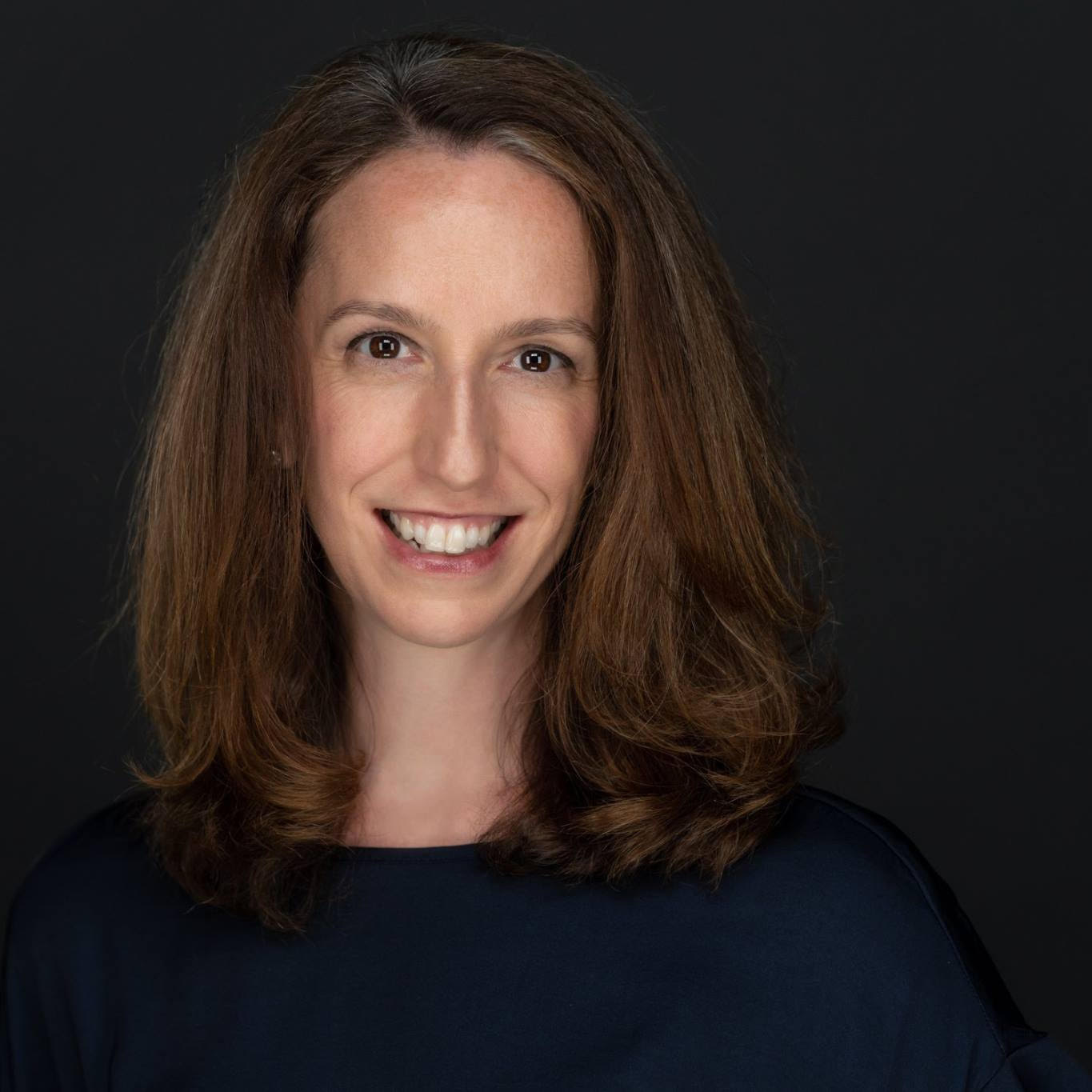
Dr. Jessica Drummond
Founder & CEO
The Integrative Women’s Health Institute
At the Integrative Women’s Health Institute, we’ve dedicated 17 years to crafting evidence-driven, cutting-edge programs that empower practitioners like you to address the complexities of women’s health.
Dr. Jessica Drummond’s unique approach focuses on functional nutrition, lifestyle medicine, movement therapies, nervous system dysregulation, trauma, and mindset – essential elements often overlooked in traditional health education.
In addition, your training will be fully evidence based, personalized, and nuanced (this is not a cookie cutter approach) in functional nutrition, exercise, recovery, cellular health, and all other lifestyle medicine tools.
You’ll learn to support your clients with cutting edge tools safely and effectively.