Follow Us for Free:


About the episode
“I felt like someone was in it with me.” – Rachel Weaver
One of the hardest parts of caring for people with chronic illness is that we don’t always have the answer. Symptoms can take years to fully understand. Treatments don’t always work the way we’d hoped. And sometimes the biggest challenge isn’t deciding what to do next, it’s helping someone keep moving forward while you’re figuring it out together.
Our role isn’t only to diagnose and prescribe. It’s also to create space for people to feel heard, supported, and safe while they’re navigating an incredibly difficult season of life. That doesn’t require having all the answers. It requires listening well, asking thoughtful questions, and remembering that every person sitting across from us has already invested an enormous amount of energy just to make it into the room.
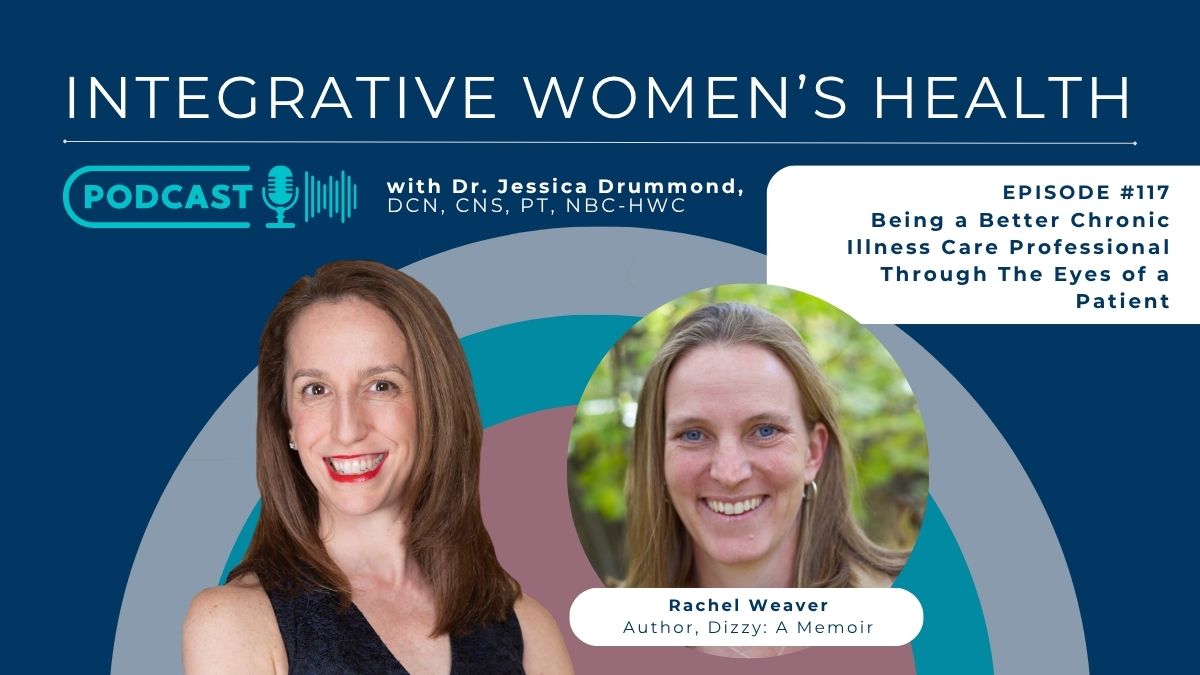
In this episode, I’m joined by author and speaker Rachel Weaver to talk about her memoir, Dizzy, and what living through nearly two decades of chronic illness taught her about healthcare from the patient’s perspective. Rachel shares the experience of searching for answers while navigating debilitating vestibular migraine, and together we explore what makes patients feel dismissed, what helps them feel genuinely supported, why communication can be just as important as clinical expertise, coaching versus problem-solving, the realities of navigating a fragmented healthcare system, the importance of multidisciplinary care, and how practitioners can make an extraordinary difference, even when they don’t yet know exactly what’s causing a person’s symptoms.
Enjoy the episode, and let’s innovate and integrate together!
Join Dr. Jessica Drummond to learn proven strategies to confidently address perimenopause, menopause, and chronic conditions while growing a profitable and impactful practice.
Discover proven strategies to attract high-value clients, deliver transformational results, and position yourself as a sought-after expert in this rapidly growing field.
Highlights
- How Rachel’s memoir, Dizzy, offers valuable insights for clinicians and health coaches
- How narrative medicine can deepen empathy and improve the patient experience
- Rachel’s goal of helping people with chronic illness feel less alone
- Why symptoms like dizziness can be so difficult for patients to describe and for clinicians to fully understand
- The communication challenges that exist between patients and clinicians
- Why kindness and emotional support are essential, especially when answers are not immediately available
- How a coaching approach differs from a traditional problem-solving model in healthcare
- The simple but important questions clinicians should ask about a patient’s support system and daily life
- How chronic physical illness and mental health are deeply interconnected and require integrated care
- How AI may change the future role of clinicians
- Why Rachel believes clinicians should communicate like poets
Learn more about Rachel Weaver
- Rachel Weaver’s Website | RachelWeaver.net
- Rachel Weaver’s Book | Dizzy: A Memoir
- Rachel Weaver on Instagram
About Rachel Weaver
Rachel Weaver’s novel Point of Direction was named a Top Ten Book To Pick Up Now by Oprah Magazine and won the Willa Cather Award for Fiction. Rachel’s newest book, Dizzy, an “arresting new memoir” according to Maureen Corrigan on NPR’s Fresh Air, published in February of 2026. Her second novel The Last Run, is forthcoming in June 2026 with Lake Union Publishing. Prior to earning her MFA in Writing and Poetics at Naropa University, Rachel worked for the Forest Service in Alaska studying bears, raptors and songbirds. She teaches at Wilkes University and Lighthouse Writers Workshop and holds a CPA in Narrative Medicine from Columbia University.
Learn more about The Integrative Women’s Health Institute’s Programs
Ready to revolutionize your career and grow your practice?
- Integrative Women’s Health Institute on Instagram | @integrativewomenshealth
- Integrative Women’s Health Institute on YouTube
Click here for a full transcript of the episode.
Jessica Drummond 00:00:03 Hi and welcome to the Integrative Women’s Health Podcast. I’m your host, Doctor Jessica Drummond, and I am so thrilled to have you here. As we dive into today’s episode, as always innovating and integrating in the world of women’s health. And just as a reminder, the content in this podcast episode is no substitute for medical advice, diagnosis, or treatment from your medical or licensed health care team. While myself and many of my guests are licensed healthcare professionals, we are not your licensed healthcare professionals, so you want to get advice on your unique circumstances. Diagnostic recommendations treatment recommendations from your home medical team. Enjoy the episode. Let’s innovate and integrate together.
Speaker 2 00:01:02 Hi, and welcome back to the Integrative Women’s Health Podcast. I’m your host, Doctor Jessica Drummond. And today I’m thrilled to introduce you to Rachel Weaver. She’s a novelist. I’m going to dive into her bio in a moment. But people send me books all the time. Many of them are excellent non-fiction books, but this memoir called dizzy is one of the best books I’ve read this year in general.
Speaker 2 00:01:26 And I read a lot of books, a lot of fiction. I read every week 2 to 3 books. You know, I live in my public library, and this is one of the best ones I’ve read in a while. And I think it’s a really important look for those of us who are clinicians and coaches, who hold space for people over time, that our role is to make sure we’re taking such good care of ourselves and our support, and scaffolded enough so that in our interactions with people, whether we are working in corporate healthcare and we have seven minutes or we are working in our own private practices and we have more time that we are holding that space in a way that says to the client, either implicitly or inferred, I am here for you. Until we solve this problem, I may not know the answer to this problem, but we are going to navigate this forever, you know, together and I will not give up. Like we’re going to figure this out. We are at best, at worst going to make you more comfortable, more able to live your life in the way that you want to live it.
Speaker 2 00:02:42 Less symptomatic, more your energy, more aligned with your goals. Like, this is part of our job as a women’s health or wellness professional. It’s to have that A coaching style commitment to our client. Now, it doesn’t mean we’re going to drag them through it. We’re not going to want it more than them. We are going to make sure the goals are theirs, and they’re really clear on what those goals are. But we’re also going to be asking some of the hard questions like how are they being supported and what space do they have at home to take care of this? Because it might be just a little bit for a while until that can slowly expand or they get more comfortable with asking for support, or they build their community, or we discover together what community resources are available. Like, it’s the commitment to navigating the journey with them that I actually think is the most important part of our job. Absolutely. We want to know what we’re doing so we can help them solve their underlying condition or at least manage their symptoms.
Speaker 2 00:03:51 But our real job is to help people live healthier, more meaningful lives by their own definition and their own level of capacity. And so that’s going to look different for everyone. But, you know, it’s so rare for people to find clinicians and coaches that are willing to just patiently and consistently help people over time. And I hope that’s what this interview inspires you to do. So without further ado, let me read you Rachel Weaver’s bio. Her most recent novel, Point of Direction, was named a top ten book to pick up now by Oprah Magazine and won. Hold on. Let me put on my glasses here. Oh, yes. Won the Willa Cather Award for fiction. Her newest book. So that was her last book, point of direction. It’s a fiction novel. This newest book, dizzy, is a memoir, and it truly is an arresting new memoir. I read it in two days. It’s fantastic. And it’s not just about her healing or difficulty in healing journey as a patient, which I think we all need to, like, sit inside of each of these interactions that she describes and think about what could we have done as a clinician to make that interaction better? So, according to Maureen Corrigan on NPR’s A Fresh Air, she called it an arresting new memoir, and I agree.
Speaker 2 00:05:27 Her second novel, The Last Run, is forthcoming in June of this year with Lake Union Publishing. Prior to earning her master’s in fine arts and Writing and Poetics at Naropa University. Rachel worked for the Forest Service in Alaska. There’s some really awesome parts about that. You’re going to love that. Studying bears, raptors, and songbirds. She teaches at Wilkes University and the Lighthouse Writers Workshop, and holds a CPA and narrative medicine from Columbia University. Her website is Rachael Weaver. You can also follow her on Instagram or Facebook and do yourself a favor. Read this book and make it an academic study. All right, let’s get into the interview and I will see you on the other side.
Jessica Drummond 00:06:20 Welcome back to the Integrative Women’s Health Podcast. Hi there. I’m your host, doctor Jessica Drummond, and I am here today with Rachel.
Speaker 2 00:06:28 Weaver, author of this beautiful book called dizzy. And I have to tell you, Rachel, as I mentioned, I probably read at least one book a week, maybe more, and people send me books all the time.
Speaker 2 00:06:42 Honestly, this is the first one that’s really good, and I read a lot of good fiction. But this is a memoir. And it’s just, oh my gosh, it’s so good. I read it in two days. Although I will say, as a person who lives with a bit of dysautonomia, the first couple chapters are hard to get through because you feel dizzy. Your writing is so spot on that I was like, I don’t know if I’m going to be able to read this whole book. Have you heard that before?
Rachel Weaver 00:07:13 Yes, I have been hearing that from a lot of people. I set out to write non-fiction using a lot of the tools of fiction, obviously not the make it up part, but those tools that crafting elements that really pull readers inside the experience of the character, in this case, myself. So that was very intentional. So yes, I have been going around apologizing to people here and there.
Speaker 2 00:07:36 Yeah, I think it does add to the experience that you’re like, whoa, I can see how dizzy this person felt.
Speaker 2 00:07:44 I also think it brings up a really important point that I think you were trying to make in this book, that the people living with chronic illness, or even initially, this is an acute illness. And I have a lot of questions about that from my clinical brain. But you have the story begins with you in your real life being essentially dropped off at graduate school and out of nowhere experiencing really intense dizziness. And I think one of the questions I wanted to talk with you about is that in the world of complex chronic illness, which I have also have some experience with, or any kind of illness that affects people more women than men, that there’s a lot of vague language, dizzy, fatigue, pain. But it actually very often doesn’t sound as bad as it is.
Rachel Weaver 00:08:46 Which I think is a huge part of what makes it so difficult to have those symptoms because like you said, they’re very general and they are very unspecific, and it’s hard to quantify it. You can be a little dizzy or you can be a lot dizzy, but how you might describe that to someone is so subjective.
Rachel Weaver 00:09:08 And their scale for like, what does it mean to be a lot? Dizzy is going to be different than the next person’s scale, right? I think that’s the hardest. That was one of the hardest parts of my journey, I think, was trying to figure out how to describe it in a way that was impactful and honest and specific, and to make whoever I was trying to explain it to, whether that was a clinician or a friend or whatever, try to make them understand sort of the depth of it.
Speaker 2 00:09:39 And I think when we say things to other people in our lives that haven’t really experienced this. And you talk about how up until this happened to you, which was a pretty abrupt shift. You had been a very healthy. And a lot of this book is about your backcountry adventures in Alaska, and you had done a lot of really physical things, and a lot of people that end up with this kind of illness have a history of being athletes or high achieving professionals, and then it feels very formal, foreign.
Speaker 2 00:10:13 And then from a language perspective, it’s hard to communicate because essentially show up at student health and are like, I’m dizzy. And I can imagine as a nurse practitioner working in a college, I was often seeing myself in the providers, too, because I’m often in that seat. I think one of the things this book does teach us as the providers, and what I really think is something that I’ve worked very hard to do in my career, but it’s certainly taken me 25 years to get to the level I’m at now. And there were probably many years, many patients of the tens of thousands of patients that I thought. I even remember having this experience when I was pregnant with one of my kids, and I was working in a perinatal physical therapy department, and a woman was sitting in front of me being like, oh, I have back pain. And I’m thinking, you have back pain. The amount of back pain I have right now. So I think as a professional, especially in the beginning, if you haven’t experienced chronic illness yourself, this idea of dizzy, she sees hungover college students.
Speaker 2 00:11:22 What does that mean? And so one of the things I found really interesting about the book is I often felt like I was trying to jump into your head and being like, tell them more. And you couldn’t because you were so Fatigued and brain foggy and dizzy. So talk about that experience a little bit that has professionals. Maybe we need to take more. Because people can’t give us more.
Rachel Weaver 00:11:53 Yeah, I think that’s the conundrum of it. All right. I’ve spent a lot of time trying to figure out why was this so hard to communicate in that setting? Was it me? Was it them? Was it both of us? And really, what I’ve come down to is that on any given clinical interaction, you’re just two people and everybody brings to the table their own set of experiences. And so and then it gets very complicated by all the layers of the time pressure and the sick person or the person who’s feeling really poorly, not having the energy or given the time. That was my problem.
Rachel Weaver 00:12:30 I think more often than not was there wasn’t enough time for me to try to think through what I was being asked and say it in a way that was very helpful. I don’t know the answer to that. I think some of the experiences that I had that went very well in the clinical setting were situations in which we did have more time, and maybe the the person that I was interacting with just was a little maybe we would have been friends otherwise. Maybe our personalities just matched a little better. But I don’t know that there’s a specific answer. There’s some obvious answers, right? There are a lot of clinicians that I could see very clearly that they were annoyed right away, that I had this fake symptom, and I couldn’t talk about it in any more specificity. I didn’t have any other symptoms. And so as soon as somebody’s annoyed with you, that changes the dynamic pretty quick. Or when somebody is frustrated or exasperated, there’s all that body language going on. And sometimes it’s very overt and sometimes not as much.
Rachel Weaver 00:13:35 But I think also there’s a lot of other things that clinicians can offer people when they honestly don’t know how to address the physicality of what’s going on. There’s still a lot of other layers underneath there just being a kind human and sitting with a person for the last few minutes and meeting them in that middle ground of, I am, this must be terrible for you. Let’s think through what else could you do in your life that might make this a little easier? Or what other avenues could you explore in the medical world or elsewhere that might help? Or just being a a friend in the or just a kind hearted person in the absence of coming to an answer, which I think is the primary goal of most clinicians.
Speaker 2 00:14:20 Yeah. And I would say that our training is very focused on essentially your worth, your value, your skill awfulness is how quickly you can solve this problem. Thinking of each of these things as a problem. But now that for decades now I’ve been learning and teaching and speaking with patients from a coaching lens, which is like a different communication strategy.
Speaker 2 00:14:46 It’s how we communicate with patients in a very different way. I think what I’ve had to unlearn from my clinician training is that’s not the only goal. Of course, you ultimately want a solution to this dizziness, but your case was really unique in that you had a very severe thing, but you had one thing and it happened overnight, which in some ways I’m like, they should have picked that up much sooner. But there’s many years. This is over an 18 year journey. And obviously a lot of the practitioners were terrible and some of them were good and some of the circumstances were bad, and we can go through that in a minute. But I think one of the things for clinicians to learn from this is that figuring out why the person is sick or really uncomfortable, or having challenges with certain physical symptoms or even emotional symptoms is part of the job. But it’s not the whole job because sometimes it’s not going to be straightforward. Because I was thinking back through your journey and I was like, in some ways, how the clinicians went about this was correct and that you tried something that seemed reasonable and then it didn’t work.
Speaker 2 00:16:03 So we try something else, and eventually you built this really detailed spreadsheet of what you had tried and what tests you had had, and none of the things that you did were wrong. They weren’t. They were looking for eye issues and brain issues and things like that. But it was the how it was that throughout the experience, there was very little support for how awful this must feel in your daily life.
Rachel Weaver 00:16:33 Yes, I agree, but there was a lot of time when I would think, but. Is that their job? I don’t know if that’s their their job, but. Again, it just always comes back to. It’s two people, right. And who knows what’s going on in either person’s life on that particular day. But I got to that place very quickly with so many clinicians in which it was very clear that they had no idea what was going on with me physically. And there was an opportunity there, I think, to help address some of the rest of what comes along with a long term physical problem.
Rachel Weaver 00:17:14 And I don’t know if it’s certainly what I needed, but I didn’t know how to say that directly. Again, I’m not sure if that’s a clinician’s job, except I do think that just as humans, when you do just offer to hold the space for just a short period of time. It’s very that is healing. And that is the reason I think a lot of clinicians get into healthcare in the first place. And then they don’t get that because they’re rushed and they are like A equals B, and then they’re out of the room. So it’s a missed opportunity, I think, on both for both parties to just connect in some way, like you’re talking about, wow, this must be really hard. And what could you do to try to ease some of this? I don’t know, in whatever way, or just to honestly sit there for two minutes and let me just breathe. But I don’t know. I never said that. I never asked for that. And I never some, some clinicians just offered it because I think that’s just a part of who they are probably is people.
Speaker 2 00:18:17 But I also actually think that should be part of the training, because that is something that we’re responsible for in an unspoken way that maybe needs to be more well spoken and certainly how we train our students. Because think about this. Okay, so your experience was like acute, severe dizziness to the point where you were like driving to these appointments. That was crazy. Yeah. Yeah.
Rachel Weaver 00:18:46 I should.
Speaker 2 00:18:47 Not have. And there was a part where you’re like driving with twin babies in your car. And the whole time I’m thinking had any clinicians at that point and you did have a few. And I thought I was really curious to think about the clinicians who were working in a health care system that is more corporate, where it was like, you have to see 20 patients a day, 50 patients a day, and they have seven minutes. And you were like, I always could feel at five minutes their hand was on the door. And some of that is structural that they have to see so many people that it’s just like they have to do that for their own sanity, because that’s all day, every day for decades.
Speaker 2 00:19:22 And then you had people like, for example, the acupuncturist that you worked with who couldn’t long term solve the dizziness. Although she did get you some temporary relief. She had more spaciousness in your in her practice. To hold space for all of the emotional stressors that came, and even just physical stressors that came from living with this for years.
Rachel Weaver 00:19:51 But she drove an old Subaru, so she was making specific choices, I think, to see fewer patients to create that space. Right. So there’s but you’re right. You go to work in a corporate clinic that is run by a hospital or some big organization. Then you don’t have a lot of say. And I think that is it’s too bad. It’s too bad because that’s a hard thing to change, right?
Speaker 2 00:20:21 And I do think you can still have a coaching mindset about how you’re communicating with that decreased time, because I think what I started hearing myself say when, for example, some of the neurologists who are kind of like, you don’t have this or I don’t believe in this, and Sia, we can’t help you.
Speaker 2 00:20:39 Not a soul was like, how is it going at home? Are you able to work? Are you able to drive? And maybe that’s the physical therapist in me. That’s what about your functional daily living? Because when you would explain things like how it was for you to actually drive and I was like, this is flat out dangerous. This person we need to get some like, where’s her Uber? I know they didn’t even really have that when you were doing this, but I think this is the job of any health professional along the way to be making sure their their patient is just safe in their life at a minimum. And I think we’re losing that more and more in fact, interestingly, my mom was running in a five K race at nine years this year, which was a new hobby, and she got knocked over by some guy in the race and she had five fractures. I know it was a little rough. My mom’s very tough in that she drove herself home from that, which I wouldn’t have recommended it.
Speaker 2 00:21:42 But then she went to the E.R. and then they just sent her home with my dad, who is also just about 80 and has a severe illness himself in this moment. And so they fell in the garage. Now, even eight, ten years ago when I was practicing in hospital settings, that that would be unheard of. You wouldn’t you would make sure your patient was safe. And I think we maybe have to go back to some of those basics as clinicians, as wellness professionals, and just start with asking your patients the basic questions if they’re extremely fatigued, if they have chronic headaches, chronic pain, dizziness, injury, illness. Is someone taking care of them in any way?
Rachel Weaver 00:22:29 Yeah, and there certainly were people along the way that did that a little here and there. But that was not the predominant mindset, I would say. It’s almost I felt it felt like the humanity had been hammered out of so many of the people that I saw. They were just in automatic mode, which is it’s too bad.
Rachel Weaver 00:22:50 It’s, it’s that’s a that would be a hard place to operate from all the time. As a clinician, I think, and it’s definitely a hard thing to interact with as a patient.
Speaker 2 00:23:00 Yeah. And so if you were to go back with everything, you know now, what do you think would have been most important in some of those earliest interactions to maybe shortcut the timeline for how long you had to struggle?
Rachel Weaver 00:23:16 the book is about the medical journey, but it’s also about my dealing with a lot of my own life experiences, and I think a lot of what the whole journey taught me was to rely on other people a little bit more. I think I definitely missed the mark early on, although there wasn’t anyone when I was a single person when this started and I had just moved to a new place. I certainly had some family in the area, but I just wasn’t a person who really relied on others. I usually just figured it out myself and I just kept thinking I could do that. But the more exhausted I became, I think I thought I could still do that, but I really was not doing it very well.
Rachel Weaver 00:24:03 But eventually Mike would come with me to some, my husband would come to some appointments, but it was different when he was there. It was always interesting to me to watch a male doctor that I had been seeing, like suddenly interacting with him in this totally different way. I don’t know. One of the biggest things, I think, was my inability to use the internet. Honestly, I just I’m like the last person in the United States maybe to start using the internet because I just started two years ago. I’m like, this is fantastic. There’s so much stuff to learn. But I couldn’t, I couldn’t like ChatGPT. Here’s my symptoms. Who should I go see in my area or whatever? I was so limited in my screen usage and I would sometimes ask people to help me. Can you look up this? Can you try that or whatever? Yeah, I think a lot of it was just me trying to navigate on my own when I probably should have had some help. But not everybody has a huge safety net or a bunch of people that are willing to let them move in with them or come to all their appointments or whatever it is.
Rachel Weaver 00:25:07 If you have that, you’re very lucky and you should use it.
Speaker 2 00:25:11 Yeah. And one of the things you bring up quite a bit in the book is really the financial pressure of navigating the health care system. So I think to to circle back to what you just said for a second is this. It’s a little bit of both. It’s the person navigating the system. And especially for you, it was such an abrupt shift from being fiercely independent and literally living essentially off the grid in Alaska and fishing for your own food. You were a capable person, backcountry hiking, all of that, literally climbing trees in the forest. And I think most of us, the the US society is very capable and individualistic. That is what is rewarded. So even people maybe who are coming to this, who have a new onset illness or have an injury that they have to try to recover from or they have something more chronic, it is a weird shift in the value of a person when the entire society is set up as saying, your value is in your fierce individualism, in your productivity to ask for help.
Speaker 2 00:26:25 So I do think it is something that the the person struggling and looking for help has to actually overcome that barrier to start looking around their own community. Who could I ask for help? And there were some people along the way who did help you and maybe who would have more. And then I think on the flip side, the health and wellness professionals that are listening to this right now, it’s really important that you help that person over that hump. Who in your world could help support you? How could we get your basic needs more met? And so some one of those basic needs is about getting access to health insurance, being able to pay for your MRI. And so many of the practitioners are out of pocket, which is actually how I practice and a lot of other people practice so that, like the acupuncturist, we can have more time and be a little slower paced, but it’s also expensive for people. So I wonder what are some of your thoughts now? Because I think there was a real benefit of both some of the people outside the system and both some of the people inside the system.
Rachel Weaver 00:27:38 Yeah, I think one of the hardest things was there were often times when I would need two different people to talk, and that seemed like a huge barrier. So often even getting my medical record, they would charge me $15 or whatever it was to print off my my record from my three visits at this guy’s office so I could share his notes with this next person or whatever. And at the time, I didn’t really have $15 to drop on, like stuff like that. Like there’s just so many barriers to Communication between professionals because I often would. I would often feel like, oh, there might be some benefit. Like if these two people could talk about how they see what’s going on from their perspective. And yes, I think it would have been extremely helpful to have some of those questions asked. How are you getting here? I don’t. Can we make sure that your appointment is not during rush hour? Because I see that it’s very hard for you to drive. Just kindness is like that would go such a long way.
Rachel Weaver 00:28:48 I actually was really blown away when I was pregnant at that point. I had been dizzy for a decade or whatever. And OBS are all about, are you safe at home before you bring these kids into the mix? And like, at every opportunity, every time Mike left the room, they’d be like, are you safe at home? I was like, wow, this is great. I just, I think you’re right. I think those are just those are kindnesses. Those are caring kindnesses. Just human kindness that, like, I see that you’re struggling. Tell me a little about it or what? Like, what can we brainstorm about really inexpensive two hour daycares at the rec center? Or is there anything like that around you or. You know what I mean? Like, that kind of discussion sometimes is even more beneficial than or equally as beneficial to. I think maybe we should try this new med or.
Speaker 2 00:29:41 Well, and I think it really even goes beyond kindness to literal safety, because there were a lot of times when you were having really bad side effects from a new medication they were trying, for example, or like the vestibular physical therapy or the visual ocular physical therapy was like really making you sick and nauseous.
Speaker 2 00:30:03 And no one was like, okay, they could have sat with you and really just explained. Sometimes there are things like that where things are going to get a little worse before they get a little better. But if you think about the number of people who are in their 20s, 30s and 40s right now, living with things like stage four cancer or severe stage three cancer, they’re nauseous, they’re dizzy, they’re extremely fatigued. And I think we have to start asking these questions like, who’s helping you at home? How are you helping taking care of your kids? Is it is it required that you work? Are there any benefits we can help you access through your company? I was just on a call with our students, and one of them works with low income people. And we were talking about ways to get funding. And there are often state organizations for people with disabilities. And a lot of these chronic illnesses are categorized as disabilities. And yet no one’s really coming to people. And I think this is where women’s health and wellness professionals can step into that void to say, look, Let’s do some of the legwork of helping you find less expensive childcare.
Speaker 2 00:31:16 I was telling her, in our community, there are exercise facilities for people who need more strength training if they have, say, severe osteoporosis or something like that, that are 10 to $15 a month for people with disabilities, whereas joining a regular gym might be $60 a month, and that can make a huge difference. So I actually do think it is part of the job. I think it’s beyond the kindness, because otherwise the person actually can’t heal when they’re under this extreme level of stress.
Rachel Weaver 00:31:48 Absolutely, absolutely. Yeah. I think the the one doctor that or one of the doctors, but probably the one that made the biggest difference for me, that is what he did. He just always had the time and space to let me. In my mind, it looks like when you go outside after buying like a bunch of balloons and the winds blow blowing and it tangles all the strings together, only one of those strings was my physical dizziness. By the time I got to him. Ten years in and I’ve got these little kids and I’m trying to work, and I’m still terribly dizzy.
Rachel Weaver 00:32:27 Although he was making me a little bit better, I just it was such a tangle that I needed help teasing out. What are the things we can address? Okay, let’s get you sleeping a little better. That’s probably going to help everything, right? But he was he is very adept at doing exactly what you’re saying. How did you get here? Yeah. You can bring your kids. He. My kids grew up in that office, which is just kind of sad, but like, they were always welcome and they could sit and hang out and whatever while I was talking to him. So I think you’re right. I think thinking about your job as a clinician as, okay. This is one string this physicality stuff that we’re addressing. But there’s a lot of others after lots of years of dealing with something.
Speaker 2 00:33:13 Yeah. And so even though in your case the physical illness, if you will, was really the root cause you eventually, as anyone would, became quite depressed, anxious, you had some real severe mental health symptoms and to the point where you were struggling with some suicide ideation.
Speaker 2 00:33:35 And I think one of the most important points that you made was the things we’re just talking about the other balloon strings and the support of your partner, of your community and those handful of practitioners along the way who really did just hold that space for you, even if they didn’t have the answer. I do think a few of them really tried, like all the avenues they had awareness of, to figure this out physically. They believed you. Which is half the battle. But they just didn’t have the answer yet. And we have that all the time with chronic illnesses like endometriosis or long Covid or things like that, where we don’t actually know the answer yet. The research is still coming and sometimes the cases are different for each person. We may be able to solve some of the cases and not all from a physical perspective, but I think, what do you think about bringing on people who are mental health experts, because the physical illness or disability actually triggers some mental health concerns? Or do you feel like just the people addressing your physical health should be more tied, tapped into that, or both?
Rachel Weaver 00:34:51 I think it’s I feel like it’s often addressed as two separate things.
Rachel Weaver 00:34:55 In the beginning of all the dizziness, there was a lot of suggestion of, oh, this is just mental health for you. And that would just make me angry. Angry because like, obviously it was causing me a lot of anxiety and depression, but I just kept thinking, but that’s not the root of it. I need you to help me get to the root of it. But when the root of it was elusive, a lot of times clinicians were like, just go find a therapist or and it felt like the blame was being placed on me. You must be doing this to yourself because you can’t deal with stress or whatever. And obviously I did need that support. But again, it was hard to it was always hard to find someone that my insurance would cover. I was so strapped financially that I was like, I have to choose. I have to choose if I’m going to, you know, spend this money to at the acupuncturist who’s going to give me like an hour of less dizziness or with a therapist.
Rachel Weaver 00:35:56 And eventually I would find someone I could use my insurance. But oftentimes you get like a number of visits and then that’s it. And and I just kept thinking, but if I wasn’t, there’s not much to unpack here. It’s just that I feel terrible. And I was struggling in my life because I feel terrible. Not to say that it wasn’t helpful, but I often felt like those two things were so connected that it felt weird to talk about it in two isolated situations, and I don’t know what there is to do about that too much. Except for now, we’re back to the doctor that was. He is so fantastic because he was like, okay, this there’s a lot of depression, there’s a lot of anxiety. Let’s address that too. Right. And that is a part of migraine, certainly. But he was like, all right, we’re going to address sleep this way. We’re going to address the depression, the anxiety. In this way. We’re going to keep addressing the migraine in this way.
Rachel Weaver 00:36:47 I’m going to sit here in this dimly lit room for an hour and let you, like, talk about whatever, which was so healing. I think it just helped me feel like I could address. I just felt like someone was in it with me in a a very healing way. Even though I think he still identifies, I think he’s actually pretty bummed out that he wasn’t the one who identified how to address the physicality in his mind. That’s good doctoring, but in my mind, like what all the other things he was doing was the good doctoring.
Speaker 2 00:37:26 But ultimately, didn’t he go to a conference and find this new research?
Rachel Weaver 00:37:31 No, he didn’t find the research. He was constantly going to conferences and like, okay, there’s this new drug coming out. Let’s try this. I think it’s going to be good for you. But no, I found the research.
Speaker 2 00:37:40 Oh, you found it.
Rachel Weaver 00:37:41 On my own. Yeah.
Speaker 2 00:37:43 Okay. Great. But I think even still, because as a clinician, I think, yeah, ultimately you would love to be the problem solver, but I actually don’t care who finds the solution.
Speaker 2 00:37:55 In fact, I think increasingly this is where AI is probably going to come in, because right now, AI tools are wrong about 80% of the time in terms of diagnosis. But that’s going to change and it’ll change as better models are built. And we’re not just using these big kind of sloppy, ChatGPT clod like the larger models that are just sloppy. But there are a lot of people working on very targeted models that use only certain research and certain clinical perspectives, and I think that’s coming down the pike in the next. It may not be as quickly as some of the marketing will tell us, but sometime in the next decade. And that’s where I think the role actually of professionals is going to be more like coaches. Like you said, one of the most important thing was to have someone really looking for the answers. Because even if, let’s say, the best case scenario happens and we can, we could have from day one and like, okay, this person was fine. Then she drove 1000 miles and she landed on the doorstep of her graduate program and woke up dizzy.
Speaker 2 00:39:01 I think even an AI tool that’s so vague isn’t going to find the answer, right? That because there could be 3040 reasons for why that’s the case. Or even a great clinician might take a year to unravel it. But I think that first, like I go back to that first nurse practitioner every time because I’m just like, she could have figured it out.
Rachel Weaver 00:39:23 Maybe I’ll write the first study. You know, describing and naming vestibular migraine was in 2006. It came out in 2006. So in January of 2006, when I showed up at the nurse practitioner at the student health center, it would have it wasn’t. I was ahead of the the research.
Speaker 2 00:39:42 Yeah, yeah. No, I agree with you that it would have been crazy for her to have happened to have seen that study. That’s maybe a-I would have seen that, because it just would have been loaded into its back in, but it would have been crazy for her to have seen that research and to be able to name the diagnosis and then know what to do with it.
Speaker 2 00:40:00 But the underlying cause of your dizziness was a common, like what we call in our training like pillar, a foundation like you’re talking about your other doctor was going through like sleep, nervous system regulation, nutrient sufficiency, like of course, back in 2006, we didn’t have continuous glucose monitors. So ultimately their blood sugar irregularities, which we would have picked up in a second with somebody like, what’s your we would have looked at like salt and hydration, like certain things that often lead to this. Or you did look you dug through every nook and cranny of ENT and vision. So like all of those things absolutely could have been at the bottom of it. And I think not to say that she should have figured it out. Absolutely not. Like that would have been really lucky. But more than that, I think we increasingly now have more of a systematic approach to instead of thinking like, oh, you have to go to a neurologist and then an ENT and then an ophthalmologist and then an endocrinologist. Like instead thinking what? This was a person who was, like, perfectly healthy.
Speaker 2 00:41:16 Of course, we want to rule out something crazy like a brain tumor, but then we actually look at how are the systems performing. And I do think healthcare is transitioning in that way. But yeah, 20 years ago that would have been highly unlikely.
Rachel Weaver 00:41:30 Yeah, yeah.
Speaker 2 00:41:32 But today, I think if she leads with that coaching and look, one of the things I say to my students all the time is like, you will always have a great practice and maybe you’re not going to be Uber wealthy, but you’re going to be absolutely fine. And maybe that’s I think the vast majority of people who go into healthcare don’t do it because they’re trying to be Uber wealthy. Some probably do. They won’t be necessarily Uber wealthy. But if they say to their patients from day one, no matter what, I’m in this with you and we’re going to figure it out. I don’t care if Claude figures it out, or a neurologist that I meet at a conference figures it out. But that’s really, I think ultimately what your primary care physician did that is increasingly the role of a good health professional.
Rachel Weaver 00:42:19 I agree, and it was so unusual for someone to say that. And that’s what I needed. I needed someone to help me hold the weight of it and help me make some decisions based on what I was experiencing and based on what they knew, and just based on, like, how much my whole life was deteriorating around me. But yeah, I think you’re right. I think that coaching added to come into it as a with a coaching attitude, that’s a different attitude than I’m going to solve this for you. Attitude, right? That’s a lot of pressure because there’s a lot of things that can’t be solved. And I think both patients, people who haven’t been all that sick especially, I shouldn’t say especially, but I think the vast majority of people walk into a clinical setting thinking, oh, they’re going to know what’s wrong with me. They’ll just fix it, right? But I think the longer you spend as a patient, the more you recognize, oh, that’s not actually how it works.
Rachel Weaver 00:43:15 But yet there’s still a lot of clinicians that hold very tightly to that role. And so as soon as you step in and someone like me comes in, I’m like, I know you’re not going to be able to figure this out. It’s going to take more collaboration than just you spitting out, try this drug, try that drug, go see this person or whatever. Then the interaction is skewed from the beginning and both parties aren’t very fulfilled.
Speaker 2 00:43:37 Yeah. And so I think if you look back, a lot has changed in 20 years. But of course the health care system moves at a very glacial pace. And so a lot hasn’t changed. So I think anyone who’s listening to this wants to be that kind of collaborative clinician. And I think one of the best ways to do so is just really slowing down and giving people the space because they’re tired, their brain foggy. They just drove here and they already were at this level of energy you used up. Their tank is nearly empty. Just a few minutes of patience, I think, would have made a lot of difference along your really extended journey.
Rachel Weaver 00:44:24 Yeah, I started thinking about it like I went to graduate school and I studied fiction and but there were a lot of people that were studying poetry. And I’m always so amazed at poets like what they can accomplish in such a short space, like a short amount of time on the page. And I started thinking about clinicians in that way, too. Or like there’s a lot of bad poets out there that cannot get across something compelling in a short space, but I think clinicians are almost forced. Most of them are forced to do this amazing thing in a short period of time. And so I think thinking about it like, how can I do that? How can I what can I bring to that small, short period of time that I have with this person to make it as helpful? And connecting connective for both of us as as fulfilling really is for both. I think that’s part of the reason why so many clinicians are so burned out, and certainly patients are burned out. But I think there’s this very specific skill set, like poetry, like a prose writer can write 40 pages, and we got all this room to make the point we’re trying to make.
Rachel Weaver 00:45:33 But if you’re a poet, you got to do it in 40 lines and sort of all clinicians at this point in time, unless they’ve stepped out of the insurance structure, they’re pretty limited. And that’s a very specific skill set.
Speaker 2 00:45:45 Yeah. And I think they need to practice it. That has to be as important as reading research, as understanding lab testing and medications and supplements and exercise protocols. I think it’s an important piece of the puzzle to practice, because I think, and that’s a very nice way to look at it. You have this container of time. Maybe it is only seven minutes, but we used I used when I used to teach some of the coaching skill set in person. We, I used to have the students do an exercise where they each would just share a health struggle story for five minutes while the other person did not say anything or interrupt, and actually really was practicing having an open beginner’s mind rather than thinking about what they were going to say. Because that’s the other thing that happens naturally.
Speaker 2 00:46:38 And it first of all, it was difficult people. It didn’t take five minutes. They could get the story out in less time if they weren’t interrupted. And I think there’s a lot of examples in there where people either had a pre existing notion like, oh, you don’t have this or this, I can’t help you. It’s outside of my parameter. Your eyes are fine or whatever, rather than I’m gonna do everything I can to help you, which may mean help you find the answer outside of this office. And then the other thing was like, the one piece I remember is the guy who’s texting his wife for two minutes. It’s okay. You just broke that poem. You broke that seven minute container.
Rachel Weaver 00:47:25 Yeah. That guy’s not a good poet. Terrible.
Speaker 2 00:47:29 Even if he had, let’s say his wife was like, the house is on fire. Okay, fine. Excuse me. I have to deal with this. Then let me come back and give you your seven minutes. Yeah.
Rachel Weaver 00:47:38 Yeah, definitely.
Speaker 2 00:47:39 Yeah. So I think clinicians have a ton to learn from this book. And it’s not only about this. There’s a lot going on. There’s whole family backstories and the adventuring in Alaska, which made me want to live off the grid. So anything else you want to share? I don’t want to give the book away because I want everyone to read it. But anything else you’d like to share with us? Community of women’s health and wellness professionals who see a lot of patients like you and really do want to be great poets.
Rachel Weaver 00:48:08 Yeah, I think I I’m really grateful that you had me on the show, and I really enjoyed this conversation. I think the work you’re doing in the world will make a huge difference for a lot of patients and clinicians. It’s not just patients that are frustrated at this point with the system as it is. So I think figuring out what we can all do to make it better for everybody involved is essential, because in the end, if your seven minutes is with someone who feels pretty happy and enjoys their job and it’s glad to be there.
Rachel Weaver 00:48:39 That makes it. That goes a long way in the healing process, in the conversation, in the collaboration. So I just I mostly just feel grateful that you’re doing this kind of work and having these kinds of conversations with clinicians and training.
Speaker 2 00:48:54 Thank you. Thanks, everybody. Going by and read this book dizzy. Take your time with it or read it in two nights. If you’re like me, Rachel Weaver. And if you have a little dizziness, it’ll get better. And I hope you’re feeling well. Thanks, everybody. Such a wonderful conversation with Rachel Weaver.
Jessica Drummond 00:49:18 As you know, I.
Speaker 2 00:49:19 Loved her book, dizzy. That’s your only homework for this week. Go out and get the book read through it. You might not scream through it in two nights. There’s a lot of adventure. I mean, it’s it’s a great book, but I want you to take your time with it, too. And as this patient, this human being navigates her healing experience. Put yourself in each interaction that she has with different clinicians.
Speaker 2 00:49:46 Look at it from the clinical perspective. Look at it from the patient perspective and see where each of those people could have been a little bit better supported. Where each of those clinicians could have been just a bit better of a poet, if you will. I just think there are so many important lessons in this book, and it’s really worth your time to use it as a living, breathing example of how you can care better even within the constraints of our really difficult health care personal health care system, which you know, is hard if you’re working inside of corporate, you know, private equity owned medicine, it’s hard if you’re working outside of that corporate medicine system, all of it is challenging. But we have to remember what people are going through just to get in that visit with you. So learn something. Enjoy the ride. Enjoy the book. Put it on your reading list for yourself this year and I’ll see you next week.
Jessica Drummond 00:51:01 Thank you so much for joining me today for this episode of the Integrative Women’s Health Podcast.
Jessica Drummond 00:51:08 Please share this episode with a colleague and if you loved it, hit that subscribe or follow button on your favorite podcast streaming service so that we can do even more to make this podcast better for you and your clients. Let’s innovate and integrate in the world of women’s health.
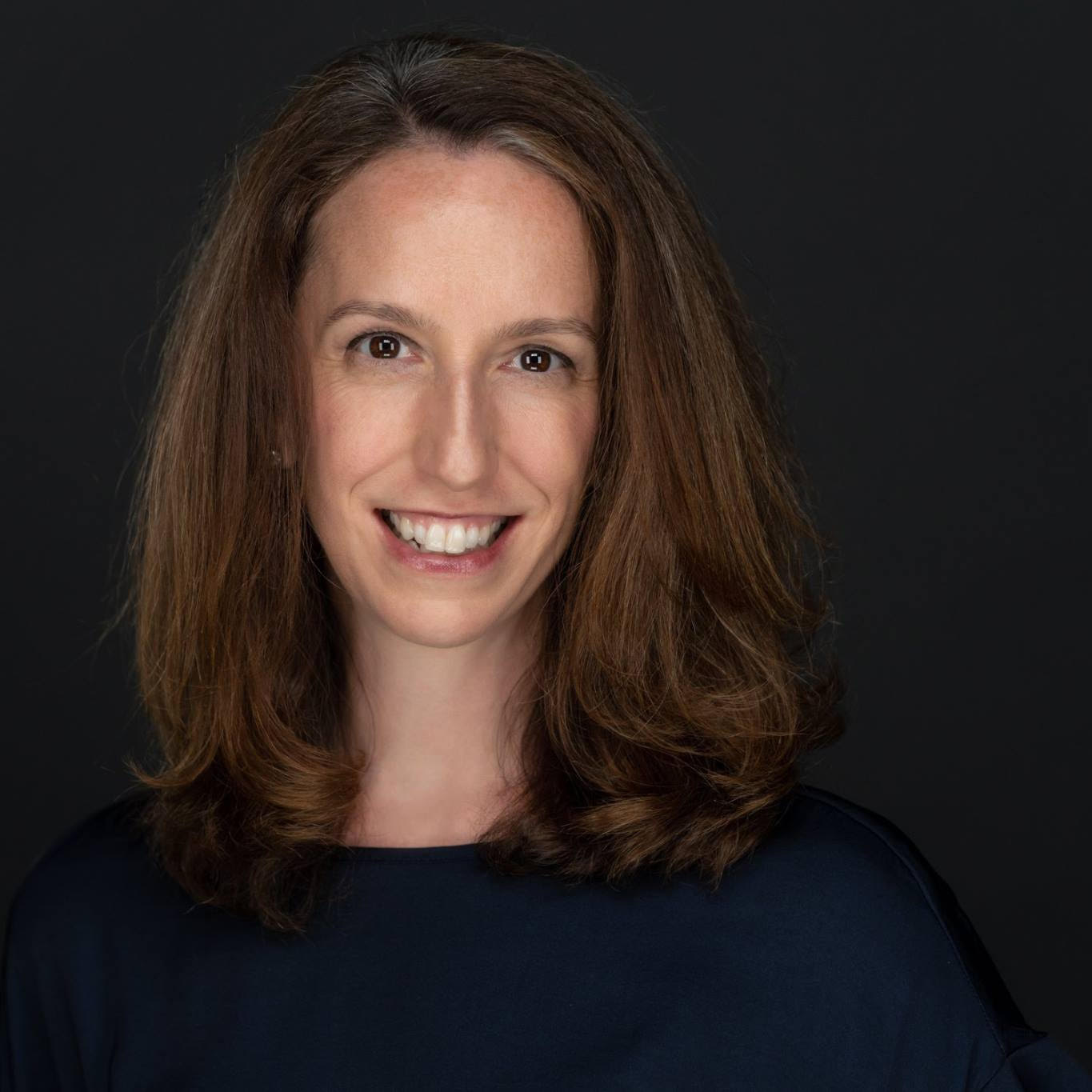
Dr. Jessica Drummond
Founder & CEO
The Integrative Women’s Health Institute
At the Integrative Women’s Health Institute, we’ve dedicated 20 years to crafting evidence-driven, cutting-edge programs that empower practitioners like you to address the complexities of women’s health.
Dr. Jessica Drummond’s unique approach focuses on functional nutrition, lifestyle medicine, movement therapies, nervous system dysregulation, trauma, and mindset – essential elements often overlooked in traditional health education.
In addition, your training will be fully evidence-based, personalized, and nuanced (this is not a cookie-cutter approach) in functional nutrition, exercise, recovery, cellular health, and all other lifestyle medicine tools.
You’ll learn to support your clients with cutting-edge tools safely and effectively.