Follow Us for Free:


About the episode
“We’re just not looking at the whole person anymore.” – Stacey Roberts
Sometimes a patient is doing everything they’re supposed to do, but they’re still in pain. They’ve tried physical therapy, massage, supplements, maybe even surgery, and they’re still looking for answers. Those are the cases that invite us to widen our lens. Because pain isn’t only about what’s happening in a joint or a muscle. Hormones, inflammation, gut health, nervous system signaling, sleep, stress, and biomechanics can all be part of the picture, and understanding those connections gives us more ways to help.
Practicing this way also requires a different kind of healthcare model. It’s almost impossible to have the necessary conversations when you’re seeing several patients an hour or working within a system that doesn’t give you the time to ask deeper questions. More practitioners are beginning to create practices where they can offer that kind of whole-person care, and that brings up its own questions. What can you do within your scope? When should you collaborate or hire? And can you really build a successful cash-based integrative practice if you don’t live in a large or affluent market?
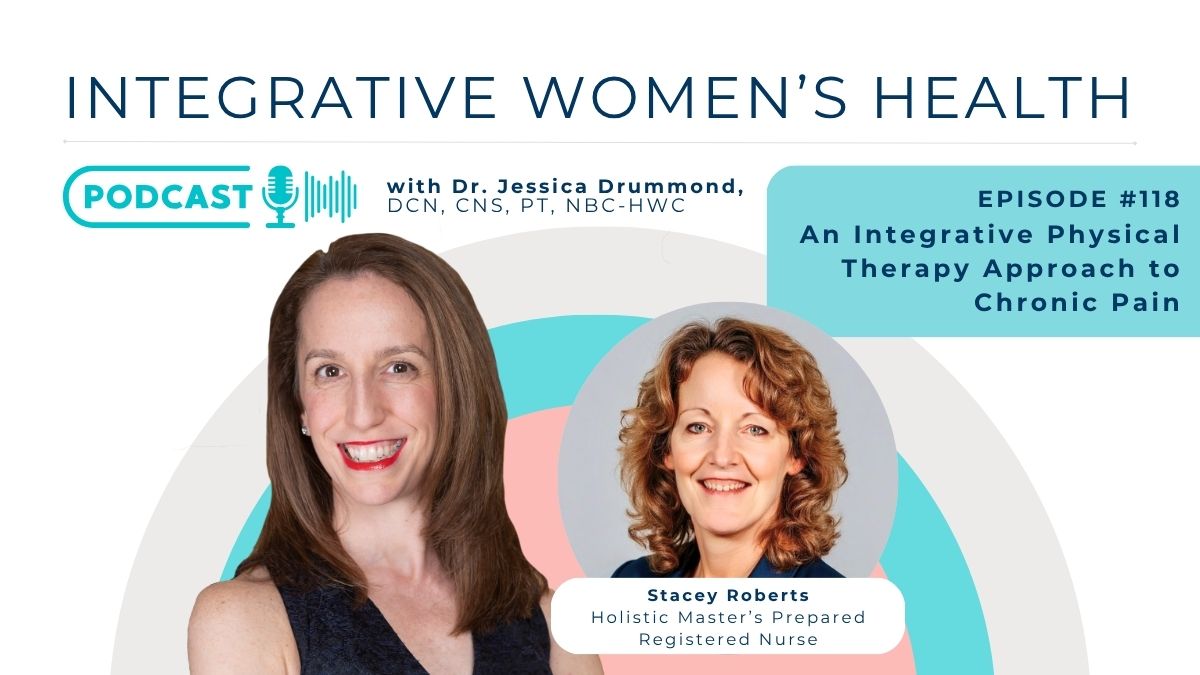
In this episode, I’m joined by Stacey Roberts, PT, RN, MSN, a musculoskeletal specialist, pelvic and sexual health physiotherapist, and functional medicine specialist with more than 30 years of experience. Stacey shares how questions she couldn’t answer through traditional physical therapy led her to explore the gut-joint connection, hormones, inflammation, and other drivers of chronic pain, what it looks like to expand your skills without stepping outside your scope, building the right clinical team, how Stacey grew a thriving cash-based practice after being told that model wouldn’t work in her community, and more.
Enjoy the episode, and let’s innovate and integrate together!
Join Dr. Jessica Drummond to learn proven strategies to confidently address perimenopause, menopause, and chronic conditions while growing a profitable and impactful practice.
Discover proven strategies to attract high-value clients, deliver transformational results, and position yourself as a sought-after expert in this rapidly growing field.
Highlights
- Stacey’s career journey from physical therapy to nursing and functional medicine
- Why Stacey expanded her scope to provide more comprehensive pain management
- How Stacey built a successful cash-based practice in a rural community
- How integrating physical therapy with functional medicine can uncover contributors to persistent pain
- How changes in the physical therapy industry are creating greater demand for personalized care
- Why hormone therapy during perimenopause and menopause requires an individualized approach
- How gut health can contribute to joint inflammation and pain
- How genomics can help personalize supplementation for complex hormone and pain cases
- How physical therapists can incorporate nutrition and functional medicine
- Stacey’s approach to growing and marketing a successful integrative practice
Learn more about Stacey Roberts PT, RN, MSN
- Stacey Roberts’ Website | newyouhealthandwellness.com
- Stacey Roberts’ Book | The Pain Free Formula: Solving the Puzzle of Muscle and Joint Pain Without Surgery, Drugs or Injections
- Stacey Roberts’ Podcast | The Pain Free Formula
- Stacey Roberts on Instagram @newyouhealthandwellness
About Stacey Roberts PT, RN, MSN
Stacey Roberts PT, RN, MSN has over 30 years of experience helping patients live pain-free while achieving their health goals. She is a Holistic Master’s Prepared Registered Nurse, a Musculoskeletal Specialist, a Pelvic and Sexual Health Physiotherapist, and a Functional Medicine Specialist. Stacey owns the New You Health and Wellness Practice in Wauwatosa, Wisconsin, combining cutting-edge technology, advanced manual therapy, and functional medicine to help patients attain optimal health. Many of her patients, including herself, have avoided surgery, drugs, and injections. She is the author of the #1 best-selling book, The Pain Free Formula: Solving The Puzzle of Muscle and Joint Pain Without Surgery, Drugs, or Injections and the host of the #1 podcast on chronic pain, The Pain Free Formula.
Learn more about The Integrative Women’s Health Institute’s Programs
Ready to revolutionize your career and grow your practice?
- Integrative Women’s Health Institute on Instagram | @integrativewomenshealth
- Integrative Women’s Health Institute on YouTube
Click here for a full transcript of the episode.
Dr. Jessica Drummond 00:00:03 Hi and welcome to the Integrative Women’s Health Podcast. I’m your host, Doctor Jessica Drummond, and I am so thrilled to have you here. As we dive into today’s episode, as always innovating and integrating in the world of women’s health. And just as a reminder, the content in this podcast episode is no substitute for medical advice, diagnosis, or treatment from your medical or licensed health care team. While myself and many of my guests are licensed healthcare professionals, we are not your licensed healthcare professionals, so you want to get advice on your unique circumstances. Diagnostic recommendations treatment recommendations from your home medical team. Enjoy the episode. Let’s innovate and integrate together.
Dr. Jessica Drummond 00:01:02 Hi, and welcome back to the Integrative Women’s Health Podcast. I’m your host, Doctor Jessica Drummond. And today I’m with a guest that if you are a women’s health or wellness professional and you’re thinking about, can I open a successful practice integrating functional medicine or functional nutrition, can I open or grow my successful practice in a rural area or an area with, you know, lower health care availability or an area of relatively lower socioeconomic status? If you’ve ever asked yourself, can I do this? Is it in my scope? This is the episode for you.
Dr. Jessica Drummond 00:01:40 I’m so excited to introduce you to Stacy because she is a physical therapist who’s been in practice even longer than I have, and she’s still growing and evolving and launching and learning and building her team and reaching and having a very successful practice in a rural area that people were like, you’re never going to be able to create a cash practice. Can you do that as X, y, z in your scope of practice? This is going to answer all those questions, and we’re going to give you some real specifics about how to think about your marketing in that kind of practice. Plus we’re going to talk about particularly if you are a practitioner that’s focused on pain, how to think about integrating the skill set that maybe you already have in fitness, physical or occupational therapy, acupuncture or herbal medicine, whatever it is, with other ways of looking at pain from the gut, from the brain, from the immune system, from the musculoskeletal system, from the fascia. We’re going to talk more about that in a nerdy way as well.
Dr. Jessica Drummond 00:02:46 So let me pop on my reading glasses and introduce you to Stacey Roberts. She’s a physical therapist, a nurse, an RN who also has a master’s in nursing. And we talk about our pathway to becoming an NP and whether or not you should do that, because we have a couple of different ideas about that. She has over 30 years of experience helping patients live pain free while achieving their health goals. She’s a holistic master’s prepared registered nurse, a musculoskeletal specialist, a pelvic and sexual health PT, and a functional medicine specialist. Stacey owns the new UU Health and Wellness practice in Wauwatosa. What? Wawa? Tosa, Wisconsin. I’m sure I mentioned that I’m sorry. In Wisconsin, combining cutting edge technology, advanced manual therapy, and functional medicine to help patients attain optimal health. Many of her patients, including herself, have avoided surgery, drugs, and injections. She is the author of the number one bestselling book, The Pain Free Formula Solving the Puzzle of Muscle and Joint Pain Without Surgery, Drugs or Injections, and the host of the Number one podcast on chronic pain, the Pain Free formula.
Dr. Jessica Drummond 00:03:57 And you can learn more about her at new U. Health and wellness.com. Let’s dive right into the episode. I want you to take away one thing about either how you look at pain, or how you can think about being building a successful integrative practice in any way you want. All right, take notes. I’ll see you on the other side.
Dr. Jessica Drummond 00:04:27 Hi, and welcome back to the Integrative Women’s Health Podcast. I’m your host, doctor Jessica Drummond, and I’m here with Stacy Roberts. Stacy, thank you so much for joining us and coming here to talk all.
Dr. Jessica Drummond 00:04:39 About.
Dr. Jessica Drummond 00:04:40 How we can look at pain in an integrative and holistic way, both from a physical therapy perspective and from a nursing functional medicine perspective. You have a background that’s very unique and yet increasingly common among our students and graduates. Now that we’ve been teaching so many physical therapists about this for 20 years. So what I’d love to hear first is what was your professional story? You have a lot of degrees. What was the order and inspiration for why you went down the career path that you did?
Stacey Roberts 00:05:18 Yeah.
Stacey Roberts 00:05:19 And thanks. Thank you for having me. I’m really excited to be on this show today. I guess it’s been it’s just a journey, right? So I’m pushing almost 40 years in practice. I think it’s 36 or 37 years this year. And if I look back at when I started, I was actually started to go to school for pre-med to be an orthopedic surgeon. I wanted to get into sports medicine, that type of stuff. And then I was a collegiate athlete and was injured and never really had an experience with physical therapy. As a matter of fact, my high school guidance counselor said you should be a physical therapist. And I’m like, nah, I didn’t even know what it was. So then in college, when I hurt my my ACL playing college basketball, I had my first interaction with physical therapy and I thought to myself, I’m seeing this person back then. You could see PT three times a week, and now that’s a lot different today. But I had a relationship with that person, whereas I saw my orthopedic surgeon like for ten minutes every three months or so.
Stacey Roberts 00:06:14 So that was a really big linchpin for me to be able to go, you know what, I really would like to do this work with people on exercise, help them get back to sport, really have that integral part of their almost daily life. And that’s how I moved into more of the sports medicine physical therapy. Then from there, I just started noticing, gosh, people who were doing everything they were supposed to do following all the directions. It didn’t always get better. Right. So there was a percentage of people that I was always head scratchers. Right. How come? And it’s very easy to blame the patient for not doing their exercise program or not following through. But when the patients are really diligent and they’re doing what they’re supposed to do and they’re not getting better. That made me kind of question. That led me down a path of how does the brain impact or how does pain impact the brain and chronic pain? Has it changed the pain? How does it change our perception and even our sensitivity to pain? And then as time went on, I just started.
Stacey Roberts 00:07:10 I think it’s also in my life where I’ve been in my life as well, whether it’s perimenopause and okay, interesting that people have more pain during this time and then menopause and wow, this is really interesting. Now I have pain during that time, right? Yeah, yeah. So what can I do there? So I wanted to expand my scope of practice about five or 6 or 7 years ago, I had had a clinic in Australia where I was helping people with fertility, women’s health issues and utilizing pelvic floor PT and women’s pelvic floor. And I recently got into men’s pelvic floor on public health as well. But at that point in time I thought, you know what? I feel limited as a T1, learn more about hormones or and more. Learn more about thyroid. I had self-taught myself that due to my own thyroid issues, and so that’s when I went back to school for nursing to expand my scope of practice and got my Masters in nursing and then opening my clinic. I kind of just got busy and haven’t been able to get to finishing my NP at this point yet, but we’re doing so well focusing on pain, and then instead of focusing on everything, we really said, okay, pain is going to be the major focus because so many people have that issue.
Stacey Roberts 00:08:19 And then along with that, I can do weight loss, right? Because what’s one reason why people have pain? Maybe they have excess weight, right. So it could help them lose weight and hormones. Right. What happens in menopause. Right. So Doctor Vonda Wright talks about the musculoskeletal syndrome of menopause. So we can help people optimize hormone levels as well too. So that’s how I kind of branched off into really focusing on pain. Writing my my book really came about from a personal experience, and then the podcast kind of leaning off of that. But as far as how I’ve gotten to where I am today, professionally, that’s been the story.
Dr. Jessica Drummond 00:08:55 Yeah, I love that. And so it sounds like you lived in Australia for a while now. Tell me a little bit about that. Like if you were practicing any differently in Australia and then how long you’ve had the current practice in Wisconsin, what is the structure of that practice? What does it look like now?
Stacey Roberts 00:09:12 Sure. The practice that I had in Australia was a more of a naturopathic wellness first, and I wasn’t able to practice with my physical therapy license over in Australia, so I did I learned pelvic health and did PT on the sly with that.
Stacey Roberts 00:09:27 And then I advanced my pelvic health education over there. And then in the US when I came back as well. But then when I came back here, I just I started working in as a physical therapist, which was great for a little while. And then I started to teach again, And then I got the bug of I want to have my own clinic again. But at that point I didn’t have the funds to start it off. So I started working for a corporation and opened a bunch of clinics for them and then thought, gee, why am I opening it for somebody else? It’s time for me to do this for myself. And that’s when I decided I needed to expand my scope of practice. And what my clinic looks like now is, instead of the traditional physical therapy, we call it advanced physical therapy and advanced manual therapy with functional medicine as well as a patient will come in. And I’m a cash based clinic, which everybody told me that wouldn’t work, especially Milwaukee, Wisconsin, the way I was going to pay out of pocket for what we do.
Stacey Roberts 00:10:18 And you can’t compete with free. I’ve heard that so many times and I just thought, we’ll do it. We’ll see what the market says. Right. And if we provide a great service, I had a device called Soft Wave, which is an electro hydraulic shock wave device. So that was my lead generation of getting people in. And then we would book into an evaluation where they would see the value of seeing myself and my colleagues doing a whole biomechanical analysis and then also talking to them about hormones, about gut health, about stress. And I’ll be honest, Jessica, when I first started talking to patients about that, they would arms crossed be like, yeah, whatever. But the last I would say probably 3 or 4 years, maybe five years now when I bring it up, people are leaning in right there. That does make sense. Or I’ve heard about that at some point or from somewhere. Still not 100% as far as no resistance, but people are starting to really be more open because really, I’m usually the last resort.
Stacey Roberts 00:11:12 They’ve been to everybody. They’ve tried everything. They and they still want to either avoid surgery or they’ve had surgery and they’re not any better. So they want to they want to stay active. So that’s where I am now. And for any cash based business, I don’t care who you are. You just have to find your value. What is your value that you have you specifically. And make sure that you shout that from the highest mountaintops with every marketing initiative that you do so that people understand how you’re different from somebody else down the street?
Dr. Jessica Drummond 00:11:42 Absolutely. And so when you think about, okay, so you started your practice thinking about pain in a very not only integrative way but functional medicine way. So integrative in the sense of thinking about pain in the brain signaling, which our physical therapy perspective on that has really expanded quite a bit in the last decade. Just thinking about everything from central sensitization to how the nervous system responds to stress. And then you layer in a functional medicine approach as you’re becoming a nurse practitioner, where you’re thinking about how low estrogen impacts pain, and you’re thinking about how potentially low GLP effects pain.
Dr. Jessica Drummond 00:12:25 For example, as we know in endometriosis, they have relatively low levels of GLP one peptides, or even just the inflammation that can come from any number of insults, whether it’s nutrition, stress, chronic infections, there’s thousands of things that can trigger that overall chronic inflammation. So let’s talk briefly about pain. And then I have a couple other questions about your practice that I know our community will really be like leaning into. Number one, I love that you said everyone said this couldn’t work here. And when we interviewed our graduate, Amanda Thompson, she’s in a rural area in Texas, same exact thing, and her practice is absolutely thriving. So if that’s one of the excuses you have in your brain, this is not going to work here. It absolutely will. Because like you said, the the reality is there’s a gaping hole in the health care system that people would have access to that already. There are people that want to stay physically, functionally active and out of pain from a musculoskeletal standpoint well into their 70s.
Dr. Jessica Drummond 00:13:33 80s 90s. So if you think about your average patient or your most common patient, what are they looking to do and what did they not find from the conventional medical system? That is really why your practice is thriving so much.
Stacey Roberts 00:13:52 Really what they want to do is stay active, just like what you were saying. I think mine and yours, it sounds like we’re a little bit similar. Age is one of the first generations that want to stay active. We want to play. We want to hike. We want to do what? What we can as for as long as we can. Right. Pain is one of those limiting factors that keeps us from doing that. So my patients are coming to me. They just haven’t. They’ve tried everything. They’ve tried traditional physical therapy or whatever traditional physical therapy is these days. Back in the day when I graduated and you went to your continuing and you developed your manual therapy skills, and it didn’t matter that wasn’t reimbursed lower than their ex and wish to do only exercise.
Stacey Roberts 00:14:35 We really had that one on one time with patients and those types of things. Now it’s more of a because a lot of these physical therapy clinics are from large big conglomerates that it’s really about the bottom line. So they pushed only certain things in. Our patients get an exercise sheet and nobody ever touches them, which is a big, huge problem for me because it makes me sad for my profession. When I hear people say physical therapy didn’t work, and not that exercise is wrong. Absolutely. We want to do that. But we also have to figure out the trigger of where their pain is coming from. So that’s what we do. And that’s the patient that comes in where they’ve had physical therapy, they’re doing chiropractic, they’ve had massage therapy, they’ve tried all the supplements, they’ve tried this. They’ve ordered everything from the late night TV shows that are there and nothing is helping them. Right? Nothing. Yeah. So that’s where when they come to see myself and my colleague, we really take some time to just meet them where they’re at and listen to what their experience has been.
Stacey Roberts 00:15:31 What we can build off that is is working. That’s worked for them. But what’s been that big gaping hole, like you said, what’s been missing from the whole program? And a lot of times I was never I never utilized modalities before, ever, until about six years ago when I came across shockwave. The company’s name is Soft Wave, and that’s been a huge game changer for my practice. And even for me mentally, it really it accelerates the patient’s healing response. I player fasciitis is a common thing that we see and and think I’m okay as a physical therapist doing it for as long as I have. So patients would get better in 10 or 12 treatments. Now they’re better in 3 to 6, right? I’m doing the same program that I did before, just adding that. So that’s something different that most patients have have not experienced. But if you only do that, then you’re not taking away the trigger. Right? So that’s where yep. They’ll probably they probably can get a little bit better with shockwave alone.
Stacey Roberts 00:16:26 But if you don’t get rid of the trigger that is causing the pain and and continuing to trigger it, it’s eventually going to come back, right? And then they’re going to be in the same spot that they were prior to seeing me. So that’s how I look at it from the standpoint of, you know, what’s been missing in medicine, specifically physical therapy is we’re just not looking at the whole person anymore. Right? We’re just trying to pigeonhole everybody to say, here are the same exercises that have given the last 20 people that have come across.
Dr. Jessica Drummond 00:16:52 Yeah, I think we do have to acknowledge the shift in physical therapy. So I graduated from physical therapy school in 1999. And so it’s been almost 30 years now. And when I was early in my career and I was doing outpatient orthopedics, and then I was doing man, I was doing women’s health pretty quickly. Within the first two years or so of my practice, I always had 45 minutes an hour, you know, assessing that not just the pelvis, but the whole body, assessing not just the knee, but the lake you’re talking about, like gait biomechanics and nutrition and how people were what kinds of things in their lives were causing inflammation in general stress, lack of sleep.
Dr. Jessica Drummond 00:17:38 And I think back then, also the stressors were different because literally cell phones didn’t exist.
Stacey Roberts 00:17:47 Right.
Dr. Jessica Drummond 00:17:48 And we had fewer day by day stressors. And there has been a bit of whatever they say, the frogs boiling in water, where people’s stressors have come up at the same time that. So I’m trying to remember I went to a private practice. You know, how the American Physical Therapy Association has like the private practice sections and all that? I went to either a meeting that was entirely for the private practice section or it was it was part of CSM, I don’t remember. This was probably 20, 15, 20 years ago and the entire transition that started happening then that has really pretty fully taken hold in. Health care is private equity, has purchased essentially all of the physical therapy practices and the hospitals, and they’re now mostly purchasing things like senior care facilities and all of that. And the entire goal of private equity is to spend about 7 to 10 years, be essentially pricing out everyone around them, like kind of becoming a monopoly in their area or globally or countrywide.
Dr. Jessica Drummond 00:19:03 And then they raise the price of everything with much less quality because they have no competition or they have much less competition. So I think the space in the marketplace that’s now left knowing that essentially all of corporate medicine is owned by private equity now is whose only only goal is profit profitability. Literally, their only goal is a small practice like yours that for people who actually want whole person health care, it’s just it’s otherwise no longer available. By and large, exactly.
Stacey Roberts 00:19:40 When we saw outside of our industry, let’s say grocery chains, Walmart and the mom and pop shops closed up. We’re now in physical therapy at least. And even with nursing, I would say the same to any primary care or wellness clinics. We’re starting to see the mom and pop the individual or the the the 2 to 5 therapists, smaller shops really opening up and thriving because to what you talked about at the very beginning, people are looking for that. They want that connection. They want to talk to somebody and they’re because of social media.
Stacey Roberts 00:20:13 They’re more educated now. It might not be the right education or correct right or 100% correct.
Dr. Jessica Drummond 00:20:19 There’s grains of truth here and there.
Stacey Roberts 00:20:21 Yeah, right. Exactly 100%. I’m the same. I’m sure you are. I’m on Google and chat and Claude now and figuring stuff out for myself, but we’re they’re much more educated. Right. So I think a lot of people become intimidated by that. But I get excited about that because a lot of the things I’ve learned besides my own physical health journey and, you know, mental health journey, which we all have, is what I learned from my patients, right? They they taught me so much over the years. They might be like, hey, what about this supplement? Or hey, what about this? And instead of just disregarding it, I’m like, oh, that’s interesting. Oh that’s interesting. Oh, let me research that. It’s really helped me expand myself. And I think what happens in conventional medicine is when those questions are asked, a they don’t have time to answer them.
Stacey Roberts 00:21:08 B many times they get irritated that the patient’s asking that question, and maybe it’s out of their scope to answer it or not even out of their scope necessarily, but they just don’t know, right? And they.
Dr. Jessica Drummond 00:21:19 Don’t. And they’re unwilling to find out. Yeah. That just being willing to listen to those concerns. And then I think the one of the most powerful skill sets a person in a practice like yours could have is actually responding with nuance to the questions people bring from social media, because there is almost always that grain of truth. We have to help people understand the difference between a magical supplement and how a supplement can actually fit into a well designed nutrition exercise lifestyle program, and how long it might be needed for and how to find quality. This is the kind of thing that your sort of practice has the time to engage with, versus someone with a physical therapist, you might have to see four patients an hour all day. If they answered all those questions, they just don’t have time to answer all those questions, and neither does a primary care physician or nurse practitioner who’s in the exact same kind of private equity boat.
Stacey Roberts 00:22:21 And I see that too, in functional medicine, too, I see people coming in to me and talk to me about functional medicine that we do, and they’ll bring in a bucket of supplements. So it’s kind of it’s like the PT who’s seen four patients an hour has kind of become medicalized, right? To see as many people as you can in this period of time. So that’s what’s happening with the MDS for the longest period of time. People are coming in with this bucket of supplements that people aren’t thinking about. How is this impacting? But I just know that you might be low and b maybe you’re low and b maybe long D or take all these different supplements, and then instead of looking at how are they all integrating together. Right. My my goal. Most times when patients come in with supplements is to have them take less, right? Sometimes it’s more if they’re not taking anything, but many times they’re coming in with a bucket. And I’m trying to streamline that into what they need based on data that we gather in the clinic.
Stacey Roberts 00:23:10 And also there is some symptomology about that I’m also trained as a herbalist. I utilize that knowledge with one foot in that complementary, one foot in more conventional, to help make sure they’re taking what they’re taking is safe, first of all. Right. And then second of all that it’s necessary. Right. So you’re right, having that extra time and making that extra time is important. And people want that information. They want those types of answers.
Dr. Jessica Drummond 00:23:35 And I think they want them. Increasingly, I think we’re going to see actually an expansion of this from trusted human sources. This is the part of our jobs that I think will never be taken from AI by AI, because we the reality is AI is incorrect somewhere around 80% of the time for medical questions, because they don’t. It doesn’t have the ability that you have of seeing that person asking really skillful questions back about what side effects they might be having, or looking at the nutrient drug interactions, or seeing how their symptoms are improving or not improving.
Dr. Jessica Drummond 00:24:24 I think that real, skillful, trusted conversation is a long way from being replaced by any kinds of tools, whether it’s AI or whether it’s online education or social media education. It’s very difficult for someone who has a even if they have a, well, a skillful platform, even if they’re writing very knowledgeable blog posts or highly knowledgeable reals or something like that, it still can’t take into consideration the human that’s sitting in front of you.
Stacey Roberts 00:24:59 And I think too. The latest trend is hormones, right? So everybody should be on hormones females, males. And should many people be on them? Yes. Or as long as it’s safe. But many times it’s done in a way that. Oh, like everybody in perimenopause should be on estrogen, progesterone and testosterone. That’s not necessarily true. Right. So we look at how all those hormones interact with each other. Right. But if you put it that in chat or clod or Google, it probably says, yeah, these are all great or social media.
Stacey Roberts 00:25:29 It’s all over the place. Everybody, if you’re not taking testosterone, you’re missing out. And that’s that can really impact that hormone cascade that even the conventionally trained practitioners who are prescribing them aren’t necessarily paying attention to. How cholesterol turns into DHA, turns into testosterone, turns into estrogen, and where progesterone comes in and where cortisol comes into all that, so that not everybody should be taking just a blanket amount of different hormones. So that takes a skill at this point right now that is in the hands of, in my opinion, the practitioner to look at that patient, look at their results, help them move towards what’s right for their body, not just what everybody else is saying they should take without knowing them, even just from a supplement point of view. My colleague sent me a text and said, this patient wants to know if they should take B vitamins. And they said, I don’t know. Yeah, eat it right. I need more background. That patient needs to come and see too many of the B vitamins is not great, right? How is their gut health? Are they going to be able to utilize those B’s? Stuff like that is really important to to your point, to sit down across from somebody and have those conversations.
Dr. Jessica Drummond 00:26:39 Absolutely. That’s exactly why we designed our Perimenopause and menopause certificate program. With that lens of complexity and why it’s a year long. It’s not just a weekend. C.U. of everyone gets this hormone prescription and this is everyone’s supplement stack. It’s really in-depth because like you said, some people have thyroid autoimmune stressors. Some people have gut Meiosis. Let’s talk briefly about one of the things that you brought up or that your book talks about, that I have not done a ton of deep dive research into is the I know a lot of gut brain axis astro bloom. But let’s talk about the gut joint axis.
Stacey Roberts 00:27:21 Yeah, I love it was I was listening to was it Doctor Rhonda Patrick a few years ago. She’s a great PhD. I can’t remember the name of her company right now, but fantastic. You’re able to take research and just break it down so the average person can understand it. She she first started off with a lot of the sauna research, but I was listening to her in regards to the gut brain access like we were talking about.
Stacey Roberts 00:27:46 And she started talking about something called lipopolysaccharide, which are in her gut, and they attach to gram negative bacteria, and they can be inflammatory if they stay in the gut and we excrete them and all, that’s great. But if they start leaching into our system from increased intestinal permeability or as we know it, as leaky gut. That can get into the brain at those levels of LPs have been noted to be elevated in people who have depression and anxiety. So I thought, And I think I was either thinking of my book at that time or writing a bit of it. And I thought, if I can get to the brain, what could it get to the joint? Is there a gut joint axis? And then, sure enough, I started digging down into the research and there it was. And LPs is exactly the the component, and I’m sure there’s many others, but LPs is a component that can leach into the joints as well. When you have an arthritic joint and they look at the synovial fluid, that’s usually elevated levels of LPs, which are associated with something called toll like receptor four.
Stacey Roberts 00:28:44 And that’s related to degeneration of tissue. And when you can address LPs then to like receptor three gets activated which is related to regeneration. Right. So then the question is joint pain and arthritis really wear and tear or does it have more to do or at least partially due to what’s happening in our gut and how that LPs migrates to those joints and then can start that degenerative process. And then, of course, wear and tear probably worsens that or feeds into that or excess weight, that type of stuff. So yeah, I found it just absolutely fascinating. And it really kind of connected the dots for me when I would see patients who would have celiac disease, or I would think they had celiac disease. So I would send them to get tested and they get tested. It was positive. And then they got rid of gluten and suddenly their joint pain went away. Right. And I went interesting. And I didn’t really understand why. But this is one of the mechanisms as to why. So that was like 15 or 20 years ago.
Stacey Roberts 00:29:42 And that helped me with my different pain that I was having at that time that I couldn’t figure out. And as a PT, if you can’t figure out your pain, you get really ticked off because you.
Dr. Jessica Drummond 00:29:52 Shouldn’t lose your whole job. Yeah.
Stacey Roberts 00:29:54 No. Exactly. So when I started dressing my gut and food sensitivities ten, 15 years ago, it completely changed joint health, but I didn’t know why at that time. So that was like a massive lightbulb moment that went, oh, okay, I see, I see why that happens now.
Dr. Jessica Drummond 00:30:08 Yeah, absolutely. So are there any particular gut tests, functional gut tests that you like over others?
Stacey Roberts 00:30:16 I used to do a lot of the GI mapping the honest but it’s not inexpensive for the patient. Right. And the newer research from pendulum who makes Akamatsu as one of their main products, is that really the CEO talks about this really to assess fully assess the gut, you really need like ten stool samples, probably minimum, spread through over a period of time to really get a good assessment of the gut.
Stacey Roberts 00:30:41 So then that really made me think, oh, is it really beneficial? Right. Is there’s so many different bacteria. I think it can be beneficial. And I will many times get a little bit more nitty gritty if I’m if we’re hitting a wall and not moving in that direction. So occasionally I’ll do the GI mapping, but I don’t do it as much anymore. We just really work on food sensitivities, work on optimizing the a very simple supplementation program and a gut rehabilitation program for patients, starting first with food and their food sensitivities, and then expanding from there and then listening to the patient as far as symptoms go. And unfortunately, I keep looking. What there’s no really good tests for LPs systemically in the system that is commercially available for us to really have a reliable test to say, okay, see, this is what’s going on, at least systemically, right? Yeah, that we might be able to correlate and say, all right, if we can get this done, we get systemic inflammation down.
Stacey Roberts 00:31:38 That’s certainly going to help your localized inflammation as well too.
Dr. Jessica Drummond 00:31:41 Yeah, absolutely. I’ve actually found that I used more biomechanics now just because it’s a it’s a wider genome wide sequencing. But it’s very interesting because as I’ve been using that more in the last year. What I do find so commonly is the the strategy is the same that I was already using. Essentially, you’re adding beneficial prebiotics first most of the time, and then some of the the spores or the ones we know really repopulate the growth. And the keystone species like things like acrimony. Acrimony is not always the keystone species, but it often is. And I think that your point is well taken that we don’t always need the tests. And that’s how I’ve come to practice with almost everything. I think you maybe you run even with hormone testing, with, gosh, you can almost always tell the longer you do this work of with anything, like you said, you probably knew 90% of the time if these people had celiac, you just know.
Dr. Jessica Drummond 00:32:47 And the less I think and I think it sometimes comes down to the patient, there are just some people who just love the data. They’re just data motivated and that can be really helpful. And there are some cases where we do the standard strategies, even if it’s personalized, where we just might be missing something, they might have some random. I did do a stool test the other day that showed up in. This. Made a ton of sense when we circled it back to the patient, but they had a really interesting overgrowth of a of an oral bacteria in the stool at such a high level that we thought, oh, this has got to be in the mouth. And the person actually ended up having to see a periodontist for like a little bit of a bone replacement from a small infection in one little area of their mouth. And there are these occasional outliers that I think it’s valuable. And I do like Huron person who used to work at Microbiome Labs, he actually sold it, but we’ve recommended his training to our students.
Dr. Jessica Drummond 00:33:53 And of course, we teach a ton about the gut microbiome in relationship to women’s health. But I think for general gut health, I think that’s one of the best kind of, you know, really evidence based education areas. Just as a tidbit.
Stacey Roberts 00:34:09 I love his information. He’s really I think he’s one of the first ones that brought it and put it all together and then and teaching it in a way that’s digestible, right? That’s not overwhelming. The other point that I want to make to that I’ve done recently is gone back to the genome, looking at the genome, because I’m into neutral genetics. When I was in Australia, gosh, it was probably ten years ago. And I would when I would come home, I would fly the University of North Carolina and take their courses on neutral genetics. And it was fascinating, but there wasn’t a lot of meat yet to it. I couldn’t it wasn’t I wasn’t able to really apply it to my patients at that time. But now. And one of the things with Chat and Claude and all those are you can take some raw data and obviously de-identified it and put it in there to help with the patients that are really tough.
Stacey Roberts 00:34:56 I have a patient, no matter what progesterone she takes, she just feels horrible, right? Another patient who just joint pain instead of getting better on estrogen got ten times worse, right.
Dr. Jessica Drummond 00:35:09 MCAS check for MCAS.
Stacey Roberts 00:35:11 Yes, you have that. Yeah that’s fine on that.
Dr. Jessica Drummond 00:35:15 Yeah.
Stacey Roberts 00:35:16 Yeah. And I found that going back to that genome now with more information after a decade. And it’s just going to get better and better. It gives me the nuances to be able to even further personalize their supplementation program based on how their body would process it. Right. So that’s I think everything is advancing so much. And it’s so interesting. Right? Everything’s so interesting. But I don’t think that test, at least right now, is necessary for every single person that walks through the door. So I always tell my patients, 70 to 80% of you are going to do great with our soft wave, our biomechanical analysis, and our functional exercise program with advanced manual therapy. We do extremely well. They do extremely well with that.
Stacey Roberts 00:36:00 If they’re not getting better, if they’re not by 50% better by the third or fourth treatment, now we’re reassessing what’s going on here. So we’ve already established with them in their eval that sounds like there may be some hormone stuff going on now. Don’t know if it’s related to what you’re experiencing, but we might circle back to that. Or it sounds like there may be some gut issues with your digestive stuff going on, or sounds like the medications that you’re taking. Things changed around the time you started that. So things that we kind of lay the plant the seeds for and then circle back to that if they’re not getting better because at least for us, they’re not coming to us right away. For functional medicine, it’s a natural, natural kind of movement towards functional medicine if they’re not getting better. Right. And that’s the value that I talked about in the beginning that we add to the community and how we introduce functional medicine to patients through through them dealing with pain.
Dr. Jessica Drummond 00:36:48 Absolutely. I really do think functional medicine and functional nutrition first, which is like everything but prescribed pharmaceuticals, is a really powerful layer on top of physical therapy or in collaboration with physical therapy.
Dr. Jessica Drummond 00:37:03 I think all physical therapists should also be functional nutrition trained, and I think that applies within our scope of practice, as is when we start prescribing medications. Obviously we need a different layer of scope of practice. One question for you. So obviously you’re on that path to be able to prescribe medications, being a nurse practitioner or on your way to being a nurse practitioner. From a business standpoint, why did you decide to become a nurse practitioner rather than just hire a nurse practitioner?
Stacey Roberts 00:37:35 Well, that’s where I’m at now, to be honest, Jessica, I’m at the point where I’m like, I can’t do it all myself. I can’t see everybody myself. So I have another full time OT and a part time PT on my heart is in functional medicine. The combination of that with PT. But you know what? That’s the next business step is bringing in someone. But the challenge for me, and this is my own bias, probably not. Probably certainly is that are they going to I don’t want anybody who’s going to be cookie cutter.
Stacey Roberts 00:38:04 Right. So that it’s about me having to make sure that they’re aligned with what we do and how we do it differently. Right. And that’s just hard to find, right? So from a business standpoint, that’s the next level that we’re going to do. And what we might do instead of bringing somebody on right away is partner with a company where we can do nurse practitioner on demand kind of thing. But again I can’t see everybody. I’m already so busy. I travel around the country teaching. I, you know, you know what I’m talking about. I don’t have to tell you about it. Seeing patients and trying to get podcasts done every week and all that, which all is very valuable and I love all of it, but I just can’t see everybody. So that’s what we’re looking at, expanding that aspect of the business, not necessarily to prescribe although hormones are would be are a great adjunct. Right. But to educate when we do a weight loss program, we if the patient comes in wants to do GLP ones, we are supportive of that.
Stacey Roberts 00:39:01 However, we they know that if they’re coming to see us, we’re got to get the diet right first, the nutrition right first. We’ve got to get the exercise program right first and then look at if and then probably 50% of those people wouldn’t even need the GLP one we’re finding. Right. But then if they still do, or if they still want to go that route, they have much better chance of being successful and a much better chance of not losing muscle mass and not having the negative impacts and doing it low and slow. Right. There’s you know, I see so many people just going up and up and dose and a lot of times it’s because they haven’t seen their practitioner. It’s been a month since they’ve been on it and they’re just automatically upped. And there’s been no conversation. Right. And then another month goes by and there’s no conversation. And then their prescriptions upped again. And the patient doesn’t know what to do with that except to take it. Right. So that’s again our value add for our community is to be like okay, we’re not against it by any means.
Stacey Roberts 00:39:57 It has some fantastic benefits, but let’s do it in a way that you can be successful and healthy as a result of doing it. Because not all.
Dr. Jessica Drummond 00:40:06 The same.
Stacey Roberts 00:40:07 Right? If you drop £60 in three months, that’s not really healthy. The only other time you see that is in cancer, right? Or some significant stressful event. So we want to help people do it in a healthy way. And that’s a commitment to from them as well.
Dr. Jessica Drummond 00:40:20 Yeah. And longer term sustainable without the GI. Downsides without the bone and muscle loss. 100%. And I completely agree with you. I think they’re valuable tools is a really good tool. And mast cell activation endometriosis. We’re starting to get some more research in those directions of these chronic inflammatory and immune dysregulation. But yeah, I think we always have to do it very thoughtfully. And the hard part is we have these kind of two options. You’re very difficult to get in standard primary care facilities where sometimes they’re just like, no, unless you meet certain criteria, or people go to direct consumer sources which have very yeah, they might have a practitioner who’s, who’s a prescriber on the back end, but they’re really not getting to know the patient.
Dr. Jessica Drummond 00:41:05 They’re not setting the foundations of exercise and stress management and nutrition. So I think we actually encourage some of our graduates to partner with certain companies. Liv health is one of them to provide some of that prescription, but in a much more thoughtful way, that’s really led by health coaches, physical therapists, nurses, gynecologists in a lot of cases who even can prescribe. But there’s so much work to do on the front end and the the medications or even like you said, they can go online and buy stacks of supplements that don’t do anything in or make things worse when they’re just taken out of context.
Stacey Roberts 00:41:50 And I just hear as we’re talking in the back of my mind, I’m hearing all the physical therapists listening, going, but that’s not in my scope, but that’s not in my scope, because I hear that question all the time and what I do. And of course, you have to do what’s within your state and within whatever your state mandates and your scope of practice. But I’m always doing it related to pain.
Stacey Roberts 00:42:09 Right? So it’s that’s where I’m coming from is if I’m working on nutrition, I’m not doing it because I’m a dietitian or a nutritionist. I’m doing it because I’m helping them manage inflammation to decrease pain. If I’m doing supplements, it’s the same thing. I’m helping them. If I’m looking at their thyroid results, I’m not making a medical decision for them, but I’m helping them understand how the thyroid impacts muscle and joint pain. I’m always relating it back to what my scope and my specialty is. I think that for me, because in my state, it’s a bit more of a gray area about whether we can do nutrition or not. But as long as I’m documenting the reasons why I’m doing that and it’s helping this patient with whatever their pain issue they’ve come to see me for, it’s, in my opinion, hopefully not going to have been arrested or lost my license. No no, no. Is really the way that I find that it’s and it makes sense to the patient to. Right. Because those things are such a disconnect like hormones and pain.
Stacey Roberts 00:43:07 In such a disconnect, food and pain is such a disconnect. So my goal and our goal here at NYU Health and Wellness is to help the patient understand that we’re not just telling you to stop eating sugar or just because everybody says that. We’re saying, okay, this could be inflammatory for your situation, and it’s what happens when you do have it. Do you notice a flare? And oh, yeah, I do notice that with life. So it’s the education aspect of it that’s important.
Dr. Jessica Drummond 00:43:34 Absolutely. And that is a very common question that we get as well. And I’ll point to Doctor Joe Tata’s work. He’s a physical therapist. And he and some other colleagues of ours who I’ve known for almost like two decades now, what really did change the scope of practice, according to the Apta, to include nutrition when it is related to. And of course, if you’re working with hypermobility syndromes or pelvic pain or chronic musculoskeletal pain that has an inflammatory component 100% in your scope, and you’re exactly right there are you do have to stay aligned with your state or country.
Dr. Jessica Drummond 00:44:13 We have students in 60 plus countries now laws, so you have to be aware of those. That’s why we have a scope of practice lawyer who teaches some things in our curriculum. But I do think that the Apta is now behind you, which I think gives us a little more support in that way. So awesome. So you’ve built this really successful practice in this very clear niche market in your area where everyone told you cash couldn’t be done. And absolutely. So what are some of the tools or some of the strategies that have helped you be most successful from a marketing standpoint? I know you published a book. Has that been helpful?
Stacey Roberts 00:44:52 Yes, it’s been helpful, and I didn’t publish it to be number one in the New York Times bestselling list. I published it from a personal point of view, because I really felt strongly about the message that I wanted to get out there based on my personal experience that I had and conventional medicine and dealing with pain and injury. Honestly, it just really ticked me off.
Stacey Roberts 00:45:10 And so I’m like, I really have to get this information out to people. But I went into it realizing that this is something that I’m birthing. Right. But it’s really a marketing tool, right? My book is over 300 pages. Your book doesn’t have to be that right. Any type of thing that you would offer and put out is valuable from a marketing standpoint, as well as positioning you as an authority standpoint. Right. That’s the one reason I did it. The other reason I did the podcast is because to support the book, and also I utilize my podcast. Now, when a patient comes in or they inquire, we text them a podcast episode depending on what they inquired about. I really do that with my book. Right? Or share an evaluation. They get my book along with the evaluation. Any type of value add that I can use for my podcast or my book. And again, personally, I’ve done over 5050 some episodes now on my podcast and I’m like, I love doing it.
Stacey Roberts 00:46:05 If I hated it, it wouldn’t be something that I’d want to do for marketing if I felt like I was pulling teeth. But it really for me is that way of because I don’t know about you, Jessica, you might be the same when I am reading articles that pop up on my feed and I’m like, oh my God, this is really good information. I don’t want to forget it. And I’ll say it and then I’ll forget about it. I don’t have, but now I save it and I’m like, podcast potential. So then I’ll go back to those that I’m looking for ideas, and then it reiterates what I was reading before, and it’s been helpful for my patients and colleagues and other people who are interested in that. So those are the two things that I do from that standpoint in clinic. And then I do Facebook advertising, which is great lead generation for our shockwave device and called Soft Wave. And then I wouldn’t start off with that to be honest. I went through four companies and wasted a lot of money doing that.
Stacey Roberts 00:46:55 So you want to build your brand and how I did that to when I first opened zero patients, nobody at all. I went on a morning show, which I still do once a month or once every 6 or 8 weeks, and talk about I bring a patient. And at first it was just family and friends who had a good experience. I bring them on and that the guests are the host, excuse me? Interviews that patient. I just sit there and explain what we do and what soft wave is. And then that was a huge four or 5 or 6 people every time I was on the show and then build from there and then of course email newsletter. Getting that out and doing that on a more regular basis. So many different gosh and I do this too is on feeds. I swear my Facebook feed is full of all the marketing things that are potentially out there in the entire world, because I see them all the time. And that could be just a full time job assessing all those, right? But that part is fun for me.
Stacey Roberts 00:47:46 I do love to figure out how can I get this message to people. Because I believe so strongly in it. Right? I’m so passionate about getting the message to people, whether they utilize it or not, whether they it’s for them or for a loved one. I just feel like if I can get it out there in the ether and somebody picks it up and it can help them in some way, that that makes me feel good. So I love that combination. I think of things that fill us up as well as being able to help other people.
Dr. Jessica Drummond 00:48:14 Yeah, I think for me, the podcast allows me to, in a deeper level, talk to people like you and so many others who are doing cutting edge things, who have actually implemented various aspects of what we teach in our program. So there are these living examples of what is challenging and what’s working well. And so I think a real lesson to take from what you just said from a marketing perspective is one having this excitement about the work that you do, a passionate about it, really knowing that you’re filling a need.
Dr. Jessica Drummond 00:48:47 And then the book is great, and I’ve written a few books, which is writing books is really hard in my opinion, but it’s also so powerful when you’re done, because you finally taken the commitment to put all your thoughts together in an organized way, like what you said, versus just saving them and never looking at them again. Yeah, and then you have that as an anchor and then you can take pieces of it over time. And whether it’s through ads or through blog writing or through Substack or being on a morning show and having different examples of patients or doing your own podcast. That idea of thinking about your marketing is just sharing this message in a lot of different ways, out into the ether. It all builds on itself over time. So it’s also that somewhat longer term commitment. You think about building that depth of work over three, five, ten, 15 years. It does really compound.
Stacey Roberts 00:49:48 Absolutely. And it and I think you have to if you hate Facebook, you don’t want to be sitting on Facebook all the time.
Stacey Roberts 00:49:56 Right. So find what you really like. And it doesn’t have to be all the things we just talked about anybody.
Dr. Jessica Drummond 00:50:01 It could be 1 or 2.
Stacey Roberts 00:50:03 Yeah, exactly. And just focus on that. Get that down pat and then move on to the next one if you need to. And I think as a business owner, we just try to wear so many hats and do so many things. And sometimes we just got to go look, this is what I’m really good at here, and I’m going to keep working on this and consider other things over time. That’s what I had to do because I was full time nursing school and I started my clinic, and it was sometimes I had to take hour by hour of my life so that I wouldn’t I wouldn’t get too stressed out or like my head was going to explode.
Dr. Jessica Drummond 00:50:34 Yeah, that is a lot. You have done a lot in the last decade, so go hire a nurse practitioner.
Stacey Roberts 00:50:40 Exactly, exactly.
Dr. Jessica Drummond 00:50:43 So great to meet you, Stacey.
Dr. Jessica Drummond 00:50:44 I love everything you’re doing. It’s always wonderful to meet people out in the world doing things like you’re doing. So where can our community find you? Get your book, learn more about your practice.
Stacey Roberts 00:50:55 Thank you for asking and it’s been a pleasure. I’ve watched and followed you for a long time and really love what you do and appreciate what you do for for us as clinicians as well as the general public. So thank you so much. Thank you. So the pain free formula solving the puzzle of muscle and joint pain without surgery and drugs or injections is on Amazon. So you can grab that. The audible will be out probably in a few months as well to the audible version. The Pain Free Formula podcast is wherever you listen to podcasts, and then my clinic is new to you health and wellness. And that’s all spelled out any WOU. And when you go to the website, you can reach out to us from there or email us at info at Newark Health and Wellness.
Dr. Jessica Drummond 00:51:34 Com thank you so much Stacy.
Dr. Jessica Drummond 00:51:36 Thank you everyone for being here and I’ll see you next week.
Dr. Jessica Drummond 00:51:44 Thank you so much to Stacy. I so.
Dr. Jessica Drummond 00:51:47 Enjoyed meeting her and talking with her.
Dr. Jessica Drummond 00:51:50 One.
Dr. Jessica Drummond 00:51:50 On one. I think she has so many examples of.
Multiple Speakers 00:51:53 How this can be possible for you. You don’t have to go back to school. You don’t have to expand your scope of practice. You can hire people, you can deepen your leadership skills. And if you want to write a book, you can write a book. If you want to be a blogger, you can be a blogger. If you want to go on morning news television, you can do that. Start with one thing and get clear about who you’re helping. What problem to solve that you’re helping them solve. Take our training. If you don’t have an integrative lens on it already, I’m going to teach you everything about the gut brain axis. You’re going to learn about how the gut informs musculoskeletal pain, myofascial pain, how to do things like MCAS and Potts, like all of that.
Multiple Speakers 00:52:42 You’re going to learn in the Perimenopause and Menopause certificate program and or in our membership program, where we talk about all of those things that our scope of practice expansive. And I want you to think about what are your limiting beliefs about how you can use this knowledge to serve, if maybe your area is not the most affluent, or it is an area where there’s lack of access to healthcare, or you live in a rural area, Stacy’s is showing us exactly how we can do it. It’s one option. It’s one option. So I hope you picked one thing to learn about this week. In this episode, even either a wider lens on pain or how you can think about marketing your integrative practice no matter what your scope of practice is or both. I hope you enjoyed that. I’ll see you next week.
Dr. Jessica Drummond 00:53:38 Thank you so much for joining me today for this episode of the Integrative Women’s Health Podcast. Please share this episode with a colleague and if you loved it, hit that subscribe or follow button on your favorite podcast streaming service so that we can do even more to make this podcast better for you and your clients.
Dr. Jessica Drummond 00:54:03 Let’s innovate and integrate in the world of women’s health.
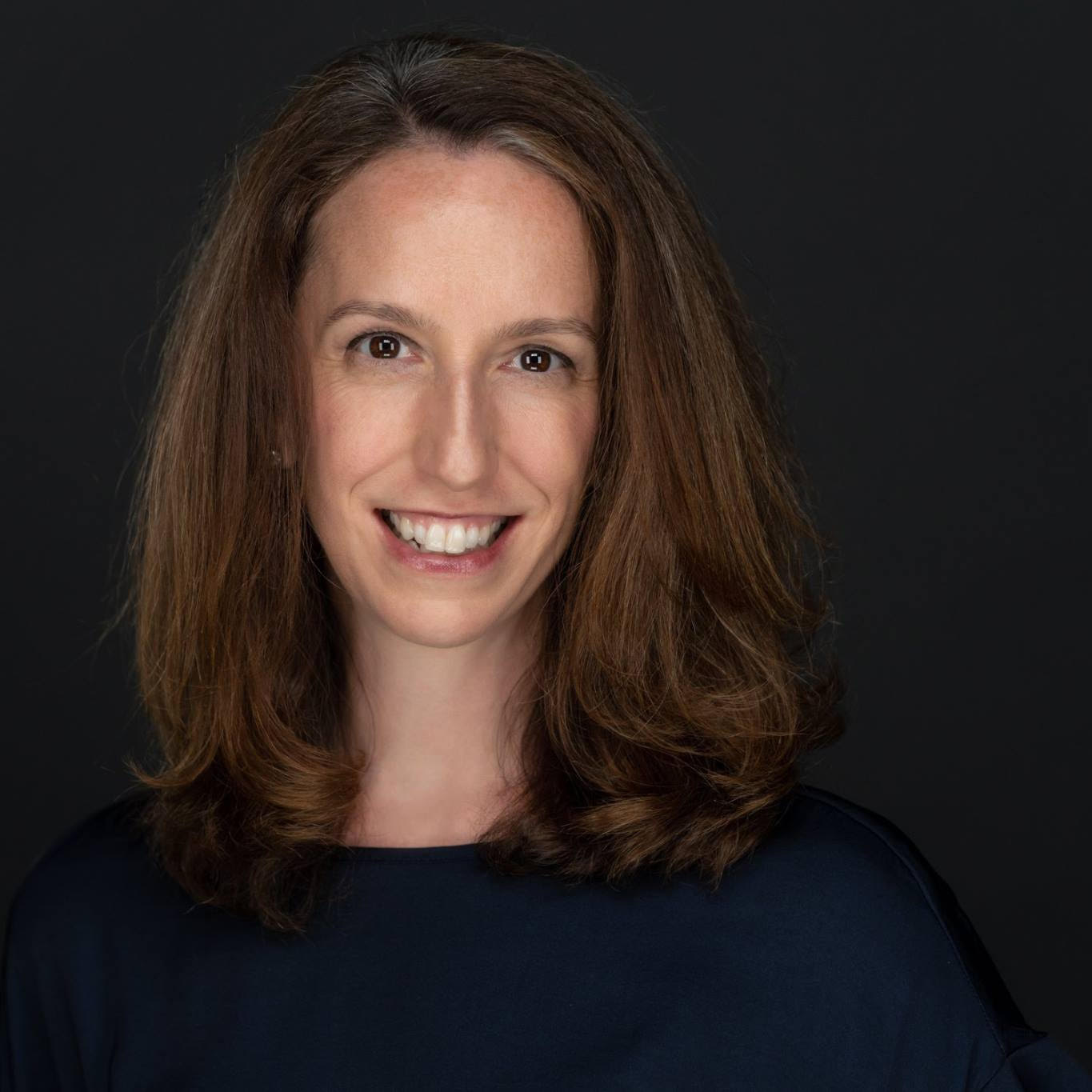
Dr. Jessica Drummond
Founder & CEO
The Integrative Women’s Health Institute
At the Integrative Women’s Health Institute, we’ve dedicated 20 years to crafting evidence-driven, cutting-edge programs that empower practitioners like you to address the complexities of women’s health.
Dr. Jessica Drummond’s unique approach focuses on functional nutrition, lifestyle medicine, movement therapies, nervous system dysregulation, trauma, and mindset – essential elements often overlooked in traditional health education.
In addition, your training will be fully evidence-based, personalized, and nuanced (this is not a cookie-cutter approach) in functional nutrition, exercise, recovery, cellular health, and all other lifestyle medicine tools.
You’ll learn to support your clients with cutting-edge tools safely and effectively.