Follow Us for Free:


About the episode
“If you don’t have an air filter, your lungs become the air filter.” – Justin Liberman
We’ve spent decades shifting our thinking about the quality of our food and water, but most of us are only beginning to have the same conversation about the air we breathe. Unlike food or water, we’re breathing all day and all night without really thinking about what might be in that air. Mold spores, smoke, viruses, allergens, chemicals from furniture and building materials, and other tiny particles can all become part of the indoor environment where our clients and we are trying to work, sleep, exercise, learn, and recover.
For women’s health practitioners especially, this gives us another piece of the environment to consider when a client is struggling with brain fog, fatigue, poor sleep, chronic illness, or frequent infections. While can’t control every exposure, creating healthier air doesn’t have to mean completely rebuilding a home or clinic. Sometimes opening windows when appropriate and adding effective air filtration to the rooms where people spend the most time is a practical place to start. The same is true in our clinics, our children’s classrooms, and other spaces where we want people to breathe, think, heal, and function well.
In today’s episode, I’m joined by Justin Liberman of Jaspr to talk about indoor air quality and how we can begin creating healthier spaces for ourselves, our families, and our clients. We discuss why indoor air can be more polluted than outdoor air, what to look for when choosing an air filter, HEPA and carbon filtration, filtering mold, viruses, smoke, and chemicals, how room size and ceiling height affect filtration, how often filters need to be changed, cleaner air in schools and clinical spaces, what we’re learning about air quality and illness, why clean air deserves a place alongside clean food and water as one of the foundations of health, and more.
Enjoy the episode, and let’s innovate and integrate together!
Enjoy the episode, and let’s innovate and integrate together!
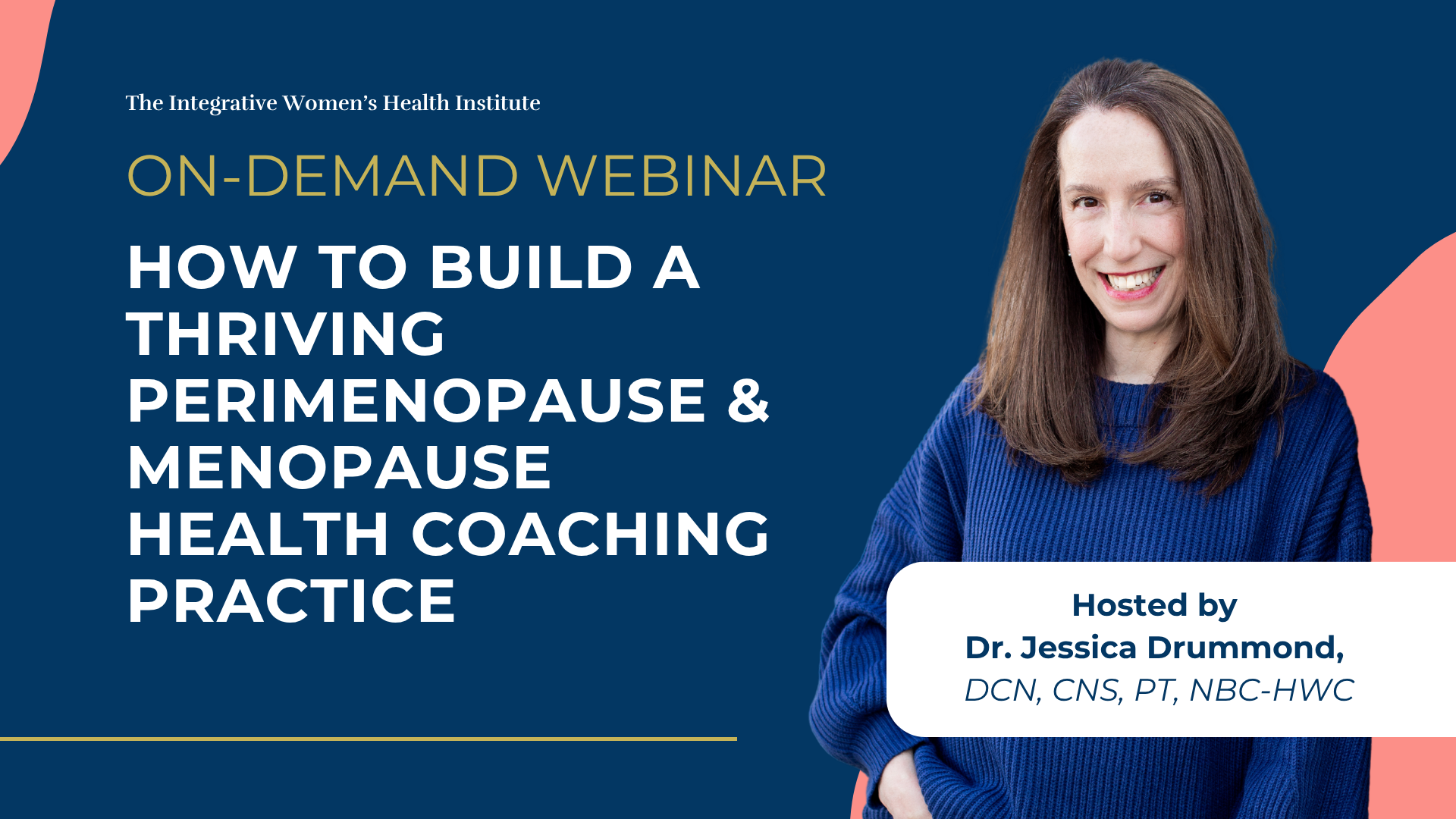
Join Dr. Jessica Drummond to learn proven strategies to confidently address perimenopause, menopause, and chronic conditions while growing a profitable and impactful practice.
Discover proven strategies to attract high-value clients, deliver transformational results, and position yourself as a sought-after expert in this rapidly growing field.
Highlights
- Why clean indoor air is a foundational part of health
- How indoor air quality can affect cognitive function, healing and recovery
- Why rising rates of Long COVID and asthma make air filtration particularly important for children
- How modern buildings can worsen indoor air quality
- What actually determines whether an air filter can clean a room effectively
- Why different pollutants require different filtration methods
- What research on classroom air purification suggests about reducing student absenteeism
- Why awareness around clean air may be following a similar path to the clean water movement
- How often air filters should be replaced
- Why capturing invisible PM2.5 particles matters for indoor air quality
- How Jaspr’s air scrubbers are designed to monitor and respond to changes in indoor air quality
Learn more about Jaspr Air Scrubbers
About Justin Liberman
Justin, Jaspr’s Director of Operations, brings over eight years of hands-on experience in environmental and air quality analysis. He started his career at Air Quality Canada, where he tested the air in more than 3,000 homes—giving him a front-row seat to the invisible issues affecting people’s health every day. With a background in environmental science and a deep commitment to healthy living, Justin became an expert at identifying indoor contaminants like mold, VOCs, dust, and chemical pollutants, often uncovering the hidden environmental triggers behind symptoms like fatigue, rashes, and breathing problems. At Jaspr, he’s now able to go beyond the diagnosis and offer real solutions—helping people take immediate action to clean up their air.
Learn more about The Integrative Women’s Health Institute’s Programs
Ready to revolutionize your career and grow your practice?
- Integrative Women’s Health Institute on Instagram | @integrativewomenshealth
- Integrative Women’s Health Institute on YouTube
Click here for a full transcript of the episode.

Dr. Jessica Drummond
Founder & CEO
The Integrative Women’s Health Institute
At the Integrative Women’s Health Institute, we’ve dedicated 20 years to crafting evidence-driven, cutting-edge programs that empower practitioners like you to address the complexities of women’s health.
Dr. Jessica Drummond’s unique approach focuses on functional nutrition, lifestyle medicine, movement therapies, nervous system dysregulation, trauma, and mindset – essential elements often overlooked in traditional health education.
In addition, your training will be fully evidence-based, personalized, and nuanced (this is not a cookie-cutter approach) in functional nutrition, exercise, recovery, cellular health, and all other lifestyle medicine tools.
You’ll learn to support your clients with cutting-edge tools safely and effectively.