Follow Us for Free:


About the episode
“We don’t position seed cycling as a stand-alone intervention, and we’d probably be skeptical of any protocol that claims to do that.” – Terry Chang
Seed cycling is one of the tools that comes up all the time in women’s health conversations. There’s a long history of using seeds and other plant-based approaches to support hormonal health, and plenty of women who feel better when they use them. At the same time, the conventional research on seed cycling is still relatively limited. As practitioners working across traditional, integrative, and conventional medicine, we need to be able to hold both of those things at once. We can stay open to tools that may be helpful while continuing to ask good questions about how they work, who they’re appropriate for, and what the research actually tells us.
This doesn’t have to be an either-or conversation between seed cycling and something like hormone therapy. For some women, seed cycling can be another layer of support alongside nutrition, movement, stress regulation, and other foundational strategies. For others, it can offer a more natural option as they decide what they want to do next. There are also contraindications and times when it may not be appropriate, which is why understanding the physiology and the individual woman in front of us matters.
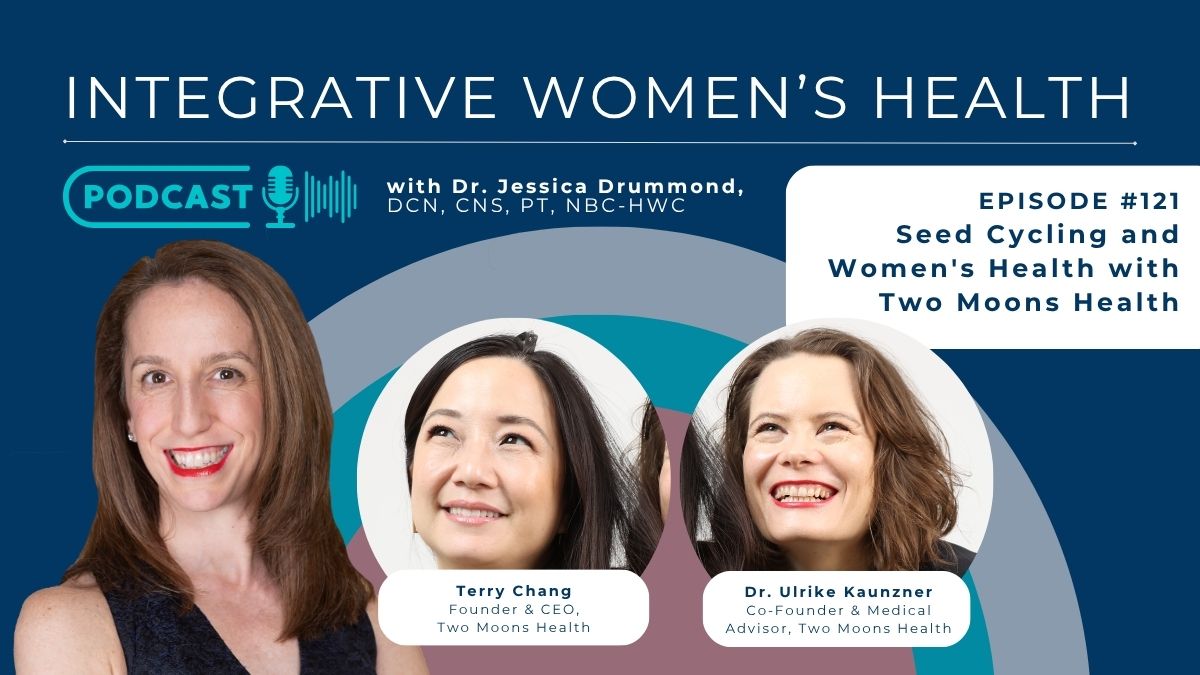
In today’s episode, I’m joined by Terry Chang and Dr. Ulrike Kaunzner, co-founders of Two Moons Health, to take a deeper look at seed cycling and the emerging research behind it. We talk about how flax, pumpkin, sesame, and sunflower seeds may support different phases of the menstrual cycle, the role of nutrients, fiber, lignans, and chasteberry, early results from their clinical study on PMS symptoms, seed cycling through perimenopause, contraindications to be aware of, how practitioners can think about the current evidence, making traditional wellness practices more realistic for busy women, and more.
Enjoy the episode, and let’s innovate and integrate together!
Join Dr. Jessica Drummond to learn proven strategies to confidently address perimenopause, menopause, and chronic conditions while growing a profitable and impactful practice.
Discover proven strategies to attract high-value clients, deliver transformational results, and position yourself as a sought-after expert in this rapidly growing field.
Highlights
- How customer feedback shaped the evolution of Two Moons Health
- Ulrike’s journey from neurology to incorporating more integrative approaches to women’s health
- The proposed hormonal mechanisms behind seed cycling and the role of each ingredient
- What Two Moons Health’s initial clinical study found about PMS symptoms and sleep
- How seed cycling may be used for irregular cycles and during different stages of life
- When seed cycling may not be appropriate and contraindications
- The potential effects of seed cycling on the gut microbiome
- How seed cycling can fit into a broader wellness routine rather than functioning as a standalone solution
- Why convenience and daily ritual can make wellness practices easier to sustain
- The clinical considerations practitioners should understand before recommending seed cycling
- How practitioners can think about the risks and benefits of seed cycling as a food-based intervention
Learn more about Two Moons Health
- Two Moons Health Website | TwoMoonsHealth.co
- Two Moons Health on Instagram @twomoonshealth
- Find out more about joining Terry, Ulrike & Jessica live in New York on September 30, 2026:
Email us at support@integrativewomenshealthinstitute.com or send us a DM on Instagram @integrativewomenshealth
About Terry Chang
Terry Chang (Founder & CEO) is a seasoned executive and lawyer, with 18+ years of experience, including in the media, beauty and financing industries, most recently leading legal, business affairs & business development for an independent film company. Born and raised in California and now a longtime New Yorker, she is a graduate of Columbia Law School and Harvard University. She was inspired to co-found Two Moons when personally searching for greater hormonal balance for herself through a more natural plant-based remedy.
About Dr. Ulrike Kaunzner
Dr. Ulrike Kaunzner (Co-Founder & Medical Advisor) is a neurologist with a robust research background and a deep commitment to integrative approaches in patient care. With a medical education from Friedrich Schiller University (Jena, Germany) and Université René Descartes (Paris, France), Ulrike’s journey has continued through postdoctoral research at The Rockefeller University and advanced clinical training at Weill Cornell Medicine (NYC). A believer in the power of natural approaches, she’s also certified in plant-based medicine and has practiced seed cycling for years.
Learn more about The Integrative Women’s Health Institute’s Programs
Ready to revolutionize your career and grow your practice?
- Integrative Women’s Health Institute on Instagram | @integrativewomenshealth
- Integrative Women’s Health Institute on YouTube
Click here for a full transcript of the episode.
Dr. Jessica Drummond 00:00:03 Hi and welcome to the Integrative Women’s Health Podcast. I’m your host, Doctor Jessica Drummond, and I am so thrilled to have you here. As we dive into today’s episode, as always innovating and integrating in the world of women’s health. And just as a reminder, the content in this podcast episode is no substitute for medical advice, diagnosis, or treatment from your medical or licensed health care team. While myself and many of my guests are licensed healthcare professionals, we are not your licensed healthcare professionals, so you want to get advice on your unique circumstances. Diagnostic recommendations treatment recommendations from your home medical team. Enjoy the episode. Let’s innovate and integrate together. Hi, and welcome back to the Integrative Women’s Health Podcast. I’m your host, doctor Jessica Drummond. And today we’re going to talk about a few things that are, I think, very interesting to you guys, our audience of women’s health and wellness professionals who are ahead of the curve, often in things like traditional medicine, herbal medicine being integrated into women’s health.
Dr. Jessica Drummond 00:01:25 But many of us are practicing across, you know, traditional and integrative medicine ideas and the limited research that we have and more traditional conventional Western medicine research, Western medicine practices. One of the topics that also often comes up is seed cycling. And while there’s a lot of conversation on Instagram about how beneficial it is, There’s also a lot of rebuttal from many in conventional medicine talking about how there is no research, and we don’t know if it does anything. But I’m going to introduce you to two guests today who are the founders of Two Moons Health, Two Moons Healthcare. They came together just friends, people that had been friends for 20 years. And this is why female friendship is so important. They were hanging out at a clothing swap and let them tell you the whole story, but they came up with a really interesting product. But more than that, because of their extensive educational backgrounds or extensive clinical backgrounds, their extensive work life backgrounds, they are also doing some much needed research in this field, and really thinking about how traditional strategies like seed cycling can be brought into the modern era from a sort of practicality standpoint, but also doing that clinical research to see how valuable, how effective, how safe these kinds of tools are.
Dr. Jessica Drummond 00:03:10 So let me introduce you to Terry Chang. She is a seasoned executive, an attorney with over 18 years of legal experience, including in the media, in beauty, and in the financial industry. Most recently, she led legal, business affairs and business development for an independent film company. She was born and raised in California and is now a longtime New Yorker. My youngest daughter is so jealous right now. She is a graduate of Columbia Law School and Harvard University. She was inspired to co-found Two Moons when personally searching for greater hormonal balance for herself through a more natural, plant based remedy. Dr. Ulrike Kaunzner. She is also the co-founder of Two Moons and the Medical Advisor. She is a neurologist with a robust research background and a deep commitment to integrative approaches in patient care. With a medical education from Frederick Schiller University in Germany, University René Descartes in Paris. Ulrike’s journey has continued through postdoctoral research at the Rockefeller University and advanced clinical training at Weill Cornell Medicine in New York. She’s a believer in the power of natural approaches.
Dr. Jessica Drummond 00:04:31 She’s also certified in plant based medicine and has practiced seed cycling for years herself. And we get into the story of how she learned about this. Again, their website is Two Moons Healthcare, and they’re on Instagram at Two Moons Health. Both of them live in New York City, and I am going to be joining them at an event in New York on September 30th. If you want to hang out with the three of us and some other speakers in Women’s Health, please join us in New York on September 30th and you can reach out to our team support at Integrative Women’s Health Institute comm. If you want all of the details about that event, or send us a quick DM on Instagram at Integrative Women’s Health. So let’s dive into the conversation, and I want you to pay attention to at least one thing that could be helpful for your practice. Is it a business idea? Like how did they iterate this? You know, you have a little chance right now to learn from a graduate of the executive business School at Harvard on a couple of little clinical pearls, if you will, for your practice.
Dr. Jessica Drummond 00:05:44 And if you want to think about using seed cycling in your practice more clinically. Again, I want you to listen for how they are using this, why they are using it. And the research body of evidence that we have right now, would this be applicable in your practice? And I’ll see you on the other side of our conversation. Hi, everyone. Welcome back to the Integrative Women’s Health Podcast. I’m your host. I’m here today with Terry Chang and Dr. Ulrike Kaunzner, Dr. Kaunzner. They are the founders of Two Moons, and they have created a really interesting brand that we’re going to talk about in terms of why we start maybe thinking about products that support women for their overall health, but then actually in ways that are in alignment with how busy women are these days. Terry, you spent nearly two decades in law and media. Not exactly a straight line. Towards what? Launching a women’s health company. So walk me through how you realized you needed something that didn’t exist yet on the market.
Dr. Jessica Drummond 00:07:06 What sort of triggered this entrepreneurial streak?
Terry Chang 00:07:10 I like to say that Ulrike and I became entrepreneurs by accident. It began out of a very natural conversation. So I had I’ve known Ulrike for 18 years, and we had a gathering in my living room of a bunch of women, and it was our annual clothing swap, where we bring clothes that are just in the back of our closet, and we haven’t worn for some time. And it was a group of women, and we just opened up that night about issues around hormonal health, which was not really a topic that this group of girlfriends had approached before. And I opened up with my own struggles with my cycle, and I said, I really would like to have something more natural that isn’t an SSRI or hormonal birth control that is typically prescribed for people who have difficulty with moods and their cycle, and Ulrike mentioned the idea of seed cycling, which she herself had practiced for years. And I thought that was absolutely fantastic, that there’s something plant based, something natural that I already want to incorporate into my diet.
Terry Chang 00:08:12 And I just asked her, combining different seeds at different points in the month. It’s amazing, but it sounds really inconvenient. How can we make this more convenient for modern women? And that night we vowed that we would try to create something new. And at first we thought maybe it’d be snack bars, right? So we actually tried in our kitchens different recipes of snack bars, combining the seeds that you would eat in the different halves of the month. And they didn’t turn out very well, actually. But then we did a marketing survey of our women friends. So our own friends, our sisters, friends of our sisters, and what we found out is women do not want to eat more snack bars. They do not want to eat more sugar. And so we asked them, what format would you like? We gave them a lot of options. We said, what about a butter? Or what about a spread? What about a gummy? What about a capsule or a powder? And the capsule worn out? And that’s our unconventional story about how we accidentally became founders.
Terry Chang 00:09:17 And as for the lore background, I think is less of a detour than one might think, because people go to law school and end up in all kinds of professions. We see the JD as a tool. Some people end up in entrepreneurship. Other people, they become real estate developers, some become politicians. And for me, it turned out the direction was this I want to help women feel better, more empowered and more informed about what’s happening in their own bodies. And it also happened that around that time, right before that clothing swap, I did an eight month executive education program at Harvard Business School. I had gone there as an undergrad, but this was towards the tail end of the pandemic, and it made me more alert to spotting what’s a genuine market need, what’s a real pain point that people are suffering from? And if it’s something you can build towards a solution that potentially that’s also a business. So when I put that together with hearing from women like that night at the clothing swap, it became pretty clear that this was it.
Terry Chang 00:10:17 This is the this is the idea. This is a product people need.
Dr. Jessica Drummond 00:10:20 I love that, and I think it’s a little bit of a mini masterclass for our own health entrepreneurs that listen to us, that testing, surveying your audience, talking to your audience, listening to your audience, knowing that you may not get your product or service quite right, but continuing to iterate over time is a really key business principle that a lot of people don’t necessarily know when their background is in health, that this very often takes some iteration. It’s a really normal journey to go through a number of different phases like that.
Terry Chang 00:10:55 Absolutely.
Dr. Jessica Drummond 00:10:56 Ulrike! You’re a neurologist with postdoctoral research from Rockefeller and clinical training at Weill Cornell. That’s a very conventional, rigorous medical training path. And we think about seed cycling. It doesn’t have the same level of clinical research behind it. How did you even think of that? How did you know about that? Because it’s not something you’ll commonly hear as a recommendation from a traditionally trained neurologist.
Dr. Ulrike Kaunzner 00:11:26 Thank you.
Dr. Ulrike Kaunzner 00:11:27 Good question. So Terry knows the story well. It is something that is actually discussed frequently in my family. My dad is an OB, but his interest in natural healing methods. He took me once in acupuncture class while I was still in medical school. I was actually 19 and we were all traveling his family, and he took a class during a congress to a medical meeting, and I did the same. And so we always had very open mindedness towards like teas and herbs and acupuncture, etc.. And my mother’s father, granddad, actually created a lot of teas. And so this is something I grew up among, and it was very nice to see all these herbs and have all these scents around. And so it was always like a natural contribution to the traditional Western medicine. And I was one of my sisters spent actually several years in Korea, and she always had such a different view on the female body and how treatment is there. And it’s so interesting to hear these influences. And aside from the rigorous, classic medical school way and my way to neurology was very interesting, one in kind of neurology, then focus through the research at Rockefeller on autoimmune and inflammatory cells, specifically dendritic cells.
Dr. Ulrike Kaunzner 00:12:40 And this kind of led to Ms.. And Ms. is an autoimmune inflammatory condition meaning more women are affected. So somehow I started hearing more and more about women’s problems. Women’s concerns? Is it all neurologically? Is it more hormonal? It’s hormonal influencing the neurological aspect. And so it got more and more interest in this. And somehow this all came together. It’s a little mosaic. And yeah, this is wherever I am. And whoever wants to listen gets my speeches and recommendations from magnesium to teas to different cold water applications, whatever it is. And yeah, this is how it came together.
Dr. Jessica Drummond 00:13:16 So can you explain the proposed mechanism behind seed cycling, what’s actually happening hormonally, and do we have any research to support that to support this mechanism at this point?
Dr. Ulrike Kaunzner 00:13:29 It’s a very good question. So it dates back probably two different philosophies and medical techniques and treatments are erratic. Medicine uses a lot of seeds, for example. And it had been used for some times. The women’s cycle is separated in the follicular phase and the luteal phase, and during the follicular phase, most of the estrogen increases up to ovulation, and then during the luteal phase, the progesterone increases and supports essentially the uterus lining and potential implantation.
Dr. Ulrike Kaunzner 00:14:05 And then there’s a second increase, actually a little bit of estrogen a bit later in the face. So the first phase is estrogen dominant. The second one is progesterone dominant. And the thought behind the seeds is. So seed cycling includes flax seeds and pumpkin seeds during the first half in sunflower seeds and sesame seeds during the second half. And these seeds contain different things. So, for example, the flax seeds and the sesame seeds, they contain ligands. They are thought to have a supportive component to Aids a little bit the hormone, the receptivity, but also because they are helping with digestion a little bit. How hormones can be digested and erased a little bit easier. There’s this famous problem where estrogen is sitting actually in part of the gut of the microbiome, and it’s important that it can also be. Secreted in a sufficient method. So that is lignin. Then there are a lot of electrolytes in there. Such as zinc magnesium manganese selenium. And. Then some of them also have properties in terms of healthy fats such as omega three and also for healthy.
Dr. Ulrike Kaunzner 00:15:12 Omega three omega six ratio. And so this is the thought that it supports a little bit. This estrogen during the first half and the progesterone peak during the second half, but also helps with other aspects in terms of the magnesium can help with cramps, can help with sleep or can help with headaches or the other electrolytes. Can also help with interferometry properties. And there have been a few studies, like indicating very early on that it might be having some impact on poly metabolic syndrome, as we now call the PCOS, and there are a few preliminary studies that show that in terms of our capsules, we actually added to additional things. We added to Chase theory, which has been used for a very long time to really help with women symptoms. And there are actually multiple publications that show that this helps very impressively with PMS symptoms and also with perimenopause symptoms. And this dates back to a very long time. And there are actually multiple dozens of applications that indicate some benefits from Chase Berry or Vitex, as it’s called.
Dr. Ulrike Kaunzner 00:16:16 And the other thing that we added is a little bit of psyllium. Also during the second half, only just to aid with digestion is there is a little bit more tendency for constipation secondary to the progesterone.
Dr. Jessica Drummond 00:16:29 And the GC. Vitex is just in the second half. Correct?
Dr. Ulrike Kaunzner 00:16:33 Correct, because it has very interesting effects on the HPA axis, also can have some impact on dopamine, some impact on prolactin. And the thought is sometimes that if it’s given too long, I actually talk to multiple practitioners and also people who produce certain teas or drops. Many people give it like continuously, but sometimes there’s a thought the effect might rain off a little bit, so the benefit might be just to take it during certain parts of the cycle.
Dr. Jessica Drummond 00:17:01 So you have a clinical study underway. Can you tell us a little bit more about the details of that study and what kind of results you’re seeing, if anything yet?
Dr. Ulrike Kaunzner 00:17:13 Thank you. So we did the study in 2025. And we actually in the process of submitting it for potential publication.
Dr. Ulrike Kaunzner 00:17:22 And it’s very exciting. We enrolled 40 women, 39 women actually concluded the study, which is a great outcome. And they took the capsules for about two months. And there was a baseline questionnaire, then a questionnaire after one month and then a final questionnaire. It’s very interesting because 70% of women had less PMS or period associated pain and cramps. About 67%. Had less bloating and had improved GI symptoms in about 62%. Had improved mood, sleep and skin and very high number. Actually would like to recommend it to their friends and family. And also about 80% wanted to continue taking it. That was really nice to see.
Dr. Jessica Drummond 00:18:04 But that’s actually some very strong results for a small study. So most of the conversation around seed cycling centers on women who are consistently who maybe aren’t consistently cycling. That’s part of why they may need them, but they’re in the premenopausal stage where they should be consistently cycling. What about for women who are in perimenopause or have irregular absence cycles for other reasons, let’s say due to Red’s relative energy deficiency in sport? Or maybe they’re just postpartum.
Dr. Jessica Drummond 00:18:41 Are there recommendations for women who aren’t in that sort of peak consistent cycling phase.
Dr. Ulrike Kaunzner 00:18:49 So it’s indeed a product that could be beneficial from like early lead periods up to last, because it can help regulate the cycle for teenagers, teenage girls. We’ve heard from a few people who literally had really long cycles or irregular cycles where they narrowed it down more to like a 30 day cycle. And for post delivery, it might be very beneficial for balancing out the hormones afterwards again, and help essentially the HPA axis again to function in a more regular way again and initiate the period again. And for women in perimenopause. I would say early to mid perimenopause, it’s probably a good contribution to other habits they have because the spirit can be very helpful. And again, of course the seeds, because they can help maintaining a more regular cycle. And if it’s later in like women’s life cycle, it’s probably more difficult if hormones truly are lacking, because then this entire estrogen progesterone support does not work so well. But we truly think for any woman who is not on certain antidepressants or dopaminergic medications, or who is not on any hormonal medication, or has like certain hormonal support, for example, iet the dispute, copper would work.
Dr. Ulrike Kaunzner 00:20:13 It is certainly an addition or a yes supplement that could be taken to support wellbeing and healthy cycle world.
Dr. Jessica Drummond 00:20:20 So you wouldn’t recommend it for women who are on hormonal birth control or hormone replacement therapy?
Dr. Ulrike Kaunzner 00:20:27 Correct. Because on the birth control or some form of hormonal intervention, a regular cycle is not maintained. And if someone is taking HRT, I do think it’s probably too much. Unless the HRT is really given in a cyclical fashion, but we always recommend it to people who are not on any of these additional medications or support systems.
Terry Chang 00:20:50 And also for some women who are considering HRT a bit later, but they’re not quite ready for it, and they’re looking for a bridge and they’re not yet comfortable. They can think of this as a bridge.
Dr. Jessica Drummond 00:21:02 Yeah, I could see how. For example, we know that maca supports estrogen and Shastry Vitex supports progesterone, but only when the body is producing that themselves. Although there is some interesting data on higher doses of certain kinds of maca even to be supportive, post-menopausal, like the feminists research and things like that that I’m sure you’re aware of.
Dr. Jessica Drummond 00:21:27 But the the seeds, however themselves. Because if you didn’t have those herbal supports, the Ayurvedic and herbal medicine supports. I could see how the seeds could be beneficial really at any phase because of what we were talking about earlier. The electrolytes, the magnesium, the essentially the nutrients and the fiber for the gut microbiome. Because we have so much information now about how the gut microbiome changes in perimenopause and menopause, because we start losing that metabolic support, we start losing the producers of short chain fatty acids. So have you thought about doing any research in those areas?
Dr. Ulrike Kaunzner 00:22:10 This would probably require bigger cohorts and maybe a placebo control over extended design in the sense of checking hormonal values, or maybe doing microbiome sampling or different microbiome sampling does not need to be the classic that one, and it’s actually very interesting. I’ve just talked about this last few days. There was a request from Great Britain actually for study and more looking into like certain women in extreme sports, extreme professions. And it’s very interesting how these women’s health field is hopefully more expanding and how we can really use more markers.
Dr. Ulrike Kaunzner 00:22:49 And maybe even as we have like more tracking systems or easier ways of looking at, who knows, sweat, urine, saliva, blood to maybe do bigger studies and assess more components because it’s so interesting. Every every part of the body is affected and every part of the body has like estrogen, almost everybody, every body part has estrogen receptors. And how much is there changing?
Dr. Jessica Drummond 00:23:13 Yes, absolutely. And that brings me to the conversation about perimenopause. The fact that and this is what our certification is so focused on educating health and wellness professionals around, is that at least 87% of the time, perimenopause doesn’t arrive in a vacuum to a perfectly healthy woman and system. Well, there are thyroid issues. There’s Overtraining, whether that means she is presenting at 5 a.m. on a call overseas, or she’s on a planes twice a week, or she’s training for a hydraulics competition or something like that. Or CrossFit. Women have metabolic stress due to sometimes nutrition or lack of exercise or significant stress. Women carry a ton of caregiver stress.
Dr. Jessica Drummond 00:24:04 And so these hormonal shifts, let’s say, even for a premenopausal woman who would otherwise have healthy cycles, there’s often so many other things going on. Is there anything that women need to think about when they’re supporting with seed cycling or your products and specifically, or is this just another tool to actually support that high level of stress that most modern women are carrying?
Terry Chang 00:24:30 Well, I would say that we don’t position seed cycling as a stand alone intervention, and we probably be skeptical of any protocol that claim to do that. It’s definitely part of a broader practice. For instance, journal, meditate, do affirmations. It’s a larger part of a larger nutritional plan, but I think that there’s some value in using ritual to be mindful of where you are in your cycle. On the sides of our bottle, we actually have the list, the numerical list of the days that you’re on. And you can mark them off as you’re taking it. And I think consistency in this mindfulness is part of the practice. And I’d say beyond just perimenopause, one of one of the areas that we’re seeing seed cycling being applied by our consumers, even though it’s not what we market for primarily, is that some women are using it to regulate the length of their cycles in order to be able to predict their ovulation a little better when they’re trying to conceive.
Terry Chang 00:25:35 And we actually know when women are getting pregnant off of our product, because anytime somebody pauses the subscription, we ask for the reason. And we’ve been delighted to see pregnancy many times listed as a reason. That’s always a very it’s a very beautiful thing to think about these moon babies coming to coming to life. And but I think these women are doing multiple things right. So it’s part of exercise. It’s part of nutrition. It’s a whole it’s one of many interventions that I do think it helps them be more mindful about what rituals are engaging in.
Dr. Jessica Drummond 00:26:09 Yeah. And I think essentially what you’ve created here is a version of seed cycling that of course, people can still do seed cycling by just putting a couple of tablespoons of flax seeds and pumpkin seeds in their yogurt or whatever. But if they are that busy mom, busy athlete, busy executive, this is something they can take on a trip. Take on a vacation so they if they are going to be eating breakfast just after going to the gym, they don’t really have to think about carrying pouches of seeds.
Dr. Jessica Drummond 00:26:44 I think there’s a ritual element. There’s a convenience element that, you know, a lot of times when we think about wellness. Recommendation strategies I think one of the downsides to the wellness industry right now is this idea of optimizing everything so that if you aren’t doing it perfectly in the originally intended way, I think that adds a lot of stress for people. So if we can make things a little bit more convenient to the actual busy, modern lifestyle of a woman in her 20s, 30s, 40s, 50s, she often has a lot going on. So I think that layer of convenience and then combined with that ritual, that helps bring a moment of pause any time during a woman’s day because just taking a minute for mindfulness, for breathing, for journaling, for slowing down and taking the time to eat breakfast, even if they don’t have a bag of seeds with them, really does make a huge difference. So for the clinicians that want to introduce the tool of seed cycling into their practice, we now know that we’re starting to gather a small body of research around this, which is really encouraging for the clinicians.
Dr. Jessica Drummond 00:28:07 Anything else they should think about in terms of contraindications or anything else like that that a clinician might consider when recommending this as a wellness support?
Dr. Ulrike Kaunzner 00:28:19 Important that there are no allergies, let’s say mostly to sesame or any other contraindications directly related to the ingredients. The Chase berry is sometimes something where people can have a little bit of GI discomfort, but it’s overall very well tolerated. But the main aspect is truly what I mentioned earlier. I would not combine it with hormonal medications, hormonal treatments, and ideally not with antidepressants or dopaminergic medications.
Dr. Jessica Drummond 00:28:48 And pregnancy.
Dr. Ulrike Kaunzner 00:28:49 Correct? Not during pregnancy and during breastfeeding. I would not do it. As of now, from what we know, the seeds themselves probably. But once the breastfeeding is finished and the regular cycle could be initiated again, or should start soon again, then it would be a good tool.
Dr. Jessica Drummond 00:29:08 What would you say to a practitioner who’s intrigued by seed cycling in general, but is worried about recommending something that has, while a small body of evidence it’s much smaller than, for example, hormone therapies or other nutraceutical or nutrition or other lifestyle interventions.
Dr. Jessica Drummond 00:29:26 How do you think about this as a clinician with this risk benefit conversation or as an attorney.
Terry Chang 00:29:34 From the attorney perspective. If I were to argue it, I would say the relevant comparison isn’t seed cycling versus HRT. It could be seed cycling versus nothing. Or it could be seed cycling as a bridge. While woman is trying to decide is she ready for this next step to HRT? And it depends on the probably the patient as well. Not every patient wants to take anything pharmaceutical, and some have a strong preference for natural food based products. Right. So that preference deserves to be honored. And I’ll leave it to the clinician here to give her take. But as a consumer, that’s what I would think.
Dr. Ulrike Kaunzner 00:30:10 Very much agree with Terri. I think it would be a nice way to say, oh, there is something that is maybe a little bit more benign and probably a lot more benign than other interventions. And why not giving it a try if there’s a bit of an upset stomach or all the side effects? We rarely saw any in our study, which is really nice to see.
Dr. Ulrike Kaunzner 00:30:29 But of course, like leading reading through the literature or. listening to some anecdotal reports and talking to colleagues who give it for a long time, or even people who produce teas or drops or other just very pure Shakespeare components, for example. It is something to think about that it could occur, but it’s a very small number of people. And if someone falls into this group of not having any contraindication in terms of other medications, why not giving it a try and see if the person tolerates it and if there are benefits?
Dr. Jessica Drummond 00:31:00 Excellent. Thank you so much for sharing both your entrepreneurial journey and some of your business insights, with really introducing our community to a much deeper conversation around seed cycling, because it is something they’re asked about. It’s a bit of an Instagram trend, and so our professionals really like to be prepared to talk about the risks, the benefits, the body of evidence, what we know, what we don’t know, and then building a product that actually integrates in with the busyness and the stress level that modern women are carrying.
Dr. Jessica Drummond 00:31:35 Is there anything else you’d like to share with our community before we wrap up? And where can we find you?
Terry Chang 00:31:40 You can find us on our website at Two Moons Healthcare or on our Instagram at Two Moons Health. We’d love to hear from you. We’ll check our DMs.
Dr. Ulrike Kaunzner 00:31:52 Interior oversees so nicely. It’s not a capsule, it’s a conversation. And it’s really interesting what we learn in this process and with whom we connect, and what the conversations are, and really beautiful to see if the advocacy work that Terri is doing. Also to see what the steps are in women’s health. And it’s really beautiful to see what changes over these last few years. And I think there’s really a momentum where a lot is moving in, hopefully the right direction. And I think particularly in the field of women’s health, hormonal health, we will see a lot of changes and improvement. And yeah, I think it’s exciting times for research, natural approaches and traditional medicine. And I think it will all come together.
Dr. Jessica Drummond 00:32:31 Excellent.
Dr. Jessica Drummond 00:32:31 Thank you so much for being here today.
Terry Chang 00:32:33 Thank you, Doctor Drummond.
Dr. Ulrike Kaunzner 00:32:35 Thank you so much.
Terry Chang 00:32:36 Thank you so much for having us.
Dr. Jessica Drummond 00:32:42 I hope you enjoyed meeting Terry and Doctor Eisner as much as I did. And that you’ll join the three of us September 30th in New York City at the live event that they’re hosting. I believe the location is Bibliotheque, but just in case there are any changes, we’re recording this a few months earlier. Send us a quick DM on Instagram. I’m sure we’ll also post it on Instagram at Integrative Women’s Health, or reach out to our team at support at Integrative Women’s Health Institute. Com and you can get all the information about this live event. It’ll be really fun to hang out in person. Ask any questions that have bubbled up from this episode. Most importantly, I just want you to be thinking about when you are utilizing products that have this long history of natural support through different traditional forms of medicine, like Arvada or Chinese medicine, or herbal medicine. Western herbalism.
Dr. Jessica Drummond 00:33:46 There is often a body of research from that medical discipline, or from that health discipline that we can tap into and consider applying in more conventional settings. But I also think it’s really valuable to be bring the rigor of the scientific method that’s often used in Western medicine and Western science to get curious about the effectiveness of many of these tools, of the safety of these tools. And sometimes they’re really valuable as more nutrition nutraceutical. Other times they have direct mechanistic and physiologic benefits and risks that we have to be mindful of. So for example, there are some contraindications that doctor counselor discussed here. And I think for those of us who are going to responsibly use more traditional forms of medicine in a more modern system, and for modern women who are trying to adapt these tools in a very busy, high stress lifestyle, and they may be on other kinds of medications, we have to consider that whole picture. So I think this is really important work that these two founders are doing really important work in women’s health. And I think those of us who are utilizing these tools in women’s health need to be on the leading edge asking these questions, thinking about how we can contribute to or spread the word about research and be really nuanced when almost nothing is a complete silver bullet.
Dr. Jessica Drummond 00:35:25 And there are some things that are really valuable, that are being underutilized. So we have to be really mindful in discussing the risks and benefits, and we have to be looking for tools that can fill in the gaps that are not well supported by a lot of our more Western medicine tools. Thanks so much for joining me this week, and I’ll see you soon. Thank you so much for joining.
Dr. Jessica Drummond 00:35:57 Me today for this episode of the Integrative Women’s Health Podcast. Please share this episode with a colleague and if you loved it, hit that subscribe or follow button on your favorite podcast streaming service so that we can do even more to make this podcast better for you and your clients. Let’s innovate and integrate in the world of women’s health.
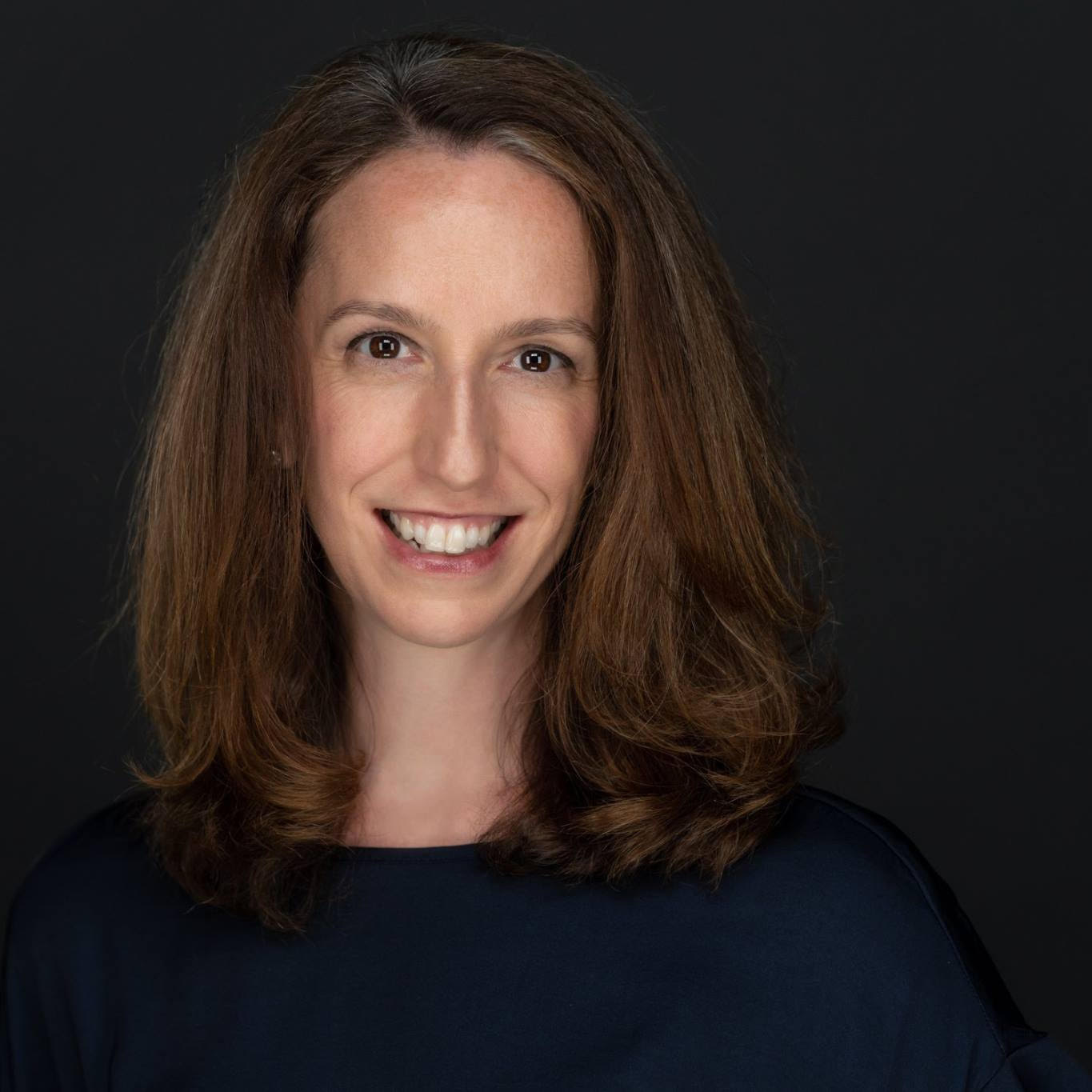
Dr. Jessica Drummond
Founder & CEO
The Integrative Women’s Health Institute
At the Integrative Women’s Health Institute, we’ve dedicated 20 years to crafting evidence-driven, cutting-edge programs that empower practitioners like you to address the complexities of women’s health.
Dr. Jessica Drummond’s unique approach focuses on functional nutrition, lifestyle medicine, movement therapies, nervous system dysregulation, trauma, and mindset – essential elements often overlooked in traditional health education.
In addition, your training will be fully evidence-based, personalized, and nuanced (this is not a cookie-cutter approach) in functional nutrition, exercise, recovery, cellular health, and all other lifestyle medicine tools.
You’ll learn to support your clients with cutting-edge tools safely and effectively.