Follow Us for Free:


About the episode
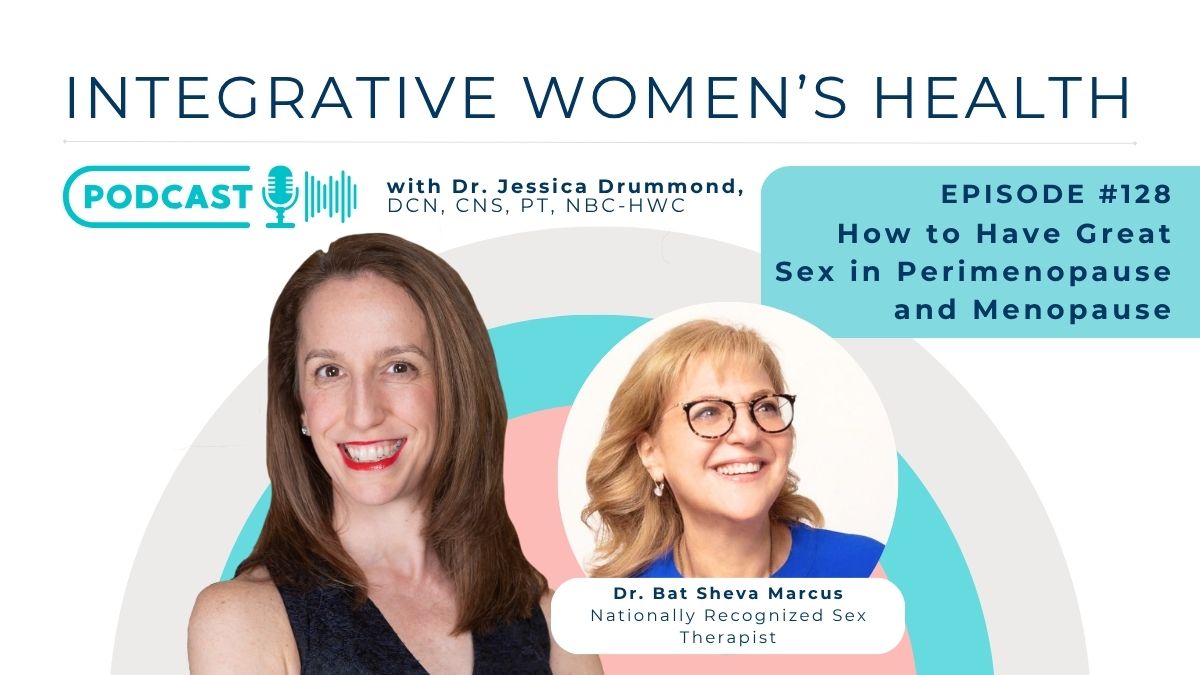
“Sex is not static. It changes at every stage of your life.” – Dr. Bat Sheva Marcus
Low libido and sexual desire are among the biggest concerns we hear from women in perimenopause and menopause, and these challenges can become even more complicated for women who are also dealing with chronic pelvic pain, vaginal dryness, vaginismus, or another chronic health condition. Maybe she’s tried hormone therapy, or she’s been working with a therapist, but she’s still struggling to enjoy sex or feel connected to her partner. So where do we go from there? How do we help women who have been avoiding intimacy for months or even years begin to feel comfortable with their bodies and their relationships again?
We know that hormones can influence sexual desire, but we also have to consider what’s happening in the brain and how a woman’s sexual responses may change over time. Sometimes we need to address both the physiological and behavioral aspects of sexual health to see meaningful improvement. And for our patients who have experienced pain or have had to avoid intercourse for medical reasons, rebuilding intimacy may need to be very gradual, much like any other rehabilitation process.
In today’s episode, I’m joined by sex therapist, author, and sexual health educator Dr. Bat Sheva Marcus to explore a more comprehensive approach to sexual health during perimenopause and menopause. We talk about how hormones and the brain influence desire, the roles of estrogen, testosterone, and medications in addressing sexual difficulties, practical strategies for working through sexual avoidance, communicating with partners, rebuilding intimacy, Bat Sheva’s approach to scheduling sex, and more.
Enjoy the episode, and let’s innovate and integrate together!
Join Dr. Jessica Drummond to learn proven strategies to confidently address perimenopause, menopause, and chronic conditions while growing a profitable and impactful practice.
Discover proven strategies to attract high-value clients, deliver transformational results, and position yourself as a sought-after expert in this rapidly growing field.
Highlights
- Dr. Marcus’ mind-body approach to sexual health
- The connection between hormones, brain activity, and desire
- How declining sexual desire during menopause can quiet the erotic brain
- The role of regular erotic practice and fantasy in rebuilding sexual desire
- How chronic illness, hormonal changes, and medications can affect sexual desire and orgasm
- The four key areas of sexual health: pain, arousal, desire, and orgasm
- Why identifying the primary sexual concern matters when symptoms overlap
- Rebuilding intimacy and pleasure beyond intercourse
- Bat Sheva’s approach to communicating about sexual needs and scheduling intimacy
- What it takes to maintain a satisfying sex life after 50
Connect with Dr. Bat Sheva Marcus
- Dr. Bat Sheva Marcus’ Website | DrBatSheva.com
- Dr. Bat Sheva Marcus’ Book | Satisfaction Guaranteed: How to Have the Sex You’ve Always Wanted
- Dr. Bat Sheva Marcus on Instagram @DrBatSheva
- Dr. Bat Sheva Marcus on TikTok @TheDrBatSheva
About Dr. Bat Sheva Marcus
Dr. Bat Sheva Marcus, LCSW, MPH, PhD, is a nationally recognized sex therapist, author, educator, and sexual health advocate. She spent 25 years as the Clinical Director of one of the largest sexual health centers in the country. She is the author of Satisfaction Guaranteed: How to Have the Sex You’ve Always Wanted and was profiled in The New York Times Magazine as “The Orthodox Sex Guru.” She also hosted The Joy of Text podcast, which earned more than half a million downloads. Known for her warm, candid, and practical approach, Dr. Marcus addresses the physical, psychological, hormonal, and relationship factors that shape sexual health, desire, and intimacy.
Learn more about The Integrative Women’s Health Institute’s Programs
Ready to revolutionize your career and grow your practice?
- Integrative Women’s Health Institute on Instagram | @integrativewomenshealth
- Integrative Women’s Health Institute on YouTube
Click here for a full transcript of the episode.
Jessica Drummond 00:00:03 Hi and welcome to the Integrative Women’s Health Podcast. I’m your host, Doctor Jessica Drummond, and I am so thrilled to have you here. As we dive into today’s episode, as always innovating and integrating in the world of women’s health. And just as a reminder, the content in this podcast episode is no substitute for medical advice, diagnosis, or treatment from your medical or licensed health care team. While myself and many of my guests are licensed healthcare professionals, we are not your licensed healthcare professionals, so you want to get advice on your unique circumstances. Diagnostic recommendations treatment recommendations from your home medical team. Enjoy the episode. Let’s innovate and integrate together. Hi, and welcome back to the Integrative Women’s Health Podcast. I’m your host, Doctor Jessica Drummond, and I’m here with Doctor Bat Sheva Marcus. She is so brilliant and so fun. Honestly, this is a really fun conversation. We’re going to be talking about libido, low desire, orgasm challenges for women in perimenopause and menopause, and especially if they’re complicated by chronic pain, chronic pelvic pain, vulvodynia, vaginismus or chronic illness.
Jessica Drummond 00:01:35 And we’re going to talk about how to rebuild that intimacy and relationships that can really be derailed when women have had sexual dysfunction challenges or low libido or low desire. I think you’re really going to like this because there’s a lot of interesting practical, clinical pearls that are very different than what you’ve probably heard in sort of mainstream Instagram sex therapy, if you will. So let me share with you a little bit more about Doctor Marcus. She is a nationally recognized sex therapist, author, sex educator, and sexual health advocate. She spent 25 years as the clinical director of one of the largest sexual health centers in the US. She is the author of a book that you were going to want to get your hands on. It’s called Satisfaction Guaranteed. How to Have the Sex You’ve Always Wanted, and was profiled in the New York Times Magazine as the orthodox sex guru. So this is actually really valuable for those of you who are working with patients and clients who do come from a more conservative or religious background. I think her perspectives are very helpful for anyone, honestly.
Jessica Drummond 00:02:54 But I think, you know, a lot of times, especially in the realm of pelvic rehab, we have questions about that. She hosted the Joy of text podcast, which earned more than half a million downloads. She’s known for her warm, candid and practical approach. I found her very warm and fun. She addresses the physical, psychological, hormonal, and relationship factors that shape sexual health, desire, and intimacy. So we are going to get right into talking about this, particularly around the time frame of perimenopause menopause. But it is related to your patients and clients at all phases of life, especially when they’re undergoing a health condition that impacts their sexual health and their sexual relationships and their sexual desire. And if they are just busy women postpartum, or moms or high pressure careers or balancing a lot of things, you are going to learn a lot from this episode, so let’s get right into it and I’ll see you on the other side. Hi everyone. Welcome back to the Integrative Women’s Health Podcast.
Jessica Drummond 00:04:08 I’m your host, Doctor Jessica Drummond, and I’m here with Doctor Batsheva Marcus. And we are going to dive right into talking about the sexual health and libido challenges of perimenopause and menopause, because that is one of the biggest challenges that a lot of our patients and clients are coming to us with. So where do we begin when our clients are finding that therapy or medications are not alone, individually aren’t enough, they’re not working well, how could we help combine essentially a mind body therapeutic approach when it comes to low libido, low desire, sexual pain, even in this phase.
Dr. Bat Sheva Marcus 00:04:59 Yeah, I feel like that is the question. Right? And it’s the question I’ve spent my life working on this, this intersection between the brain and the body and how they do not work independently. And so I’ll have physicians who I’m giving grand rounds to say, but I’ve used this answer and it hasn’t done anything, or I’ve had therapists say I’ve done behavioral work with the client, or I’ve done some more psychoanalytic work with the client, and it’s not doing anything.
Dr. Bat Sheva Marcus 00:05:24 And my entire approach is that you really need to identify where the problems are stemming from and usually can and use them both. And if you’re using both properly, the results are staggering. They’re just different. They’re fundamentally different. Just in case people need. They need the indication of how true this is. I always like to talk about an article that was in New York Times years ago about men who have children. They give their wives, give birth to children, and they stay home with the children and their testosterone levels drop. People don’t realize how dramatically our brain and what’s going on in our head affects our body. We have a better understanding of what our body is doing, but I don’t think people even there like if I’m not interested in sex with my husband, I’m not interested in my husband. How could it possibly be a testosterone issue? Batsheva like, how is that possible? And so the trick is to unpack that and understand how they all interact with each other, because very often if you use one without the other, you’re not going to necessarily get anywhere.
Dr. Bat Sheva Marcus 00:06:20 And the truth is that’s true about pain also. But let me just in terms of low desire, I will say if your hormones are very low, it makes it harder to respond to things that you would have otherwise responded to. Again, if you think of 217 year olds that you see waiting for the bus or in line for a movie theater, and they cannot keep their hands off each other, they’re like, climb out. Your first thought is not. They must have had a really intense, lovely conversation. Right. That’s not your first thought. Or he must have brought her flowers. Your first thought Is there? Hormones are raging, right? So then when we don’t feel like that, we just don’t realize how much of that is hormonal. And the second piece is that once the hormones start to drop, you start turning off parts of your brain that you’ve used. So we can talk about that. But I feel like in addition to the fact that sometimes women’s hormones are low, they also often have stopped doing the things that will allow them to be and feel sexual.
Dr. Bat Sheva Marcus 00:07:15 And very often we pin it on their relationship when it’s really unfair to do that. And I’m happy to talk more about that, because I feel like that is really a problem and I can just keep going and going. So you need to stop me and I’ll hold that. I’ll. Okay.
Jessica Drummond 00:07:28 Yeah, absolutely. So I would be curious to learn a bit more about that. So let’s say you have a woman who’s 48. She’s on the cusp of empty nesting. She’s maybe been married for over 20 years. She probably has a job herself, and she is presenting with normal decline of perimenopause in all her major sex hormones estrogen, progesterone and testosterone. What are the parts of the brains that are that parts of the brain that are being turned down? And how does that show up practically? What does she feel like is actually happening in her relationship?
Dr. Bat Sheva Marcus 00:08:09 You will feel like I never have any spontaneous interest in sex. And not only I may actually start having some aversion if my let’s say it’s a male partner, my husband is like approaching me for sex.
Dr. Bat Sheva Marcus 00:08:21 I will do a lot to stave that off and make that not happen. Half the clients walking through my practice have that issue. Maybe more than half. What’s happening is a few different things. First of all, let’s just talk about the erotic brain for a second, right? The erotic brain. There’s a part, actually, of the brain that processes erotic thoughts and erotic images the same way different parts of your brain process other things. And when you stop using a part of your brain, it goes quiet, Like neuroplasticity is a real thing, right? If you speak French and you stop speaking French for ten years, trying to speak French again is going to be really hard and rusty. It’ll come back. The nothings died. Neurotransmitter haven’t died. They’re just not firing the way they used to. They’ve just gone dark. And if you go back, it’ll be very hard in the beginning. But once you get it going again, you’ll be back to your French. And it’ll be easier to learn Spanish also, because that part of your brain is now functioning.
Dr. Bat Sheva Marcus 00:09:12 And I think women don’t realize that they left the arrived part of their brain, the part that you used to fantasize and think about sex. They’ve let that, like, completely go dark and they’ve gone let it go dark because their hormones have dropped to a certain degree, because they’re busy with other things in their lives, and they haven’t put a lot of paid attention to it. In many cases, they’ve actually shut it down. I talked to women who are like, they see things on television, or they see ads and they like, feel like embarrassed a little bit about it and then it becomes a cycle. And so the trick in that case, that’s one example, is to get that going again. And that’s work. It’s like trying to learn French again. It’s work. Hormones can be extremely helpful with that. And if your hormones are if you’re on empty, it makes it very hard to do that. But if you get the if you get that going against the odds, you’ll actually need to keep the hormones going.
Dr. Bat Sheva Marcus 00:09:59 So it’s a really interesting back and forth. And it’s a it’s a striking and important factor in women’s lives that women let go of their fantasy life, and we men do not. And so I think that’s why women have a plunge in their desire.
Jessica Drummond 00:10:12 That’s really interesting. So what would be some of the strategies? So let’s say a woman is also working with her medical provider, and she’s on an appropriate low dose topical testosterone cream and her estrogen progesterone her more normalized then what is the type of work they would do to actually re-engage that erotic brain? What are the first couple of French lessons, if you will?
Dr. Bat Sheva Marcus 00:10:37 Yes, absolutely. So I think the first three and it’s funny, I just did an online I created online course on this, the first three mindset changes that have to happen. And this is one of those interesting things, Jessica, where sometimes you can tell this to women and they’re like, I got it. Or they can read a book or they can watch a course and understand it.
Dr. Bat Sheva Marcus 00:10:56 And sometimes that’s where a therapy needs to work with people, because it’s hard to make those changes. But the three that I will point to are you have to think I always call it think movement, not magic. You have to think about your sex life as an exercise regime or movement program, rather than this magical thing, because your desire for sex is not going to just land and you’re not going to wake up. It just doesn’t happen that way. You’re not going to wake up and suddenly, magically want sex. You have to decide that you want to have sex, sexuality, eroticism in your life. And to do that, it’s going to become a regular practice like movement. And like many people, they’re like, oh my God, that sounds so not sexy about Java. And I’m like, you know what’s really not sexy? Not having sex. That’s not sexy. Yeah. So but what is sexy is when you make up your mind and you find things that you like The same way with an exercise program.
Dr. Bat Sheva Marcus 00:11:44 If you find that you like to play tennis or swim or dance right, once you’re doing those things, it feels really good. It changes your life. You know? It’s a good thing. You build it into your life regularly, and then it feels great and it makes dramatic changes. It also means, though, that you don’t always want to get off that sofa to go to your tennis lesson. You don’t, but you know that you should. And once you get started, you’re happy. So one of the biggest fundamental mind shift mindset shifts I asked women to make is that. And it’s a hard one. It just feels so intuitive. The other, the second one, is one that goes against everything that people are hearing on social media, which is you have to be relaxed and present. I feel like that is such a harmful message to give women. Because of who? I don’t know about you, Jessica, but in my life, if I wait till I’m relaxed and present, I will be retired.
Dr. Bat Sheva Marcus 00:12:34 If then what I’m saying. So I say screw relaxed and present. Think wild and distracted. Right? Like what you want to do is not try to empty your brain, because that’s really hard for us these days. Like, we’re just not programmed to do that. But you want to fill your brain with sexy thoughts and ideas and images and just exactly like what I saying before, you want to get the neuroplasticity, it’s your job to start learning how to fill your brain with sexy things so that you don’t have to try taking a bath and waiting for two hours to calm down before you have a 15 minute sexual interlude with your partner. Right. So that would be the second message. And the third message is I always laugh on like, give up the come on, baby, light my fire concept and bring your own spark. You have to learn how to turn yourself on. And this is also so counterintuitive to so many women, but you have to know what turns you on. Again, going back to that fantasy, know what turns you on.
Dr. Bat Sheva Marcus 00:13:28 Be able to get yourself turned on. And I don’t just mean by masturbating physically, but I mean with your brain. You need to know how to get your body to feel that way again. And I can certainly talk to you about some of the techniques I talk with, you know, patients about how to do that. It’s not that complicated, but that those three steps feel very fundamental to me.
Jessica Drummond 00:13:47 Yeah, and I could see how for many of our clients, this will feel overwhelming a little bit. Like you said, you can know what to do, but to be able to actually take those steps, it’s like, okay, I want to let you get into some of the specifics, but let’s say it’s, oh, one of our colleagues who teaches a lot about the brain and sexual health in general, was talking about. I know she personally goes to burlesque dance classes. So that’s almost exactly exercise and eroticism, right? Because she posts about that and it wouldn’t even have to be burlesque dance classes.
Jessica Drummond 00:14:22 It could be literally any dance class to just get back in your body and then. But I think signing up for that, like it’s one thing if you’ve always been a dancer, you’ve been taking dance classes, but if you’re 50 and you’ve barely had sex in three years and you were never a dancer. Like this can feel like a huge leap. You’re like, what am I going to show up for? Like a pole class? I’m like, yeah, yeah.
Dr. Bat Sheva Marcus 00:14:48 All right, so let me talk about the fantasizing piece first, because I think that’s I agree with you. I think the dancing is amazing. But for somebody who likes to dance, right, getting in touch with your body is great. Yoga or whatever is great. But I think let’s just talk about the fantasizing piece, because I find this to be one of the most fascinating areas, because people are so they don’t think they’re resistant, but they’re so resistant to this. Okay. So I will say to women, the first thing we’ve got to do is figure out what turns you on.
Dr. Bat Sheva Marcus 00:15:12 Like, right now we need to figure out what turns you on. And it’s probably not going to be the man in the bed next to you. That is just not real. As much as you love him and you want to have sex with him, you’ve been with him for five years, ten years, 20 years and alone is our erotic brain likes to run wild or free. It’s not going to be happy. Okay. And maybe and he can stoke it, but you need to figure out what really turns you on. And I will usually suggest that women start with either reading, watching, or listening to erotica to try to figure out what actually turns them on. And each of those have their own benefits. I particularly like reading for women, because I feel like reading works really well for me, because they can imagine the people the way they want to see them. Like, the visual stimulation is often better for men. That’s very broad. Some women actually get really turned on with visual stimulation.
Dr. Bat Sheva Marcus 00:15:57 You can start and think back about parts of movies that turned you on. But what I like women to do is find either books of short stories for erotica, or go to Lit Erotica online, or download one of that new apps that have like hot set scenes being played out by actors and start listening and start figuring out what turns you on now. People are a little embarrassed when they start with that, no question. But more than that, here’s where women get stuck and they don’t even realize they’re doing it. They start editing and deciding things are not appropriate. When they start fantasizing, I shouldn’t be interested in this. I shouldn’t be thinking about other people. I shouldn’t be thinking about other people’s work. The number of women who’ve walked in and said to me, do you think I’m a lesbian? Because I keep fantasizing about other women, and I start laughing. I’m like, no, all that tells you is that you get turned on thinking about sex with other women. It does not mean you want to do it in real life.
Dr. Bat Sheva Marcus 00:16:50 A fantasy is just a fantasy, and women need to understand that. And it takes a while for that to integrate that. You can be fantasizing about anything you want. You don’t have to share the fantasy with anybody if it turns you on. It’s great. That’s what’s great about our brain and fantasizing, right? It doesn’t cost any money. It can take you anywhere and be any place, and to feel guilty about your fantasies is so counterproductive. And it is so common with women. It’s sort of the class of women on women, one comes up all the time with women. Is it cheating? If I’m thinking about other men scenario, which I’ll come back to in a minute. But okay, because I think that the effects of women a lot or and this one I get all the time, it takes a little while for it to come out because I have to trust me. But like the idea of being overpowered in sex like that is a very hot fantasy for many women, right? This for a whole.
Dr. Bat Sheva Marcus 00:17:39 Yeah, but they’re like, I don’t want that to happen in real life. And I’m like, no, you don’t want that through. Like but just listen to me. I’m like, you’ve created the man or man or whoever’s climbing in your window. You’re telling them exactly what to say. They look exactly the way you want them to look. They stop exactly. When you’re telling them to stop, they do exactly what you want to do, that there’s no reality to a real live scene like that. Like real life experience like that. You need to understand that it’s fine not only to find reveling in your fantasies is actually a really good thing. And that is just it’s so hard sometimes for women to. And I always get about it. But what about this fantasy? But what a BDSM fantasy is like, isn’t that wrong? And I’m like, it’s only happening in your brain. It’s like we have in English, I think a real paucity of language when it comes to fantasies, because when I say a fantasy, People will think, oh, that’s something I want to have happen.
Dr. Bat Sheva Marcus 00:18:34 Sex in the water or sex on the beach? That may be kind of fantasy, but there could also be a fantasy of I never want it to happen, but it turns me on. Or I have a fantasy that I want to share with my partner because that will be fun. Or I have a fantasy that I never want anybody to know about. I think that it becomes an area where it’s really sticky for women, but I think if they get started and they start actually paying attention to how much of their editing their fantasies, and I’ve seen this happen time and time again with women, they’ll be like, oh my God. Now I start noticing I’m no, I’m thinking about things during the day before, I used to shut them down because I was always inappropriate. The hot principal or the hot fireman who came back to what I was saying. And now I’m not shutting it down anymore. And that’s what gets the brain going.
Jessica Drummond 00:19:14 And I think that’s a very important distinction for us as professionals who are working with this woman, this idea that working with a sexual health therapist is so important because the the fantasy is literally like retraining the brain.
Jessica Drummond 00:19:31 It’s the same thing we do in pain re-education, where you’re, for example, learning how to move a limb that hasn’t moved in a long time and it’s very restricted. Visualizing moving that limb while you move it moving, visualizing moving it in water or in cold actually does change the pain in that limb. And I think your clarity around, okay, let’s say somebody thinks whatever a person breaking into their house and having sex with them is a good fantasy or it turns them on. That is a very clear thing not to be. You could change how well that helps if a person immediately is. I’m afraid of that or that’s dangerous. It actually is going to not be so helpful than if they have this awareness that like, oh, this is just a movie that I’m creating in my mind. This person is Brad Pitt and they they’re gonna we have consent. This person is not an actual murderer, rapist or whatever. This is just literally it’s just a movie.
Dr. Bat Sheva Marcus 00:20:38 Yes. And not only is it okay, but it’s really good, right? Because it’s there that many times you’re going to find what really actually turns you on.
Dr. Bat Sheva Marcus 00:20:47 And especially when I’m working with perimenopausal menopausal women, the things that used to turn them on may not turn them on anymore. Even the things they used to think about when they were a teenager. Right. We change. Everything changes. And so I love that analogy about the limbs. I love it because I think that’s 100% true. It’s like the studies they did where people practice piano in their head, but they actually improved. Right. Again, that’s the situation where the brain is making this happen. And if you were walking around, that was a sexual being that of course it’s going to be easier for you to respond sexually to your partner and you’re going to feel better about yourself. I did this whole other piece of just feeling more alive in the world. That doesn’t have to do with sex in the bedroom with your husband. Right. It has to do with feeling sexy and feeling alive and feeling like you’re connected. And that helps.
Jessica Drummond 00:21:32 And more energy because you’re actually when you’re playing the fantasies in your brain, just like when you’re visualizing doing a sporting movement or something, there are actually different hormones and neurotransmitters released.
Jessica Drummond 00:21:49 And so you’re you’re actually healing the brain at the same time in an area that was less functional. Yeah, I love that. I think it’s so relevant, especially for our pelvic rehab professionals who work with a lot of women who just almost have blacked out, like even awareness of their pelvis or any other areas that are in a lot of pain or discomfort or just like you said, there’s a lack of desire at some point and they’re like, I don’t feel like being touched or being connected with. And any time I allow a little bit of that, this person’s going to take my energy versus having that sexual relationship actually increases my energy, my hormone secretion, my brain neurotransmitter secretion. So if you think about how hormones, medications and medical conditions over time, we have 87% of women in perimenopause have at least one other chronic illness, whether it’s chronic migraines or autoimmune disease or post viral illness. It’s very common now. So that will also impact their sex lives directly and indirectly. So where are some of the ways we can start giving women support around that?
Dr. Bat Sheva Marcus 00:23:14 I think the world is changing a little bit.
Dr. Bat Sheva Marcus 00:23:16 For a long time. I feel like for 20 years I was screaming to the rooftops about giving women estrogen, and after that horrible World Health Organization study that basically made physicians just yank women off of estrogen wholesale. And I’m not talking about systemic. I’m not talking just about local estrogen. I’m talking about systemic estrogen as well. Yeah. Should I explain that or do you think you’re listening?
Jessica Drummond 00:23:37 No, I think.
Dr. Bat Sheva Marcus 00:23:38 You know, they got.
Jessica Drummond 00:23:39 That. Yes. Estrogen therapy is generally good.
Dr. Bat Sheva Marcus 00:23:42 Yeah, exactly. And even if they’re giving you estrogen in your vagina, you may not still need it for your whole body. You may need it for your whole body. Right. Your vagina needs it the most. But your rest of your brain and your body and your bones and everything else needs it. Okay. So that has changed dramatically, I would say, in the last five years, I don’t know, maybe eight years. Finally, people, I used to be fighting with doctors all the time, especially when when people had any kind of history of cancer in their family, doctors were very wary of that.
Dr. Bat Sheva Marcus 00:24:07 And testosterone treatment for women also, which again, there’s almost no conversion from testosterone to estrogen. Some of it can, but it’s extraordinarily slight. And doctors were afraid of it. They were afraid testosterone. And people thought of testosterone as being a male hormone. But now there are many practitioners who are well educated on this and will give women testosterone. And you need to give women enough so that it actually has an impact. One of the things I have found, and this is anecdotal, there’s no data on this yet that I found is that if you give women a dose of testosterone and a high enough dose, and then she works with all behavioral pieces as well and gets her kind of mojo back, sometimes she can take it off or get off the testosterone entirely and she doesn’t need it because now her, like we were saying, she woke up the parts of her body that was like not needing the crutch anymore. You may not need the crutch anymore. Sometimes you do. Sometimes your tank is just too empty and you can’t.
Dr. Bat Sheva Marcus 00:25:02 But and that’s fine, because I don’t think there’s anything wrong with that long term. Staying on estrogen, testosterone, you know, sort of the other medical piece which people don’t pay enough attention to is that sometimes women’s orgasms start getting weaker as they go through perimenopause and menopause, and that takes a little bit more of a systemic, systemic look to see what other meds they’re on that may be contributing. But bupropion or Wellbutrin can be incredibly helpful with women’s orgasm, and it’s a pretty benign drug. I think women who are feeling like that’s a particular place where they need help. That might be where they start. It’s interesting, actually, Jessica, because I wrote a book which we can talk about later, but I briefly break women’s sexual health into four sections or four areas where there’s problems and that’s pain, arousal, desire and orgasm. And so identify and trying to. In the book, I try to help you identify what’s not working, what’s the primary issue because everything plays on everything else. So if let’s say your orgasm goes, then the sex isn’t so much fun anymore and then your desire is going to go, so is the desire the problem or is it the orgasm? That’s the problem, right? You kind of have to figure out where to start.
Dr. Bat Sheva Marcus 00:26:03 And most everything is multifactorial. Most things are not. You know this, right? There’s not one thing going on. There’s a lot of things going on. That’s why you’re so holistic. But if you can identify where the origins start, it may be helpful. And that is, like I said, I cannot tell you the number of women who walk in who have been told for years that their low libido is a result of problems in their relationship, and that’s often absurd. Often they’re the cause of the problems in the relationship. Right. Like the chicken or egg problem. Right? Like a relationship where somebody is avoiding sex for a long time can create a lot. It’s like the third leg of a stool. They pull it away, it starts to wobble.
Jessica Drummond 00:26:39 Yeah. So there are some medications that actually deplete the response and then or that deplete desire or actually cause vaginal dryness or things like that. Yeah. And then I think the summary of that is there’s also medications, particularly topical testosterone that’s a high enough dose that there’s some effect and potentially Wellbutrin if orgasm is the issue can be really valuable.
Jessica Drummond 00:27:06 And I do like how you’ve divided this into four quadrants, because I think there is a lot of interconnection. Obviously, if you have intense pain, like with vulvar tinea or vaginismus or Endometriosis, or you have vaginal dryness, or just general urinary syndrome of menopause, and not appropriately addressed with a combination of systemic and topical estradiol and then desire. Of course, that’s going to dampen desire. You don’t want someone touching you in a place that yes, it hurts.
Dr. Bat Sheva Marcus 00:27:40 If every time you had sex, I would say you got hit over the head by two by four, you wouldn’t really want to have sex. So I get it. But I think what happens also like so classically, a woman will come in for menopause. It’s been a while. It’s been a long time. They haven’t had sex at all. They haven’t had intercourse at all. They have just. She’s completely avoidant. So the work often will start with getting her the help to get like the estrogen, the testosterone. She needs it.
Dr. Bat Sheva Marcus 00:28:03 But at the same time, because so often those women have gotten into a rut where sex was equivalent into intercourse and sex are synonymous, which is not true for anybody listening. Right? There are a million ways of sex that do not involve a penis in a a vagina. And if your vagina feels not good right now, its. You can rebuild a sex life without it for the moment. And that is such crucial information, especially, I think, for women hitting menopause because it just feels not right. Like it doesn’t feel like sex to them always meant intercourse. So if they can start to understand that there’s other ways to build and sex and other ways to build in pleasure, and they get their orgasms back then while their vaginas are healing, and then they can start using dildos or whatever they need to get back to knowing they can have intercourse comfortably. That makes all the difference in the world.
Jessica Drummond 00:28:53 Absolutely. So if we think about kind of the the practical strategies to reignite that intimacy, particularly for women who have become avoidant, they’ve now started fantasizing on their own.
Jessica Drummond 00:29:09 How do they. One of the things I used to do as a pelvic health PT, we obviously are working a lot here. For those who are just listening, I’ve got a model of the pelvis. We did a lot of manual therapy to the muscles and the fascia and internally in the vaginal canal, and a lot of times I would bring their partner in to just help them understand the anatomy, the physiology, which muscles were injured or tight or what tissues were delicate. And that could be really beneficial, obviously in a very appropriate way. But I think in when because sex in a lot of these cases of women who are in partnerships in perimenopause or menopause, it’s one thing to get their own desire back, to reconnect with their own orgasm. I think that’s a great place to start. How do you then practically bridge into this relationship when there is this kind of avoidant pattern that’s been created?
Dr. Bat Sheva Marcus 00:30:06 So that’s obviously a pretty complex question, right? It’s not a one answer thing, but often if I’ll be working with a woman, we will talk about specific strategies to raise the topics if they haven’t talked about it in months, or their husband is furious at them or completely removed at this point, then there needs to be some kind of conversations about this before they can head into the bedroom.
Dr. Bat Sheva Marcus 00:30:29 But what I have discovered and found out really, is that as soon as the partners in the husband realize that the wife is wanting to work on this now, as opposed to just hiding in the shower when he goes to bed, then it changes the whole dynamic in the relationship. So that’s, I think, how to talk about it and how to bring it up. And quite honestly, I made such a big believer in like the meta conversation before the conversation, like the because it’s scary for a woman to go into this conversation like, honey, I’ve been avoiding you for a year and a half or two years, but that’s scary. So I will often suggest to people that they start with this meta conversation like I’m about to talk about something. It’s going to be really hard for me to talk about. I really need you to listen. And I just ask them to be very gentle in response because I am feeling very scared about this vulnerable. Whatever. Language works for you. I often also will talk to women about having this conversation, very much like I talk to parents about talking to the kids about sex.
Dr. Bat Sheva Marcus 00:31:22 When you’re not making eye contact, when you’re facing you’re making breakfast or you’re in the car next to each other, or you’re lying in bed in the dark, possibly spooning whatever it is where you’re not feeling this eye contact. So I do think some kind of conversation has to initially start so that that’s piece number one. The second thing, which I feel like is invaluable at that moment, like maybe the most effective technique I think I’ve ever used with clients in this situation is this works. The little designer on this is scheduling sex, but scheduling not sex, like almost every therapist in the world will. Sex therapist will say you have to schedule sex. That’s a given. And we could talk about that. Why that is so ubiquitous? Like everybody’s going to say that. But what I think has been missing is the scheduling, not sex. So oftentimes with couples in this situation, the the they’ll sit down, they’ll have a conversation and they will agree to have sex, let’s say once a week, let’s say at a very specific time, like Sunday morning, Saturday or whatever.
Dr. Bat Sheva Marcus 00:32:18 And the rest of the time sex is off the table. Any kind of sex is off the table. And what I find this does, is it what’s happened in so many of these relationships is that so much debris has. Right? Basically, the woman has a clock ticking in her head as soon as they have sex. If they ever have sex. She starts to think, okay, I’m done. I’m okay. One day, two days, three days. It’s been a week. Oh my God, it’s been ten days. I’m sure there are people listening to this saying, oh my God, that’s me. Because that’s what happens. The low desire partner has this clock in their head. In addition, she doesn’t want to kiss her partner, touch her partner, do anything, even if it’s not directly sexual, because she’s afraid of be taken as a signal that she wants to. She’s open to having sex, right. And so that the that kind of contact gets that kind of intimacy gets yanked away as well as the sex.
Dr. Bat Sheva Marcus 00:33:11 So that’s what’s happening on the low desire partner. And the high desire partner is at total loss. And by the time they see me, usually they’re just at wit’s end. They’ll say things like, I’ve tried everything, I’ve tried approaching her and I should get pushed away. I’ve tried not approaching her because I want to give her space and then nothing happens. I tried doing the dishes and vacuuming the floor and writing her love notes and breaking flowers, and nothing is working. And I feel awful about it. And I feel completely rejected in this situation. And I think I’m going to just do a little side kick, which women don’t understand exactly, that sometimes they’re like, why does he need sex so much? What does it matter? And I’m like, oh, he doesn’t need the actual physical act. He could just do it himself. It would probably be faster and more efficient and possibly even feel better. But he wants the connection with you, right? For him, this is the connection.
Dr. Bat Sheva Marcus 00:33:58 And so that is what is happening here. But he is often feeling or the hydrogen’s apartment, it’s usually the men but not always is feeling like I just I don’t know what to do anymore. And she doesn’t even kiss me anymore. And she doesn’t even touch me anymore. Of course she doesn’t kiss you and touch you, because as soon as she does that, you think, oh, she’s open to this now. So all of that debris accumulates. And if you say, I’m going to have sex on Sunday morning, and the rest of the time sex is off the table, it just clears away the debris. For the meantime, it just clears it away. Right? Because you you know, you can. And this goes back till you can get yourself turned on, bring your own spark. You go into that encounter. Ready, willing and able. He doesn’t have to win you. He doesn’t have to dine you. He doesn’t have to guess. He knows that you’re going to be up for it and positive about it.
Dr. Bat Sheva Marcus 00:34:43 But the rest of the week, you can be you can climb into bed naked with him and put your arms around him and know that there is not going to be sex unless a low desire partner uses the words I want to have sex now is that happens no sex. And my experience is that it’s so relieving and freeing to so many people. I think that is one of the most helpful techniques. If you’re about to turn things around, I would say to you, two really important things are have a conversation and possibly start with that need a conversation to make it simpler, and b put sex on schedule, a very specific time. And I’ve built out exactly rules how to do it, just because I know the same things that trip people up with it. But it is an unbelievable effective tool.
Jessica Drummond 00:35:24 Yeah, I really like that and I think it could be expanded. A lot of our patients have had surgeries or have to have multiple surgeries, or sex is off the table for medical reasons for a period of time.
Jessica Drummond 00:35:39 Or if you think about like postpartum period. In many normal cases, it’s okay and physically healthy to have sex at six weeks, but that may or may not be the case for that patient or how she’s feeling or her estrogen level. So I think that I do think that’s sometimes for many of our patients, like where it starts, where it was like, oh, we were unsafe medically to have sex for two months. But then it’s I don’t necessarily feel ready. It’s almost like again, rehab. If you think about like somebody had knee surgery, you don’t go from total non weight bearing crutches to sprinting to downhill skiing to wear lines right right where you’re having sex every single day. It might be like okay, now I feel safe and comfortable enough to have sex maybe once a week or once every other week, and then my tissues can heal in between and recover. But I can be affectionate with you and intimate with you and connected to you six days a week. But and I do think that’s something to really bring up in the conversation when someone is working with a physical health professional to make that transition, whether it’s post-surgery or post-baby or perimenopause or post menopause, there are moments where people are taking away full sexual intercourse, but it doesn’t mean they can’t be connected.
Jessica Drummond 00:37:05 But it can be really helpful when essentially that conversation has already been had of we can be fully connected, but these are the things we’re not going to do, and we’re not even going to talk about it unless I say, okay, yes, now we’re ready to move to rehab.
Dr. Bat Sheva Marcus 00:37:19 Phase two when people here’s something to keep in mind. And like I said, I have I’ve made like cheat sheets for this because I see people what they stumble on. When you get to a point where you’re going to have sex once a week and not honestly intercourse, like you’re just going to have sex where somebody has an orgasm or both of you have an orgasm. Whatever it is, you’re going to have sex once a week and it’s off the table to rest. For this to work, you have to really stick to it, and you both have to be completely for the trust to exist. If she needs to know that even if it’s great sex, you’re not going to be like, oh my God, that was so great, honey, don’t you want to do it again tomorrow? That is not that will just start the entire cycle all over again.
Dr. Bat Sheva Marcus 00:37:54 And if Sunday morning arrives and you start running off to get your nails done when you’re supposed to be having sex, then he’s not going to feel like he can trust you on his end. Right? So for this to work, it has to be like a very concrete agreement. And it’s so effective. And what’s amusing to me a little bit is sometimes people are like scheduling sex. That sounds terrible. But that goes back to is that, you know what sounds terrible? Not having sex. That sounds terrible. And the other thing is, and I’ll say this to couples all the time, I get the scheduling things on the calendar for a specific time. It does sound a little unromantic, I hear that. I also want you to know that couples who have successful sex lives for long term and long term, certainly even long term monogamous relationships, whether they realize it or not, they’re scheduling sex. So I’ll have a conversation with a couple and I’ll be like, well, they’re like, we don’t schedule sex.
Dr. Bat Sheva Marcus 00:38:41 I’m like, okay, just let me know. Like, when did you have sex? And they’re like, usually once over the weekend or twice over the weekend on Wednesdays because he works at home or sometimes they’ll say, we never usually last 3 or 4 days go by without their scheduling it. It’s just a soft schedule. And for somebody who is, this is their field and thinks sex is so important. I’m pretty unromantic when it comes to sex because I think that’s how you get the romance back.
Jessica Drummond 00:38:59 Yeah, yeah. And I think that’s a really valuable insight, because most people are busy, and most people, when they’re going through any kind of just aging process, are going to have changes happening in their body, males and females. And as you said, even people that are having healthy sex lives well into perimenopause and menopause and beyond are thinking about like, when are all the teenagers at our house, when are you at work until 7 p.m. versus when you have a half day? You’re definitely arranging sex within your regular life.
Dr. Bat Sheva Marcus 00:39:34 You just need. So if I had this one client who was a physician or her husband was a physician, and she said to me after after they’ve been scheduling for a while, she was like, now we say, let’s set up an appointment. Honey, can I have an appointment with you? And that’s how they would. And they put it on their books like an appointment. It was very cute.
Jessica Drummond 00:39:49 Yeah, I love that. So let’s wrap up with some really encouraging information. What makes sex better after the age of 50?
Dr. Bat Sheva Marcus 00:39:59 I think people have to realize that sex is not static. It changes at every stage of your life all the time, right? And where people get stuck is when they figured out how to sex and they moved along and their sex life was humming along just fine. And then a curveball comes in like something happens and somebody back goes out. Somebody whatever. There’s an infidelity. Something comes up, the kids are banging on the door. And when you start learning that, you can make changes and then things are great again.
Dr. Bat Sheva Marcus 00:40:29 Like when you realize that your sex life is not static and it’s constantly shifting and changing, and your job is to change it, it changes the world. And usually at 50, we’ve kind of started. If you’re having good sex, it’s because you figure that out, right? Every single sexual problem that I can think of, not every but almost every sexual problem I can think of. There is a great approach and work around. And if you know that, it changes the way you approach sex entirely. And for a lot of people, whether they realize it or not, they actually do have a little bit more time and a little bit more leeway. And hopefully by that age you kind of learn to give yourself a little more grace, and that can make your sex life just way more satisfying and powerful than it’s ever been.
Jessica Drummond 00:41:12 I love that. Thank you so much, Batsheva. So where do people find you? Where is your practice? Tell us about your book.
Dr. Bat Sheva Marcus 00:41:21 Oh thank you. So first of all, thank you for having me on here.
Dr. Bat Sheva Marcus 00:41:24 So much fun talking to you. I my practice is primarily virtual, but I do see clients in New York City. So if somebody wants to see me for real, then you get all information about my practice at my website, which is. Doctor. Batsheva. Doctor. Batsheva. Com.
Jessica Drummond 00:41:37 Yes. We will include links in the show notes and all that.
Dr. Bat Sheva Marcus 00:41:41 Com is where you get all your information. I’m pretty active on Instagram, at Volcom, on TikTok, embarrassingly at the doctor. Com and I’m just I hope it comes across how much I love what I do. And and I just feel like as soon as we get this, like merging the physiological, getting the body and the brain to work together, it changes everything. Oh, and I should probably mention also in my book, Satisfaction Guaranteed How to Have Sex You’ve Always Wanted. And that’s where I talk about the quadrants and how to identify it, where you might want to start in this journey.
Jessica Drummond 00:42:13 I love that. Thank you for sharing.
Jessica Drummond 00:42:14 And I really, I really do hope a lot of our audience will reach out to you. I think even those of us who do this work often have challenges like this. Because we’re busy people, we have kids, we’re all growing older as well. And I think your approach to it is just so actually fun and relaxed and non-threatening and really positive. So I really appreciate the energy that you bring to this work.
Dr. Bat Sheva Marcus 00:42:40 Thank you so much. Thank you so much. And thank you so much for having me here.
Jessica Drummond 00:42:43 Thank you for being here. Thanks, everyone. I’ll see you guys next week. I hope you enjoyed that episode with Doctor Batsheva. oh my gosh, what a good conversation. I hope you wrote down at least one really good clinical pearl from that episode. I think the one I’m gonna hang on to is this whole idea of scheduling sex fairly in a very attended two way, a consistent way from both parties, and scheduling of sex is off the table so that women really, especially the lower sexual desire partner, whether they’re the male or the female, they just have this confidence that they can be connecting with their partner in lots of different ways, but not in whatever they have defined to be as having sex, which we all know can be many, many, many things.
Jessica Drummond 00:43:42 So I really hope you grabbed at least one super valuable clinical pearl and go and get Doctor Shiva’s satisfaction guaranteed book. Have it on your bookshelf in your clinic. I think so many patients and clients can really benefit from some of these strategies. The other one I really loved was visualization, which is so in alignment with our skill set of coaching and coaching communication. So great episode. I hope you enjoyed it as much as I did and I will see you next week.
Multiple Speakers 00:44:21 Thank you so much for joining me today for this episode of the Integrative Women’s Health Podcast. Please share this episode with a colleague and if you loved it, hit that subscribe or follow button on your favorite podcast streaming service so that we can do even more to make this podcast better for you and your clients. Let’s innovate and integrate in the world of women’s health.

Dr. Jessica Drummond
Founder & CEO
The Integrative Women’s Health Institute
At the Integrative Women’s Health Institute, we’ve dedicated 20 years to crafting evidence-driven, cutting-edge programs that empower practitioners like you to address the complexities of women’s health.
Dr. Jessica Drummond’s unique approach focuses on functional nutrition, lifestyle medicine, movement therapies, nervous system dysregulation, trauma, and mindset – essential elements often overlooked in traditional health education.
In addition, your training will be fully evidence-based, personalized, and nuanced (this is not a cookie-cutter approach) in functional nutrition, exercise, recovery, cellular health, and all other lifestyle medicine tools.
You’ll learn to support your clients with cutting-edge tools safely and effectively.