Follow Us for Free:


About the episode
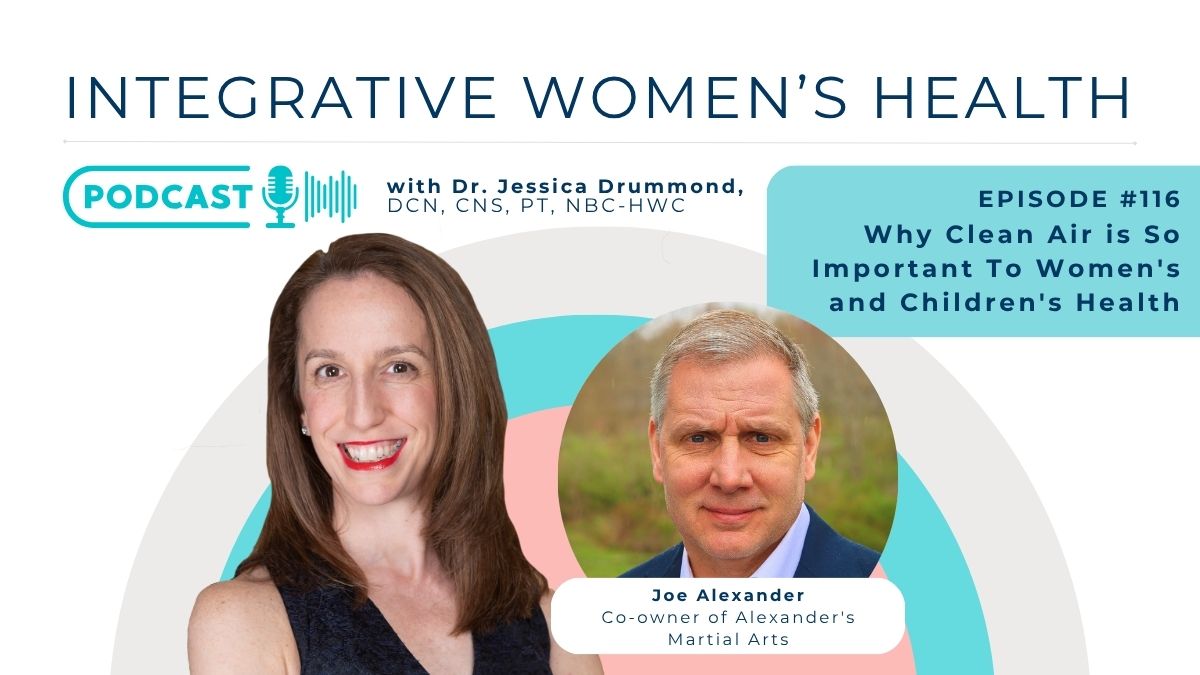
“We wanted a place where grandma feels safe coming to watch a little kid do class.” – Joseph Alexander
One of the things we’ve learned over the past few years is that as much as our health is impacted by the choices we make as individuals, it’s also shaped by the environments we spend time in every day. The air in our clinics, schools, gyms, and workplaces influences not only how infections spread, but also how well we think, learn, recover, and our overall quality of life. Yet indoor air quality is still rarely a topic in healthcare conversations.
As practitioners, we need to expand the way we think about prevention. Whether you’re working with someone recovering from a viral illness, supporting a pregnant client, treating endometriosis or chronic pain, or simply trying to keep your team healthier throughout the year, cleaner indoor air is one of the most overlooked tools we have. The exciting part is that many of the changes you can make are surprisingly practical and don’t require rebuilding your clinic or completely changing the way you work.
In today’s episode, I’m joined by Joseph Alexander, engineer and co-owner of Alexander’s Martial Arts, whose family transformed their martial arts school into a model for healthier indoor air. Joe walks us through the engineering behind ventilation, filtration, CO₂ monitoring, and upper-room UV systems, and explains why these strategies matter for far more than COVID alone. We also talk about protecting vulnerable patients, creating safer healthcare and fitness spaces, supporting children’s learning and cognitive health, and simple changes practitioners can make to improve the environments where care happens every day.
Enjoy the episode, and let’s innovate and integrate together!
Highlights
- Joseph’s decision to create a COVID-safe martial arts studio
- The practical strategies Joseph’s family has used to avoid COVID infection
- Why early evidence convinced Joseph that COVID was primarily an airborne virus
- Engineering upgrades to improve air quality, including upper-room UV, Corsi-Rosenthal boxes, and MERV-13 filtration
- The differences between HEPA and MERV-13 filtration systems and when each is most effective
- How bringing in filtered outdoor air can improve ventilation and reduce indoor infection risk
- How Joseph communicates clean air measures while navigating public attitudes toward COVID precautions
- The everyday strategies his family uses to reduce exposure in public spaces
- Why high-quality respirators provide significantly better protection than surgical masks against airborne viruses
- How Joseph’s children confidently navigate masking in school and social settings
- Why clean air can be a valuable service for health and wellness practices supporting vulnerable populations
- The long-term health consequences of viral infections like COVID and why prevention remains important
- How healthcare professionals can use tools like respirators, filtration, and ventilation to reduce the spread of airborne disease
Learn more about Joseph Alexander
About Joseph Alexander
Joseph Alexander earned his BS in Physics from the University of Alabama in Huntsville in 1993, where a lifelong passion for science — sparked by childhood science fair projects exploring wave interference and radio telescopes — led to both a physics scholarship and the beginning of a serious martial arts career. He went on to become a Kudan (9th Degree Black Belt) and Hanshi, a two-time NASKA North American Middleweight #1 Rated Fighter (1993 & 1995), and president of Midori Yama Budokai, eventually co-owning Alexander’s Martial Arts with his wife Kristen, which grew to multiple locations serving over 700 families. After retiring in 2025 from a career as a Senior Systems Analyst at Delta Research, Joseph is perhaps best known in the indoor air quality community for the extensive COVID mitigation work he undertook at his martial arts facility — driven by his wife’s TBI-related health vulnerabilities — including installing upper-room UV systems, Corsi-Rosenthal filtration boxes, and a full Dedicated Outside Air System (DOAS) that brought CO2 levels from over 3,000 ppm down to under 1,000, all while working toward compliance with ASHRAE-241 standards for clean air delivery.
Learn more about The Integrative Women’s Health Institute’s Programs
- Perimenopause and Menopause Certificate Program
- The Integrative Women’s Health Membership
- Endometriosis Certificate Program
Ready to revolutionize your career and grow your practice?
- Integrative Women’s Health Institute on Instagram | @integrativewomenshealth
- Integrative Women’s Health Institute on YouTube
Click here for a full transcript of the episode.
Dr. Jessica Drummond 00:00:03 Hi and welcome to the Integrative Women’s Health Podcast. I’m your host, Doctor Jessica Drummond, and I am so thrilled to have you here. As we dive into today’s episode, as always innovating and integrating in the world of women’s health. And just as a reminder, the content in this podcast episode is no substitute for medical advice, diagnosis, or treatment from your medical or licensed health care team. While myself and many of my guests are licensed healthcare professionals, we are not your licensed healthcare professionals, so you want to get advice on your unique circumstances. Diagnostic recommendations treatment recommendations from your home medical team. Enjoy the episode. Let’s innovate and integrate together.
Dr. Jessica Drummond 00:01:02 Hi, and welcome back to the Integrative Women’s Health Podcast. I’m your host, doctor Jessica Drummond. And today we are talking with Joseph Alexander of Alexander’s Martial Arts. This is a really nerdy conversation in a way that challenged me because I’m not an engineer. And yet I think absolutely every health and wellness professional needs to hear this conversation. This is one of the most important things you can do for health and health care and longevity for you, your employees, your team, your patients, your kids.
Dr. Jessica Drummond 00:01:40 If you want to start talking about biohacking, longevity, etc., the most scientifically proven way to improve longevity and health span is to have less damage to the system long term from having chronic infections, whether we’re talking about Epstein-Barr virus, RSV, flu, Covid, Lyme pneumonia, that entire list of viral, bacterial, even fungal infections. The fewer infections that people endure, the better their longevity. In fact, that’s why things like the shingles vaccine is one of the most proven tools for longevity. Even if you are resistant to vaccines or you’re concerned about vaccines because of autoimmune impacts, or you’re at risk and you don’t tolerate vaccines well because of autoimmunity or because of a chronic post viral issue, this episode is for you, especially if you work in healthcare, especially if you work in fitness or manual therapy. Acupuncture. If you work in any setting where you’re with people who are active and who are breathing on each other, you have got to listen to this, because we talk about both the top of the line engineering strategies to create a safe and healthy indoor air, and that includes new data coming out on how indoor air affects kids cognitive function.
Dr. Jessica Drummond 00:03:26 And we can change it within hours. I mean, literally within hours. There are so many good tips in this. And so I want to introduce you to Joe Alexander. He and his wife homeschooled his kids, and they started a martial arts studio. And what they did to retrofit that building is just a masterclass in what indoor air quality should be. Joseph Alexander earned his BS in physics from the University of Alabama in Huntsville in 1993, where a lifelong passion for science sparked by childhood science fair projects exploring wave interference and radio telescopes, led to both a physics scholarship and the beginning of a serious martial arts career. He went on to become a ninth degree black belt, and Hankey, a two time NASCAR North American middleweight number one rated fighter in the league in the mid 1990s and president of Midori Yama Buddha Budokai. I’m sure I’m butchering that. I’m sorry. Eventually owning Alexander’s martial arts with his wife Kristen, which grew into multiple locations serving over 700 families across generations. We talked about that how to protect kids, how to protect pregnant women, how to protect unborn children, how to protect grandparents.
Dr. Jessica Drummond 00:04:44 Every generation is coming through his martial arts facilities, and he wanted them treated just like he was treating his own family. After retiring in 2025 from a career as a senior systems analyst at Delta Research, Joseph is perhaps best known in indoor air quality community for the extensive Covid mitigation. He undertook it as a martial arts facility driven by his wife’s TBI related health vulnerability. So if you if you work with patients in neuro and TBI, this is also for you, including installing upper room UV systems, Corsi Rosenthal filtration and a full dedicated outside air system DOS that brought CO2 levels down from over 3000 ppm to down to under 1000. All while working towards compliance with Ashrae 241 standards for air delivery. Their website for their martial arts facility is Alexander’s Martial arts.net. Welcome to Joe Alexander and enjoy this conversation I want you to take notes. If you work in healthcare, if you work in fitness, I want you to write down at least one thing you are going to do for yourself, for your community, for your team, for your patience, for your athletes to protect them from things that can damage their health, that are in the air.
Dr. Jessica Drummond 00:06:14 All right. Just one thing. We’re going to start with one easy, low hanging fruit change that you can make. Let’s get in the interview and I’ll see you on the other side.
Dr. Jessica Drummond 00:06:27 Welcome back everyone to the Integrative Women’s Health Podcast.
Dr. Jessica Drummond 00:06:30 I’m thrilled to be here with Joseph.
Dr. Jessica Drummond 00:06:33 Alexander.
Dr. Jessica Drummond 00:06:33 Of Alexander’s Martial Arts. Welcome.
Joseph Alexander 00:06:37 Hi. How are you?
Dr. Jessica Drummond 00:06:37 I’m good. So we started talking after I interviewed Bailey. And she’s a very well known Covid conscious, strength training, fitness professional athlete. And so I’ll link back to that episode. But Joseph and your family have a martial arts studio, and I thought it was so interesting how you have actually prevented your whole family from even getting Covid through this whole time, and yet participating actively in sports, having people come to your fitness center or your martial arts center. So how has your family personally stayed Covid free?
Joseph Alexander 00:07:17 We’ve done a handful of things. I guess the first thing is that we saw this as a threat from the very beginning, where a lot of people just didn’t seem to take it very seriously or took it seriously for certain demographics, but not on the whole.
Joseph Alexander 00:07:30 So we took it pretty seriously from the very beginning. We started out by isolating like everybody else, and we went through the perturbations and different advice on masking, and then as we got a little bit more into it, we got into doing some more research and just understanding what the necessities were if you were going to stay safe. And so we’ve used N95 quality masks. We don’t go into public settings without masking. We even I literally even mask when I take the mail out in the morning, because we have a lot of joggers that come through our neighborhood. Right. So even though that would not be a dense situation, it’s not going to hurt me to throw on a mask while I walk to the front mailbox. And even as in I worked as an engineer for years during the pandemic, and even in that time, I wore it in 95 every day to work, put a Hepa filter in my office, essentially kept the door closed unless somebody needed to meet with me and ask people if they came in, if they had mind masking up.
Joseph Alexander 00:08:22 And just that kind of extra layer of caution and protection has kept us Covid free as far as we know, for the whole period.
Dr. Jessica Drummond 00:08:31 That’s fantastic to hear. And I think when we think about Covid and our everyone’s experience in the beginning, most of our audience are women’s health and wellness professionals. So a lot of us were working in hospitals or in clinical settings, or if we were in outpatient, those clinical settings were shut down. Maybe people who had or they were fitness professionals in gyms and they were shut down. And so they started teaching online or they started moving their practices to telehealth. So that happened for a little while. And I think one of the things I like to acknowledge when we talk about Covid, very frankly, is that there is still a lot of unprocessed trauma around just the whole experience of trauma of Covid, particularly among health professionals. Their livelihood was at risk, their lives were at risk without adequate PPE at the time. And then once we began to understand how dangerous this virus was, in reality, they still weren’t very well protected and they aren’t very well protected now.
Dr. Jessica Drummond 00:09:35 And so I think the fact that your family and you were able to see and where is your studio?
Joseph Alexander 00:09:41 It’s in Madison, Alabama.
Dr. Jessica Drummond 00:09:42 Okay. So even in the South, which had a lot of resistance to even vaccination or conversations around vaccination. What were some of the things that triggered this need to be very Covid safe from the very beginning? What were some of the red flags that you’ve seen over the years about this virus in particular?
Joseph Alexander 00:10:02 There’s a couple of things. One. My kids are homeschooled. With the karate schedule, I don’t get through teaching until 9:00 at night, come home, have dinner at ten. So our normal school schedule would pretty much mean I never saw the kids. So my wife had run the school. I run one of our locations for years and actually built our biggest location. She’s a she’s an absolute dynamo. My wife has always read to the kids, and they were reading a book on the, I guess, 1918 flu and that pandemic right before the Covid thing hit.
Joseph Alexander 00:10:29 Right. So our family was learning about that in history a little bit. And then when we started to see this unfold, it was like you could track the public response and the administration response to Covid in a very similar way, and the denial and the looking away from it and hoping it would just all go away and let’s have some sunshine and bright lights or whatever. All that kind of approach kind of echoed the things we did 100 years ago that didn’t work before. We really understood infectious disease very well. When you overlay what we know today, on top of that, it’s like we’re choosing not to take the precautions that we have access to in in today’s world. And so we just took a very different approach. I was it’s a weird thing, but my mom has an environmental illness. She has basically her immune system is crazy and does all kinds of odd things with her allergies. And the early 1980s, they gave her two weeks to live, and they ended up putting her in this environmental unit.
Joseph Alexander 00:11:40 And and she’s still alive and kicking today. But we had to make some changes in my family and get away from petrochemical paints and things that outcast heavily. A lot of that stuff to help sequester and protect her. So I seen a situation where we had a medical concern that was not normal and took extra precaution and had a tremendously better outcome than anybody could have expected. So I was tuned to that kind of approach of, hey, don’t just listen to what the entire population is looking at, step back, look at it analytically, and figure out maybe we do a little extra and ended up a little bit safer. And and then ultimately wearing a mask wasn’t that big a deal, right? It’s really not that much extra.
Dr. Jessica Drummond 00:12:25 Yeah, absolutely. And I think when we look at your history, so you come from an engineering perspective where it’s like if we have this safety tool, which I’m sure you have to do on all your engineering sites like OSHA, all of that. Right, right. So we have safety tools and we’ll get into in a minute.
Dr. Jessica Drummond 00:12:44 Everything you did to retrofit the environment inside your martial arts studio. But you had this history with your mom, and then you also said that there was a history with your wife having a TBI. What were some of that? And like, what else were you thinking about in terms of why you had to protect your unique family?
Joseph Alexander 00:13:02 When we recognize that Covid had effects on the brain. Right. And things like Covid, brain fog with my wife already having had a TBI in a car crash 30 odd years ago now, she’d already lost some. I had done some damage to her speech center in her short term memory. She’d had to relearn a lot of vocabulary and develop a lot of memory tools. Frankly, her memory is better than mine now because she has rewired her brain and we did not want to take a risk where she would have to try to do that again. How many times do you get to rewire your brain when you suffer a deficit and come back up to where you were. And so we didn’t want to take that risk, for starters.
Joseph Alexander 00:13:43 And then, of course, when we’re protecting her, it was really easy to recognize that we wanted to protect our kids, at least that well. And then when we started protecting our family at that level, our approach at the karate school has always been that it’s a large, dysfunctional family, that our idea of fun is to kick and punch each other. Yeah, but we’re all pretty, and you’ve got to be pretty tight and pretty respectful of one another in order for that to be an environment that is healthy, right? So we take good care of our people, and if we’re going to do that for our family, then the next thing was there’s tons of other families we work with. We’ve got grandparents that come in and want to watch their kids train. We’ve got parents come in with one child, they got another one on the way. I don’t want I don’t want to expose a pregnant parent and their child to unnecessary risk of any sort. So when we start thinking about all those things and how we would protect our people, we wanted to make sure we were doing that for our entire population as much as we possibly could.
Joseph Alexander 00:14:39 I love that there are staff and students.
Joseph Alexander 00:14:41 Yeah.
Dr. Jessica Drummond 00:14:42 Absolutely. And so now. Looking at your. So now you’ve got this insight from okay what happened during the Spanish flu. What did people do. What did people not do. What was the public response. And then your experience as an engineer, how quickly did you recognize that Covid was airborne? Because that really wasn’t the party line back in late 2020 almost immediately.
Joseph Alexander 00:15:07 So the first story was about the first story that I recall was about somebody who had Covid, went to a restaurant in China set near the air distribution device, whether they sat in front of an air conditioner or they sat near the intake for the HVAC. I don’t know exactly where they were, but they set near the whatever was distributing air in the building, and lots of people on the other side of the restaurant even got sick. And at that point it was obvious that they didn’t have contact with those other people. Whatever it was they put in the air, the HVAC or whatever system they were using, spread it throughout the room, and lots of people got sick.
Joseph Alexander 00:15:46 And then you had a bunch of people. Not long after that, in the States that got sick of choir practice. Right. And it didn’t take a lot of connecting those dots of this is an aerosolized. It’s something that they’re breathing out. And I did not have any clue about all the atomization in the aerosolized version of the particles. I in my head at first I kind of thought they were like slobber.
Joseph Alexander 00:16:09 Oh, sure. Sure. Yeah.
Joseph Alexander 00:16:11 And I thought falls out. How long does it take to fall out of the air, etc.. And then of course, other people were doing much, much good science on it and starting to track how it dissipates through a room. And then you start to find out the particles are like the same size as cigarette smoke and hangs around in the air, and this distributes itself through the air in a similar way. So now it’s hanging in the air for three hours or so. And so in my head I’m like, there is no way you can run a gym where people are breathing out heavily.
Joseph Alexander 00:16:39 How can that be any different than singing? Essentially, have this stuff hang in the air for three hours? Because my first thought was after every class, we flushed all the air out of the building and we start over. We just basically take a whole house fan, make a bunch of noise, run a bunch of air through the building, open all the doors, and we’re just going to deal with whatever climate that gives us. But then you start to find out how long it hangs out and stuff and how it. And then you start looking at the fluid dynamics and you’re like, when you pull all that air through, what about the corner over there? And then it’s a different temperature. So it will naturally mix to equilibrium with the rest of the air. So even after you flush the air out, the different temperature air that hung out in the corner is now going to distribute itself. And we start just thinking about if it’s that persistent and it’s that contagious and it’s that small, how easily it could dissipate and fill the.
Joseph Alexander 00:17:25 Room.
Dr. Jessica Drummond 00:17:26 And I think so then applying those engineering perspectives, you did a lot of essentially retrofitting of your gym facility. So talk about the what you did and then a few things that maybe someone who’s running a small physical therapy or acupuncture practice, or someone who has a small gym where they might have 5 to 15 people at a time in there. What are some of the most powerful things they could do to keep their community and themselves safe?
Joseph Alexander 00:17:55 Okay, sure.
Joseph Alexander 00:17:56 Because we read that book on the 1918 flu. One of the things they did early on for taking infectious stuff out of the air was UV ultraviolet. And you can’t douse people with ultraviolet because it causes cancer. But you can hit the air where people aren’t. So you can ultraviolet above their heads pretty well. So one of the first things we did was we put in these ultraviolet traps. Basically they’re it’s a filter with a heavy ultraviolet light. And they use them in I use them in hospitals and stuff as well as use them in the gym.
Joseph Alexander 00:18:26 So that was one one approach we took and we could never really find out how many watts per radian of energy you had to put on the virus for how long to kill it with a UV, so we never could check that box and go, oh, we’ve got UV. We’re good. The only thing we could really find that we could quantify was filtration. Right. So the Corsi Rosenthal boxes started coming out using Merv 13 filters and high volume air cycles. And you could actually measure. So you can take an atomizer and you can basically atomized some salt water. You don’t want to be in the room with it because it’s not good for you to breathe. But anyway, so you can set that up in a room. I was zooming a particle meter and watching the particles, so we’d make the room really messy, and then we turn on a filter in a confined space, and you could watch how quickly you could drop the particles out of the air, so you can calculate a clean air delivery rate from a homemade air filter.
Joseph Alexander 00:19:24 And basically it’s a it’s called a Corsi Rosenthal box. It’s Corsi and Rosenthal are the two guys that came up with them. It’s essentially Merv 13 air filters and a box fan. They’re not very expensive. They’re not always pretty, but they’re not very expensive. And they work really well. So there’s that. There’s Hepa filters, which are pretty easy.
Dr. Jessica Drummond 00:19:43 Is there a difference between Hepa filters and Merv 13 filters?
Joseph Alexander 00:19:47 Yeah, yeah.
Joseph Alexander 00:19:48 The quasi Rosenthal box with a Merv 13 catches about 70% of the particles where a Hepa has to hit 99.7, I think, to be certified.
Dr. Jessica Drummond 00:19:58 So the Hepa is actually even stronger. But it’s just it’s a cost difference.
Joseph Alexander 00:20:02 It’s a cost difference. And because it is a denser filtration, the airflow through the filter is limited because the density of the filtration. So your net clean air through it, even though it’s more efficient, the amount of air you can push through and clean, there’s a trade off there. If you could filter 2000 cubic feet at 70%, that’s better than doing 1000 cubic feet at 99%.
Dr. Jessica Drummond 00:20:28 It’ll be faster. Yeah. Okay, that makes sense.
Joseph Alexander 00:20:32 And that’s the trick.
Dr. Jessica Drummond 00:20:33 And the nice thing about the Corsi. Rosenthal I’ve built some. There are instructions online. It’s basically duct tape. And like you said, a box fan.
Joseph Alexander 00:20:41 We did a Stem day at our karate school where we invited kids to come out, build Corsi Rosenthal boxes, and we donated them to the local elementary schools.
Dr. Jessica Drummond 00:20:49 Oh, fantastic. I love that. Okay, so you’ve got filtration, you’ve got far UV lighting and different boxes that are hidden from people’s.
Joseph Alexander 00:20:57 They’re actually they’re.
Joseph Alexander 00:20:58 Actually the drop ceiling.
Dr. Jessica Drummond 00:20:59 Oh okay. So they’re are they. The can lights essentially are far UV.
Joseph Alexander 00:21:03 It’s not far UV it’s called upper room UV.
Dr. Jessica Drummond 00:21:05 Okay.
Joseph Alexander 00:21:06 And so they’re up in the drop ceiling. They stick out a little bit. And they irradiate about the top 8 to 10in of the room.
Dr. Jessica Drummond 00:21:12 So as things circulate through that. Okay. All right. And then so what did you do anything else with your HVAC system?
Joseph Alexander 00:21:20 Two things.
Joseph Alexander 00:21:21 When we put Merv 13 filters in everywhere so that the HVAC and we run the fan constantly. So the HVAC is doing that 70% kind of.
Joseph Alexander 00:21:29 Number for us, okay.
Joseph Alexander 00:21:30 Which is huge because we’ve got three. Three units on the space and we’ve got 6000 CFM cycling through the HVAC. So that’s a lot of air we’re moving. And then we spent quite a bit like better part of 100 grand on a dedicated outside air system. So at the same time as we’re learning all this Covid stuff, my older daughter is getting a degree in public health. She just got published in the Capstone Journal of Law and Public Policy at UA. Yeah. She did. She wrote an article called The Essential Element Taking Action to Improve Indoor Air Quality. So she’s tuned into this as well. And one of the big things that we were we learned about while she was researching the air quality in public health is CO2 density, right? A lot of people use a CO2 monitor as a proxy to know how stale the air is.
Joseph Alexander 00:22:15 We breathe in room air, we breathe out CO2, we keep the oxygen part of it. And then what happens is you can measure the density of CO2 in the room and a couple different things like below ambient, outside, somewhere between 4 and 500 parts per million. When you get to about 1000, you start to get a little drowsy. When you get to two and 3000. You start to not think so. Well, right? And so while we were busy thinking about all this filtration, the other side of how to fix Covid is ventilation. Bringing fresh air filtration also addresses the CO2 issue.
Dr. Jessica Drummond 00:22:49 Ventilation? You mean.
Joseph Alexander 00:22:51 Ventilation? Yes.
Joseph Alexander 00:22:52 Yes, correct. Thank you. Sorry. Said that.
Joseph Alexander 00:22:53 Wrong.
Dr. Jessica Drummond 00:22:54 So if you then have a CO2 monitor and your HVAC system is actually bringing in outdoor air. But you could also do that with opening doors and windows.
Joseph Alexander 00:23:04 Things like that. Yeah.
Joseph Alexander 00:23:05 For a big building we’re running as much air flow as we are. Talk to HVAC guys, because my first thought was, I used to have an old house that had one of those hallway air that had a big fan in this.
Joseph Alexander 00:23:15 In the hallway.
Joseph Alexander 00:23:16 Yeah, the whole house fan. It would just pull all the air up and blow it out the vents, right? I thought, why don’t I just put one of those in karate school? And we had built our own building. So it’s my space to tear.
Joseph Alexander 00:23:25 Up if I’m right.
Dr. Jessica Drummond 00:23:26 You were allowed to put anything anywhere?
Joseph Alexander 00:23:28 Yeah, I was allowed to mess with.
Joseph Alexander 00:23:29 The HVAC.
Joseph Alexander 00:23:30 But I started trying to figure out how to do that. And immediately the concern about humidity and mold and mildew, because the amount of humid air in North Alabama is very humid, the amount of humid air would be bringing into the area would cause problems. So I got Ahold of some HVAC people who are specialists and they’re like, yeah, there’s something called a dedicated outside air system. What it does is it pulls in air, it controls the humidity of the air. It also filters it as it brings it in. So it’s not like I’m bringing in a wildfire smoke from outside. That’s depends on where you live.
Joseph Alexander 00:24:01 While you might be able to open a window, you might need to put a Merv 13 filter in front of that window.
Dr. Jessica Drummond 00:24:07 The window.
Joseph Alexander 00:24:08 Yeah, yeah.
Joseph Alexander 00:24:09 Because you might have wildfire smoke or some such. So there’s a whole lot of considerations. But by bringing in fresh air and by climate, using it on the way in through that dough system, it keeps the temperature controlled and the humidity controlled and all the things that we really want to make the school functional and safe.
Dr. Jessica Drummond 00:24:26 That’s fantastic. I really think from an engineering perspective, we also interviewed and I’ll stick the link in the show notes an architect who thinks about designing health and wellness spaces and hospitals. And this whole idea of air quality, I think, really extends beyond Covid to all airborne viruses. And even what you were mentioning a little bit there. Mold and mycotoxins and the environmental toxins that your mom was dealing with, her health concern, the benefit of optimizing clean air and indoor spaces really expands far beyond. And then if we oxygenate that air with fresh ventilation.
Dr. Jessica Drummond 00:25:07 I saw some really interesting data just this last week of kids test scores going up because of the exact thing you were talking about.
Joseph Alexander 00:25:13 Some engineering companies in town, Huntsville in Madison is the north Alabama area there. Huntsville is called Rocket City because post-World War II, that’s where a lot of the engineers came. Redstone Arsenal was there. There’s a huge NASA thing there. So that’s where the Space and Rocket Center is in Alabama. So some of the big engineering companies, even though they didn’t make a giant deal about it because of political stuff, have done a lot to bring fresh air into the building because the engineers just do a better job when they have oxygen.
Joseph Alexander 00:25:43 Yeah. So while it might.
Joseph Alexander 00:25:44 Also help with Covid and airborne disease.
Dr. Jessica Drummond 00:25:47 So as we talk about bringing in clean indoor air and we talk about cognitive function, and we talk about lowering mycotoxins and environmental toxins and wildfire smoke and microplastics and air, like all the different things that are contaminating our air. One of the things that I think is our biggest struggle, it’s not so much that we don’t have the tools or that people can’t learn to use the tools, or aren’t even willing to pay for the tools in a lot of cases, but it’s the public opinion.
Dr. Jessica Drummond 00:26:17 How are you navigating that in your real life.
Joseph Alexander 00:26:20 So a couple of things. One, nobody knows whether you’re running a Merv 13 filter or running the fan all the time, or whether your air conditioner is just running. Okay. So if you take the HVAC system, it runs 6000 cubic feet of air a minute. But when it’s running, 10% of that is fresh air. It’s mandated. But that’s a very little bit. And then the other 5400 cubic feet a minute is getting filtered within the building. So we put a Merv 13 filter on it, and we knock out 70% of the Covid sized particles. So right there, we’re already bringing the clean air delivery right way up in the building and nobody can see it. I think one reason why we’ve used Hepa filters instead of just CR boxes is because they look like normal air filters, and people accept normal air filters. There’s a cool there’s a couple cool ones that mount on the wall even. They just look like a box. I think they’re good for about 125 cfm each.
Joseph Alexander 00:27:15 We have two in each of the bathrooms. So even though we’re filtering the air that’s coming out of the ceiling. The bathroom is a small confined space, so we put an extra 250 cfm of clean air delivery through Hepa boxes in there, and people don’t necessarily resist an air filter in in the potty.
Joseph Alexander 00:27:33 Room, you know, because they just assume.
Joseph Alexander 00:27:35 It’s for bathroom smells or whatever, when really what we’re doing is scrubbing the air. So there’s a lot of that. And then we just tell people that we’re cleaning the air because we don’t know who else is here. You don’t know what health concerns they might have. And we want a place where grandma feels safe coming to watch a little kid do class. And that’s one of the biggest things we’re trying to do, is make it more mutually acceptable. And our I guess our approach to self-defense is three, three levels, right? First thing we do is we’re aware just common sense. Second would be to avoid and the third would be to resist.
Joseph Alexander 00:28:10 First of all, being aware of the environment you’re in. If you have a CO2 monitor, you know if the air is stale or not. So you can measure that avoidance. You can stay out of places that that where you’re concerned about the air quality or when there’s dense, packed people. Or you can take action at that point and wear a mask, or you can do something to actively risk lower your risk. One thing that we also do as a family, like we don’t go in and shop a lot. We have most of our stuff delivered, but if you go to a warehouse store where it’s got a 20 foot ceiling and a huge volume of air. The CO2 numbers in there are typically really good. So go to like a Costco or Sam’s or one of those big warehouse stores. The air quality is better, so we just make those judicious decisions all the time. And so we just try to let people know about those type of simple, simple changes.
Dr. Jessica Drummond 00:29:00 Yeah. So in our family so we’ve been masking the better part of all of this except my kids are in school.
Dr. Jessica Drummond 00:29:07 So what we did with my oldest daughter’s in college. So she’s often on her own at this point. But my youngest daughter, we put Hepa filters in each and every one of her classroom, starting in last year and this year. We’ve done the same thing in high school, and that has helped dramatically just doing that, because, of course, our kid in school was the biggest vector of bringing things home to us.
Joseph Alexander 00:29:31 My daughter came in to me today and said, 70% of Covid, I don’t know where she pulled the stat. She’s I’m sure she can reference it for you if you’d like.
Joseph Alexander 00:29:39 Sure.
Joseph Alexander 00:29:39 She’s she’s one semester from getting her bachelor’s in public health and she turned 18 in September. So she’s a smart cookie. Yeah, but yeah, she said 70% of the disease spread is from grade school age kids. And you can correlate it to when schools in and when summer break happens.
Dr. Jessica Drummond 00:29:56 Wow. That’s amazing. Yeah. And we have seen dramatic changes. And I’ve talked to a few different people on this podcast who’ve said the exact same thing, that as soon as they put a Hepa filter in their child’s classroom, particularly the younger kids, and there is some really good data out of Finland showing that it dramatically decreases all missing school.
Dr. Jessica Drummond 00:30:17 And then if we were able to get more schools to have fresh air brought in, that dramatically increases cognitive health and test scores and all of that. So I do think that’s a great place to have public advocacy. And then our family. My husband and I mask and my children more, most of the time masked just every time we’re in the store places that it’s easy where you’re not having to talk or eat or something like that. Like stores 100% on airplanes and airports and health pediatrician visits. And anytime we go to a hospital or a doctor, we’re 100% on that. But our kids, like I said, don’t always mask in school. And so adding the help of filters has really helped that because it’s so socially challenging to do that. How have your kids and your family navigated particularly living in a southern state? Like how have you been able to live these values. What has it encouraged anyone else to? Has it caused any pushback? What if. How have you navigated that?
Joseph Alexander 00:31:21 There are some little communities of people who are Covid cautious still and who are still taking precautions.
Joseph Alexander 00:31:26 We literally have classes at our school Monday, Wednesday and Saturday. Early in the day or earlier in the afternoon. But where it’s mask only, everybody who comes to that class has to be willing to wear it in 95. And it’s just by social agreement that we’re going to make a space for anybody who’s vulnerable and wants to be safer, to be safe. And then we have a 20 minute break and then the mask optional classes happen. So that’s one thing, is we made a safe space for people to not feel too weird when they are masked, because we do have students who mask and mask at school, etc. and then mask, of course they’re at the karate school for those mask only classes.
Dr. Jessica Drummond 00:32:01 I love that because it’s so much community, which I think is really where some of the people who would love to be more Covid conscious are just socially. It’s so challenging.
Joseph Alexander 00:32:10 Yeah, and we celebrate those guys that are masked. We do have an online program still. They, like those kids that are masked only don’t typically come to our big graduation because we can’t control that population well enough to make it a safe environment.
Joseph Alexander 00:32:24 Even despite 90 cubic feet, a minute of fresh air, right? Or clean air. So we make another venue for them and we celebrate that with the online. So they graduate with the online crew and we make that a thing. So we just basically had to come up with other ways to include people. And that’s been interesting. Healthcare has been one of the craziest things for us. We we moved our family up here. We just moved to Connecticut like a year ago.
Joseph Alexander 00:32:49 Okay, so.
Joseph Alexander 00:32:49 I’m operating the school a long distance. I have a partner. I sold a controlling partnership to one of my employees, basically, and I’m still helping him operate the school, but they’re still doing all the same stuff. Great that we were doing. Yeah. So they’re keeping that going. But the health care thing was driving us nuts because to get someone to wear a mask and a health care environment, particularly. My wife had a really tough time with the dermatologist and having having her annual skin check to make sure she doesn’t have cancer anyway, so just getting to wear a mask and want to be in a little tiny room with you and have you stripped down completely naked.
Joseph Alexander 00:33:23 And if you can’t wear a mask in the space where I am, and if you got to see my face so I can’t wear a mask, it’s an untenable environment. That was a big challenge. Luckily, our pediatricians in both places have been great about masking, and then we always mask when we go to the doctor. When we go to the dentist, that’s a special challenge.
Joseph Alexander 00:33:41 Right? Yeah, yeah. You know.
Joseph Alexander 00:33:42 What? Do you know what a ready mask is?
Dr. Jessica Drummond 00:33:44 The one where you just put it over your nose.
Joseph Alexander 00:33:46 It’s essentially. Yeah, it’s essentially a mask. That’s N95 material that you just stick under your face.
Joseph Alexander 00:33:51 Yeah. Okay.
Joseph Alexander 00:33:52 And we did. This is kind of crazy, but we cut them down to these small little. Instead of being a big rectangle that goes all over your chin, you can make this just sit on your nose like a little duckbill.
Joseph Alexander 00:34:01 And then you.
Joseph Alexander 00:34:02 Just literally breathe in through your nose while you’re.
Dr. Jessica Drummond 00:34:04 While you’re having your dentist. What I’ve done at the dentist is what I usually do is show up with an N95 and I just ask the hygienist to wear it.
Dr. Jessica Drummond 00:34:14 And so far they all have.
Joseph Alexander 00:34:16 Yeah, we’ve had good luck with that as well. We call ahead. We bring in 95 for the whole office. We bring a Hepa filter in with us, and then we try to schedule ourselves back to back in the same room so we can have that Hepa filter turning and cleaning the air.
Dr. Jessica Drummond 00:34:30 Yeah. That’s great. I actually have a harder time. And we have my daughter and I have an orthodontist that’s more of like an open plan. That’s a mess. And honestly, what we’ve done is just hope for the best. Which, yeah.
Joseph Alexander 00:34:44 My wife loves this thing. I think it’s a little crazy, but it’s just a little lap size Hepa filter.
Dr. Jessica Drummond 00:34:49 Okay, there you go. I actually just have a Hepa filter that’s like a necklace. I haven’t really used it, but I should bring it in the next time. Yeah, yeah, that’s a good one.
Joseph Alexander 00:34:58 I don’t know that it when I think about all the air in the I have a hard time convincing myself it works great.
Joseph Alexander 00:35:04 But also I can see that it’s probably. Maybe it’s only 40 or 50% effective, but.
Dr. Jessica Drummond 00:35:08 But lowering the viral load maybe. I agree with you. I think those kinds of things are secondary or only in in the case where you can’t use an N95 mask, it’s not going to really work on a plane instead of a mask. It’s not going to work in a dentist instead of a mask. But I think anything one of the things we do know about Covid now, if we’re talking specifically about that and any other airborne virus is.
Joseph Alexander 00:35:30 Just going to say at RSV and whatever else, kids tend to bring home the flu.
Dr. Jessica Drummond 00:35:36 Just lowering the viral load is helpful. So all those different things are going to help with that. While again, not great data using things like nasal sprays or even saline leverages. I think we have to think about viral load when we’re in higher risk situations that are unavoidable. And I think the other thing too, is to think about tracking. I know Michael Hauger at Tulane University does a great job of tracking when the Covid rates are higher and lower.
Joseph Alexander 00:36:06 So that’s.
Dr. Jessica Drummond 00:36:06 Correct. When they’re lower. A better time to go to the dentist, to go to the orthodontist, to go get your skin check.
Joseph Alexander 00:36:12 We do plan our schedule based on Michael Hauger stuff. Pretty much. Yeah. Yeah. When it comes to going out and doing public things, that that is a huge influence on what we do.
Dr. Jessica Drummond 00:36:20 It’s really good to know. I think the more of us, and particularly in health care, our audience is primarily health and wellness professionals and fitness professionals. Like, I really want to encourage you guys. Like, we now know the data is so clear that every Covid infection and additionally every RSV infection, every flu infection, every mycotoxin, every mycoplasma pneumonia, like every infection, literally causes vascular and brain injury at the minimum. And so the kinds of things you and I are doing. I think what’s challenging about it is that it seems so weird in society right now. And yet we know the data. As health professionals, we can read it, we can understand it.
Dr. Jessica Drummond 00:37:10 And yet, health care is one of the most dangerous places that people go. So I guess any other insights you have is just a person who’s been living this way. What are your thoughts about maybe are we gaining some traction now? Is there anything you’re seeing?
Joseph Alexander 00:37:27 I think there’s a kind of a couple of different groups, right? There’s the people who are going to resist it for I don’t know if it’s ideological or political or what kind of head in the sand reason and are going to let the social pressures dictate what they do. And when you think back when the Covid pandemic first happened, they told us all to basically put some old underclothes over your face and call it a mask or some such. Right. Right.
Dr. Jessica Drummond 00:37:52 Which also doesn’t work.
Joseph Alexander 00:37:53 Yeah, yeah. And they basically knew it didn’t work, but they wanted us to leave the real PPE for the people who were in the trenches. And if it said up front, hey, you’re going to have to leave the real PPE for the people in the trenches and just stay the heck away from people.
Joseph Alexander 00:38:06 People might have got the concept, but then they got this absolutely off base concept. Nothing drives me more crazy than watching somebody wear a blue surgical mask and tell me that they’re masking, and the thing doesn’t fit. It doesn’t do anything for air. It keeps the slobber out so they’re not going to spit on me. But I’m not worried about your spit that much. Right. I was a competitive fighter. I’ve had all kinds of spit and blood and stuff on me. That doesn’t bother me if you’re breathing out an infectious disease. No more than I would drink stagnant water. I don’t want to breathe stagnant air. And getting people to understand the difference between a surgical mask and a proper PPE for airborne respiratory, whether it’s infection or other particles, you don’t want to breathe in understanding what they’re dealing with. Also, most people think of a filter like a colander and the and the smaller the gaps, then the better filter. And then they think, gosh, if it’s that good of a filter, how can I possibly breathe when I’m wearing it? It’s not just the colander, it’s also electrostatic charged.
Joseph Alexander 00:39:11 And that electrostatic charge is what does a lot of the small particle work. So it’s not that tight because it has to have a certain amount of air flow. Otherwise you can’t breathe through it. But people assume that it’s so tight that they can’t breathe. And that’s just not correct. Understanding that they’re electrostatic charged in a proper in 95 is not as restrictive as it would have to be in order to just be a filter, right, to just be a mesh and do the job. And I don’t think people quite get that. The other thing they could that would help people is when they fit test. A lot of times, oh, I get a little bit of fogging on my glasses when I breathe out. You might. But there’s a difference between when you’re putting positive pressure against the mask, pushing it away from your face, and you’re putting negative pressure on the mask and pulling it to your face. And there’s a little bit of. Understand what its purpose is that I think would help people and they would feel.
Joseph Alexander 00:40:07 Like they were doing a good job. If they’re wearing it and they’re seeing a little. Bit of fog at the bottom of their glasses, sometimes they feel like they’re not. What’s the point? The darn thing doesn’t work. You’re putting positive pressure on it. You’re causing it to leak a little bit. When you pull in, you’re causing it to squish. Against your face a little better and pull and adhere better, right? Less or less leakage. I saw a thing where with a taekwondo family that was training and competing in masks, and they used masking tape.
Dr. Jessica Drummond 00:40:33 Yeah.
Joseph Alexander 00:40:33 So that they don’t so that their mask doesn’t slip or whatever.
Dr. Jessica Drummond 00:40:36 Yeah. So even in such a high intensity moving activity, you can really keep a mask quite effectively working if you just essentially tape it to your face, like the ready mask you were talking about before. That just sticks to your face. But I agree with you. I think even if you have a not 100% perfect seal on an N95 because you have an aura or you have a any of the different brands of N95, they’re going to fit different faces differently.
Dr. Jessica Drummond 00:41:03 Some of them have little bits of foam that you can mold it a little bit better. Others some people do well with different styles of masks. You can check and see which one feels better, but.
Joseph Alexander 00:41:14 I think those got a very small face and we have to. She’s tricky to mask. I’ve got a fat face so that aura works great for me. I’ve got I got plenty of squishy.
Dr. Jessica Drummond 00:41:22 That’s great. And they have kid sized masks. How are you feeling? Like your family is navigating this socially, especially your kids.
Joseph Alexander 00:41:31 They’re pretty awesome. It’s pretty great. So my daughter, my older daughter, worked as an intern for a local congressman and went to work every day in a in 95. We took 4 or 5 Hepa filters into the office and asked if we could put them around the office. No problem. And she and she would come in and to her immediate supervisor and say, hey, annoying health moment. And she would give him some long bit of data about why he ought to be masking because he had some other health concerns and was just just acting like most people do and kind of blowing it off.
Joseph Alexander 00:42:02 And she’s like, here’s 17 reasons why you should be masking. So every day she would walk in and give him his 45 second health update.
Dr. Jessica Drummond 00:42:08 There you go. I love.
Joseph Alexander 00:42:09 It. Yeah, it just became a joke for him. But and in the long run, he was actually learning some stuff and she was doing a good job. My kids are super active on on schoolhouse. So it’s it’s an adjunct to Khan Academy. Okay, so they’ve got friends from all over the world that they basically talk on the computer mostly. So they’re pretty. Then they’ve got a whole big friend base and group and it’s got they’ve got their own little subgroups and all this stuff that kids go through. They’re doing that pretty, pretty successfully. And then my older daughter, she’s been homeschooled all the way through. Like I said, she’s got one semester left at UA for her bachelor’s. And then we got to worry about law school and where she’s going to go and how she’s going to do that. But it’ll be a case of finding her housing where she’s on her own, where we can put a Hepa filter in, where we can make that kind of thing happen.
Joseph Alexander 00:42:55 And then her masking and being responsible as she possibly can be as much as she can be.
Dr. Jessica Drummond 00:43:00 Yeah, absolutely. It’s not easy, but I have found that even if you’re just really focused on the high risk situations and you’re mitigating the risk as well as you can, it’s so worth it. And I think for all the health and wellness professionals listening, you have an opportunity, I think, to be a safe space, particularly for people with things like long Covid, with Epstein-Barr virus, with hypermobility syndrome, a lot of people, endometriosis are speaking online about how they’re really just avoiding going to health care centers at all because they just don’t feel safe there. And so I think there’s such an opportunity to actually use this to your advantage in places where particularly people with chronic illnesses are really just looking for someone to be that safe space.
Joseph Alexander 00:43:49 There would be a huge market if so, what we do at the karate school, which is Which you could do in other environments. Like I said, we have a specific time on Mondays and Wednesdays that are mask only.
Joseph Alexander 00:44:00 Everybody in the building staff has to mask up two hours before class. Even though I’m cycling the air in that place every 6 or 7 minutes. When you cycle all the air, even through a Hepa filter, you’re only getting about 70% of the stuff out to you because it stays in weird places. So you got to have 3 or 4 air changes before the air is clear, even with good filtration. But anyway, so our guys mask up well early and we have a block of time that is for those people who have that need. And then we have a 20 minute break and then we do the other stuff. If once every two weeks you had all masked appointments at your doctor’s office. Yeah. Or once every two weeks. You knew your everybody in your dentist’s office was going to be in full PPE. Fully 95 type. Yeah. Gear. I don’t I know people that would drive from Huntsville in north Alabama to Atlanta to go to a dentist who would wear proper PPE. That’s 4.5 hours if you drive like a crazy person.
Dr. Jessica Drummond 00:44:55 100%. There is such a large online community of people who are looking for things like this. If you’re a massage therapist, if you do fitness training, if you do physical therapy, especially for people that have chronic illnesses, I 100% agree with you that there’s a huge market of people who are just looking for safe health care. And then I think when we talk about low hanging fruit, one of the fastest and most efficient things we can do is add Hepa filters to your kids schools, classrooms. If you do nothing else from this presentation, do that. Well, yeah.
Joseph Alexander 00:45:31 And if they’re worried about the noise, at least get the school to put a Merv 13 in their system rather than running a Merv six, which is what they’re probably running. They’re basically putting a filter in there to keep dirt from clogging up the condensing unit. Put something in there to take the junk out of the air. There’s a concern with that, which is that if you put a higher Merv filter in is going to increase the static pressure.
Joseph Alexander 00:45:52 It’s going to be harder for that thing to pull air through. But you could probably add an assist or boost fan, an additional in-line fan to the which would cost a little bit. But like I said, at the karate school, we got the 6000 CFM that the AC units running, and then by the time we put the Merv 13 in there, almost half of the air filtration we’re doing is just because we’re running the fan all the time through our big system. Yeah. So you wouldn’t get to the levels that I’m at, but I’m at like hospital levels of air quality, air filtration. You could get to a reasonable level just for keeping a fan all all the time and running better filters. And like you said, adding a Hepa filter when you can.
Dr. Jessica Drummond 00:46:30 Yeah, that would be great.
Joseph Alexander 00:46:32 You can do a lot of work that way.
Dr. Jessica Drummond 00:46:33 Yeah, I am going to be talking to someone in the next couple of weeks who is aiming to build the kind of healthiest school. I think they’re doing it in Austin.
Dr. Jessica Drummond 00:46:42 I’ll have to look at that. But same idea with like making sure there’s ventilated air, making sure there’s filtered there, making sure the lighting is good. I think these are underappreciated aspects of public health. Is optimizing air quality, optimizing lighting and exposures to environmental toxins. And I think if we reconsider, we kind of orient people to Covid and other viruses as being like environmental toxins. That may be a good way to communicate this in some spaces.
Joseph Alexander 00:47:13 I don’t think that people have connected well enough. I believe it’s Epstein-Barr that’s basically long mono, right?
Dr. Jessica Drummond 00:47:19 Correct. Yeah. Epstein-Barr is the virus that causes mono, and then it can it becomes chronic.
Joseph Alexander 00:47:25 Yeah. And so I don’t think oh, I had mono when I was in college and it knocked me down for a month. And now I’m good. Not necessarily. No no no. And then I think RMS has been tied to a different potential virus.
Dr. Jessica Drummond 00:47:38 Same virus. Epstein-Barr. Yeah.
Joseph Alexander 00:47:40 Yes a lot. Lots of things that we think of as major chronic health issues are tied to viruses that, frankly, we’d ha.
Joseph Alexander 00:47:50 You got mono? Yeah. You’re drinking after we’d have laughed at in high school, right? And we just didn’t understand the long term implications. I think the fact that Covid is being called long Covid. The long term effects of Covid is treated like an aberration. I think it’s probably not correct. I think that that’s probably Covid, and the acute stuff was probably what Covid did to people who had some underlying issues. That meant it just took you out quick.
Dr. Jessica Drummond 00:48:20 Yeah. But for sure.
Joseph Alexander 00:48:21 The thing that they’re calling long Covid now is what’s going to accumulate for pretty much everybody eventually if we don’t do something about.
Dr. Jessica Drummond 00:48:29 It. No, that’s 100% true. David Petrino just said that in one of his most recent lectures. He’s a physical therapist who runs the research lab up at Mount Sinai with their new center for Chronic Illness. And I’ve been saying this since 2021, when I had long Covid in 2020. And I started to realize, oh, everyone’s going to get this unless we decide to mitigate, then because we know that cumulative infections increase the risk.
Dr. Jessica Drummond 00:48:56 And in another decade, if everyone’s had five, ten, 15 Covid infections, there’s no getting out of having long Covid. And long Covid. Looks like so many different things that we aren’t acknowledging our long Covid, that I think that’s where healthcare professionals have to start stepping up and just being more responsible in this area, right?
Joseph Alexander 00:49:19 Yeah, yeah. I just think people are in for a rude awakening. The problem is the awakening is going to drag for ten years before it comes home to roost kind of problem. And I would like my kids not to have any more of that than they have to. That’s the other thing I would tell people. I’m 50 odd years old. I’ve got what, 25 years left? Probably. So if I get long Covid and I’m miserable for the next 25 years are limited in some way for the next 25 years. 25 years isn’t that long. But if I’m eight years old and I get it, I got 80 years to live with whatever that is. So it to me is almost criminal to not protect the kids because they’ve got forever in terms of their lifespan, to to have to manage whatever happens to them now.
Joseph Alexander 00:50:04 So being very aggressive about protecting the kids is a big deal, because they’re going to pay for that for a long time.
Dr. Jessica Drummond 00:50:11 I couldn’t agree more. I couldn’t agree more. And I think again, as women’s health professionals, we have a responsibility to educate even our pregnant women patients because we know there’s damage in utero if the mom gets Covid. So there’s just there are so many things we can do. So I think the hopeful message at the end of this conversation is just that unlike the Spanish flu, we have all this engineering, we have all these air quality tools, we have Hepa, we have Hepa filters, but we also have N95 filters. We have N95 and N95 masks and they’re readily, readily available. You can get them for free at different mask blocks if you can’t afford them. And as health care professionals, it’s time for us to take the lead.
Joseph Alexander 00:50:53 I think that makes. Yeah, that’s absolutely what should happen. It’s crazy because my daughter, that paper she just got published in 1895, the precursor to Ashrae, recommended 30 cubic feet a minute of fresh air for people indoors.
Joseph Alexander 00:51:08 And then because of the oil problems in the early 70s, we cut that way, way down and we cut down to us the required indoor fresh air is basically based on whether you can smell the guy next to you or not. That’s what they cut the numbers down to because it was more about.
Dr. Jessica Drummond 00:51:26 Conserving fuel and. Yeah. Yeah.
Joseph Alexander 00:51:28 And and yeah, being efficient for the building as the and the envelopes and the buildings are gotten tighter and tighter. Yeah. Right. So almost for real, we had a better plan of how to deal with it as far as building code. Back when the 1819 flu hit. So in some ways we’ve got way more tools, but we’re worse off because our more efficient, tighter envelope buildings are much more efficient traps for whatever we breathe out. So we have to intentionally change that error if we’re going to change it.
Dr. Jessica Drummond 00:52:02 Absolutely. Thank you for setting that example, for showing that it can be done in a big fitness facility where a lot of kids and grandparents and parents are there.
Dr. Jessica Drummond 00:52:12 And for just, I think being an example, because I think the more of us that do it, the less socially awkward it becomes and the more comfortable people feel mitigating this risk for themselves and their kids and their families.
Joseph Alexander 00:52:25 Thanks. Yeah, I hope that’s what people take away from it, I really do. I think for the last however many years, I think we’ve only had one staff member out with Covid in that five year span. Now they’ve got regular lives, they go to college and they’ve got all the other stuff. But I think we’ve only had one staffer out, and I wish small businesses would pick up on that. If you it’s better for your customer, but in a selfish way, it’s better for your staff. And if you’re a small business, you probably don’t have 2 or 3 extra whatever that person’s role is standing around waiting to get called up. Treat those people like they are your business because they’re the ones doing the work and protect that.
Dr. Jessica Drummond 00:53:04 Absolutely. And I think that’s another really important point that, you know, ever since.
Dr. Jessica Drummond 00:53:09 So I had Covid in 2020, got long Covid, then had Covid twice, other times early in 2122. But once we started understanding masking and how to do that and what it meant and Hepa filters in the schools, we haven’t been sick at all with anything for years.
Joseph Alexander 00:53:30 Yeah, that’s a nice feeling, isn’t it?
Dr. Jessica Drummond 00:53:32 Yeah, and I think that if you feel like and I see this a lot in my women’s health patients. If you feel like you’re getting sick all the time now that you get every virus that you were never sick before, that you’re sick four times a year. It’s literally unnecessary.
Joseph Alexander 00:53:49 Yes, absolutely. Yeah. We have not been. We haven’t been sick either for like 5 or 6 years. And I used to get chronic sinus infections. It was all the time. But I went from being an engineer to all of a sudden getting thrown in environment where I was teaching kids and I, I got everything. I got some of everything for the first good while.
Dr. Jessica Drummond 00:54:09 Yeah.
Dr. Jessica Drummond 00:54:09 And now you know better.
Joseph Alexander 00:54:11 Yeah. Now I know better. Exactly. Yeah. We have a it’s a whole different feeling.
Dr. Jessica Drummond 00:54:14 Yeah, absolutely. Thank you so much for sharing all of that with us. Thanks for being here. And we’ll see you all next week. That conversation was so encouraging to me. Thank you to Joe Alexander and Alexander’s martial arts and Joe’s family, his daughter, his wife, his family for really modeling what it can be like if you care about your family, yourself, and your community’s health. Some of the things that are really big needle movers put a Hepa filter in your child’s classroom. Put a Hepa filter in your clinic. Many, many. If you have a large space where N95 masks in healthcare settings at least part of the time and let your community know there are so many people, the entire community of hypermobility disorders, the community of people living with endometriosis, the community of people living with long Covid, and then the US alone. That is over 50 million people are looking for safe spaces to get health care.
Dr. Jessica Drummond 00:55:28 If you have that advertise it, people are willing to drive across states hours to see you in your dental practice, in your fitness practice, and really understand the engineering behind clean air, and or consult with people who are engineers who understand, like what do N95 masks mean? Why do they work? And it’s not just about the size of the particle filtration, but about the electromagnetic field. So, so much valuable insight. Again, your homework for this week. One simple thing. What is the lowest hanging fruit thing you’re going to do? Are you going to wear an N95 when you’re in public, especially when you’re on a plane or traveling, or on a train or a subway, or in a cab, or at a theater? Are you going to wear an N95 in your clinic? So vulnerable people don’t have to ask you? It’s hard on them. And are you going to clean up the indoor air in your kids schools? It will not only improve their long term health, but their cognitive function quickly.
Dr. Jessica Drummond 00:56:38 The more fresh air oxygenated air that is brought into classrooms, kids test scores improve within a couple of minutes to a couple of hours, and you can just walk around with a little CO2 monitor. And if that’s showing 4 to 500, that’s what you’re looking for. And you know, we talked about in the episode a little bit about how we can’t always just open the window. There are some reasons why that can be challenging, but in many cases you can just open the window and and get these kinds of results at absolutely no cost. So start monitoring the CO2 in your in your office, in your kid’s school, add that Hepa filter and start wearing a well fitted and 95 or Kn95 mask anywhere you can start with the low hanging easy fruit. You’ll make a huge difference. And if 25% of the population does this. Even if just during high risk times, we have the capacity to eradicate Covid in the same way that certain strains of the flu were eradicated during parts of the Covid pandemic. That’s still ongoing, of course.
Dr. Jessica Drummond 00:57:49 So I hope you enjoyed this episode. Just do one thing. Thanks so much. I’ll see you next week.
Dr. Jessica Drummond 00:57:59 Thank you so much for joining me today for this episode of the Integrative Women’s Health Podcast. Please share this episode with a colleague and if you loved it, hit that subscribe or follow button on your favorite podcast streaming service so that we can do even more to make this podcast better for you and your clients. Let’s innovate and integrate in the world of women’s health.
Automatically Transcribed With Podsqueeze
Dr. Jessica Drummond 00:00:03 Hi and welcome to the Integrative Women’s Health Podcast. I’m your host, Doctor Jessica Drummond, and I am so thrilled to have you here. As we dive into today’s episode, as always innovating and integrating in the world of women’s health. And just as a reminder, the content in this podcast episode is no substitute for medical advice, diagnosis, or treatment from your medical or licensed health care team. While myself and many of my guests are licensed healthcare professionals, we are not your licensed healthcare professionals, so you want to get advice on your unique circumstances. Diagnostic recommendations treatment recommendations from your home medical team. Enjoy the episode. Let’s innovate and integrate together.
Dr. Jessica Drummond 00:01:02 Hi, and welcome back to the Integrative Women’s Health Podcast. I’m your host, doctor Jessica Drummond. And today we are talking with Joseph Alexander of Alexander’s Martial Arts. This is a really nerdy conversation in a way that challenged me because I’m not an engineer. And yet I think absolutely every health and wellness professional needs to hear this conversation. This is one of the most important things you can do for health and health care and longevity for you, your employees, your team, your patients, your kids.
Dr. Jessica Drummond 00:01:40 If you want to start talking about biohacking, longevity, etc., the most scientifically proven way to improve longevity and health span is to have less damage to the system long term from having chronic infections, whether we’re talking about Epstein-Barr virus, RSV, flu, Covid, Lyme pneumonia, that entire list of viral, bacterial, even fungal infections. The fewer infections that people endure, the better their longevity. In fact, that’s why things like the shingles vaccine is one of the most proven tools for longevity. Even if you are resistant to vaccines or you’re concerned about vaccines because of autoimmune impacts, or you’re at risk and you don’t tolerate vaccines well because of autoimmunity or because of a chronic post viral issue, this episode is for you, especially if you work in healthcare, especially if you work in fitness or manual therapy. Acupuncture. If you work in any setting where you’re with people who are active and who are breathing on each other, you have got to listen to this, because we talk about both the top of the line engineering strategies to create a safe and healthy indoor air, and that includes new data coming out on how indoor air affects kids cognitive function.
Dr. Jessica Drummond 00:03:26 And we can change it within hours. I mean, literally within hours. There are so many good tips in this. And so I want to introduce you to Joe Alexander. He and his wife homeschooled his kids, and they started a martial arts studio. And what they did to retrofit that building is just a masterclass in what indoor air quality should be. Joseph Alexander earned his BS in physics from the University of Alabama in Huntsville in 1993, where a lifelong passion for science sparked by childhood science fair projects exploring wave interference and radio telescopes, led to both a physics scholarship and the beginning of a serious martial arts career. He went on to become a ninth degree black belt, and Hankey, a two time NASCAR North American middleweight number one rated fighter in the league in the mid 1990s and president of Midori Yama Buddha Budokai. I’m sure I’m butchering that. I’m sorry. Eventually owning Alexander’s martial arts with his wife Kristen, which grew into multiple locations serving over 700 families across generations. We talked about that how to protect kids, how to protect pregnant women, how to protect unborn children, how to protect grandparents.
Dr. Jessica Drummond 00:04:44 Every generation is coming through his martial arts facilities, and he wanted them treated just like he was treating his own family. After retiring in 2025 from a career as a senior systems analyst at Delta Research, Joseph is perhaps best known in indoor air quality community for the extensive Covid mitigation. He undertook it as a martial arts facility driven by his wife’s TBI related health vulnerability. So if you if you work with patients in neuro and TBI, this is also for you, including installing upper room UV systems, Corsi Rosenthal filtration and a full dedicated outside air system DOS that brought CO2 levels down from over 3000 ppm to down to under 1000. All while working towards compliance with Ashrae 241 standards for air delivery. Their website for their martial arts facility is Alexander’s Martial arts.net. Welcome to Joe Alexander and enjoy this conversation I want you to take notes. If you work in healthcare, if you work in fitness, I want you to write down at least one thing you are going to do for yourself, for your community, for your team, for your patience, for your athletes to protect them from things that can damage their health, that are in the air.
Dr. Jessica Drummond 00:06:14 All right. Just one thing. We’re going to start with one easy, low hanging fruit change that you can make. Let’s get in the interview and I’ll see you on the other side.
Dr. Jessica Drummond 00:06:27 Welcome back everyone to the Integrative Women’s Health Podcast.
Dr. Jessica Drummond 00:06:30 I’m thrilled to be here with Joseph.
Dr. Jessica Drummond 00:06:33 Alexander.
Dr. Jessica Drummond 00:06:33 Of Alexander’s Martial Arts. Welcome.
Joseph Alexander 00:06:37 Hi. How are you?
Dr. Jessica Drummond 00:06:37 I’m good. So we started talking after I interviewed Bailey. And she’s a very well known Covid conscious, strength training, fitness professional athlete. And so I’ll link back to that episode. But Joseph and your family have a martial arts studio, and I thought it was so interesting how you have actually prevented your whole family from even getting Covid through this whole time, and yet participating actively in sports, having people come to your fitness center or your martial arts center. So how has your family personally stayed Covid free?
Joseph Alexander 00:07:17 We’ve done a handful of things. I guess the first thing is that we saw this as a threat from the very beginning, where a lot of people just didn’t seem to take it very seriously or took it seriously for certain demographics, but not on the whole.
Joseph Alexander 00:07:30 So we took it pretty seriously from the very beginning. We started out by isolating like everybody else, and we went through the perturbations and different advice on masking, and then as we got a little bit more into it, we got into doing some more research and just understanding what the necessities were if you were going to stay safe. And so we’ve used N95 quality masks. We don’t go into public settings without masking. We even I literally even mask when I take the mail out in the morning, because we have a lot of joggers that come through our neighborhood. Right. So even though that would not be a dense situation, it’s not going to hurt me to throw on a mask while I walk to the front mailbox. And even as in I worked as an engineer for years during the pandemic, and even in that time, I wore it in 95 every day to work, put a Hepa filter in my office, essentially kept the door closed unless somebody needed to meet with me and ask people if they came in, if they had mind masking up.
Joseph Alexander 00:08:22 And just that kind of extra layer of caution and protection has kept us Covid free as far as we know, for the whole period.
Dr. Jessica Drummond 00:08:31 That’s fantastic to hear. And I think when we think about Covid and our everyone’s experience in the beginning, most of our audience are women’s health and wellness professionals. So a lot of us were working in hospitals or in clinical settings, or if we were in outpatient, those clinical settings were shut down. Maybe people who had or they were fitness professionals in gyms and they were shut down. And so they started teaching online or they started moving their practices to telehealth. So that happened for a little while. And I think one of the things I like to acknowledge when we talk about Covid, very frankly, is that there is still a lot of unprocessed trauma around just the whole experience of trauma of Covid, particularly among health professionals. Their livelihood was at risk, their lives were at risk without adequate PPE at the time. And then once we began to understand how dangerous this virus was, in reality, they still weren’t very well protected and they aren’t very well protected now.
Dr. Jessica Drummond 00:09:35 And so I think the fact that your family and you were able to see and where is your studio?
Joseph Alexander 00:09:41 It’s in Madison, Alabama.
Dr. Jessica Drummond 00:09:42 Okay. So even in the South, which had a lot of resistance to even vaccination or conversations around vaccination. What were some of the things that triggered this need to be very Covid safe from the very beginning? What were some of the red flags that you’ve seen over the years about this virus in particular?
Joseph Alexander 00:10:02 There’s a couple of things. One. My kids are homeschooled. With the karate schedule, I don’t get through teaching until 9:00 at night, come home, have dinner at ten. So our normal school schedule would pretty much mean I never saw the kids. So my wife had run the school. I run one of our locations for years and actually built our biggest location. She’s a she’s an absolute dynamo. My wife has always read to the kids, and they were reading a book on the, I guess, 1918 flu and that pandemic right before the Covid thing hit.
Joseph Alexander 00:10:29 Right. So our family was learning about that in history a little bit. And then when we started to see this unfold, it was like you could track the public response and the administration response to Covid in a very similar way, and the denial and the looking away from it and hoping it would just all go away and let’s have some sunshine and bright lights or whatever. All that kind of approach kind of echoed the things we did 100 years ago that didn’t work before. We really understood infectious disease very well. When you overlay what we know today, on top of that, it’s like we’re choosing not to take the precautions that we have access to in in today’s world. And so we just took a very different approach. I was it’s a weird thing, but my mom has an environmental illness. She has basically her immune system is crazy and does all kinds of odd things with her allergies. And the early 1980s, they gave her two weeks to live, and they ended up putting her in this environmental unit.
Joseph Alexander 00:11:40 And and she’s still alive and kicking today. But we had to make some changes in my family and get away from petrochemical paints and things that outcast heavily. A lot of that stuff to help sequester and protect her. So I seen a situation where we had a medical concern that was not normal and took extra precaution and had a tremendously better outcome than anybody could have expected. So I was tuned to that kind of approach of, hey, don’t just listen to what the entire population is looking at, step back, look at it analytically, and figure out maybe we do a little extra and ended up a little bit safer. And and then ultimately wearing a mask wasn’t that big a deal, right? It’s really not that much extra.
Dr. Jessica Drummond 00:12:25 Yeah, absolutely. And I think when we look at your history, so you come from an engineering perspective where it’s like if we have this safety tool, which I’m sure you have to do on all your engineering sites like OSHA, all of that. Right, right. So we have safety tools and we’ll get into in a minute.
Dr. Jessica Drummond 00:12:44 Everything you did to retrofit the environment inside your martial arts studio. But you had this history with your mom, and then you also said that there was a history with your wife having a TBI. What were some of that? And like, what else were you thinking about in terms of why you had to protect your unique family?
Joseph Alexander 00:13:02 When we recognize that Covid had effects on the brain. Right. And things like Covid, brain fog with my wife already having had a TBI in a car crash 30 odd years ago now, she’d already lost some. I had done some damage to her speech center in her short term memory. She’d had to relearn a lot of vocabulary and develop a lot of memory tools. Frankly, her memory is better than mine now because she has rewired her brain and we did not want to take a risk where she would have to try to do that again. How many times do you get to rewire your brain when you suffer a deficit and come back up to where you were. And so we didn’t want to take that risk, for starters.
Joseph Alexander 00:13:43 And then, of course, when we’re protecting her, it was really easy to recognize that we wanted to protect our kids, at least that well. And then when we started protecting our family at that level, our approach at the karate school has always been that it’s a large, dysfunctional family, that our idea of fun is to kick and punch each other. Yeah, but we’re all pretty, and you’ve got to be pretty tight and pretty respectful of one another in order for that to be an environment that is healthy, right? So we take good care of our people, and if we’re going to do that for our family, then the next thing was there’s tons of other families we work with. We’ve got grandparents that come in and want to watch their kids train. We’ve got parents come in with one child, they got another one on the way. I don’t want I don’t want to expose a pregnant parent and their child to unnecessary risk of any sort. So when we start thinking about all those things and how we would protect our people, we wanted to make sure we were doing that for our entire population as much as we possibly could.
Joseph Alexander 00:14:39 I love that there are staff and students.
Joseph Alexander 00:14:41 Yeah.
Dr. Jessica Drummond 00:14:42 Absolutely. And so now. Looking at your. So now you’ve got this insight from okay what happened during the Spanish flu. What did people do. What did people not do. What was the public response. And then your experience as an engineer, how quickly did you recognize that Covid was airborne? Because that really wasn’t the party line back in late 2020 almost immediately.
Joseph Alexander 00:15:07 So the first story was about the first story that I recall was about somebody who had Covid, went to a restaurant in China set near the air distribution device, whether they sat in front of an air conditioner or they sat near the intake for the HVAC. I don’t know exactly where they were, but they set near the whatever was distributing air in the building, and lots of people on the other side of the restaurant even got sick. And at that point it was obvious that they didn’t have contact with those other people. Whatever it was they put in the air, the HVAC or whatever system they were using, spread it throughout the room, and lots of people got sick.
Joseph Alexander 00:15:46 And then you had a bunch of people. Not long after that, in the States that got sick of choir practice. Right. And it didn’t take a lot of connecting those dots of this is an aerosolized. It’s something that they’re breathing out. And I did not have any clue about all the atomization in the aerosolized version of the particles. I in my head at first I kind of thought they were like slobber.
Joseph Alexander 00:16:09 Oh, sure. Sure. Yeah.
Joseph Alexander 00:16:11 And I thought falls out. How long does it take to fall out of the air, etc.. And then of course, other people were doing much, much good science on it and starting to track how it dissipates through a room. And then you start to find out the particles are like the same size as cigarette smoke and hangs around in the air, and this distributes itself through the air in a similar way. So now it’s hanging in the air for three hours or so. And so in my head I’m like, there is no way you can run a gym where people are breathing out heavily.
Joseph Alexander 00:16:39 How can that be any different than singing? Essentially, have this stuff hang in the air for three hours? Because my first thought was after every class, we flushed all the air out of the building and we start over. We just basically take a whole house fan, make a bunch of noise, run a bunch of air through the building, open all the doors, and we’re just going to deal with whatever climate that gives us. But then you start to find out how long it hangs out and stuff and how it. And then you start looking at the fluid dynamics and you’re like, when you pull all that air through, what about the corner over there? And then it’s a different temperature. So it will naturally mix to equilibrium with the rest of the air. So even after you flush the air out, the different temperature air that hung out in the corner is now going to distribute itself. And we start just thinking about if it’s that persistent and it’s that contagious and it’s that small, how easily it could dissipate and fill the.
Joseph Alexander 00:17:25 Room.
Dr. Jessica Drummond 00:17:26 And I think so then applying those engineering perspectives, you did a lot of essentially retrofitting of your gym facility. So talk about the what you did and then a few things that maybe someone who’s running a small physical therapy or acupuncture practice, or someone who has a small gym where they might have 5 to 15 people at a time in there. What are some of the most powerful things they could do to keep their community and themselves safe?
Joseph Alexander 00:17:55 Okay, sure.
Joseph Alexander 00:17:56 Because we read that book on the 1918 flu. One of the things they did early on for taking infectious stuff out of the air was UV ultraviolet. And you can’t douse people with ultraviolet because it causes cancer. But you can hit the air where people aren’t. So you can ultraviolet above their heads pretty well. So one of the first things we did was we put in these ultraviolet traps. Basically they’re it’s a filter with a heavy ultraviolet light. And they use them in I use them in hospitals and stuff as well as use them in the gym.
Joseph Alexander 00:18:26 So that was one one approach we took and we could never really find out how many watts per radian of energy you had to put on the virus for how long to kill it with a UV, so we never could check that box and go, oh, we’ve got UV. We’re good. The only thing we could really find that we could quantify was filtration. Right. So the Corsi Rosenthal boxes started coming out using Merv 13 filters and high volume air cycles. And you could actually measure. So you can take an atomizer and you can basically atomized some salt water. You don’t want to be in the room with it because it’s not good for you to breathe. But anyway, so you can set that up in a room. I was zooming a particle meter and watching the particles, so we’d make the room really messy, and then we turn on a filter in a confined space, and you could watch how quickly you could drop the particles out of the air, so you can calculate a clean air delivery rate from a homemade air filter.
Joseph Alexander 00:19:24 And basically it’s a it’s called a Corsi Rosenthal box. It’s Corsi and Rosenthal are the two guys that came up with them. It’s essentially Merv 13 air filters and a box fan. They’re not very expensive. They’re not always pretty, but they’re not very expensive. And they work really well. So there’s that. There’s Hepa filters, which are pretty easy.
Dr. Jessica Drummond 00:19:43 Is there a difference between Hepa filters and Merv 13 filters?
Joseph Alexander 00:19:47 Yeah, yeah.
Joseph Alexander 00:19:48 The quasi Rosenthal box with a Merv 13 catches about 70% of the particles where a Hepa has to hit 99.7, I think, to be certified.
Dr. Jessica Drummond 00:19:58 So the Hepa is actually even stronger. But it’s just it’s a cost difference.
Joseph Alexander 00:20:02 It’s a cost difference. And because it is a denser filtration, the airflow through the filter is limited because the density of the filtration. So your net clean air through it, even though it’s more efficient, the amount of air you can push through and clean, there’s a trade off there. If you could filter 2000 cubic feet at 70%, that’s better than doing 1000 cubic feet at 99%.
Dr. Jessica Drummond 00:20:28 It’ll be faster. Yeah. Okay, that makes sense.
Joseph Alexander 00:20:32 And that’s the trick.
Dr. Jessica Drummond 00:20:33 And the nice thing about the Corsi. Rosenthal I’ve built some. There are instructions online. It’s basically duct tape. And like you said, a box fan.
Joseph Alexander 00:20:41 We did a Stem day at our karate school where we invited kids to come out, build Corsi Rosenthal boxes, and we donated them to the local elementary schools.
Dr. Jessica Drummond 00:20:49 Oh, fantastic. I love that. Okay, so you’ve got filtration, you’ve got far UV lighting and different boxes that are hidden from people’s.
Joseph Alexander 00:20:57 They’re actually they’re.
Joseph Alexander 00:20:58 Actually the drop ceiling.
Dr. Jessica Drummond 00:20:59 Oh okay. So they’re are they. The can lights essentially are far UV.
Joseph Alexander 00:21:03 It’s not far UV it’s called upper room UV.
Dr. Jessica Drummond 00:21:05 Okay.
Joseph Alexander 00:21:06 And so they’re up in the drop ceiling. They stick out a little bit. And they irradiate about the top 8 to 10in of the room.
Dr. Jessica Drummond 00:21:12 So as things circulate through that. Okay. All right. And then so what did you do anything else with your HVAC system?
Joseph Alexander 00:21:20 Two things.
Joseph Alexander 00:21:21 When we put Merv 13 filters in everywhere so that the HVAC and we run the fan constantly. So the HVAC is doing that 70% kind of.
Joseph Alexander 00:21:29 Number for us, okay.
Joseph Alexander 00:21:30 Which is huge because we’ve got three. Three units on the space and we’ve got 6000 CFM cycling through the HVAC. So that’s a lot of air we’re moving. And then we spent quite a bit like better part of 100 grand on a dedicated outside air system. So at the same time as we’re learning all this Covid stuff, my older daughter is getting a degree in public health. She just got published in the Capstone Journal of Law and Public Policy at UA. Yeah. She did. She wrote an article called The Essential Element Taking Action to Improve Indoor Air Quality. So she’s tuned into this as well. And one of the big things that we were we learned about while she was researching the air quality in public health is CO2 density, right? A lot of people use a CO2 monitor as a proxy to know how stale the air is.
Joseph Alexander 00:22:15 We breathe in room air, we breathe out CO2, we keep the oxygen part of it. And then what happens is you can measure the density of CO2 in the room and a couple different things like below ambient, outside, somewhere between 4 and 500 parts per million. When you get to about 1000, you start to get a little drowsy. When you get to two and 3000. You start to not think so. Well, right? And so while we were busy thinking about all this filtration, the other side of how to fix Covid is ventilation. Bringing fresh air filtration also addresses the CO2 issue.
Dr. Jessica Drummond 00:22:49 Ventilation? You mean.
Joseph Alexander 00:22:51 Ventilation? Yes.
Joseph Alexander 00:22:52 Yes, correct. Thank you. Sorry. Said that.
Joseph Alexander 00:22:53 Wrong.
Dr. Jessica Drummond 00:22:54 So if you then have a CO2 monitor and your HVAC system is actually bringing in outdoor air. But you could also do that with opening doors and windows.
Joseph Alexander 00:23:04 Things like that. Yeah.
Joseph Alexander 00:23:05 For a big building we’re running as much air flow as we are. Talk to HVAC guys, because my first thought was, I used to have an old house that had one of those hallway air that had a big fan in this.
Joseph Alexander 00:23:15 In the hallway.
Joseph Alexander 00:23:16 Yeah, the whole house fan. It would just pull all the air up and blow it out the vents, right? I thought, why don’t I just put one of those in karate school? And we had built our own building. So it’s my space to tear.
Joseph Alexander 00:23:25 Up if I’m right.
Dr. Jessica Drummond 00:23:26 You were allowed to put anything anywhere?
Joseph Alexander 00:23:28 Yeah, I was allowed to mess with.
Joseph Alexander 00:23:29 The HVAC.
Joseph Alexander 00:23:30 But I started trying to figure out how to do that. And immediately the concern about humidity and mold and mildew, because the amount of humid air in North Alabama is very humid, the amount of humid air would be bringing into the area would cause problems. So I got Ahold of some HVAC people who are specialists and they’re like, yeah, there’s something called a dedicated outside air system. What it does is it pulls in air, it controls the humidity of the air. It also filters it as it brings it in. So it’s not like I’m bringing in a wildfire smoke from outside. That’s depends on where you live.
Joseph Alexander 00:24:01 While you might be able to open a window, you might need to put a Merv 13 filter in front of that window.
Dr. Jessica Drummond 00:24:07 The window.
Joseph Alexander 00:24:08 Yeah, yeah.
Joseph Alexander 00:24:09 Because you might have wildfire smoke or some such. So there’s a whole lot of considerations. But by bringing in fresh air and by climate, using it on the way in through that dough system, it keeps the temperature controlled and the humidity controlled and all the things that we really want to make the school functional and safe.
Dr. Jessica Drummond 00:24:26 That’s fantastic. I really think from an engineering perspective, we also interviewed and I’ll stick the link in the show notes an architect who thinks about designing health and wellness spaces and hospitals. And this whole idea of air quality, I think, really extends beyond Covid to all airborne viruses. And even what you were mentioning a little bit there. Mold and mycotoxins and the environmental toxins that your mom was dealing with, her health concern, the benefit of optimizing clean air and indoor spaces really expands far beyond. And then if we oxygenate that air with fresh ventilation.
Dr. Jessica Drummond 00:25:07 I saw some really interesting data just this last week of kids test scores going up because of the exact thing you were talking about.
Joseph Alexander 00:25:13 Some engineering companies in town, Huntsville in Madison is the north Alabama area there. Huntsville is called Rocket City because post-World War II, that’s where a lot of the engineers came. Redstone Arsenal was there. There’s a huge NASA thing there. So that’s where the Space and Rocket Center is in Alabama. So some of the big engineering companies, even though they didn’t make a giant deal about it because of political stuff, have done a lot to bring fresh air into the building because the engineers just do a better job when they have oxygen.
Joseph Alexander 00:25:43 Yeah. So while it might.
Joseph Alexander 00:25:44 Also help with Covid and airborne disease.
Dr. Jessica Drummond 00:25:47 So as we talk about bringing in clean indoor air and we talk about cognitive function, and we talk about lowering mycotoxins and environmental toxins and wildfire smoke and microplastics and air, like all the different things that are contaminating our air. One of the things that I think is our biggest struggle, it’s not so much that we don’t have the tools or that people can’t learn to use the tools, or aren’t even willing to pay for the tools in a lot of cases, but it’s the public opinion.
Dr. Jessica Drummond 00:26:17 How are you navigating that in your real life.
Joseph Alexander 00:26:20 So a couple of things. One, nobody knows whether you’re running a Merv 13 filter or running the fan all the time, or whether your air conditioner is just running. Okay. So if you take the HVAC system, it runs 6000 cubic feet of air a minute. But when it’s running, 10% of that is fresh air. It’s mandated. But that’s a very little bit. And then the other 5400 cubic feet a minute is getting filtered within the building. So we put a Merv 13 filter on it, and we knock out 70% of the Covid sized particles. So right there, we’re already bringing the clean air delivery right way up in the building and nobody can see it. I think one reason why we’ve used Hepa filters instead of just CR boxes is because they look like normal air filters, and people accept normal air filters. There’s a cool there’s a couple cool ones that mount on the wall even. They just look like a box. I think they’re good for about 125 cfm each.
Joseph Alexander 00:27:15 We have two in each of the bathrooms. So even though we’re filtering the air that’s coming out of the ceiling. The bathroom is a small confined space, so we put an extra 250 cfm of clean air delivery through Hepa boxes in there, and people don’t necessarily resist an air filter in in the potty.
Joseph Alexander 00:27:33 Room, you know, because they just assume.
Joseph Alexander 00:27:35 It’s for bathroom smells or whatever, when really what we’re doing is scrubbing the air. So there’s a lot of that. And then we just tell people that we’re cleaning the air because we don’t know who else is here. You don’t know what health concerns they might have. And we want a place where grandma feels safe coming to watch a little kid do class. And that’s one of the biggest things we’re trying to do, is make it more mutually acceptable. And our I guess our approach to self-defense is three, three levels, right? First thing we do is we’re aware just common sense. Second would be to avoid and the third would be to resist.
Joseph Alexander 00:28:10 First of all, being aware of the environment you’re in. If you have a CO2 monitor, you know if the air is stale or not. So you can measure that avoidance. You can stay out of places that that where you’re concerned about the air quality or when there’s dense, packed people. Or you can take action at that point and wear a mask, or you can do something to actively risk lower your risk. One thing that we also do as a family, like we don’t go in and shop a lot. We have most of our stuff delivered, but if you go to a warehouse store where it’s got a 20 foot ceiling and a huge volume of air. The CO2 numbers in there are typically really good. So go to like a Costco or Sam’s or one of those big warehouse stores. The air quality is better, so we just make those judicious decisions all the time. And so we just try to let people know about those type of simple, simple changes.
Dr. Jessica Drummond 00:29:00 Yeah. So in our family so we’ve been masking the better part of all of this except my kids are in school.
Dr. Jessica Drummond 00:29:07 So what we did with my oldest daughter’s in college. So she’s often on her own at this point. But my youngest daughter, we put Hepa filters in each and every one of her classroom, starting in last year and this year. We’ve done the same thing in high school, and that has helped dramatically just doing that, because, of course, our kid in school was the biggest vector of bringing things home to us.
Joseph Alexander 00:29:31 My daughter came in to me today and said, 70% of Covid, I don’t know where she pulled the stat. She’s I’m sure she can reference it for you if you’d like.
Joseph Alexander 00:29:39 Sure.
Joseph Alexander 00:29:39 She’s she’s one semester from getting her bachelor’s in public health and she turned 18 in September. So she’s a smart cookie. Yeah, but yeah, she said 70% of the disease spread is from grade school age kids. And you can correlate it to when schools in and when summer break happens.
Dr. Jessica Drummond 00:29:56 Wow. That’s amazing. Yeah. And we have seen dramatic changes. And I’ve talked to a few different people on this podcast who’ve said the exact same thing, that as soon as they put a Hepa filter in their child’s classroom, particularly the younger kids, and there is some really good data out of Finland showing that it dramatically decreases all missing school.
Dr. Jessica Drummond 00:30:17 And then if we were able to get more schools to have fresh air brought in, that dramatically increases cognitive health and test scores and all of that. So I do think that’s a great place to have public advocacy. And then our family. My husband and I mask and my children more, most of the time masked just every time we’re in the store places that it’s easy where you’re not having to talk or eat or something like that. Like stores 100% on airplanes and airports and health pediatrician visits. And anytime we go to a hospital or a doctor, we’re 100% on that. But our kids, like I said, don’t always mask in school. And so adding the help of filters has really helped that because it’s so socially challenging to do that. How have your kids and your family navigated particularly living in a southern state? Like how have you been able to live these values. What has it encouraged anyone else to? Has it caused any pushback? What if. How have you navigated that?
Joseph Alexander 00:31:21 There are some little communities of people who are Covid cautious still and who are still taking precautions.
Joseph Alexander 00:31:26 We literally have classes at our school Monday, Wednesday and Saturday. Early in the day or earlier in the afternoon. But where it’s mask only, everybody who comes to that class has to be willing to wear it in 95. And it’s just by social agreement that we’re going to make a space for anybody who’s vulnerable and wants to be safer, to be safe. And then we have a 20 minute break and then the mask optional classes happen. So that’s one thing, is we made a safe space for people to not feel too weird when they are masked, because we do have students who mask and mask at school, etc. and then mask, of course they’re at the karate school for those mask only classes.
Dr. Jessica Drummond 00:32:01 I love that because it’s so much community, which I think is really where some of the people who would love to be more Covid conscious are just socially. It’s so challenging.
Joseph Alexander 00:32:10 Yeah, and we celebrate those guys that are masked. We do have an online program still. They, like those kids that are masked only don’t typically come to our big graduation because we can’t control that population well enough to make it a safe environment.
Joseph Alexander 00:32:24 Even despite 90 cubic feet, a minute of fresh air, right? Or clean air. So we make another venue for them and we celebrate that with the online. So they graduate with the online crew and we make that a thing. So we just basically had to come up with other ways to include people. And that’s been interesting. Healthcare has been one of the craziest things for us. We we moved our family up here. We just moved to Connecticut like a year ago.
Joseph Alexander 00:32:49 Okay, so.
Joseph Alexander 00:32:49 I’m operating the school a long distance. I have a partner. I sold a controlling partnership to one of my employees, basically, and I’m still helping him operate the school, but they’re still doing all the same stuff. Great that we were doing. Yeah. So they’re keeping that going. But the health care thing was driving us nuts because to get someone to wear a mask and a health care environment, particularly. My wife had a really tough time with the dermatologist and having having her annual skin check to make sure she doesn’t have cancer anyway, so just getting to wear a mask and want to be in a little tiny room with you and have you stripped down completely naked.
Joseph Alexander 00:33:23 And if you can’t wear a mask in the space where I am, and if you got to see my face so I can’t wear a mask, it’s an untenable environment. That was a big challenge. Luckily, our pediatricians in both places have been great about masking, and then we always mask when we go to the doctor. When we go to the dentist, that’s a special challenge.
Joseph Alexander 00:33:41 Right? Yeah, yeah. You know.
Joseph Alexander 00:33:42 What? Do you know what a ready mask is?
Dr. Jessica Drummond 00:33:44 The one where you just put it over your nose.
Joseph Alexander 00:33:46 It’s essentially. Yeah, it’s essentially a mask. That’s N95 material that you just stick under your face.
Joseph Alexander 00:33:51 Yeah. Okay.
Joseph Alexander 00:33:52 And we did. This is kind of crazy, but we cut them down to these small little. Instead of being a big rectangle that goes all over your chin, you can make this just sit on your nose like a little duckbill.
Joseph Alexander 00:34:01 And then you.
Joseph Alexander 00:34:02 Just literally breathe in through your nose while you’re.
Dr. Jessica Drummond 00:34:04 While you’re having your dentist. What I’ve done at the dentist is what I usually do is show up with an N95 and I just ask the hygienist to wear it.
Dr. Jessica Drummond 00:34:14 And so far they all have.
Joseph Alexander 00:34:16 Yeah, we’ve had good luck with that as well. We call ahead. We bring in 95 for the whole office. We bring a Hepa filter in with us, and then we try to schedule ourselves back to back in the same room so we can have that Hepa filter turning and cleaning the air.
Dr. Jessica Drummond 00:34:30 Yeah. That’s great. I actually have a harder time. And we have my daughter and I have an orthodontist that’s more of like an open plan. That’s a mess. And honestly, what we’ve done is just hope for the best. Which, yeah.
Joseph Alexander 00:34:44 My wife loves this thing. I think it’s a little crazy, but it’s just a little lap size Hepa filter.
Dr. Jessica Drummond 00:34:49 Okay, there you go. I actually just have a Hepa filter that’s like a necklace. I haven’t really used it, but I should bring it in the next time. Yeah, yeah, that’s a good one.
Joseph Alexander 00:34:58 I don’t know that it when I think about all the air in the I have a hard time convincing myself it works great.
Joseph Alexander 00:35:04 But also I can see that it’s probably. Maybe it’s only 40 or 50% effective, but.
Dr. Jessica Drummond 00:35:08 But lowering the viral load maybe. I agree with you. I think those kinds of things are secondary or only in in the case where you can’t use an N95 mask, it’s not going to really work on a plane instead of a mask. It’s not going to work in a dentist instead of a mask. But I think anything one of the things we do know about Covid now, if we’re talking specifically about that and any other airborne virus is.
Joseph Alexander 00:35:30 Just going to say at RSV and whatever else, kids tend to bring home the flu.
Dr. Jessica Drummond 00:35:36 Just lowering the viral load is helpful. So all those different things are going to help with that. While again, not great data using things like nasal sprays or even saline leverages. I think we have to think about viral load when we’re in higher risk situations that are unavoidable. And I think the other thing too, is to think about tracking. I know Michael Hauger at Tulane University does a great job of tracking when the Covid rates are higher and lower.
Joseph Alexander 00:36:06 So that’s.
Dr. Jessica Drummond 00:36:06 Correct. When they’re lower. A better time to go to the dentist, to go to the orthodontist, to go get your skin check.
Joseph Alexander 00:36:12 We do plan our schedule based on Michael Hauger stuff. Pretty much. Yeah. Yeah. When it comes to going out and doing public things, that that is a huge influence on what we do.
Dr. Jessica Drummond 00:36:20 It’s really good to know. I think the more of us, and particularly in health care, our audience is primarily health and wellness professionals and fitness professionals. Like, I really want to encourage you guys. Like, we now know the data is so clear that every Covid infection and additionally every RSV infection, every flu infection, every mycotoxin, every mycoplasma pneumonia, like every infection, literally causes vascular and brain injury at the minimum. And so the kinds of things you and I are doing. I think what’s challenging about it is that it seems so weird in society right now. And yet we know the data. As health professionals, we can read it, we can understand it.
Dr. Jessica Drummond 00:37:10 And yet, health care is one of the most dangerous places that people go. So I guess any other insights you have is just a person who’s been living this way. What are your thoughts about maybe are we gaining some traction now? Is there anything you’re seeing?
Joseph Alexander 00:37:27 I think there’s a kind of a couple of different groups, right? There’s the people who are going to resist it for I don’t know if it’s ideological or political or what kind of head in the sand reason and are going to let the social pressures dictate what they do. And when you think back when the Covid pandemic first happened, they told us all to basically put some old underclothes over your face and call it a mask or some such. Right. Right.
Dr. Jessica Drummond 00:37:52 Which also doesn’t work.
Joseph Alexander 00:37:53 Yeah, yeah. And they basically knew it didn’t work, but they wanted us to leave the real PPE for the people who were in the trenches. And if it said up front, hey, you’re going to have to leave the real PPE for the people in the trenches and just stay the heck away from people.
Joseph Alexander 00:38:06 People might have got the concept, but then they got this absolutely off base concept. Nothing drives me more crazy than watching somebody wear a blue surgical mask and tell me that they’re masking, and the thing doesn’t fit. It doesn’t do anything for air. It keeps the slobber out so they’re not going to spit on me. But I’m not worried about your spit that much. Right. I was a competitive fighter. I’ve had all kinds of spit and blood and stuff on me. That doesn’t bother me if you’re breathing out an infectious disease. No more than I would drink stagnant water. I don’t want to breathe stagnant air. And getting people to understand the difference between a surgical mask and a proper PPE for airborne respiratory, whether it’s infection or other particles, you don’t want to breathe in understanding what they’re dealing with. Also, most people think of a filter like a colander and the and the smaller the gaps, then the better filter. And then they think, gosh, if it’s that good of a filter, how can I possibly breathe when I’m wearing it? It’s not just the colander, it’s also electrostatic charged.
Joseph Alexander 00:39:11 And that electrostatic charge is what does a lot of the small particle work. So it’s not that tight because it has to have a certain amount of air flow. Otherwise you can’t breathe through it. But people assume that it’s so tight that they can’t breathe. And that’s just not correct. Understanding that they’re electrostatic charged in a proper in 95 is not as restrictive as it would have to be in order to just be a filter, right, to just be a mesh and do the job. And I don’t think people quite get that. The other thing they could that would help people is when they fit test. A lot of times, oh, I get a little bit of fogging on my glasses when I breathe out. You might. But there’s a difference between when you’re putting positive pressure against the mask, pushing it away from your face, and you’re putting negative pressure on the mask and pulling it to your face. And there’s a little bit of. Understand what its purpose is that I think would help people and they would feel.
Joseph Alexander 00:40:07 Like they were doing a good job. If they’re wearing it and they’re seeing a little. Bit of fog at the bottom of their glasses, sometimes they feel like they’re not. What’s the point? The darn thing doesn’t work. You’re putting positive pressure on it. You’re causing it to leak a little bit. When you pull in, you’re causing it to squish. Against your face a little better and pull and adhere better, right? Less or less leakage. I saw a thing where with a taekwondo family that was training and competing in masks, and they used masking tape.
Dr. Jessica Drummond 00:40:33 Yeah.
Joseph Alexander 00:40:33 So that they don’t so that their mask doesn’t slip or whatever.
Dr. Jessica Drummond 00:40:36 Yeah. So even in such a high intensity moving activity, you can really keep a mask quite effectively working if you just essentially tape it to your face, like the ready mask you were talking about before. That just sticks to your face. But I agree with you. I think even if you have a not 100% perfect seal on an N95 because you have an aura or you have a any of the different brands of N95, they’re going to fit different faces differently.
Dr. Jessica Drummond 00:41:03 Some of them have little bits of foam that you can mold it a little bit better. Others some people do well with different styles of masks. You can check and see which one feels better, but.
Joseph Alexander 00:41:14 I think those got a very small face and we have to. She’s tricky to mask. I’ve got a fat face so that aura works great for me. I’ve got I got plenty of squishy.
Dr. Jessica Drummond 00:41:22 That’s great. And they have kid sized masks. How are you feeling? Like your family is navigating this socially, especially your kids.
Joseph Alexander 00:41:31 They’re pretty awesome. It’s pretty great. So my daughter, my older daughter, worked as an intern for a local congressman and went to work every day in a in 95. We took 4 or 5 Hepa filters into the office and asked if we could put them around the office. No problem. And she and she would come in and to her immediate supervisor and say, hey, annoying health moment. And she would give him some long bit of data about why he ought to be masking because he had some other health concerns and was just just acting like most people do and kind of blowing it off.
Joseph Alexander 00:42:02 And she’s like, here’s 17 reasons why you should be masking. So every day she would walk in and give him his 45 second health update.
Dr. Jessica Drummond 00:42:08 There you go. I love.
Joseph Alexander 00:42:09 It. Yeah, it just became a joke for him. But and in the long run, he was actually learning some stuff and she was doing a good job. My kids are super active on on schoolhouse. So it’s it’s an adjunct to Khan Academy. Okay, so they’ve got friends from all over the world that they basically talk on the computer mostly. So they’re pretty. Then they’ve got a whole big friend base and group and it’s got they’ve got their own little subgroups and all this stuff that kids go through. They’re doing that pretty, pretty successfully. And then my older daughter, she’s been homeschooled all the way through. Like I said, she’s got one semester left at UA for her bachelor’s. And then we got to worry about law school and where she’s going to go and how she’s going to do that. But it’ll be a case of finding her housing where she’s on her own, where we can put a Hepa filter in, where we can make that kind of thing happen.
Joseph Alexander 00:42:55 And then her masking and being responsible as she possibly can be as much as she can be.
Dr. Jessica Drummond 00:43:00 Yeah, absolutely. It’s not easy, but I have found that even if you’re just really focused on the high risk situations and you’re mitigating the risk as well as you can, it’s so worth it. And I think for all the health and wellness professionals listening, you have an opportunity, I think, to be a safe space, particularly for people with things like long Covid, with Epstein-Barr virus, with hypermobility syndrome, a lot of people, endometriosis are speaking online about how they’re really just avoiding going to health care centers at all because they just don’t feel safe there. And so I think there’s such an opportunity to actually use this to your advantage in places where particularly people with chronic illnesses are really just looking for someone to be that safe space.
Joseph Alexander 00:43:49 There would be a huge market if so, what we do at the karate school, which is Which you could do in other environments. Like I said, we have a specific time on Mondays and Wednesdays that are mask only.
Joseph Alexander 00:44:00 Everybody in the building staff has to mask up two hours before class. Even though I’m cycling the air in that place every 6 or 7 minutes. When you cycle all the air, even through a Hepa filter, you’re only getting about 70% of the stuff out to you because it stays in weird places. So you got to have 3 or 4 air changes before the air is clear, even with good filtration. But anyway, so our guys mask up well early and we have a block of time that is for those people who have that need. And then we have a 20 minute break and then we do the other stuff. If once every two weeks you had all masked appointments at your doctor’s office. Yeah. Or once every two weeks. You knew your everybody in your dentist’s office was going to be in full PPE. Fully 95 type. Yeah. Gear. I don’t I know people that would drive from Huntsville in north Alabama to Atlanta to go to a dentist who would wear proper PPE. That’s 4.5 hours if you drive like a crazy person.
Dr. Jessica Drummond 00:44:55 100%. There is such a large online community of people who are looking for things like this. If you’re a massage therapist, if you do fitness training, if you do physical therapy, especially for people that have chronic illnesses, I 100% agree with you that there’s a huge market of people who are just looking for safe health care. And then I think when we talk about low hanging fruit, one of the fastest and most efficient things we can do is add Hepa filters to your kids schools, classrooms. If you do nothing else from this presentation, do that. Well, yeah.
Joseph Alexander 00:45:31 And if they’re worried about the noise, at least get the school to put a Merv 13 in their system rather than running a Merv six, which is what they’re probably running. They’re basically putting a filter in there to keep dirt from clogging up the condensing unit. Put something in there to take the junk out of the air. There’s a concern with that, which is that if you put a higher Merv filter in is going to increase the static pressure.
Joseph Alexander 00:45:52 It’s going to be harder for that thing to pull air through. But you could probably add an assist or boost fan, an additional in-line fan to the which would cost a little bit. But like I said, at the karate school, we got the 6000 CFM that the AC units running, and then by the time we put the Merv 13 in there, almost half of the air filtration we’re doing is just because we’re running the fan all the time through our big system. Yeah. So you wouldn’t get to the levels that I’m at, but I’m at like hospital levels of air quality, air filtration. You could get to a reasonable level just for keeping a fan all all the time and running better filters. And like you said, adding a Hepa filter when you can.
Dr. Jessica Drummond 00:46:30 Yeah, that would be great.
Joseph Alexander 00:46:32 You can do a lot of work that way.
Dr. Jessica Drummond 00:46:33 Yeah, I am going to be talking to someone in the next couple of weeks who is aiming to build the kind of healthiest school. I think they’re doing it in Austin.
Dr. Jessica Drummond 00:46:42 I’ll have to look at that. But same idea with like making sure there’s ventilated air, making sure there’s filtered there, making sure the lighting is good. I think these are underappreciated aspects of public health. Is optimizing air quality, optimizing lighting and exposures to environmental toxins. And I think if we reconsider, we kind of orient people to Covid and other viruses as being like environmental toxins. That may be a good way to communicate this in some spaces.
Joseph Alexander 00:47:13 I don’t think that people have connected well enough. I believe it’s Epstein-Barr that’s basically long mono, right?
Dr. Jessica Drummond 00:47:19 Correct. Yeah. Epstein-Barr is the virus that causes mono, and then it can it becomes chronic.
Joseph Alexander 00:47:25 Yeah. And so I don’t think oh, I had mono when I was in college and it knocked me down for a month. And now I’m good. Not necessarily. No no no. And then I think RMS has been tied to a different potential virus.
Dr. Jessica Drummond 00:47:38 Same virus. Epstein-Barr. Yeah.
Joseph Alexander 00:47:40 Yes a lot. Lots of things that we think of as major chronic health issues are tied to viruses that, frankly, we’d ha.
Joseph Alexander 00:47:50 You got mono? Yeah. You’re drinking after we’d have laughed at in high school, right? And we just didn’t understand the long term implications. I think the fact that Covid is being called long Covid. The long term effects of Covid is treated like an aberration. I think it’s probably not correct. I think that that’s probably Covid, and the acute stuff was probably what Covid did to people who had some underlying issues. That meant it just took you out quick.
Dr. Jessica Drummond 00:48:20 Yeah. But for sure.
Joseph Alexander 00:48:21 The thing that they’re calling long Covid now is what’s going to accumulate for pretty much everybody eventually if we don’t do something about.
Dr. Jessica Drummond 00:48:29 It. No, that’s 100% true. David Petrino just said that in one of his most recent lectures. He’s a physical therapist who runs the research lab up at Mount Sinai with their new center for Chronic Illness. And I’ve been saying this since 2021, when I had long Covid in 2020. And I started to realize, oh, everyone’s going to get this unless we decide to mitigate, then because we know that cumulative infections increase the risk.
Dr. Jessica Drummond 00:48:56 And in another decade, if everyone’s had five, ten, 15 Covid infections, there’s no getting out of having long Covid. And long Covid. Looks like so many different things that we aren’t acknowledging our long Covid, that I think that’s where healthcare professionals have to start stepping up and just being more responsible in this area, right?
Joseph Alexander 00:49:19 Yeah, yeah. I just think people are in for a rude awakening. The problem is the awakening is going to drag for ten years before it comes home to roost kind of problem. And I would like my kids not to have any more of that than they have to. That’s the other thing I would tell people. I’m 50 odd years old. I’ve got what, 25 years left? Probably. So if I get long Covid and I’m miserable for the next 25 years are limited in some way for the next 25 years. 25 years isn’t that long. But if I’m eight years old and I get it, I got 80 years to live with whatever that is. So it to me is almost criminal to not protect the kids because they’ve got forever in terms of their lifespan, to to have to manage whatever happens to them now.
Joseph Alexander 00:50:04 So being very aggressive about protecting the kids is a big deal, because they’re going to pay for that for a long time.
Dr. Jessica Drummond 00:50:11 I couldn’t agree more. I couldn’t agree more. And I think again, as women’s health professionals, we have a responsibility to educate even our pregnant women patients because we know there’s damage in utero if the mom gets Covid. So there’s just there are so many things we can do. So I think the hopeful message at the end of this conversation is just that unlike the Spanish flu, we have all this engineering, we have all these air quality tools, we have Hepa, we have Hepa filters, but we also have N95 filters. We have N95 and N95 masks and they’re readily, readily available. You can get them for free at different mask blocks if you can’t afford them. And as health care professionals, it’s time for us to take the lead.
Joseph Alexander 00:50:53 I think that makes. Yeah, that’s absolutely what should happen. It’s crazy because my daughter, that paper she just got published in 1895, the precursor to Ashrae, recommended 30 cubic feet a minute of fresh air for people indoors.
Joseph Alexander 00:51:08 And then because of the oil problems in the early 70s, we cut that way, way down and we cut down to us the required indoor fresh air is basically based on whether you can smell the guy next to you or not. That’s what they cut the numbers down to because it was more about.
Dr. Jessica Drummond 00:51:26 Conserving fuel and. Yeah. Yeah.
Joseph Alexander 00:51:28 And and yeah, being efficient for the building as the and the envelopes and the buildings are gotten tighter and tighter. Yeah. Right. So almost for real, we had a better plan of how to deal with it as far as building code. Back when the 1819 flu hit. So in some ways we’ve got way more tools, but we’re worse off because our more efficient, tighter envelope buildings are much more efficient traps for whatever we breathe out. So we have to intentionally change that error if we’re going to change it.
Dr. Jessica Drummond 00:52:02 Absolutely. Thank you for setting that example, for showing that it can be done in a big fitness facility where a lot of kids and grandparents and parents are there.
Dr. Jessica Drummond 00:52:12 And for just, I think being an example, because I think the more of us that do it, the less socially awkward it becomes and the more comfortable people feel mitigating this risk for themselves and their kids and their families.
Joseph Alexander 00:52:25 Thanks. Yeah, I hope that’s what people take away from it, I really do. I think for the last however many years, I think we’ve only had one staff member out with Covid in that five year span. Now they’ve got regular lives, they go to college and they’ve got all the other stuff. But I think we’ve only had one staffer out, and I wish small businesses would pick up on that. If you it’s better for your customer, but in a selfish way, it’s better for your staff. And if you’re a small business, you probably don’t have 2 or 3 extra whatever that person’s role is standing around waiting to get called up. Treat those people like they are your business because they’re the ones doing the work and protect that.
Dr. Jessica Drummond 00:53:04 Absolutely. And I think that’s another really important point that, you know, ever since.
Dr. Jessica Drummond 00:53:09 So I had Covid in 2020, got long Covid, then had Covid twice, other times early in 2122. But once we started understanding masking and how to do that and what it meant and Hepa filters in the schools, we haven’t been sick at all with anything for years.
Joseph Alexander 00:53:30 Yeah, that’s a nice feeling, isn’t it?
Dr. Jessica Drummond 00:53:32 Yeah, and I think that if you feel like and I see this a lot in my women’s health patients. If you feel like you’re getting sick all the time now that you get every virus that you were never sick before, that you’re sick four times a year. It’s literally unnecessary.
Joseph Alexander 00:53:49 Yes, absolutely. Yeah. We have not been. We haven’t been sick either for like 5 or 6 years. And I used to get chronic sinus infections. It was all the time. But I went from being an engineer to all of a sudden getting thrown in environment where I was teaching kids and I, I got everything. I got some of everything for the first good while.
Dr. Jessica Drummond 00:54:09 Yeah.
Dr. Jessica Drummond 00:54:09 And now you know better.
Joseph Alexander 00:54:11 Yeah. Now I know better. Exactly. Yeah. We have a it’s a whole different feeling.
Dr. Jessica Drummond 00:54:14 Yeah, absolutely. Thank you so much for sharing all of that with us. Thanks for being here. And we’ll see you all next week. That conversation was so encouraging to me. Thank you to Joe Alexander and Alexander’s martial arts and Joe’s family, his daughter, his wife, his family for really modeling what it can be like if you care about your family, yourself, and your community’s health. Some of the things that are really big needle movers put a Hepa filter in your child’s classroom. Put a Hepa filter in your clinic. Many, many. If you have a large space where N95 masks in healthcare settings at least part of the time and let your community know there are so many people, the entire community of hypermobility disorders, the community of people living with endometriosis, the community of people living with long Covid, and then the US alone. That is over 50 million people are looking for safe spaces to get health care.
Dr. Jessica Drummond 00:55:28 If you have that advertise it, people are willing to drive across states hours to see you in your dental practice, in your fitness practice, and really understand the engineering behind clean air, and or consult with people who are engineers who understand, like what do N95 masks mean? Why do they work? And it’s not just about the size of the particle filtration, but about the electromagnetic field. So, so much valuable insight. Again, your homework for this week. One simple thing. What is the lowest hanging fruit thing you’re going to do? Are you going to wear an N95 when you’re in public, especially when you’re on a plane or traveling, or on a train or a subway, or in a cab, or at a theater? Are you going to wear an N95 in your clinic? So vulnerable people don’t have to ask you? It’s hard on them. And are you going to clean up the indoor air in your kids schools? It will not only improve their long term health, but their cognitive function quickly.
Dr. Jessica Drummond 00:56:38 The more fresh air oxygenated air that is brought into classrooms, kids test scores improve within a couple of minutes to a couple of hours, and you can just walk around with a little CO2 monitor. And if that’s showing 4 to 500, that’s what you’re looking for. And you know, we talked about in the episode a little bit about how we can’t always just open the window. There are some reasons why that can be challenging, but in many cases you can just open the window and and get these kinds of results at absolutely no cost. So start monitoring the CO2 in your in your office, in your kid’s school, add that Hepa filter and start wearing a well fitted and 95 or Kn95 mask anywhere you can start with the low hanging easy fruit. You’ll make a huge difference. And if 25% of the population does this. Even if just during high risk times, we have the capacity to eradicate Covid in the same way that certain strains of the flu were eradicated during parts of the Covid pandemic. That’s still ongoing, of course.
Dr. Jessica Drummond 00:57:49 So I hope you enjoyed this episode. Just do one thing. Thanks so much. I’ll see you next week.
Dr. Jessica Drummond 00:57:59 Thank you so much for joining me today for this episode of the Integrative Women’s Health Podcast. Please share this episode with a colleague and if you loved it, hit that subscribe or follow button on your favorite podcast streaming service so that we can do even more to make this podcast better for you and your clients. Let’s innovate and integrate in the world of women’s health.
Join Dr. Jessica Drummond to learn proven strategies to confidently address perimenopause, menopause, and chronic conditions while growing a profitable and impactful practice.
Discover proven strategies to attract high-value clients, deliver transformational results, and position yourself as a sought-after expert in this rapidly growing field.
Dr. Jessica Drummond
Founder & CEO
The Integrative Women’s Health Institute
At the Integrative Women’s Health Institute, we’ve dedicated 17 years to crafting evidence-driven, cutting-edge programs that empower practitioners like you to address the complexities of women’s health.
Dr. Jessica Drummond’s unique approach focuses on functional nutrition, lifestyle medicine, movement therapies, nervous system dysregulation, trauma, and mindset – essential elements often overlooked in traditional health education.
In addition, your training will be fully evidence based, personalized, and nuanced (this is not a cookie cutter approach) in functional nutrition, exercise, recovery, cellular health, and all other lifestyle medicine tools.
You’ll learn to support your clients with cutting edge tools safely and effectively.