Follow Us for Free:


About the episode
“I wish there was a culture of thinking about preconception before you’re ready to start.” – Emily Marson
Too often, fertility conversations don’t start until someone is already struggling to conceive. Unfortunately, by that time, many of our patients are already carrying years of stress, inflammation, disrupted sleep, nutrient depletion, hormone dysregulation, chronic pain, metabolic issues, and the wear and tear of pushing hard for a very long time. That moment of recognition can make the process become intensely stressful almost immediately.
To offer our patients the best possible outcome, we have to reframe fertility as a process of creating the healthiest possible environment for conception and pregnancy, not a switch we can flip the moment we want to conceive. Especially for women navigating endometriosis, PCOS, recurrent pregnancy loss, IVF, or perimenopausal fertility, there’s often a deep sense of urgency and pressure around fixing the problem. But properly supporting fertility requires slowing down enough to look at how all our body’s systems interact over time. And while IVF can absolutely be an important and necessary tool, there’s often a huge opportunity to better support the body before and during that process instead of only focusing on stimulation protocols and lab numbers.
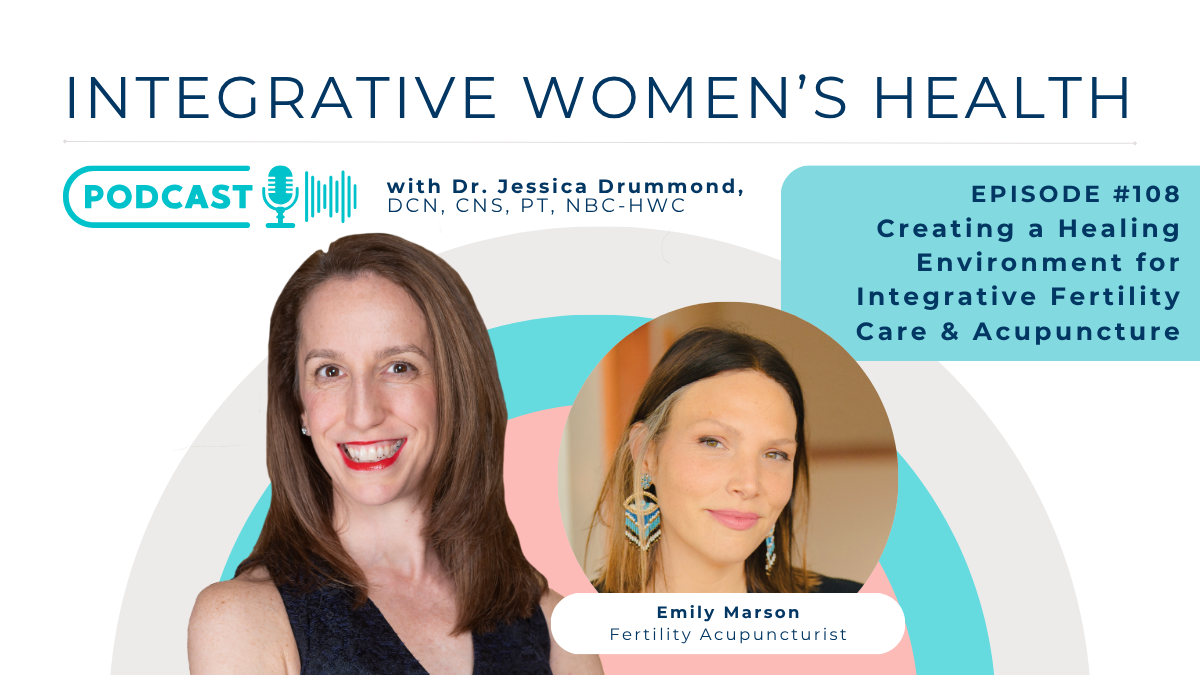
In this episode, I’m joined by Emily Marson, licensed acupuncturist and founder of Aphrodite Fertility Acupuncture in San Diego, for a conversation about integrative fertility care and how acupuncture can support both natural conception and IVF outcomes. Emily explains the critical three-month preconception window, how acupuncture influences circulation and hormone signaling, why mitochondrial support, inflammation reduction, and nervous system regulation all matter for fertility, specific considerations for those with endometriosis, recurrent pregnancy loss, uterine microbiome health, PCOS, male factor infertility, the importance of collaborative care models, and more.
Enjoy the episode, and let’s innovate and integrate together!
Highlights
- How a failed surgery led Emily’s journey to Chinese medicine
- Why the three months before ovulation are critical for improving egg quality and fertility outcomes
- Optimizing cellular health for conception through lifestyle changes, mitochondrial support, and acupuncture
- Understanding Chinese medicine concepts like qi
- The fertility-focused acupuncture techniques used to support ovarian function and uterine receptivity
- Recognizing that some IVF patients may have underlying conditions that need further investigation first
- The often-overlooked role of male factor infertility
- Why fertility treatment should take a holistic, couple-centered approach
- How insulin resistance and inflammation can complicate fertility outcomes for women with PCOS
- What recurrent pregnancy loss can reveal about the uterine environment
- Diagnostic tests that can help identify uterine environment issues
- How recent COVID infections may affect fertility, egg quality, and IVF outcomes
- Taking an integrative, team-based approach to improving fertility care and supporting healthier pregnancies
Learn more about Emily Marson
About Emily Marson
Emily Marson is a fertility acupuncturist, entrepreneur, and the Founder & CEO of Aphrodite Fertility Acupuncture, a leading San Diego–based integrative fertility clinic specializing in acupuncture for fertility, IVF support, hormonal balance, and root-cause infertility care.
She is known for helping women who feel overlooked or unsuccessful with conventional fertility treatments uncover why they’re not getting pregnant—and what to do next. Her clinical approach combines Traditional Chinese Medicine (TCM), evidence-informed fertility strategies, cycle syncing, and functional lifestyle medicine to improve egg quality, regulate hormones, optimize menstrual cycles, and support natural conception and IVF outcomes.
Emily has built a multi-practitioner fertility practice focused on delivering personalized, results-driven care for women navigating unexplained infertility, PCOS, irregular cycles, and failed IVF cycles. Her work centers on identifying and treating the underlying drivers of infertility—not just managing symptoms—while also addressing the emotional and psychological toll of the fertility journey.
Through her clinic, content, and educational platforms, Emily is on a mission to redefine fertility care by giving women clarity, strategy, and a structured path to pregnancy—bridging the gap between Eastern medicine and modern reproductive science.
Learn more about The Integrative Women’s Health Institute’s Programs
- Perimenopause and Menopause Certificate Program
- The Integrative Women’s Health Membership
- Endometriosis Certificate Program
Ready to revolutionize your career and grow your practice?
- Integrative Women’s Health Institute on Instagram | @integrativewomenshealth
- Integrative Women’s Health Institute on YouTube
Click here for a full transcript of the episode.
Dr. Jessica Drummond 00:00:03 Hi and welcome to the Integrative Women’s Health Podcast. I’m your host, Doctor Jessica Drummond, and I am so thrilled to have you here. As we dive into today’s episode, as always innovating and integrating in the world of women’s health. And just as a reminder, the content in this podcast episode is no substitute for medical advice, diagnosis, or treatment from your medical or licensed health care team. While myself and many of my guests are licensed healthcare professionals, we are not your licensed healthcare professionals, so you want to get advice on your unique circumstances. Diagnostic recommendations treatment recommendations from your home medical team. Enjoy the episode. Let’s innovate and integrate together. Hi there. Welcome everyone to the Integrative Women’s Health Podcast. I’m your host, Doctor Jessica Drummond, and I’m here today with Emily Marson. She is the founder of Aphrodite Fertility Acupuncture in San Diego. And we’re going to talk in this episode of course, about acupuncture and integrative health in general in the fertility space, especially even for women in perimenopause, women who’ve had multiple miscarriages, women doing IVF, women who have other chronic conditions associated with fertility challenges like endometriosis and PCOS.
Dr. Jessica Drummond 00:01:36 So we’re going to get a little nerdy into some interesting details from an acupuncture and Chinese medicine perspective. But I also want you to be thinking about this from your practice perspective. So if you are in integrative or holistic health or lifestyle medicine, where does your practice fit in the ecosystem of your environment, of your specialty, of your location? where do you need to start building local teams? Reaching out to local organizations. How can you integrate your practice within the ecosystem of care for women struggling in your area? And I think Emily’s practice is a really beautiful example of this, because she really thinks about what her clients need to be self advocating within the ecosystem of their complete care. So let’s get into the episode. Think about that and I’ll see you on the other side.
Speaker 2 00:02:39 Hi everyone. Welcome back to the Integrative Women’s Health Podcast. I’m your host, doctor Jessica Drummond, and I’m here today with Emily Marson, who.
Dr. Jessica Drummond 00:02:46 Is a licensed acupuncturist, Chinese medicine doctor. And she focuses on fertility acupuncture.
Dr. Jessica Drummond 00:02:55 In fact, as we’ve discussed, she runs one of the top acupuncture studios in San Diego, and I really wanted to invite her here today to expand the conversation around helping women prepare for fertility support IVF cycles. Just what is the role of acupuncture in fertility? So welcome, Emily, and just start by sharing with us a little of the story of how you came to specialize in this area of women’s health. Sure, absolutely.
Emily Marson 00:03:25 Thank you for having me. I’m excited to be here. And yeah, so my story starts after college. I was in finance in New York and hating my life, and I was a weekend warrior, so I ran a little too hard and tore a tendon. Okay, not a big deal, but ended up having surgery on it and the surgery failed. And I ended up having this big pain reaction for my whole body, even though it was just directed at my tendon and the surgery. So I was seeing all of these medical professionals, the podiatrist and the orthopedist and the neurologist, and everyone was really looking at me through the lens of their own specialty and couldn’t quite get outside of their box or their lane and look at the whole picture.
Emily Marson 00:04:06 And so out of desperation, like a lot of people do, I was like, I might as well try magic. I’ll try acupuncture. I don’t know what it is, but okay. So I went to an acupuncturist, and she was the first person who really asked me about my whole body and how it was related to what was going on with my injury. And I was like, who is this? And, man, she listens and she’s putting the whole picture together. So I started to look into acupuncture in eastern medicine and decided to drop my job in finance and move to San Diego and start acupuncture school. And it was there that I took a clinic shift on the weekends, because I was working during the week with a woman who was the supervisor of women’s health, and I thought I was going to go into sports acupuncture because that’s how I came to the field, but it was the only clinic shift I could take. And so women who were looking for fertility, pregnancy, postpartum, menopausal care came to see the supervisor.
Emily Marson 00:05:08 And we treated these patients. And I started to have these results that maybe my fellow students weren’t having. And I was like, I didn’t know what I was doing at the time. But I did really think about is the universe pointing me towards this as my specialty? And I started studying it in the cycle and the HBO axis and even IVF and fell in love. And I became obsessed. I am obsessed with helping women and women’s health and the cycle and the symphony of what needs to happen for a pregnancy to be healthy and safe, and even a postpartum for women to return to self. I became obsessed with what the body did in those really unique eras of her physiology. And from the get go. I opened a practice that specialized in women’s health and fertility. And ten years later.
Dr. Jessica Drummond 00:06:05 I relate so much to that story. I started as a physical therapist in again, I thought I was going to go into sports medicine because that’s what I had done as a child and as a teenager. And yeah, but I’ve been in Women’s Health now for 25 years.
Dr. Jessica Drummond 00:06:20 So we are. Yeah we are. So you started your practice in San Diego. Now let’s think about when women are trying to conceive. How do you think about that holistically? Let’s say they haven’t had any challenges yet. They’re just trying to think about how to prepare their bodies from a Chinese medicine and acupuncture perspective. Where do they begin?
Emily Marson 00:06:44 Yeah. Great question. So when you are born, you have all the eggs you will ever produce, but those eggs are kept in follicles, and those follicles stop in their process of maturing the egg until you hit puberty. And then cohorts of those follicles are released from the vault every month. And that cohort that was just released goes through a three month process before one of those follicles and one of those eggs will be released in ovulation. Okay. So you have about a 90 day to 100 day window when the follicle and the egg are going through a process of maturing. And when we talk about maturing, we are talking about pulling apart chromosomes. So you as a woman have chromosomes and DNA and genetics that are all jumbled up into sets of chromosomes.
Emily Marson 00:07:41 Pieces come from their mom and from your dad. So you have sets. And those sets need to separate so that your set can meet with your the male partners Set and create new sets of chromosomes and new DNA. And so when we talk about this sort of like preconception, period, we’re talking about optimizing the body so that those chromosomes can be pulled apart efficiently. And if they’re not as women as they age and their cellular health goes down, their mitochondrial health goes down, their ATP goes down. This is why we have great hair and wrinkles. This is ATP and mitochondrial health going down, which is a natural process. The cellular energy of pulling apart those chromosomes goes down. And then you’re left with chromosomes that don’t look and don’t function in a normal way. The body recognizes this. And this is where poor quality eggs come into play. And this is why you have more abnormal eggs as you get older. So for women who are thinking about trying to conceive, you want to optimize your cellular health.
Emily Marson 00:08:47 Now what does that really mean? Okay. Optimizing cellular health looks like doing things, ingesting things, and putting things on your body that lessens the cell’s sort of derangement. Okay, so you want to increase the cell’s capacity to pull apart chromosomes, and that looks like the traditional things like getting more sleep and eating to feed your body instead of without thinking about eating the things that we already know. It’s good to repeat, though, because people need to hear it nutrient dense meals, but it also means getting the right supplements in. So these mitochondrial health supplements like NAD and PQ and might appear, which actually give the body more cellular ATP. It looks like getting acupuncture, if I do say so myself. And what acupuncture does is the needles are something foreign going into the body, just like a mosquito bite. And anything that enters the body that is foreign gets a reaction from the body. Okay, so you have needles that go into the body. They remain there for about 20 to 30 minutes and the body responds and it sends blood and lymph and histamine to the area, just like it would for a mosquito bite.
Emily Marson 00:10:03 And when you send blood to the area, wherever you put the needles, then you’re sending hormones. Okay. So the brain produces the hormones, and the ovaries and the uterus have to receive the hormones. And how do they get there? They get there through the blood. Okay. And so in order to optimize your fertility and your hormone health, you need to optimize your blood flow. And the needles will produce a reaction and cause the body to respond and pull blood there. If you pull blood there, you pull the hormones there. And then it also looks like on the male side, reducing things that might hurt sperm and decrease their count. That is generally heat producing activities. So that’s no saunas, no hot tubs, no laptop on the laptop, no cell phone in the pocket. And then they also are suggested to take these cellular energy supplements. And then lastly, it’s to think about what you put on your hair, on your skin, on your hair, on your face. Because these products in our environment, it’s not just excluded hair, skin and nails, what we breathe and what we stand on and we’re standing on like plastic grass all day, there are things that enter our body that are called free radicals, and these are molecules that have an extra oxygen, okay.
Emily Marson 00:11:30 And when you have an oxygen that is not capped, not neutralized, then you have oxidative stress. And this oxygen’s extra oxygen molecule goes and slices of chromosomes. So it’s all about chromosomes. And so what you want to introduce to your body is things that are Antioxidant. Okay. And so this is why antioxidants are so important in preconception care as well. Because they go and they cap that extra oxygen. And then there’s less damage to the egg and to the chromosomes. So that was long winded answer. But basically this is the preconception 3 to 4 months before you want to start trying to conceive is to prep your cells and the follicular development and the chromosomal quality. And you can absolutely do that by making these changes in your lifestyle.
Dr. Jessica Drummond 00:12:20 Yeah. So we’re lowering the toxic load or helping to support detoxification, lowering the exposure to environmental toxins, increasing mitochondrial support, nutrients, antioxidants, everything from NAD to CoQ10 to PK, all of that. There is some pretty good research on the mitochondrial support supplements for both male and female preconception and pregnancy support for that egg and sperm quality.
Dr. Jessica Drummond 00:12:49 And you mentioned that with the acupuncture, essentially you’re supporting blood flow to the ovaries, to the testes. Obviously, you don’t have to put the needles exactly in those locations. Can you talk a little bit about how Chinese medicine thinks about the needle locations?
Emily Marson 00:13:07 Yeah, I’ll actually sort of back up and talk about the theory behind Chinese medicine, as I relate it to a Western mind. Okay. So yeah, I like to make it tangible because I think a lot of acupuncturists talk about it as they learn it in school, and I think that people still don’t get it. Okay. So when you rub your hands together, it creates a heat, right? So movement creates heat. Like when you run, you sweat. Movement creates heat. Everyone can sort of get behind that. So your organs move okay. So your heart pumps and your kidneys filter and your lungs expand and contract. And so there is a heat coming off of this movement of your organs that I don’t think is quite captured by Western medicine.
Emily Marson 00:13:49 Okay. Yeah. And this heat is energy. Like when you turn on a stove and there’s a flame, it creates a boiling water. So heat is energy. So when we talk about energy, we’re actually talking about heat and the heat that comes off of each organ. Now the Chinese mapped these channels of heat a thousand years ago. And how they run in the body, just like everything else in the body, runs in a pattern. So does this heat that comes off each organ. So the heart heat comes off of the heart and runs down the inner aspect of the arm. And so each organ has a heat pathway. And these are the pathways that maybe you’ve seen on Chinese medicine charts. We call this energy qi. But you can literally think of it as heat. And so when you have either the heat pathway or the organ itself maybe having deficient heat. So producing deficient heat not enough. Then you have a certain set of symptoms. If you have the heart, maybe racing, producing more heat, then you have excess heat.
Emily Marson 00:14:58 And that looks like maybe inflammation, excess heat you can think of as inflammation. And then sometimes along that heat pathway that heat gets stuck just like in the blood vessels. It can get stuck or a nerve can get blocked in some way or entrapped. And so that’s called stagnation in Chinese medicine. So there’s three sort of pathologies in Chinese medicine. There’s deficiency excess or inflammation and then stagnation. So if the heat coming off of the heart is let’s say excess in nature, heat always rises. We are nature. So excess heat coming off of the heart rises to the head. And you have the symptoms of anxiety, which literally feels like heat. Right. Flushing. You may have, like, hot flushing. You may have insomnia because heat at night that rises to the head will make you like awake. Too much heat is a weakness. And so then the Chinese mapped certain like wells along that heat pathway that if you put a needle into, will address one of those three pathologies. So if you put a needle into a certain point, they know they’ve mapped that it will bring up a deficient heat.
Emily Marson 00:16:17 It’ll make more heat in the heart that is maybe not producing enough, or it’ll push through a stagnation or tamp down an inflammation depending on the point in that channel. So they have mapped that over a thousand years of basically like clinical trials. And so certain points do certain things to the presenting symptomology associated with the pattern that’s happening to the heat pathway of the organ. So each organ now has sets of symptoms that are mapped to certain points. And you can either raise deficiency lower access or push through stagnation. Now with fertility on top of that. So we have the channels of heat pathways coming off of the organs. That’s why you see acupuncturist put needles in the hand to affect the ovaries. But in fertility acupuncture we also use the sort of directness of Western medicine. So it’s very integrative. So we do the pathways, the patients presenting symptoms. And then we literally put the needles over the ovaries. So I will go like down past the subcutaneous level. And I will literally tap on the ovaries. And what that does is it creates a reaction of the tissue.
Emily Marson 00:17:34 Blood is sent there. The body is like, let me get this forward thing out of the body. So it sends blood and reaction. It’s reaction processes there, and that will do a couple things. It’ll bring blood there, which I said also brings. Whenever you send blood you send or hormones. And it also gets the ovaries. Just wake up a little. And so you can influence receptor sites if you’re in IVF and maybe you’re not responding to the medication, we tap on the ovaries and we get those ovaries to sort of wake up and they receive more of the medication because the receptor sites are on. And we use other tools like an herb called mucosa to push away inflammation in, particularly in fertility cases around the uterus, like endometriosis and maybe inflammation associated with PCOS. And if you clear inflammation, you also have better receptivity of the connection from the brain’s hormones to the ovaries and uterus.
Dr. Jessica Drummond 00:18:28 Yeah. So from a physical therapy perspective, there’s a little bit of overlap there similar to visceral mobilization.
Dr. Jessica Drummond 00:18:35 So that’s where we’re creating space for the organs with a manual technique that kind of just mobilizes or gets fluidity to the fascia, which helps with lymph flow and circulation. So these are a lot of tools and strategies to do similar things to create good circulatory flow, good hormone flow, reducing inflammation locally, even not just systemically. So. Yeah that makes a lot of sense. Work those things together. When you have a patient or a couple that’s going through IVF, what are some of the things you’re thinking about that might be specific to that experience?
Emily Marson 00:19:14 Yeah. So I would say we see some of the toughest cases because oftentimes we see people who have already been through IVF and it maybe is failing them. They’re not getting embryos. Or maybe they’ve had a couple of failed transfers because those are the people who are like, I don’t know what to do next. I’ll try magic. Let me go. Yeah. To acupuncture. So we see a lot of unexplained infertility. And I would say pattern wise, we really have seen a lot of unexplained infertility end up being endometriosis.
Emily Marson 00:19:43 And often when patients step into IVF care, no fault of the doctors, but they the doctors are trained in their lane and so and good doctors don’t do this. They will do more diagnostic work. But most of you have doctors will say you’re here for IVF, let’s take you through it.
Dr. Jessica Drummond 00:20:01 Rather than maybe assessing for endometriosis, doing excision surgery if necessary, things like that.
Emily Marson 00:20:06 Yeah, exactly. And so often what we do here in the integrative sense is we are working on the on the patient in eastern medicine, eastern medically we’re thinking up all of their systems, their heat pathways, but also we’re helping the patients sort of advocate for diagnostic more diagnostic care. And with endo, there is a test now that Ray doctors don’t love. And they only really do at the end of many, maybe many fail transfers. It’s called the reset Teva. And what it looks for is a biopsy. It’s like a very simple procedure, and it’s a biopsy that looks for high BCL six levels. If you have high six levels, then you are basically positive to endo or adeno meiosis.
Emily Marson 00:20:48 The problem that R.A. doctors see with the test is that if you are negative, it doesn’t rule out that you don’t have it. They would rather have a more solid test for a negative result. But I say and I’m on a soapbox here. I say, why is this test not being done on the front end of fertility care? Maybe you’ve been trying for a year zero HCG so it’s zero positive pregnancy test. Is this for me? Is a red flag like no positive HCG? This should be really advocated for the patients who come to see me, who have unexplained infertility and are in the process of IVF, and they have some things just not being received well in the process of trying to like override with medications in IVF. I have no problems with IVF, and I think that collaborative care is the future of fertility, but I think that there is sort of a gap in care from like their ob gyn, where they’re just maybe doing an HSG or checking their numbers, and then they send them to IVF and they’re on the IVF track.
Emily Marson 00:21:53 I think that’s where sort of you and I and the other, like integrative wellness practitioners, can step up and ask for more diagnostic care, and then let’s say they have endo or positive BCL six and they go get excision surgery. And then they could try naturally again and potentially not go through 20 or $30,000 worth of IVF. And we could capture a percentage of those could attain pregnancy naturally. And you know, the emotional cost. The financial cost of IVF is very high. but I’ve talked to some races about it and I’m like, why are we not doing the sativa in the front? And Seth two, in fact have said, well, they would do IVF anyways. And I’m like, I don’t I maybe not. There’s the potential to lessen the burden of their story as they go through their fertility care.
Dr. Jessica Drummond 00:22:53 Yeah. And I think this is where that personalization and the integration really matters because you’re looking for that inflammatory marker. Great idea. Also, we have a lot better imaging now for tracking endometriosis via MRI or sometimes even a CT scan depending on their age.
Dr. Jessica Drummond 00:23:13 It also depends on what’s their age, what’s their AMH, how long have they been trying? What’s their partner status? It’s shocking to me that still so often people will go to very more extreme IBS treatment without even first checking to see the quality of the sperm. Yeah, right. Obviously they will check that by the time they get into an IVF cycle. But yeah, when the third of the time it’s male factor.
Emily Marson 00:23:44 Absolutely. And I think there’s also like for male factor there’s almost like a hit to the machismo of men. There’s like a sense of their masculinity is being called out if their sperm isn’t 100% looking great. And so there’s a hesitancy to get a semen analysis or a DNA fragmentation test from the male partner themselves often. And it puts women who are, I think, doing everything they can to their bodies, to to their wallets to get themselves pregnant. And there’s like a hesitation to approach their partner because it’s like a almost like a fragile topic. And so we try to lift that burden off of our patients who are mostly female.
Emily Marson 00:24:34 And we say, okay, approach your partner and say, why don’t you take a semen analysis to to rule you out. So you’re like associating them with the outcome with it being not them. And then it changes the story for the hurdle of getting your partner to do a semen analysis.
Dr. Jessica Drummond 00:24:54 Yeah. And I think also for people who might be setting up fertility type practices in any kind of integrative or conventional way is to really think about just present it as normal that the couple is being assessed totally physically and emotionally. Because I think the other thing that has happened a lot in the last 15 years is we’ve seen a lot more education on sort of preconception care, fourth trimester. It’s not just only about the pregnancy. There’s this preparation for pregnancy that’s relatively new even amongst women. You know, I’m 51 now. When some of my friends were getting pregnant in their mid 20s, I had several friends who would smoke till the day they got pregnant. And now I think for women in the last 15 or 20 years, there’s a shift to that preparation and we now know how important that is for men to.
Dr. Jessica Drummond 00:25:44 That’s the only time they get to prepare their sperm because their part is done. But the health of the sperm influences things like premature birth and pre-eclampsia. And so not just the sperm quality, but the entire health of the pregnancy and the partner and the baby. So I think if we start approaching this as like a couple issue rather than a woman’s health issue, we can address some of those things. And I think you’re exactly right. Like assessing for things like endometriosis and PCOS, even just those two, which are the most common issues, would go a long way to not just immediately going from just trying randomly for a year without any preparation to a more mindful approach and then potentially therapeutic strategies for treatment of PCOS and or endometriosis or adenoma not out of meiosis. A little tricky because you still need the uterus, but maybe there might be a different decision made. There might be surrogacy discussed or things like that before. Just IVF pipeline.
Emily Marson 00:26:54 Yeah, PCOS is interesting too, because when a PCOS patient walks into a fertility clinic, they have a high AMH.
Emily Marson 00:27:01 And so I often see they’re almost given hope. Oh, I have a high egg count. That means that I’m going to have better results. And the quality is not there for a PCOS patient. So often they’ll have kind of 30 follicles growing and they’re like, oh, I’m definitely getting a blast. I’m definitely getting an embryo. And the attrition rate is so high. And all of a sudden they send maybe two to PGD testing. And there’s neither of them are normal. And it’s such a head always is. But to have such a rate of drop off and they have so much hope, I’m guaranteed almost to get an embryo with those numbers. And not necessarily. And so for us, for PCOS patients who are in the IVF direction or like in their life cycle of IVF, what matters so much is getting their body and their eggs cleared of the influence of insulin in their body and their inflammation, and that can change their outcomes in IVF so much, which is not something that IVF doctors are really doing.
Emily Marson 00:28:08 Unless they have a strikingly high in a onesie, then they’ll put them on metformin or something like that. But even in sort of subclinical PCOS, where their numbers are, their AMH is just slightly high for their age. Maybe their LH is slightly high, though their A1 sees like creeping in the 5.55.6 and they have infertility. This is the other symptom, okay. The other sort of glaring symptom. And they’ll be like, oh, my cycles are generally regular. Every other cycle is like 40 days. You’re like, okay, something is like leaning. I think it’s like a spectrum leaning towards PCOS. That’s so critical for us in the wellness space to be like, there is a way to change your outcomes, and we need to work on the root before you’re thrust into the sort of control factor of IVF so that we can get you those outcomes.
Dr. Jessica Drummond 00:29:06 Yeah, absolutely. And I think that’s where the nuance is so important. Just starting to look at what are some of the factors that are even if they’re not fully diagnostic, they’re all pointing in the same direction.
Dr. Jessica Drummond 00:29:21 That’s something we can work with. Absolutely. And so what about for women who are able to get pregnant, but they struggle to maintain pregnancy. How do you think about those kinds of cases?
Emily Marson 00:29:34 Often they are told that it’s just a quality or sperm quality, and maybe that they’re over 35 and it’s their age. And I hate that explanation. Okay. Yes, sometimes. Often the first miscarriage, it can be attributed to genetics. Everyone, even women in their 20s, have abnormal eggs and sperm. And oftentimes the body recognizes it. And you don’t even achieve a pregnancy, but sometimes it slips through. Okay. But if you have recurrent pregnancy loss, this to me is more uterine environment. We need to be looking at why embryos can be created, but then not attach well or proceed in growth. And I don’t actually think that those tend to be just unlucky genetic abnormalities. And oftentimes like patients are screened for genetics in those cases, but they’re not.
Dr. Jessica Drummond 00:30:27 Even tested afterwards.
Emily Marson 00:30:29 That’s exactly. Nothing.
Emily Marson 00:30:30 Nothing. And this is where we want to look at uterine environment. And there’s like really three factors right. There is latent infection. So silent infection there’s dysbiosis. So there’s not enough lactobacillus. And the uterine environment needs to be really singular in its microbiome unlike our gut. And so you want a lot of lactobacillus and really nothing else. And then the last is silent endo. So these three tests are looked at by IVF clinics after failed like three failed transcripts, three failed transfers, which is so terrible and it is and so emotionally taxing, and they’re really not looked at in the natural fertility world. But there are three tests and they come together. And it’s the receptiveness which we talked about and the Alice and the Emma. So the Alice Emma receptivity. And again, these tests can be done. Should be done by their OB GYNs. But it’s not. It’s not happening now. It’s only happening at the end of the pipeline. You’ve made embryos, you’ve gone through Stem, you’ve paid $30,000.
Emily Marson 00:31:37 Now you have embryos and you’ve transferred fail. And these are like easy fixes, like a latent infection is just taking an antibiotic.
Dr. Jessica Drummond 00:31:45 Yeah. And we.
Emily Marson 00:31:46 Have shame.
Dr. Jessica Drummond 00:31:48 Yeah. And we have increasingly better tests for the vaginal microbiome as well. We have multiple companies working on this. Vaginal biome Sciences is one of the best microbiome labs. So there are lots of different ways to look at the some that if you’re looking for specific thresholds for antibiotics, you know, microbiome Vaginal Biome Sciences is really working on that. There’s also if you’re just looking at broad spectrum like genetic, like we don’t know what’s going on in there and we’re just looking for dysbiosis. We have tests for that. Some of these there’s a lot of overlap among the tests. There are other tests available commercially, but I think what you’re saying that’s a basically a 200, $250 test and could be antibiotics, probiotics, dietary shifts, just changing underwear hygiene. And I also think this is where we need to talk about partners, because we now know, for example, BV is really carried by men’s.
Emily Marson 00:32:49 And it is it. We have had a handful of patients who have had chronic BV infections and we cleared them and then boom, pregnant. It’s like we have all of our patients actually start on veggie biome, which is a and again I’m not a your medical advisor. So don’t take any of my medical advice. But it’s a over-the-counter vaginal suppository. And the reason that we have all of our patients use it is because it was what IVF doctors were prescribing, even though it is over-the-counter, after this test came back as positive for low Lactobacillus microbiome threshold. And it can only help. So we’re like, let’s just take that off the table and it’s easy enough. And then I like to advocate to my patients who have had potentially like recurrent miscarriage to have a latent infection biopsy done. And then if I suspect no, I will also push for the reset Teva. But that’s like environment. That’s uterine environment. That’s what we categorize as uterine environment. And it’s often what we see show up in our clinic because it’s not being fully looked at diagnostically before women head down their sort of IVF pathway.
Emily Marson 00:34:05 The other thing that sort of comes up in recurrent miscarriage is autoimmune diseases and clotting factor. And so those are treated with certain medications. And that can be the singular thing that needs to create a safe pregnancy. And so we have our patients run a recurrent pregnancy loss panel, which is deeper testing and not often covered by their insurance, unfortunately. But I say let’s rule some of this stuff out so that you don’t have to suffer in silence as you go through these traumatic events.
Dr. Jessica Drummond 00:34:41 Yeah. And then I think we have to be really aware of clotting factor issues in a ongoing Covid environment, because that’s really the number one thing that affects pregnancy, blood flow and even placental health in having a Covid infection or recent Covid infection or Covid infection during the early stages of pregnancy. So I absolutely educate our preconception patients and pregnant patients and postpartum patients to wear masks, because I think that’s one of the most important blood flow issues. yeah.
Emily Marson 00:35:17 So we have a IVF doctor that we really like who is starting to talk about like a recent Covid infection affecting like egg quality and having some time pass before they go into Stem.
Emily Marson 00:35:32 If you’ve had a recent Covid infection, because they see an association with the inability to get to blastocyst after.
Dr. Jessica Drummond 00:35:39 And I think there’s probably two factors in that. One would be that the clotting factor challenges, but also mitochondrial dysfunction. So we talked about how adding those mitochondrial support supplements, even in women who haven’t been sick with any direct mitochondrial injury. But I do think we know so much more about Covid now that we have to take that into consideration. Lastly, for our pregnant. So a lot of our practitioners work with women who are perimenopausal and menopausal. But absolutely, there are perimenopausal women who are still trying to get pregnant. Talk a little bit about that overlap. And what are some of the things you think about for women who are in their mid to late 40s?
Emily Marson 00:36:23 Yeah, I think that hormones pulse, okay. So they come from the pituitary gland and they pulse out. And in parameter pause that pulse becomes more dysregulated. Right. You get these like surges. And this is where you get the symptoms of hormones hot flashes and that sort of thing.
Emily Marson 00:36:40 One thing that I like to say, even though I know you know this, but to the general listener, is that women think in perimenopause that their cycle will get longer, but in fact it gets shorter first. So the first sign of perimenopause is let’s say you’ve always had a 29 day cycle. You’ll start to see it become 625, and then over another several years it’ll start to lengthen out. 3040 so the first sign is a shortening of your cycle. And what happens often is that your brain you’re working on that cohort of follicles, one’s going to ovulate. So your brain has to send down follicle stimulating hormone FSH to get those follicles to grow. And one of the follicles has more receptors on it for FSH. And it becomes a dominant follicle. And then it is the one that ovulate the egg at ovulation in perimenopause. And that that whole FSH pulse is triggered by your bleed. Okay. So you shed your lining and the brain says, okay, we have this new cohort. Now we’re going to send down FSH.
Emily Marson 00:37:47 And the follicles grow in perimenopause. The body is like, oh, I’m getting signaling that we don’t have a lot of eggs left. And so in the cycle it’ll start to send down FSH in the cycle before. So you’ll be in your luteal phase of one cycle. And there’s this cohort that’s coming up that’s supposed to have FSH after you bleed to grow for that dominant follicle to the next cycle. But instead of waiting until you’ll bleed, your brain will send down FSH early. So it’ll be like, hey, wake up! Ovaries wake up. And so there will be an early development of FSH and the follicles. And so you will bleed because remember, what’s happening in your ovaries and what’s happening in your uterus are happening separately. And so you will be bleeding, but your follicle development for that cycle will have already started. And so this is where you’ll have an earlier ovulation. It’s not that it took a shorter amount of time to get these follicles to size. It’s that the brain started the process overlapped the two cycles.
Emily Marson 00:38:52 And so in eastern medicine and using acupuncture we get that signaling to take a deep breath. We get the signaling to regulate. So it’s not frantic so that when it signals and it when it pulses regularly it pulses smoothly. And it’s not trying to force the ovaries to react because it’s thinking, I don’t have any time left and I need to just send out as much signaling as I can. And so it’s that synchronicity of getting the brain and the ovaries and the uterus to react together that can help with the follicular development stay sort of like in its cycle. But that definitely doesn’t happen in one cycle because of the overlapping nature. We like to have three months, once weekly of acupuncture with our patients to see the body come back into centered, pulsing and a function.
Dr. Jessica Drummond 00:39:55 Yeah. And so I think that’s one of the core messages of this conversation, that the fertility supportive work is over a period of months, generally 3 to 9 months pre during post for the whole couple. So when we think about this holistically, there’s a team but there’s also a commitment to the process over time of lifestyle, of acupuncture, nervous system regulation strategies, nutrition, supplementation.
Dr. Jessica Drummond 00:40:24 Then you create this really holistic environment so that even if people one many people will then not need IVF cycles. And if they do, they’re much more likely to be successful because they’ve cleared all the groundwork. Things are coordinated. The DNA of the of the eggs and sperm are in better condition. If endometriosis is present, it’s been addressed and at least there’s an awareness of it. And then there can be really clear treatment plans being made. For some, that surgery for some that isn’t it just depends. And I think that’s the way to start thinking about fertility. No matter what the person’s age is or what their labs are, it’s like in this couple’s situation. How do we develop this whole support strategy around them to be the most successful.
Emily Marson 00:41:14 Yeah, that’s really well said. And I wish there was a culture of thinking about preconception before you’re ready to start. And we are nature. You don’t put a seed in the ground and it pops up a flower in a day. And but we’re used to that.
Emily Marson 00:41:34 And so there’s anxiety around an urgency around fertility often. But to remember and to hearken back to that nature never ends. That’s the amazing part. Nature never ends. It’s so resilient and we are part of that. So just to think of it as a real ark, a fertility ark, and you want to spend the time to nurture the growth of your bouquet of flowers that you’re going to be producing, right? So think of yourself as nature, Not we are in nature, but we are nature. And nature doesn’t respond to force well. And this is where sometimes we see IVF really push hard. And for whatever people are like, why is it? Why are my ovaries reacting when we’re throwing? We’re like slamming medications because like, the leaf doesn’t grow if you just yell at it, changing the narrative around it. But I totally get it. It’s so urgent. It’s and it’s visceral. And the women who come to us have been trying for a long time, and they’re like, what is broken? I have been able to fix my life in every other way because I’m a type A lawyer, blah, blah, blah.
Emily Marson 00:42:48 Why can I not fix this? And so I get the the pulling of the heart to get to pregnancy immediately. So what we do and what I teach my employees to is you never want to get in the way of or like, use your bias of wellness to get in the way of their path to the fastest, healthiest pregnancy. And so that can look like a lot of women come in and they have suboptimal thyroid levels so that it’s normal if you were to look at it in a PCP perspective. Let’s let’s say a 3.8. But we know statistics and research has shown that it needs to be below a 2.5, ideally a two, to provide the thyroid health that would then equal a safe pregnancy. And as acupuncturist, we would love to spend so much time using herbs to regulate the thyroid and the acupuncture. It takes a long time. It takes a long time and not that can be done in postpartum. Let’s get your thyroid like you want. We want a healthy baby. I’m on your team.
Emily Marson 00:43:55 Let’s just let’s advocate for a little thyroid support through medication and get your thyroid within range. Will still be working with you, but let’s get you to a healthy, happy baby. And I’m not going to get away it because of my biases against Western medicine. I’m here to help you get to your healthy, happy pregnancy the fastest way we can.
Dr. Jessica Drummond 00:44:18 Yeah, and I think that’s really the best way to think about holistic health in general. It’s almost never like we don’t want to use a tool that’s available to us. It’s almost always the case that we want to use those tools and think about the longer term health, the deeper health, health over time, improvements over time. But health is so dynamic that using all the tools that we have in any given circumstance, I think is really the best way to think about it. So thank you so much for being here. I think, Emily, your perspective and all your experience really digging into the collaboration between integrative medicine, Chinese medicine, acupuncture and Western medicine, whether it’s IVF or endometriosis, surgery and physical therapy medications, I think your clinic is such a successful example of how to integrate within a system that, from a conventional lens, doesn’t take this into consideration at all.
Dr. Jessica Drummond 00:45:21 So you have to really advocate for yourself, but also help your clients self advocate.
Emily Marson 00:45:27 Yeah, that’s why we have patients who stay with us because we are walking with them. They’ll come back for their second and their third baby with us because they feel like they are truly cared for. And I really think integrative care is the golden standard of care of the future. And I hope that we can just educate the masses about integrative care, and then we can bring on the professionals, the IVF doctors, the ray, to sort of open up their perspective on care as well. And there are good doctors doing it, but it would just be like, what a world it would be if we could use all of the tools that look at the body and start to think collectively about how we get these patients to their families.
Dr. Jessica Drummond 00:46:20 Absolutely. So if our listeners would love to learn more about your practice or your work, where can they best find you?
Emily Marson 00:46:28 Yeah we are. Our website is Aphrodite Fertility com, and those are our social handles as well.
Emily Marson 00:46:33 And like I said, I’m obsessed. So if you ever just want to email me, I can I’ll chat with you over email about your case. We have virtual appointments as well, but really, I’m just here to reach as many women as I can who are struggling. So I’m here for you and reach out.
Dr. Jessica Drummond 00:46:48 Excellent. Thank you so much, Emily. Thank you so much, everyone, for being with us this week, and I’ll see you next week.
Emily Marson 00:46:53 Thanks for having.
Dr. Jessica Drummond 00:46:53 Me. I hope you found that episode as inspiring as I did. I think Emily really shows us a path as integrative health and wellness professionals. How to start building communities of integrative healing, how to help our clients be proactive and empowered and ask good questions and build healing teams in the same way that we do in the coaching model through the Perimenopause and Menopause Certificate program. We really think about where does your practice fit in into the ecosystem of your community? Who are you collaborating with? How are you educating the women in your community who need your services? And then we take a deep breath and a step back, and we work with these women to help them have a real healing experience.
Dr. Jessica Drummond 00:47:44 I loved how Emily said that so many of her clients come back to her year after year, baby after baby, and for you builds a very stable business practice because women, you don’t need to be constantly, constantly getting new clients. You work and really deliver a strong, skillful, empowered, supported healing environment for the clients that you work with. Your delivery of excellent, excellent care, and I can tell from the way Emily speaks about fertility, health, how much she really knows about evidence based fertility care from an integrative perspective, from a Chinese medicine perspective. She said she is obsessed, and that’s what I want you to be. I want you to be obsessed about your topic so that when women come into your practice, when couples, if you’re working in fertility, you know, we talked about that. I think that’s a huge missing link in really optimizing fertility care to think of each fertility experience as a couple experience and that helps your business stay strong, stay stable, not need to be constantly marketing because your delivery of service itself is a healing experience that functions as marketing.
Dr. Jessica Drummond 00:49:02 And you don’t have to think of it that way. You just want to know that each of your clients feels cared for in a very highly, skillfully excellent way. Not just because it’s a lovely environment and the music is right, and it feels good in there. And, you know, all of these things which I think is really important. Go back and listen to our episode with Abby, the architect, who we talked a lot about physical healing spaces and experiences, but how people feel when they’re working with you, with your team. What is that experience for them that is part of your business and marketing ecosystem? Because it helps people to be supported in their entire journey, because you have the right referrals for them, you have the right relationships for them. You help them ask good questions of their other providers and be even more supported there. So if you want to get into the space of fertility, integrative fertility Acupuncture? Absolutely. Reach out to Emily if you’re struggling with fertility issues yourself. She’s a great resource and I hope you enjoyed this episode.
Dr. Jessica Drummond 00:50:15 Step back. This week, your homework is to think about how you can deliver such a wonderful service to each and every client that you are who they choose to support them through their health issues for the rest of their lives, or the rest of their fertility experience, or the rest of their perimenopause menopause journey. Whatever it is for you that you’re supporting in your practice. How can you build such an excellent, empowered, healing service that people want to stay with you through the entire journey to get the best possible care? Lifestyle medicine. Integrative health isn’t just a one off appointment, it is a commitment over time to improving health, Healing. Fertility. Wellness. Energy. Long term perimenopause and menopause. Health. And you have the opportunity in your business to think about how each and every experience can encourage people to want to stay in that container over the long term, and bring their friends and family with them. Have a great week. I’ll see you next week.
Speaker 4 00:51:30 Thank you so much for joining me today for this episode of the Integrative Women’s Health Podcast.
Speaker 4 00:51:36 Please share this episode with a colleague and if you loved it, hit that subscribe or follow button on your favorite podcast streaming service so that we can do even more to make this podcast better for you and your clients. Let’s innovate and integrate in the world of women’s health.
Join Dr. Jessica Drummond to learn proven strategies to confidently address perimenopause, menopause, and chronic conditions while growing a profitable and impactful practice.
Discover proven strategies to attract high-value clients, deliver transformational results, and position yourself as a sought-after expert in this rapidly growing field.
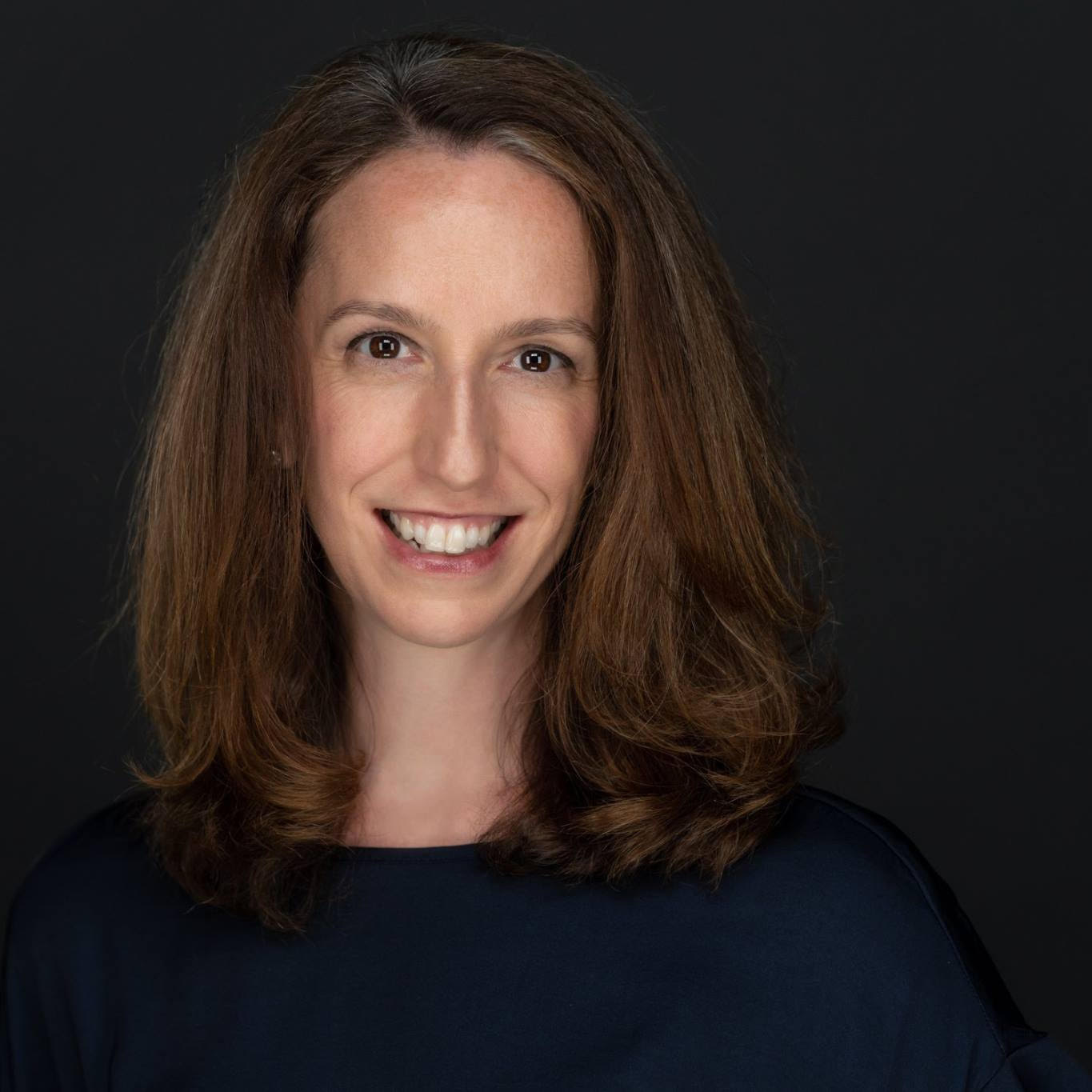
Dr. Jessica Drummond
Founder & CEO
The Integrative Women’s Health Institute
At the Integrative Women’s Health Institute, we’ve dedicated 17 years to crafting evidence-driven, cutting-edge programs that empower practitioners like you to address the complexities of women’s health.
Dr. Jessica Drummond’s unique approach focuses on functional nutrition, lifestyle medicine, movement therapies, nervous system dysregulation, trauma, and mindset – essential elements often overlooked in traditional health education.
In addition, your training will be fully evidence based, personalized, and nuanced (this is not a cookie cutter approach) in functional nutrition, exercise, recovery, cellular health, and all other lifestyle medicine tools.
You’ll learn to support your clients with cutting edge tools safely and effectively.