Follow Us for Free:


About the episode
“Heart disease is the number one killer globally, and 80 to 90% is preventable.” – Michelle Routhenstein
Heart disease is still the leading cause of death for women but it’s surprisingly easy to overlook in everyday practice. It develops quietly over years. Blood pressure creeps up, cholesterol patterns change, PCOS, insulin resistance, and chronic inflammation continue to influence vascular health long after the original diagnosis. By the time symptoms become clear, the disease process has often been underway for decades.
The encouraging part is that so many of these risk factors are things we’re already talking about with our clients, like nutrition, movement, blood sugar regulation, and gut health. Supporting cardiovascular health doesn’t require a completely different approach. It means recognizing when those everyday interventions can also protect the heart and knowing which early risk factors deserve a closer look before they become much bigger problems.
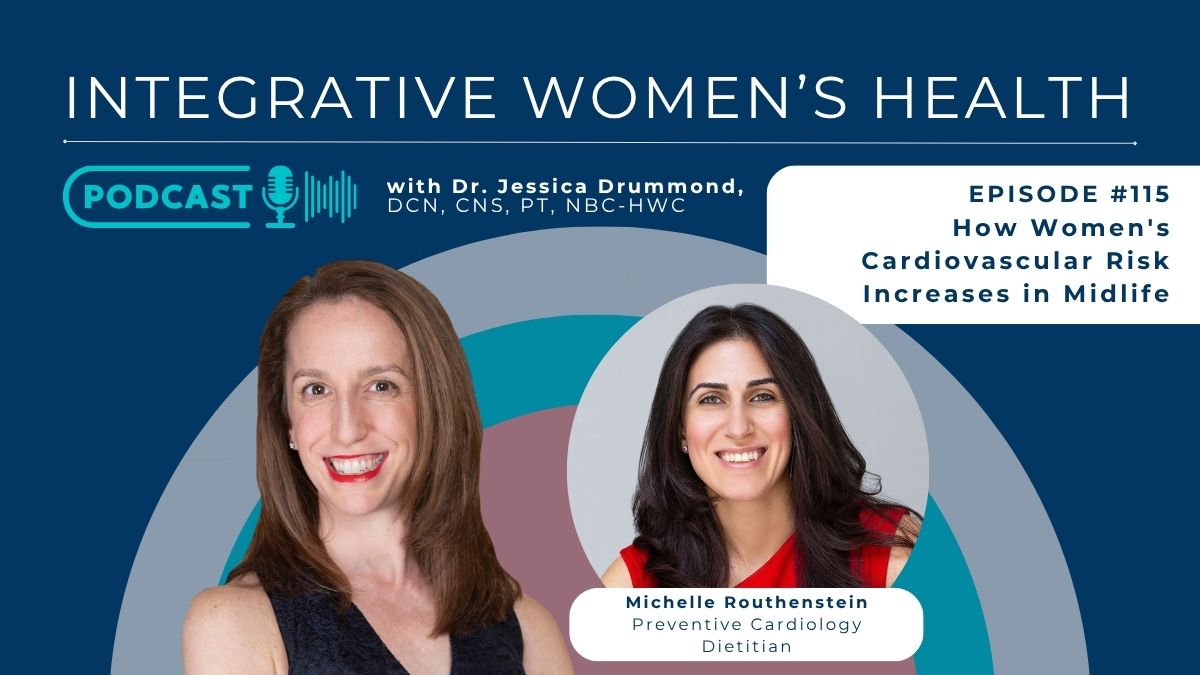
In today’s episode, I’m joined by Michelle Routhenstein, preventive cardiology dietitian and founder of Entirely Nourished, to talk about why cardiovascular prevention belongs in every women’s health practice. Michelle shares the early warning signs she wants every practitioner to recognize, nutrition strategies that support vascular health, the importance of nitric oxide and gut health, why soft plaque deserves more attention, the simple changes practitioners can make to help women reduce their cardiovascular risk, and more.
Enjoy the episode, and let’s innovate and integrate together!
Highlights
- Why cardiovascular disease remains the leading cause of death in women
- Michelle’s whole-person approach to preventing heart disease through nutrition and lifestyle
- The key cardiovascular risk factors every woman should know
- Why a calcium score doesn’t tell the full story
- How nutrition, stress management, and inflammation influence the risk of heart rhythm disorders
- Why pregnancy complications can signal a higher lifetime risk of cardiovascular disease
- How a food-forward approach to nutrition can support heart health without restrictive dieting
- Motivating patients and clients to take heart disease prevention seriously
- What women need to know about PCOS as an often-overlooked risk factor for cardiovascular disease
Learn more about Michelle Routhenstein
- Michelle Routhenstein’s Website | EntirelyNourished.com
- Michelle Routhenstein on Instagram @heart.health.nutritionist
About Michelle Routhenstein
Michelle Routhenstein, MS, RD, CDCES, CDN is a preventive cardiology dietitian and the founder of Entirely Nourished, a virtual nutrition counseling practice dedicated to helping people take control of their heart health through personalized, science-based nutrition.
With over 14 years of experience as a registered dietitian specializing in cardiovascular disease, Michelle takes a whole-person nutrition approach, considering all aspects of heart health including inflammation, blood pressure, heart function, heartbeat regularity, cholesterol, blood sugar, and other key factors. She helps clients improve their cardiometabolic risk profile, stabilize atherosclerosis, and support the prevention and management of heart failure and atrial fibrillation. Michelle translates the science into personalized, practical guidance and empowers clients to make meaningful, lasting changes that are enjoyable, sustainable, and life-enhancing.
She earned her Bachelor’s and Master’s degrees in Clinical Nutrition from New York University, where she also completed her dietetic residency. Before starting her practice, she worked in New York City hospitals, including a Level 1 trauma center, managing complex cases and seeing firsthand the powerful impact of nutrition on recovery and long-term health.
Michelle serves on the Forbes Health Advisory Board and the Medical Advisory Committee for the National Menopause Foundation. She is the author of The Simple Meal Solutions for High Blood Pressure and The Truly Easy Heart-Healthy Cookbook and has been featured in many publications like Forbes Health, Fox News, Medical News Today, Prevention, Women’s Health, GLAMOUR, Health, Good Housekeeping, and VeryWell Health.
Outside of work, Michelle enjoys exploring life with her husband and four sons through travel, biking, delicious food, and family experiences. She lives in New York and works with clients virtually.
Learn more about The Integrative Women’s Health Institute’s Programs
- Perimenopause and Menopause Certificate Program
- The Integrative Women’s Health Membership
- Endometriosis Certificate Program
Ready to revolutionize your career and grow your practice?
- Integrative Women’s Health Institute on Instagram | @integrativewomenshealth
- Integrative Women’s Health Institute on YouTube
Click here for a full transcript of the episode.
Dr. Jessica Drummond 00:00:03 Hi and welcome to the Integrative Women’s Health Podcast. I’m your host, Doctor Jessica Drummond, and I am so thrilled to have you here. As we dive into today’s episode, as always innovating and integrating in the world of women’s health. And just as a reminder, the content in this podcast episode is no substitute for medical advice, diagnosis, or treatment from your medical or licensed health care team. While myself and many of my guests are licensed healthcare professionals, we are not your licensed healthcare professionals, so you want to get advice on your unique circumstances. Diagnostic recommendations treatment recommendations from your home medical team. Enjoy the episode. Let’s innovate and integrate together. Hi, and welcome back to the Integrative Women’s Health Podcast. I’m your host.
Dr. Jessica Drummond 00:01:06 Doctor Jessica Drummond. And today I’m introducing you to Michelle Rothenstein. She has a dietetics practice that is all about preventative cardiology. And you might think that you or your patients don’t need preventative cardiology, or that no one’s going to do anything preventative. I’m going to try to challenge your assumptions today, because women’s heart health is really a very diverse field.
Dr. Jessica Drummond 00:01:35 And what we want to do as women’s health and wellness professionals of all stripes is to be thinking about some of those low hanging fruit risk factors in women’s heart health, things like arrhythmias due to dis autonomia arrhythmias due to anything else, women’s blood pressure creeping up as their estrogen declines. We also want to think about some of the common risks that can happen earlier in life, like having PCOS or having pregnancy complications. All of these are red flags for later cardiovascular events like heart disease and strokes, heart attacks and strokes. And this is one area of healthcare that I think all health and wellness professionals need to be really proficient in, and collaborating with experts like Michelle. Because there is so, so much we can do to optimize vascular health and optimize heart rhythm health and optimize heart muscle health and VO2 max and blood pressure. And it doesn’t have to be very difficult. A lot of it is the foundational health. Things like nutrition, like eating the rainbow like movement, like sleep quality, like stress reduction and stress management and stress Modification that helps absolutely everything.
Dr. Jessica Drummond 00:03:01 So I want us to start integrating preventative cardiology and preventative cardiovascular health into everything that we do. And by the way, we didn’t talk about this in the episode. I forgot to bring it up. But one of the most effective of these in this time is wearing an N95 mask. There was a new study that just came out recently, showing that having infections is one of the biggest triggers for heart attacks, and not just Covid, but other kinds of airborne infections. So when your clients are in high risk situations, like in healthcare systems, you know, at healthcare appointments or traveling on an airplane, things like that, we want to make sure they are wearing N95 or N95 masks and that in their daily life, they’re using things like ventilation and Hepa filters. So all of that, on top of all of the recommendations we’re going to talk about today, can help your clients. Not just their heart health, but their kidney health, their liver health, their digestive health, their brain health, their hormone health.
Dr. Jessica Drummond 00:04:07 Because if the system is not nourished by vascular health, all of the organ health is stressed. So let’s get into the episode. I’m going to introduce you here to Michelle Rothenstein. She is a dietitian, Ms., Rd, CDN, a preventative cardiology dietitian and the founder of Entirely Nourished, which is a virtual nutrition counseling practice dedicated to helping people take control of their heart health through personalized, science based nutrition. With over 14 years of experience as a registered dietitian specializing in cardiovascular disease, Michelle takes a whole person nutrition approach considering all aspects of heart health, including inflammation, blood pressure, heart function, heartbeat, regularity, cholesterol, blood sugar, and other key factors. She helps clients improve their cardiometabolic risk profile, stabilize atherosclerosis, and prevent and manage heart failure and atrial fibrillation. I love everything we talk about today. It’s so very applicable and easy to help integrate into your practice, and you want to add preventative cardiology to your risk of referral options for your clients. So let’s get into the episode and I’ll see you on the other side.
Dr. Jessica Drummond 00:05:28 Hi everyone. Welcome back to the Integrative Women’s Health Podcast. I’m your host, doctor Jessica Drummond.
Dr. Jessica Drummond 00:05:33 And today.
Dr. Jessica Drummond 00:05:34 I’m with.
Dr. Jessica Drummond 00:05:35 Michelle Rothenstein. And we are going to be talking all about women’s heart health. So welcome Michelle. Thank you so much for having me.
Michelle Routhenstein 00:05:45 I’m excited to chat with you today.
Dr. Jessica Drummond 00:05:46 Being a dietitian, you can obviously think about nutrition of all kinds of conditions, everything from acute care to chronic illness support. But you have a practice in preventative cardiology. Talk about why you decided to focus on cardiology. When women often think so much more about breast cancer, there’s a lot more press for breast cancer.
Michelle Routhenstein 00:06:15 I’ll make a story short of how I got into this, but before we even say that, I think it’s important to just go to the fact of what you just said. If you ask most women, what is the number one cause of issues health wise in a woman they would go breast cancer. It’s actually cardiovascular disease. Cardiovascular disease is the number one cause of morbidity and mortality in women over any types of cancers combined.
Michelle Routhenstein 00:06:42 And it’s preventable. And so when I was in my residency as a registered dietitian, we’re in every clinic. We’re in kidney clinics, we are in liver clinics. We go to the ICU, the weight loss clinics and I was seeing this repetitive theme. Everyone was having cardiovascular complications, and when I took a step back and I looked at the research and the data, it made sense. Heart disease is the number one killer globally and the most increased risk of complications. And what bothered me, though was 80 to 90% is preventable. So I went on this kind of okay, let me find out why aren’t we preventing it? If it’s preventable, why is it the number one cause? And it brought into a lot of different pieces of the puzzle. One being that some people would just say, oh, patients are non-compliant, and I don’t I don’t think that’s the reason people want to live a long, healthy life. But it also comes down to people lack the awareness. No one feels heart disease.
Michelle Routhenstein 00:07:40 No one knows what’s brewing in their arteries until, God forbid, they have a cardiovascular event. And so it’s not on people’s radar because people are like, oh, I found out I have plaque on my orders, but I feel great because you don’t feel it. But it’s brewing silently, and there are a lot of modifiable risk factors that we can control to reduce your risk. And that’s really the focus. So I went into this field because I was like, wow, there’s so much we can do here, all aspects, right? I think a lot of times people think of heart disease as a heart attack, but it also looks at atrial fibrillation and palpitations and putting that in remission with nutrition. It also looks at preventing heart failure. It looks at having a healthy pregnancy and healthy aging and healthy bone health. It is a core component because when you have good blood flow to all organs of your body, all the other organs are going to work as efficiently as they can to. So I have a big passion in this because there’s just so much we can do, and there’s so much we can take control of.
Michelle Routhenstein 00:08:41 And that empowering message is what I want people to recognize. Because once you have that awareness, you can take action that much more efficiently.
Dr. Jessica Drummond 00:08:51 I love that. And so when you think about a preventative sort of risk assessment checklist for a woman, let’s say who’s in her 40s, she may or may not be postpartum, she may be perimenopausal, she may have struggled with another chronic illness. We know that women in the perimenopause transition have about 87% of them have some other chronic illness, like autoimmune disease or endometriosis, or increasingly long Covid and other post viral issues. So if you look at a woman in her 40s and she’s trying to get ahead of either a family history or just her own heart health, what would be your ideal checklist of risk assessment?
Michelle Routhenstein 00:09:36 Great question. So it’s not just one thing. And I think we live in this day and age where, oh, just chase after one number. Just chase out after one blood pressure or one thing. They all matter. So the easiest thing you could do right now, you don’t have to go to the physician to get blood work is your blood pressure.
Michelle Routhenstein 00:09:53 And I would say that’s one of the high top priority items. So during the menopausal transition, we do have shifts where our nitric oxide bioavailability decreases. And so a lot of times people start getting higher blood pressure readings during that perimenopausal transition. So check your blood pressure at home. Ideally it’s less than 120/80. Really 110/70 would be an even better objective to reach. But check your blood pressure. That’s one right? If there is vascular tension that’s putting pressure on your cardiovascular, your heart muscle, but also on the endothelial lining, which can make plaque progress in the arteries as well. So blood pressure is one. The second thing I would look at is your cholesterol. So your apo B and also your LP little lie. So your lipoprotein little A can increase. We see 30% of women in the Perimenopausal transition have an uptick in their LP Little Lie, so they can go from having a normal level to now being in a higher risk category based on that, which can also be a factor in those plaque forming types of cholesterol.
Michelle Routhenstein 00:11:02 So blood pressure ApoE b LP little a and then I would also say inflammation and insulin resistance. So a lot of times we look at just blood sugar. We look at the fasting glucose or we look at hemoglobin A1, C. And those are very important parameters. But we have this shift in the pyramid of causal transition where you can start becoming insulin resistance. And your blood sugar levels are normal because your body is pumping more insulin to compensate. And so the insulin resistance can actually cause more LDL to not clear in the bloodstream and lead to more pathogenic cholesterol, too. So you can test peer to know that and then be able to adjust the diet accordingly. So I would look at that and then inflammation can come from varying things like you have mentioned too. But we want to check it. And the most readily available one would be HSC. So that’s the foundations of where I would start and then dig further based off of what those levels look like.
Dr. Jessica Drummond 00:12:03 Now we know that cardio cardiac calcium score can look for hard plaque in the vascular system.
Dr. Jessica Drummond 00:12:10 Talk to me a little bit about your thoughts on soft plaque and how we might assess for that. Or consider risk for soft plaque in the vessels. Yeah.
Michelle Routhenstein 00:12:20 Great question. So the heart and plaque is the last stage of plaque formation. That’s what gets picked up on a calcium score test. But the soft plaque is not seen there. And the soft plaque is the most vulnerable. It’s the most susceptible to dislodge, become unstable, cause a blood clot, cause a heart attack or stroke. And so a lot of I see a lot of people who say, oh, I have a calcium score of zero, I’m in the clear, and I’m like, oh, wait, hold on a second, We don’t know. And some of the lab works can tell us is plaque actually brewing somewhere else? So calcium score looks at the heart and plaque, and it only looks at it in your coronary arteries which are your big your big arteries. Right. So leading up to the heart muscle. And we have to recognize that in women we tend to build it in our small arteries.
Michelle Routhenstein 00:13:08 A lot of times we have higher risk of microvascular dysfunction, where plaque goes into smaller arteries that are not picked up on that CT scan. So we have to look at it as one tool, but recognize that it’s not picking up that soft plaque. We do have advanced more advanced where we can look at soft plaque in the coronary arteries, which clearly has the CTA, all of that. But I feel that one part that’s neglected is most people don’t look at their carotid arteries, the arteries leading up to the brain. And you could do a simple carotid ultrasound to assess for that. And I recommend that as part of the risk assessment tool when we’re looking to see if there’s plaque in the arteries as well.
Dr. Jessica Drummond 00:13:51 You talked about how women have somewhat different heart presentations when you were talking about the small vascular occlusion or stress on the small vessels. What about the fact that women tend to have heart attacks that are triggered by arrhythmias? What are some of the things women can do to reduce the risk of arrhythmia? Again, particularly since we’re in a kind of ongoing pandemic that is triggering lots more cases of pots due to post viral Covid.
Michelle Routhenstein 00:14:25 Yeah. So there’s a couple of things we need to really assess the fact of the the fight or flight versus the rest and digest systems. So assessing stress management and supporting the vagal nerve. We also have to recognize that there are certain nutrients that are important for your heart to beat regularly. So that includes and everything from enough calcium to enough potassium to enough of our magnesium and our sodium to help allow for optimal regulation. And when I say enough, it’s really that adequate volume. I think a lot of times we hear, oh, magnesium or potassium is great. And then people over consume them with a supplement. And I really want that food first approach and supplement when needed to really make sure that it’s the right volume for you so your body can optimally utilize it. We also have to look at hydration. We have to look at inflammation and oxidative stress. That all plays a role in here too. So it’s always a multifactorial kind of assessment of why is this happening in your body and how can we optimally optimize it.
Dr. Jessica Drummond 00:15:34 Yeah. So it goes back to that screening. And one of the things that you really led with in terms of screening that I think is vastly underestimated, especially since it’s so easy to do even at home with a relatively low cost device. Or you can do it at any CVS. Is home blood pressure monitoring? Tell me a little bit more about that, particularly if you had a case of a woman who say, struggled with or premature labor and delivery. We know some things from pregnancy can give us some predictive risk for cardiovascular disease later in life. And when we think about blood pressure, when someone, let’s say they tend to be, maybe they were always even a little bit low and then now they’re perimenopausal, they’re not supporting with hormones at all yet or haven’t at all. And they’re noticing that their blood pressure is 125/90 or 80 or 85. It’s just creeping up. What would be your first recommendations?
Michelle Routhenstein 00:16:40 Yeah. So I think you said a lot of important things. One of the reasons why heart disease is under-recognized in women is because most of the research is in men.
Michelle Routhenstein 00:16:49 So is this like portfolio? Oh, it’s just a men’s disease. But when we’re diving deeper into it, we know pregnancy related complications are a part of the story that we can’t ignore. If you’ve had preeclampsia, gestational hypertension, gestational diabetes during pregnancy, you are at an increased risk of heart disease going forward. And I think a lot of times we think, oh, it’s just for the baby or the OB will just focus on the health of the baby, but then you’re not being fully monitored afterwards. So if you had risk factors in pregnancy, heart disease should definitely be on your radar because you are at an increased risk because of that. So I wanted to point that out. What’s your baseline? Right. If your baseline for blood pressure has always been 90/60 and now you’re at 110/70, you’re still in normal levels. No doctor is going to tell you that you have high blood pressure, but that’s much higher than your baseline. What is it doing in your body? And we actually see that blood pressure can affect women more strongly than men, about ten points less.
Michelle Routhenstein 00:17:57 So we have to recognize that if you’re shifting in that other direction, we need to assess why. And there’s many angles. I love blood pressure because it responds so much better to nutrition than it does to medications, because there’s so many pathways that can cause elevations in blood pressure. Right? It can be from a fructose induced hypertension where depending on your added sugar intake, it causes sodium retention, which causes fluid retention, leading to high blood pressure. It can be from inflammation. It can be from a lack of potassium or magnesium, or you don’t have the right sodium to potassium ratio. It can happen from low nitric oxide levels. So as we shift and we age our nitric oxide bioavailability declines, and that causes the arteries to be more stiffened. So we want to vaso dilate them. And how do we do that. Through many things. One is nitric oxide is created through your gut and oral microbiome. So we want to make sure that we are nourishing your gut, having good oral care and then eating nitric oxide rich vegetables and nitric oxide precursors.
Michelle Routhenstein 00:19:08 So we have two pathways of nitric oxide. One is a direct nitric oxide pathway like beads arugula kale. And one is more of a going around the way in an oxidative stress pathway of folate and vitamin C and L-arginine. And there’s so much nutrition here. So we can add all of these to our diet. And that helps boost up your nitric oxide levels. Some people will say, oh, nitric oxide, I’m going to go get a supplement. I’ve tracked nitric oxide levels with my clients and the supplements don’t really increase it. I’ve seen people who eat a lot of arugula, a lot of beets, but their gut health is diminished, and so they don’t have any color on their nitric oxide strips. So I’m very intentional about assessing what’s going on to then give that intervention to.
Dr. Jessica Drummond 00:19:54 Yeah, I love that. I eat a lot of beet powder myself and all of those pre nitric oxide precursors. But you’re exactly right. Without also optimizing gut microbiome, we don’t necessarily see such a strong shift. So speaking as a nutritionist here we also prefer the sort of food forward approach and thinking about how we’re going to enhance the nutrition that our clients already come in with.
Dr. Jessica Drummond 00:20:25 Because a lot of our clients in perimenopause, menopause are especially with chronic illness, are already like super diet, fearful and overcompensating, restricting the diet. Where do you actually begin to help start nourishing the cardiovascular system without it feeling scary or restrictive, or starting to really bring in food fears? Because I think for so many women with decades of diet culture under their belt, there’s a lot going on there.
Michelle Routhenstein 00:20:58 Yeah, definitely. And I’m glad that you brought that up. I think a big part of it is recognizing that when these things are shifting in the body, people are like, oh, my body is shifting. I have to go on a caloric deficit. I have to lose weight, and they end up under nourishing themselves. And I always go back to understanding how your body works. So I think a lot of times when they come to me and they are like, I’m doing, I’m eating healthy, why am I still having high blood pressure? Why am I having plaque in my arteries? I go take a step back and really understand you’re not getting enough of, let’s say, calcium in your diet.
Michelle Routhenstein 00:21:33 And why is calcium important? So we go back to the basics of what is this doing in your body? We’re still going to facilitate healthy weight and healthy metabolic health, but it’s from our perspective of feeding your body what it means. And I really also believe in not doing everything at once because it doesn’t stick. So I prioritize 3 to 4 things with my clients at a time. And so we will start with one meal. I’ll say, let’s just start with breakfast. Once we feel really go with breakfast, you feel satiated. You feel energized. We’re getting good bowel movements. We’re seeing a shift. Let’s then move to lunch. And so we go meal by meal with understanding the principles of how when you pair certain foods, how does that affect our digestion? How does that help us feel more satiated? How does that also help facilitate weight loss? And there are times, especially now with so much misinformation, I do spend a lot of my time explaining a lot more because I have to debunk to then reteach.
Michelle Routhenstein 00:22:33 And so it’s that extra kind of when someone says, oh, I don’t eat x, I go y. They don’t really have an answer. They said no. This person told me not to eat it. And I go. Let me explain to you why would he be beneficial? And I also go with the really intention of like what’s not, what’s something you don’t like to eat? What’s something that you don’t tolerate? Well, we’re not going to put that in your diet plan because there’s so many different things we can add. So let’s start with the lower hanging fruit and then go up higher. And then also recognize this isn’t about a perfect diet for your heart health. There’s a lot of heart healthy, restrictive diets. And I’ve seen it where people become malnourished. And I like always emphasize malnutrition is inflammation. And people recognize that right? When we look at inflammatory markers, if you’re nutrient deficient, that can cause inflammation in the body. And that’s a big component that people need to really recognize in the picture of things.
Michelle Routhenstein 00:23:32 So it’s not about being perfect. If if we get my goal at the end of one of my programs with my clients set 80% of following our diet plan that’s personalized to them and their lifestyle and their food preferences is all they need to do. Because when you’re so restrictive, then you don’t get to eat out with your friends. You reduce your quality of life. It’s not sustainable, it’s stressful. And stress plays a role in our heart health. And so it has to be enjoyable but enjoyable and sustainable, because my goal is not to optimize your blood pressure for three months or LDL and eight bob for three months. It’s for the rest of your life, because my goal is for you to live a long, healthy life. So we need to make it a sustainable integration into your day to day.
Dr. Jessica Drummond 00:24:15 I love that, and I love that your practice is in preventative cardiology. And yet, we talked about at the beginning of this conversation that when people can’t feel heart disease until they either have an event like a heart attack or a severe arrhythmia or a stroke, and they survive it, hopefully.
Dr. Jessica Drummond 00:24:37 And then they’re like, okay, then they’re motivated and we know the data shows they’re motivated for roughly 60 to 90 days to change their habits. What are some of your ways to really help people think about taking? What are some of the things you found that work to help people take a preventative approach to cardiology, rather than a reactive approach, which that can be too late? The first cardiovascular event can kill someone, so I just know that it’s hard to start with prevention. So what is found? Have you found to really make that work?
Michelle Routhenstein 00:25:13 So you have to always meet someone where they are. And it’s hard because I wish I can convince someone who is at really early risk and be like, hey, listen, this is the golden opportunity for you to take action. There’s just some people, like, I have a lot of athletes who are my clients, and they go, Michelle, I was fit, I thought I was eating healthy. Then I had a massive heart attack or I found out that a severe plaque in my coronary arteries.
Michelle Routhenstein 00:25:37 How could this be? And then their doctor looks at them. They’re very fit. And they go, oh, it’s probably genetic. And I go, I recognize genes alone cannot create her cardiovascular disease. And so I’m part of my arm and my practice is really just advocacy. Everyone use their risk if they check their bloods. You can’t feel it. But your bloods will tell you what’s going on underneath the surface. Right. And being proactive. And I think a lot of people who end up coming with me before an event because I have two arms, I have primary and secondary prevention. A lot of people are coming for primary prevention and coming from high LP, a a strong family history of heart disease and more. People are doing direct to consumer labs and they’re like, wow, I didn’t realize, like, my labs are a Christmas tree and I need to do something about it before it’s too late. Sometimes people start feeling fatigued. They start feeling uncomfortable, they’re struggling and they’re at that point they’re like, wow, I do need to take care of it.
Michelle Routhenstein 00:26:38 It’s a it’s never too late. I had a 93 year old woman named my client and I said, you’re doing great. She’s Michelle, I have AFib and they won’t operate on me. They said I should go to sleep with AFib. It’s terrible. I can’t go to sleep. 93 women a year old woman. I love that she has so much weight to be like, I need to fix this for AFib in remission through diet. And we’re not. I’m not restricting a 93 year old woman’s diet. I was just fixing what she was eating to nourish her body. So it’s never too late to take care of your heart. But the earlier you do it, the better it responds and the more you’re able to regress the soft plaque. Once you have that hardened plaque, you can’t get rid of it. You can stabilize it, but you can’t get rid of it. The soft plaque can regress, and that’s our goal. So we do need to be proactive. And I hope if I just help one person in your audience.
Michelle Routhenstein 00:27:33 Take a little more charge in their heart health. I’m so happy because there’s so much you can do. And I think when people hear the empowerment message of, wow, I can live a long, healthy life and do the things I love and be with the people I love. If I start now, like, that’s really empowering because it’s that future of what you want, right? You want to functionally age. And there’s so much longevity talk in this in so many places on social media, it really goes to foundations. If your heart and your plumbing is not clogged up, and you’re nourishing your body and optimizing the cardiometabolic factors, you can live a long, healthy life. And that’s really foundational to recognize.
Dr. Jessica Drummond 00:28:15 I love that. So when you think about, for example, that woman you just shared who has a chronic avoid the event, but she’s not a candidate for surgery. And I know that AFib just doesn’t feel good. The chronic palpitations, just like many of the Nami’s, Just don’t feel good.
Dr. Jessica Drummond 00:28:31 This tachycardia. What are the kinds of things you’re doing nutritionally? Is that more making sure they’re in electrolyte balance? Optimizing potassium. Magnesium? Are you testing those mineral levels in some way?
Michelle Routhenstein 00:28:45 Yeah. So the mineral balance is hard because if you drink your blood tests and your kidney functions doing well, those levels will be in homeostasis. So it’s not really a good element. But when I do a very thorough assessment of their diet, I can really see, like most people, when they have a diet, they’re eating very similar foods. A lot of the time they’re there are easy gaps to say, oh wow, you’re missing this category. You’re missing these types of foods that give you this. So it’s really that diet, but also really honing in to gut health. I feel like a lot of people don’t recognize that their guts a little bit out of balance, because the last time someone probably asks about what your stool looks like was when you were in the pediatrician’s office, I think, would I? The first time I meet one of my clients, I pull up the Bristol streetcar and they’re like, oh, wow, okay, nice to meet you.
Michelle Routhenstein 00:29:35 And I’m like, yep, this is going to be really helpful for me to know. Yeah. Because if I ask someone, how are your bowel movements? Nine out of ten people will be like, yeah, they’re regular. Regular to what they were to themselves. Right. And then we work on their guy off. They’re like, okay, Michelle, I never had regular bowel movements. I never paid attention to this. And now I’m having magical poops. This is great. But that’s an important component. So it’s a lot of gut health. It’s a lot of assessing. Like her waist circumference was increased, but it wasn’t because of being really overweight. It was just she was distended. There was some issues there to nutrient deficiencies also the balance of her meals. There’s a lot kind of going on and it’s never really when it comes to arrhythmias. It’s never one thing like, I wish I could be like, oh, just solve high blood pressure and it’ll go away. It’s usually not just that.
Michelle Routhenstein 00:30:26 It’s usually gut health, high blood pressure. Elevations and or signs of endothelial dysfunction. There’s usually some other component that’s driving this. And then when all of them come together, it’s a storm. And so really looking at that, it’s also looking at things outside of nutrition that have an effect on our body and our nutrition. Right. Our stress management, our sleep, our exercise. It’s a whole picture we have to be recognizing to really pinpoint what are all the things we can do to improve. And then energy gets better. You feel better, you sleep better. Like it’s a really great effect. And that’s what we want. We wanted to make you feel good and get ready and keep your heart in sinus rhythm, because those palpitations are not fun and they’re scary. And it really can decrease someone’s quality of life, but it also can increase heart failure. And I say this not scare anyone, but I don’t think heart failure gets any talk in any space until someone gets diagnosed with end stage heart failure, which is like crazy because there are many stages of heart failure and it’s reversible.
Michelle Routhenstein 00:31:32 Earlier stages, but no one really. No one’s looking at their echo. No one knows how to read their echocardiogram, and we can reverse heart failure or stabilize it, but it responds in earlier stages. Once we get to the end stage, it’s really hard to reverse that at that point. It’s quality of life, but we have so much more to do. And so if we don’t let these risk factors that don’t feel anything, if we ignore them, then it leads to our body compensating and that can cause heart failure. And we really don’t want that.
Dr. Jessica Drummond 00:32:05 Absolutely. Yeah, I think some simple tools like nutrition trackers like chronometer or something to see if someone’s very low in potassium. We could see that very often, or doing like a biometrics test or even just if you don’t have access to functional gut testing, you can look at someone’s Bristol stool chart and ask them, are they having a good full bowel movement at least once a day? As you said, many people are like, oh, I’m regular, but what exactly do you mean by that? Or are they regularly having diarrhea? Are they regularly having constipation? That can be an issue.
Dr. Jessica Drummond 00:32:44 Excellent. So I think that really helps to give people a lot of hope, I think who one of the things about cardiovascular medicine that I’ve seen more in friends and colleagues who are now in their 40s, 50s, 60s is that if a person doesn’t have an acute event and they don’t respond to some of the more common medications, again, like some of the dysautonomia medications or some of the arrhythmia medications, or they’re not a candidate for a pacemaker or they haven’t had a heart attack, there isn’t really a place for them to go. I think your practice of preventative cardiology while there are preventative cardiologists. They’re pretty rare and specialized. I can count on the one hand the number that I know to refer people to. And so I think what we’re seeing here is that there’s a category of people. So there are people who have risk factors that may or may not know it, like pregnancy related risk factors, for example, if they had any pregnancy complications or people who have familiar familial elevated lipoprotein A, or they just have elevated ApoE B, another good candidate for preventative cardiology or for people that haven’t had an acute event, but they’re struggling with heart and vascular symptoms.
Dr. Jessica Drummond 00:34:03 I think your practice is a really good resource for them.
Michelle Routhenstein 00:34:06 Yeah. And I would also add, because I don’t think that we talked about this and I think it would be helpful. There’s also PCOS. And so PCOS is a very big risk factor for cardiovascular disease. I mean I don’t think it really gets that, that spotlight of recognizing that it can be a leading cause of the insulin resistance, it can increase and cause dyslipidemia. There’s a lot of it can also increase hypertension. So we want to make sure that we’re also assessing that. And when we say these things I never want people to feel that it’s from a fear mongering place, but rather as an empowerment. Just because you’re at risk doesn’t mean you will have heart disease. It means you’re at risk and you have a lot of opportunity to control it. Like when people hear they have a high alkali, they often think of it as a death sentence. And I want to say known about LPA for a long time. And we actually know that if we reduce the vascular burden around LP little, we improve all of our risk factors, we improve the vascular environment, we reduce the risk of LP delay tremendously.
Michelle Routhenstein 00:35:11 And so you have more control. But if you don’t know it, you’re not going to put it on a high priority list. So knowing it allows you to then say, hey, I got to prioritize my heart health for my future.
Dr. Jessica Drummond 00:35:21 And the other thing that I love about thinking about heart health as a preventative strategy. Is that your heart and vascular health really inform, as you were talking about earlier. All of those other clinics that you visited as a dietitian, right? Like your kidney health, all of your organs need good vascular flow, your brain, your dementia risk, your liver health, even the small vessels in your digestive system. Of course, we know vascular health impacts sexual health. So I think if we think about this as if you’re going to spend a year focusing on optimizing your health as you’re making this transition into perimenopause, actually thinking more about your cardiovascular health than even your hormone health, which it informs will be very productive. And obviously we don’t ignore hormone health. But the key is that it’s all related.
Dr. Jessica Drummond 00:36:16 And the foundation really is the vascular system 100%.
Michelle Routhenstein 00:36:21 I couldn’t agree more.
Dr. Jessica Drummond 00:36:23 Excellent. Thank you so much for your time. Today was such a pleasure having you here with us. Where else can people learn about you or anything else you want to leave our women’s health and wellness professional community with? What do you want? Every health care professional who works with women to know and be thinking about in terms of women’s cardiovascular health.
Michelle Routhenstein 00:36:45 First of all, thank you so much for having me. I’d love everyone to just take ownership and really show that you can do so much. We have so much data that we can reduce cardiovascular disease. And don’t let it’s just genetics stop you from doing what you can control to optimize your heart health and your risk profile.
Dr. Jessica Drummond 00:37:06 Excellent. And where can people find you if they want to learn more about your clinic or any of the work that you’re doing?
Michelle Routhenstein 00:37:11 Visit my website. Entirely nourished. Com and on there you’ll see some of my social channels, my email list, and I have a lot of free content there to you that you can browse as well.
Dr. Jessica Drummond 00:37:21 Excellent. Thank you so much. And thanks again everyone for being here.
Multiple Speakers 00:37:26 Thank you.
Dr. Jessica Drummond 00:37:31 Thank you so much Michelle everybody. Your homework for this week is go and check out.
Dr. Jessica Drummond 00:37:36 Entirely nourished.
Dr. Jessica Drummond 00:37:38 And I want you to add 1 or 2 preventative cardiology questions to your intake form. Ask your clients if they have had pregnancy complications that could be risk factors for later. Cardiovascular disease like preeclampsia. Maybe having your start having your clients check their blood pressure at home on a weekly basis. Ask them about PCOS and other signs of insulin resistance, and add ApoE B and LP little testing to their annual bloodwork panel. It’s easy to get at direct consumer labs or, you know, LabCorp quest. These labs are much easier to get. Now. You know, we want to start reversing that soft plaque. We want to start improving nitric oxide levels right now. Right now, before we progress into anything more difficult to manage. So how can you add one little layer of preventative vascular health to your women’s health practice? That’s your question to think about this week.
Dr. Jessica Drummond 00:38:41 Thanks so much for being here and I’ll see you next week.
Dr. Jessica Drummond 00:38:48 Thank you so much for joining me today for this episode of the Integrative Women’s Health Podcast. Please share this episode with a colleague and if you loved it, hit that subscribe or follow button on your favorite podcast streaming service so that we can do even more to make this podcast better for you and your clients. Let’s innovate and integrate in the world of women’s health.
Join Dr. Jessica Drummond to learn proven strategies to confidently address perimenopause, menopause, and chronic conditions while growing a profitable and impactful practice.
Discover proven strategies to attract high-value clients, deliver transformational results, and position yourself as a sought-after expert in this rapidly growing field.
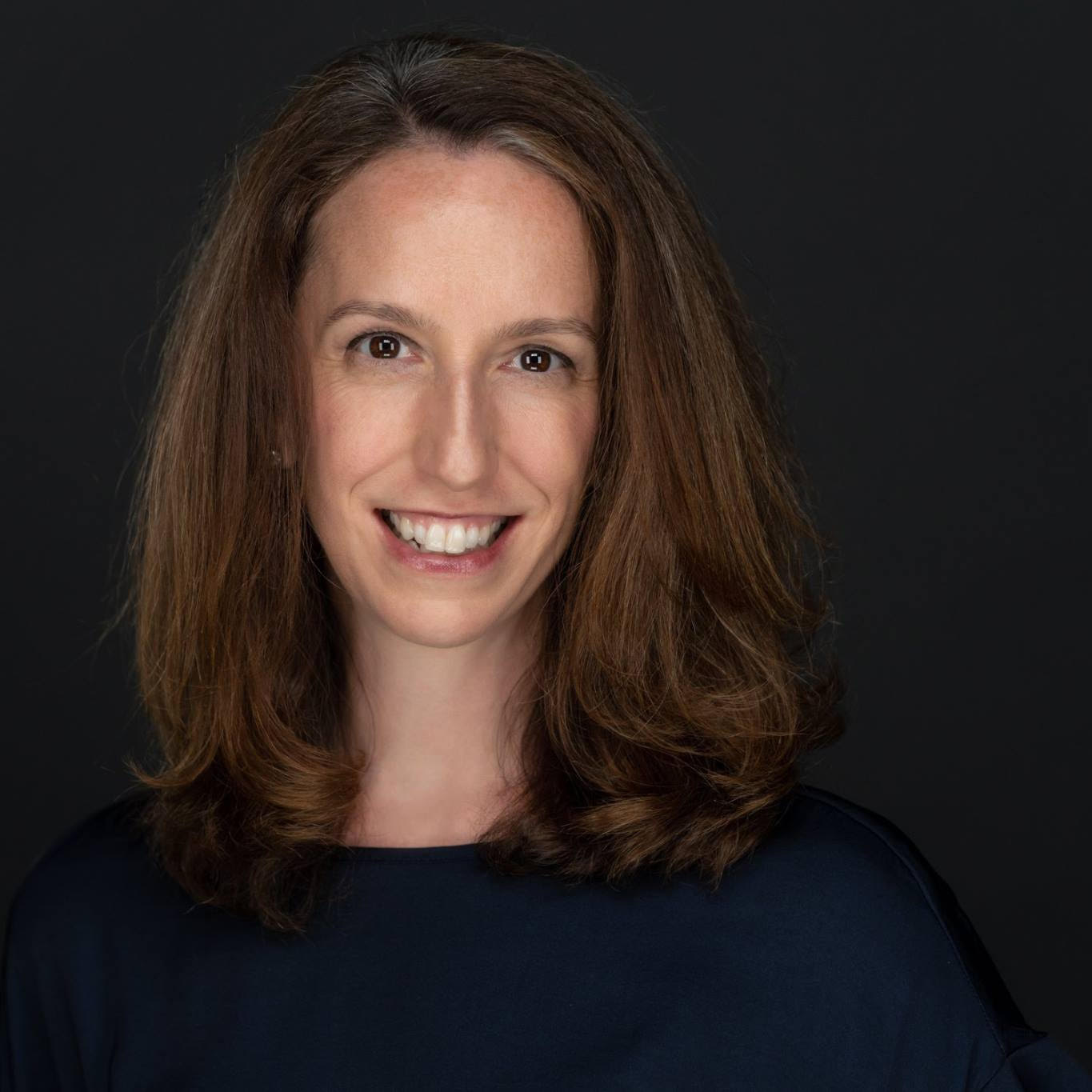
Dr. Jessica Drummond
Founder & CEO
The Integrative Women’s Health Institute
At the Integrative Women’s Health Institute, we’ve dedicated 17 years to crafting evidence-driven, cutting-edge programs that empower practitioners like you to address the complexities of women’s health.
Dr. Jessica Drummond’s unique approach focuses on functional nutrition, lifestyle medicine, movement therapies, nervous system dysregulation, trauma, and mindset – essential elements often overlooked in traditional health education.
In addition, your training will be fully evidence based, personalized, and nuanced (this is not a cookie cutter approach) in functional nutrition, exercise, recovery, cellular health, and all other lifestyle medicine tools.
You’ll learn to support your clients with cutting edge tools safely and effectively.