Follow Us for Free:


About the episode
“AI is humanity’s most powerful evolutionary partner.” – Dr. Elena Ikonomovska
Artificial intelligence is showing up everywhere in healthcare right now, and it’s easy to feel like we’re either supposed to embrace it completely or avoid it altogether. I don’t think either approach serves practitioners or our patients. Like any new technology, AI brings tremendous opportunities along with real questions about privacy, ethics, environmental impact, and the role of human clinical judgment. Those are conversations we need to be having now, not after the technology has already reshaped the way healthcare is delivered.
At the same time, women’s health has never been simple. Every day, practitioners are bringing together hormones, genetics, nutrition, nervous system function, environmental exposures, microbiome health, and each client’s lived experience to understand what’s really driving their symptoms. AI may help us connect those pieces more efficiently, but it doesn’t replace the clinical reasoning, collaboration, and therapeutic relationship that make integrative care effective in the first place.
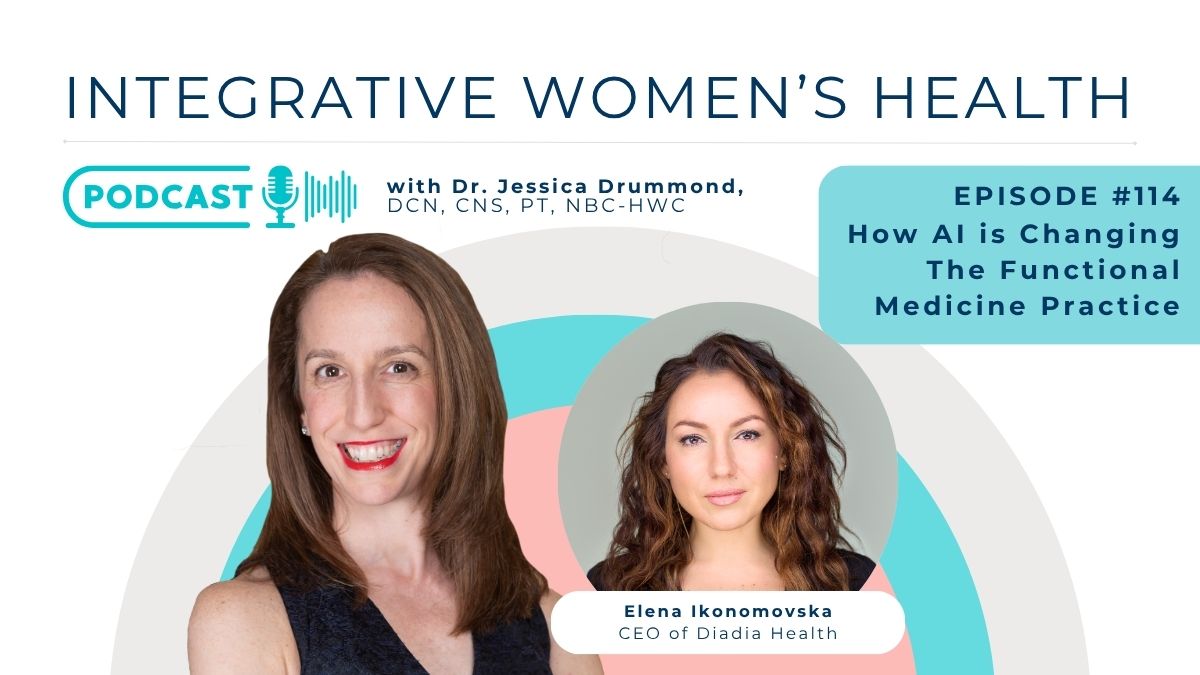
In this episode, I’m joined by Dr. Elena Ikonomovska, PhD, machine learning expert and co-founder and CEO of Diaria Health, for a thoughtful conversation about how AI is beginning to reshape functional medicine. Elena explains how AI can help practitioners make sense of complex clinical data from biomarkers to toxin testing, ways it can reduce the trial and error that often comes with chronic illness, where these tools fit into clinical practice, their current limitations, why practitioners need to be active participants in shaping how AI is used in women’s healthcare, and more.
Enjoy the episode, and let’s innovate and integrate together!
Highlights
- Why healthcare practitioners need to understand AI
- How Dr. Elena’s company, Diadia Health, uses AI to identify the root causes of complex health conditions
- What makes Diadia Health different from traditional health testing companies
- How AI can reason through complex functional medicine cases while reducing inaccurate conclusions
- Using clinician feedback and patient outcomes to improve AI without reinforcing individual bias
- The environmental costs of AI and why they should be part of the healthcare conversation
- Why AI is more likely to become a clinical partner than a replacement for practitioners
- Patient privacy and protecting sensitive health data
- The range of biomarkers, genetics, hormones, toxins, and microbiome data the system can analyze
- How AI can support experienced clinicians while also presenting a learning curve
- Dr. Elena’s advice for practitioners preparing for the future of AI in healthcare
Learn more about Dr. Elena Ikonomovska & Diadia Health
About Dr. Elena Ikonomovska
Elena Ikonomovska, PhD, is Co-Founder and CEO of Diadia Health, where she’s building the first AI-powered epigenetics platform for uncovering the root causes of complex systemic and hormonal issues.
A serial founder and AI expert with nearly two decades of experience, Elena holds a Master’s and PhD in machine learning. Her career includes work at Google during her PhD, where she prototyped technology that became BigQuery’s backbone, and at Reddit, where she served as the company’s first data scientist, building content recommendation systems trained on 300 million users and real-time safety tools to detect harmful behavior.
Elena co-founded Nuntio Labs, an AI writing tool that secured $800K in pre-product commitments and customers including Wells Fargo and Square. She then served as Head of AI at Change.org, where she founded and led the ML/AI department to scale activism and amplify diverse public voices. She later co-founded Mnemonic, Inc., serving as CEO and Chief AI Officer, developing AI-enhanced blockchain intelligence.
Her most personal venture came from her own health journey. After years of being told her labs were “normal” while feeling anything but, Elena recognized the problem wasn’t her body but how healthcare analyzed her data. She co-founded Diadia Health to change that.
Elena is a member of Chief and a fierce advocate for women’s health. She believes AI is humanity’s most powerful evolutionary partner, capable of helping everyone live with energy, focus, and presence for the moments that matter most.
Learn more about The Integrative Women’s Health Institute’s Programs
- Perimenopause and Menopause Certificate Program
- The Integrative Women’s Health Membership
- Endometriosis Certificate Program
Ready to revolutionize your career and grow your practice?
- Integrative Women’s Health Institute on Instagram | @integrativewomenshealth
- Integrative Women’s Health Institute on YouTube
Click here for a full transcript of the episode.
Dr. Jessica Drummond 00:00:03 Hi and welcome to the Integrative Women’s Health Podcast. I’m your host, Doctor Jessica Drummond, and I am so thrilled to have you here. As we dive into today’s episode, as always innovating and integrating in the world of women’s health. And just as a reminder, the content in this podcast episode is no substitute for medical advice, diagnosis, or treatment from your medical or licensed health care team. While myself and many of my guests are licensed healthcare professionals, we are not your licensed healthcare professionals, so you want to get advice on your unique circumstances. Diagnostic recommendations treatment recommendations from your home medical team. Enjoy the episode. Let’s innovate and integrate together. Hi, and welcome back to the Integrative Women’s Health Podcast. I’m your host, doctor Jessica Drummond. And today we have a brilliant guest. We have a woman, a human who is one of the only humans with a PhD in machine learning. Doctor Elena Economou is a PhD and co-founder and CEO of Deoria Health, where she’s building the first AI powered epigenetics platform for uncovering the root causes of complex systemic and hormonal issues.
Dr. Jessica Drummond 00:01:35 She’s a serial founder and AI expert with nearly two decades of experience. She holds both a master’s and a PhD in machine learning, which is extremely rare. My husband has a master’s in AI and data science, and it’s very rare to have a PhD in this field, particularly someone with two decades of experience. Her career includes work at Google during her PhD, where she prototyped technology that became big queries backbone, and at Reddit, where she served as the company’s first data scientist. Building content recommendation systems trained on 300 million users and real time safety tools to detect harmful behavior. Elena co-founded Nunzio Labs, an AI writing tool that secured $800,000 in pre product commitments and customers including Wells Fargo and Square. She then served as the head of AI at Change.org, where she founded and led the machine learning AI department to scale activism and amplify diverse public voices. She later co-founded Mnemonic mnemonic, Inc., serving as CEO and chief AI officer developing AI enhanced blockchain intelligence. Her most personal venture came from her own health journey.
Dr. Jessica Drummond 00:02:48 After years of being told her labs looked normal while feeling anything, but, Elena recognized the problem was in her body but how Health care analyzed her data. She co-founded Diarrhea Health to change that. She’s a member of and chief and fierce advocate for women’s health. You know, when she has her own journey living with PCOS and metabolic dysfunction, she believes that AI is humanity’s most powerful evolutionary partner, capable of helping everyone live with energy, focus and presence for the the moments that matter most now. I think this is one of the most important conversations of our time. If you’re a women’s health or wellness professional, because the reality is, is AI is already transforming healthcare and we have to be literate enough to be having these conversations. I’m going to be asking Doctor Elena some really challenging questions. You may or may not feel satisfied with some of these answers, and you might want to get a little activist, and I hope you do, because, you know, we have to as the voices of people in health care, both giving and receiving health care.
Dr. Jessica Drummond 00:04:03 Be really activist about how AI is utilized within health care, so that we can recognize its wonderful potential to essentially help better serve people with rare or complex illnesses or illnesses without solutions yet. I think there’s really important potential for that. And at the same time, there is significant risk of health harm, of human harm, and we have to be aware of all of that, and we each have to take a well-informed position and we need to speak out. We can’t just let the seven top, you know, AI company CEOs of large, large models that, you know, really pressure our environment in their use of data centers to make all the decisions. We have to be part of making those decisions as well. So whether or not you decide to use certain AI tools or any AI tools on a daily basis, I want you to listen to this conversation and start improving your literacy and form your opinions and help all of us shape how this really transformative technology is used, because there’s a lot of potential and a lot of risk, and we don’t want just a few people making those decisions.
Dr. Jessica Drummond 00:05:30 So let’s get into the episode and I’ll see you on the other side.
Dr. Jessica Drummond 00:05:37 Hi, everyone.
Dr. Jessica Drummond 00:05:38 Welcome back to the Integrative Women’s Health Podcast. I’m excited to introduce you today to Doctor Elena, Icona Mosca. We are going to be talking about genetics and AI driven tools for health and wellness professionals. So can you walk us through. Doctor Elena, what Dieta health, your company actually does with a patient’s genetic data and how that translates into something practitioners can use to enhance their recommendations, their decision making, their diagnostics. Why did you create a tool like this to support professionals in women’s health care?
Dr. Elena Ikonomovska 00:06:26 Thank you. Jessica, it’s such a great question to start the conversation with. So unlike other genetic testing companies or platforms that sort of correlate genetic variants with disease risks, and they create, for example, polygenic scores that resemble possibilities, we take a very different approach. And what we do is we’ve built this technology that does causal reasoning that identifies the root drivers of disease. What’s driving the symptoms? What’s driving the current health status of the patient? Via reading the biomarkers alongside other diagnostics where the genetics is one of them.
Dr. Elena Ikonomovska 00:07:03 So we actually analyze the complete picture. The full genome, advanced toxin panels, mycotoxins, microbiome test results, the comprehensive biomarker panels that doctors will use that could be more than, for example, 200 markers. And then instead of telling them these are the specific genetic variants that the patient has and risks, we explain how those variants are actually interacting with those toxins, with the gut microbiome, with the gut dysbiosis, with the nutrient deficiencies, because we know that genes are not set in stone, right. We learned that through the science of epigenetics. Now there is a lot of disease is driven through these relationships or the interactions between the genes and the environment, whether that’s environmental inside and the twin deficiencies or it’s stressors, toxins, external triggers. And so this approach of causal analysis really quantifies which genetic risks are actually manifested today and have a likelihood to be a real possibility in the future. And so it gives you a much more nuanced view into the hidden forces that are driving the patient trajectory and allows practitioners to address those adequately in time before they become bigger problems.
Dr. Elena Ikonomovska 00:08:17 So the result is that what you do, what you get is instead of the typical 612 months of trial and error, trying one protocol, set of supplements, etc., you get a very precise kind of path to how to solve problems. And so we reduce that trial and error kind of approach by 60%, but also give practitioners a view onto what’s likely going to happen. So they can solve that ahead of time. And I can give you a very specific example and know this is like a lot of it feels abstract, right? Like described I personally I have been fascinated with what happened with my health ever since I started looking at all my genetic data. All of this I built the idea because of I had my own health issues that seemed like there were no explanations for why I’m having these struggles, right? I think my whole life I’ve struggled with insulin resistance or just inability to lose weight, constantly gaining weight despite being very disciplined about what I’m eating, working out, fasting, exercising excessively, not drinking alcohol, sleeping well, trying everything right and nothing was working and I.
Dr. Elena Ikonomovska 00:09:25 Similarly, I don’t want to get into that example. It’s too complex. But I’ll give you a much simpler one. I’ve been trying to fix my vitamin D levels for two decades, taking various kinds of supplements, and I wasn’t able to really move the needle on this. At some point, I was actually taking 10,000 IU’s daily in a liquid form, and I still was in the range around 30, which is still in range. Right. But like, that’s not really optimal.
Dr. Jessica Drummond 00:09:49 Yeah.
Dr. Elena Ikonomovska 00:09:50 Yeah, exactly. When we actually looked into my genetics, I discovered I had this cluster of genes which are related to the conversion of the vitamin D into the bioavailable form, the 25 hydroxylase gene. I think it’s called. Right. Then I also have genes that related to how well I’m making it from sun through the skin, as well as transporting it to the cells. So all of these had reduced ability basically in my body, in my biology. And so the usual advice of just go out, have some more sun on your face and increase the dose doesn’t really work for me.
Dr. Elena Ikonomovska 00:10:28 When I started taking an activated form of vitamin D that calcified, which is the fast acting, highly available metabolite, it was when I was able to move my levels to the 50 age range within just a few months, just two months of taking this. And so that just specific information was a key to unlocking progress in my health. And similarly for my insulin resistance, I discovered that I have a cluster of genes which are reducing my insulin signaling, my insulin sensitivity. There were a lot of actually things that I discovered that in fact relate to my PCOS as well, that I wasn’t aware of it.
Dr. Jessica Drummond 00:11:07 Yeah. So that makes a lot of sense. So in your test in particular, you do the genetic testing. Do you do other biomarkers as well, or is it more like you have a platform where people can upload various different tests, or is your test more comprehensive of gut microbiome, toxic load, nutrient deficiency? What is included in your test.
Dr. Elena Ikonomovska 00:11:34 So we just want to frame this properly.
Dr. Elena Ikonomovska 00:11:36 We are not a testing company. We are an intelligence company. So we can take any data that practitioners have, whichever they’re using, whichever genetic data they’re using, whichever labs they’re using whichever microbiome tests are using. We are just the company of the AI that analyzes this information together. And we actually don’t analyze just genetic data. It’s always at least biomarkers with genetic data and other things. We start from the biomarkers and then we can actually even analyze those without any genetic data. We like people to use genetic data because it informs so much more at a much, much bigger depth for what’s happening. But it actually works perfectly fine even without it.
Dr. Jessica Drummond 00:12:16 That makes sense. So essentially, you’re taking all this information that normally a functional or integrative practitioner would also look like look at in collaboration and you’re layering over that this particular intelligence. So AI personalization of data, whether it’s lab data, wearable data, genetic testing is a huge hot topic in this industry right now. So tell me what I always run into when I come upon these kinds of products that are being built right now is a few major challenges one.
Dr. Jessica Drummond 00:12:58 What is your AI model built on? Is it built on one of the well-known large language models? It is. Is it a very small model that uses much less compute and very specific data? How is the structure of it from a back end perspective?
Dr. Elena Ikonomovska 00:13:17 Yes. So we are built on top of the existing foundational models. So we use them. But we have created a patented technology that teaches them how to reason. As a functional medicine clinician. In essence, if you think about it. And so not only that, to just not only the reason but also analyze these massive amounts of data like the full genome, microbiome results, metabolites and all sorts of other things that we’re going to see in the future, practitioners using more and more. In a sense, it is pretty much tuned via manual use to correctly order the clinical priorities and to properly read the literature in a way that it can connect the dots between the different pieces of information without hallucinating, which is one big problem in the current foundational model.
Dr. Elena Ikonomovska 00:14:07 So we’ve kind of solved the issue. There are issues we’ve taken away reasoning from them, we’ve solved it ourselves. And we fixed the problem of hallucinations so that they are a more effective tool for analysis for clinicians, I see.
Dr. Jessica Drummond 00:14:21 So it’s built on the backbone of a larger language model that is well known. But then essentially you’re teaching that model through I don’t know how to explain this in a simple metaphor, but like through another little window where you then apply reasoning strategies that are similar to that of a human that is trained in functional medicine, using like training data for functional medicine, functional nutrition. And then one of the biggest struggles that we have with using any of these large models is you’re going to deal with hallucination. So we just had a report out of Boston, mass General and Brigham and Women’s that using just directly a large language models. So I think they used OpenAI might have been Claude, but OpenAI’s ChatGPT people just upload all their testing the same kind of content that you’re talking about uploading.
Dr. Jessica Drummond 00:15:19 And I’ve seen various different reports. The newest study said 80% of the time the recommendations are incorrect. The best case scenario I’ve seen is about 50% of the time the recommendations are incorrect. So what you’re saying is based on how you’ve trained these models, their rate of being incorrect is much less.
Dr. Elena Ikonomovska 00:15:41 Yes, it’s actually not just about the training. It’s about the fact that how they’re doing research, we are fixing that because we’re forcing them to create a logical link between each piece of evidence that they can find. And in that way, we trace that link and ensure that it is like it arrives at a conclusion from the evidence that is presented. Because they actually don’t do that, they do pattern matching. They guess what’s most likely to be true from previously seen data. Right. They’re not capable of doing this inductive reasoning, like how the human brains work and they can say A follows B and B follows C. We can make a connection between A and C. That’s what we’re teaching them or making sure that they’re doing.
Dr. Elena Ikonomovska 00:16:22 And then we’re also training them with the clinician a way of reasoning. And furthermore, we are teaching them how to learn now from the patient data as well. So seeing how biomarkers change over time, for example, is the health of this patient improving or not. Right is the best signal to teach an AI whether it’s helping or not. Right?
Dr. Jessica Drummond 00:16:46 Right. So you’re continuing to feedback? Yes. Okay. This was helpful. So first of all to back up for a second. So it’s more like perplexity or open evidence where it can directly search the evidence that exists online. It’s not just coming from having already read all of the evidence in the past, but it can directly search brand new evidence that was just published yesterday. Correct. Okay. And then it takes that and essentially you’ve trained it to make very specific decisions about that evidence. Now while you’re training it to do that, are you making sure that the evidence, how are you making sure that the evidence is choosing is high quality human studies, full text, randomized controlled trials like a high quality evidence or review papers, not just one random in vivo study or in vitro study of, like, cells.
Dr. Elena Ikonomovska 00:17:44 Yeah. Yeah. We’re teaching it to classify it basically. And then when it classifies each of these evidence and conclusions that it’s making is like scientifically supported or plausible or not supported, it can then evaluate how, when it’s coming up to these clinical priorities, how much of the evidence it’s been using is actually supported by science. Or it’s possible right. Versus not. And then it presents these things to the clinician. So it’s very transparent in what it like finds and how it’s reasoning. It shows them all of the information. And it says okay we have this little books. If you click on them it opens up and it tells you this is this claim is supported by science. There has been a clinical trial for this. And here are the results. And here are the limitations. This has not been directly supported by human trials. However, there is a lot of research and a lot of papers pointing to pieces of the evidence which you can connect them in a logical conclusion chain, and that makes it very plausible that this could be a good solution, but it’s up to you to choose it.
Dr. Elena Ikonomovska 00:18:43 Right? And this is what actually functional medicine practitioners do, because oftentimes they are at the cutting edge of medicine. There is no there are no clinical trials for the things that are trying to do oftentimes. So they have to rely on their own clinical judgment and logic to consider certain things where things are not working. And so now you have that ability. Plus you’re reading the latest research on genomics. So how genes interact with this medication, with this supplement, with all these like nutrition as well. Right. And you can using that evidence, you can actually start making conclusions and say, okay, if this is a person that has this, it does not react super well to a small dose of GLP one. We’re going to start them differently. And or we will like more aggressively move the treatment or any other these kind of choices. Can they make that information. But there is no for example a GLP one, a specific genetic pattern test that does exist. There is no such trial.
Dr. Jessica Drummond 00:19:42 So like for example, we are currently often talking about using very low doses of GLP one to stabilize mast cells, which we have some case studies on, but we don’t have like large scale clinical trials at this point.
Dr. Jessica Drummond 00:19:58 And is there any genetic relationship to that? It could be because of course, people with hypermobility, Ehlers, hypermobility, Ehlers-Danlos or other hypermobility disorders may have genes that are more likely to trigger mast cells with various viral or toxin exposures. So there may be some connections there that we don’t have one large scale human trial, but we may have multiple different kinds of data that can start to inform the overall reasoning, for example. So in the model. So you’re essentially continuing to train the model by telling it like this worked. This didn’t work. Continuing to update the patient’s data, their success, what they had trouble implementing, what worked well, what didn’t well, what gave them side effects so that trains the model more? Is it just one large model or is it like multiple? Is it a genetic, or are you having different perspectives in that model to make sure that it doesn’t start drifting when you if you depending on what feedback it’s getting or being more biased depending on which practitioners are using it.
Dr. Jessica Drummond 00:21:06 So let’s say for example, you have a lot of practitioners using it who like love peptides, but we have only limited data, particularly on peptides outside of GLP one. But now the model might start drifting to using something that we actually have less data on. Does that make sense?
Dr. Elena Ikonomovska 00:21:22 Yeah, absolutely. So the model doesn’t take immediately clinician preferences and push them onto everyone else’s. Take them as a general knowledge. What it does, it evaluates the outcomes and then sees if a large number of applications of this specific. Let’s say peptide. Maybe we are seeing better results compared to another approach that has been taken by someone else. Because we do have the data. People have different choices, different clinical preferences, what they want to choose to solve the inflammation problem. Right. You can go with a peptide, but you could do something else as well. You would start seeing actual quantitative data. And so once there is a winner you can start then basically pushing it to recommend this more into the protocols that it’s creating.
Dr. Elena Ikonomovska 00:22:05 It learns from the clinicians, it applies the preferences only to their clinical practice and only learns from the aggregate after a long time. And enough of data has been created to recommend it more universally.
Dr. Jessica Drummond 00:22:19 Interesting. Yeah. Okay. That’s great. So it is essentially one model. It’s not a series of agents.
Dr. Elena Ikonomovska 00:22:26 It is a mix of everything. It is a model with agents that are running and doing various kinds of research tasks. It’s like tracking each other.
Dr. Jessica Drummond 00:22:33 Yeah.
Dr. Elena Ikonomovska 00:22:34 Yes, there is additional mathematical models and machine learning technologies for what I am actually trained. My PhD in is and Masters, which is learning from real time data and infinite data. Learning in the moment as data comes in. So we are defining and equipping these models with this kind of skills that allow them to mathematically model probabilities in real time and choose what is most likely the best thing to go forward to learn faster. So many ways of like just the models, just the llms themselves are not strong enough, in my opinion, to solve this problem.
Dr. Elena Ikonomovska 00:23:11 They’re not really the right choice. We need multiple different kind of predictive models, mathematical statistical models, agents that are doing research, cross-checking things, humans getting involved, providing feedback and guiding basically the technology towards the right direction.
Dr. Jessica Drummond 00:23:27 Okay. Yeah, that makes a lot of sense I appreciate that deeper explanation. So anytime we’re talking about tools like large language models that require a lot of compute being used for healthcare applications, we have to think about the negative health care implementation of the environmental cost of these models. Can you speak to that a little bit and how you’re thinking about that? Because obviously people who live closer to data centers are at increased risk of death from air pollution related challenges. We’re seeing exponentially high costs of power, electricity to drive these models that are really putting a lot of pressure on household health and risk because of financial risk. So how do you think about also the water usage by these large data centers? How do you think about that? Since as health professionals, it’s hard for us to use a tool that causes health harm?
Dr. Elena Ikonomovska 00:24:28 Yeah, I don’t understand every technology has its positives and negatives, every powerful technology especially.
Dr. Elena Ikonomovska 00:24:34 And we do. Now we are seeing the data that the environmental impact is significant, right? So there is the air pollution. There’s water pollution. And all of that is increasing cancer risks and infertility risks. Also, water scarcity becomes more of a problem because they’re consuming so much water, right. So I think that as a society, we need to think about really adopting this technology in a responsible way. And it’s I would say, I would say that we don’t ourselves built and trained such huge, massive models, nor we have data centers, but we are building on top of this technology. And so I’m definitely concerned about that. And I think that we are in the early stages. We still don’t know exactly how we’re going to be able to solve this. But I do believe with every technology that we will solve for these problems, we will find ways to mitigate them. And in fact, I think that because of how powerful this technology is to help us find new scientific discoveries, we can actually solve this kind of problems better with this technology compared to any other technology, because almost every technology so far we have created has some negative effects.
Dr. Jessica Drummond 00:25:44 Environmental costs.
Dr. Elena Ikonomovska 00:25:45 Environmental cost. For example, I was just recently learned that microplastics. Where do they come from? What is the biggest source of microplastics? It’s not the food, it’s the air. It’s the air. They’re in the air. And where the where does it come from? It’s from tires, microplastics from the tires on the road. Yeah. Like, wow. Like we have these motorized vehicles. It’s everywhere. And how do you even avoid this? Even if I want to stop eating processed food like microplastics, I can’t avoid it from the air or the water. Yeah. A society, we do create problems as we are trying to solve problems. I do agree with that, but I think I’m positive that this technology can actually help us solve more problems than create more compared to any other technology we’ve created so far.
Dr. Jessica Drummond 00:26:30 That’s very encouraging to hear from someone with a PhD. Actually, in AI and large language modeling. I appreciate that perspective and I think we have to. Maybe it’s about being both activists at the local level to slow down or stop the growth of data centers until we’ve solved this problem, until we’ve really shifted the incentives to be more around creating solutions for environmental problems and health problems before we create solutions for financial problems, for example, or financial incentives.
Dr. Jessica Drummond 00:27:05 So right now there’s a huge financial incentive to increase productivity, lower the cost of large companies spending money on human labor. And that’s probably the wrong incentives if we actually want to achieve what I think both of you and I are aligned on in terms of goals. So let’s assume that happens. I’m going to just stay really optimistic and also actively participating in that as much as we each can. And then so here’s another challenge that I know our audience is going to be struggling with a little bit. So as women’s health and wellness professionals who practice with a very integrative and functional mindset, if we use tools like yours and essentially our use of them is participating and training the model, the various models that are in the back end of this technology, we are at some respects at risk of working ourselves out of jobs. So what do you think the impact will be on that? Because the challenge is AI as AI mitigates the need for all kinds of jobs, whether in healthcare or outside of healthcare, and our health care is so tied to our jobs, how are people going to be able to even use this technology?
Dr. Elena Ikonomovska 00:28:19 Yeah, I’m not in the camp that AI will replace the doctors 100% not.
Dr. Elena Ikonomovska 00:28:23 I don’t believe that will happen. And the reason for that is because I think AI will actually uncover how little we know about health and medicine, and how much more progress we need to make, and also how much the human involvement is actually required to make that progress, and how much more infinite care we can provide to society. That is so much needed right now. I do think that, as I said, like AI is learning from the doctors, but I think that together they can uncover new ground. It’s learning something today, but very quickly what’s going to start happening is going to start guiding them to new discoveries, to new possibilities. We are already doing this because we’re at the cutting edge of medicine, right? And we are just basically guiding doctors to our solutions for which there is no data. So they have to take some sort of a risk and responsibility with the patient because things are not working differently. Right. And so because there is a certain truth about the biology that has been yet uncovered, and we’re learning it together.
Dr. Elena Ikonomovska 00:29:27 And so it will take quite a lot of time, frankly, for AI to get better than humans at a lot of these things. And and in that process, we will have pushed the ground on science and the medicine and we will have like actually, I believe, truly changed the system to be more proactive instead of reactive. I believe it truly envisioned this as a collaborative relationship where while AI is right now in training and figuring out and learning it, at some point we’ll learn to learn things good enough that doctors can be confident to let it do certain tasks for them. But I do believe that there is always going to be that need for doctors to keep on applying clinical judgment, keep on really being plugged in with the patients and help them implement these things. In reality, because patients don’t do what you don’t want to do, even if it’s explained in the best possible way. You have to still apply, like the human judgment of like how this will work in the world. And then what else do we not know that we need to ask or understand that AI technology will need? And and so yeah, I think it will be truly a sort of a collaborative relationship rather than being replace.
Dr. Elena Ikonomovska 00:30:38 I think we don’t have enough of people, enough of doctors and nurses for the kind of work that needs to be done pretty soon, actually, I would imagine there is going to be way more demand for clinical jobs than it will be in the coming 5 to 10 years, then it will in many ways actually reduce those jobs.
Dr. Jessica Drummond 00:30:57 Yeah, I agree with you in that sense, at least in the relative near term, the less next decade, next two decades even, because I think there’s two key things you said there that are really important. One, as we start proposing, like we have all this input AI saying, oh, maybe this supplement stack. But then we look at it and for example, one, we don’t have a product that includes this particular gut microbe or something like that. We may not even have something that we could give to somebody that to replace that, or that we find that there is very little research to support. Even the best thing that we know now, like we know an anti-inflammatory diet is very supportive for people with PCOS or endometriosis, but exactly what that should look like.
Dr. Jessica Drummond 00:31:44 We have some ideas based on this person’s data, but we can’t. We don’t know yet exactly how to define that. Even with all the data that currently exists. We have some good directions, good ideas, but to really refine it, we actually need more research. So I think one of the things we need to also be advocating for is much more science funding and more research, more people looking at once AI helps us discover the holes. Really go do the science that will help answer those questions, which certainly there are a lot of clinician scientists out there and just basic science scientists, which we need. And then I think your point of implementation. So I’ve said for probably a decade now that in functional medicine, because so many we have so much data input, we now can to the best of the ability of the research that’s available, essentially with a tool like yours, spit out, okay, this person with pieces needs this nutrition, this sleep quality, this exercise. But what we do here at the Integrative Women’s Health Institute is actually train people to coach the individual, to actually do that within the context of their resource limitations, their busy work schedules, their childcare responsibilities, their eldercare responsibilities.
Dr. Jessica Drummond 00:33:09 So just because you have even the perfect checklist doesn’t mean everybody has the capacity to do it without a lot of Support, encouragement, coaching. There’s a lot to that part of delivering care.
Dr. Elena Ikonomovska 00:33:25 That’s right. Yeah. Yeah. It will just point out how much the human relationship is important to us humans. We are social animals, right? We need each other in every way. And it’s just hearing. I feel worse and worse with these digital tools.
Dr. Jessica Drummond 00:33:40 Yeah, absolutely. Because just actually being on your phone more is part of what’s actually harming causing. Yeah. So we don’t necessarily want our phone coaching us through this. We want real human relationships and experiences and the trust of people who understand computer is never going to understand what it feels like to have to get up at 5:00 am so you can get it in and really hit your goals and take care of your family and all of that. One of the things that I think is a major concern in women’s health data collection like this is the surveillance risks.
Dr. Jessica Drummond 00:34:20 So we know that when certain states in the United States, there are very severe penalties for women having abortions or even miscarriages, and if they’re uploading data to a large model that could potentially be tracking their cycles or talking about their menstrual health, which is a really important fifth vital sign, really, of women’s health, how are you helping protect women’s health data in this kind of scary environment?
Dr. Elena Ikonomovska 00:34:49 Yes, I that’s why I don’t like people throwing that data into the free AI models. It’s scary to be giving your data away in there. And unlike those kind of companies, we take data privacy very seriously. We are HIPAA compliant and our business model is basically has nothing to do with sharing data with anyone or selling data. In fact, it will hurt us more than if we were to do that. And so when people are choosing AI companies, I think they should think through a little bit about the incentives and how their business models work when something is free. I always say to people, you are the product.
Dr. Elena Ikonomovska 00:35:25 Yes, I can certainly understand the risk. I hope our country is not going to get to a place where we, as a democracy, will decide that we’re going to punish women for this kind of things through this data, right? Surveillance. But I do think that at least what we can do is not give away that data to open companies and also choose the companies that we want to work with, make sure that they have privacy policies that explain that they don’t sell or share data without consent, and in which ways the data is being shared. Right. And then are this Hippo compliant or SOC compliant and all this required regulations in place?
Dr. Jessica Drummond 00:36:02 Yeah, I think that’s very important. And just in the environment we’re in, particularly in women’s health. But I think data in general, we’re already seeing things like variable pricing on airline tickets, depending on your your financial data which airlines now have access to. So yeah, based on your zip code or any other ways that they’ve actually bought that data. Like you said, a lot of people are very willing to sell your data.
Dr. Jessica Drummond 00:36:30 So it’s very nice to hear that, that you’re not. That not only is that not part of your business model, but you’re actively protecting that data. So I do appreciate that.
Dr. Elena Ikonomovska 00:36:39 And in fact, honestly, the other thing that I wanted to mention in this case is that we not only we don’t surface that genetic data directly to the practitioners all as a whole, they can’t see it that way. We just surface what is what is the possibility as a risk for the purpose of prevention and optimization or taking action, all those things, nothing else. Pretty much.
Dr. Jessica Drummond 00:36:59 Interesting. So let’s say I’m a so your customers then are the individual people or the practitioners.
Dr. Elena Ikonomovska 00:37:08 The practitioners.
Dr. Jessica Drummond 00:37:09 Okay. And then they can upload the data that their patients have shared with them, or that they have ordered, like certain lab tests.
Dr. Elena Ikonomovska 00:37:18 To.
Dr. Jessica Drummond 00:37:18 Us. And what is all of the data that your system now utilizes? If you think across the system, what can it take in?
Dr. Elena Ikonomovska 00:37:25 Yes, we can take in more than 200 biomarkers, including all of these other things cardiometabolic, immune, thyroid, antibodies, hormones, nutrients, nutrients, all these things.
Dr. Elena Ikonomovska 00:37:37 Toxins. Mycotoxins results from microbiome tests, the full genome. So the raw data basically we would need it. So these are the current things that we have available to be analyzed. And we’ll be adding more in the future. More thanks.
Dr. Jessica Drummond 00:37:52 Okay great. So maybe potentially in the future things like wearable tracking data potentially.
Dr. Elena Ikonomovska 00:37:58 Yeah I find them not as useful clinically. I think they’re interesting. But like you already have a lot of signal about the clinical picture from the biomarkers from the genetic data, from the microbiome data. It’s already enough to really figure out what’s wrong. The variables are just like a nice, I would say, gamification. I want to call it for the users to take some sort of an action on a daily basis and try to monitor their levels. But although I, I was I have been using these kind of things in the past a lot, I was wrongly guided with these kind of devices to focus on wrong things when I was having my insulin resistance problems, for example. I was just so obsessed about the spikes when I wasn’t paying attention to my fasting insulin levels, which was really the more important thing than I should have been optimizing.
Dr. Elena Ikonomovska 00:38:47 I didn’t know that until I got deep into the science of it. Because I’m a scientist, I realized I’m doing these things all wrong. But a lot of these companies will just guide you to focus on the spikes. Don’t allow spikes to happen kind of thing.
Dr. Jessica Drummond 00:38:59 But yeah, you’re resting at 100, is what you’re saying.
Dr. Elena Ikonomovska 00:39:02 You’re hungry. This is.
Dr. Jessica Drummond 00:39:04 So fast.
Dr. Elena Ikonomovska 00:39:05 But you’re resting at 100. It’s why do I have yes.
Dr. Jessica Drummond 00:39:10 I yeah, that’s a really good example because I think when people are using some of these direct consumer tools that aren’t particularly knowledgeable, they may overemphasize to the point of actually increasing their stress. This idea of optimization and then sometimes miss the forest for the trees, if you will. Yeah, exactly.
Dr. Elena Ikonomovska 00:39:31 So I was doing the exact same thing. Like why is my pre-diabetes not solving?
Dr. Jessica Drummond 00:39:37 Yeah, no, that’s really helpful. And I think I like the fact that you’re essentially your customers are the practitioners, so that they also hold some responsibility of taking care of their clients data, but also taking care of their clients.
Dr. Jessica Drummond 00:39:56 One of the things I’m speaking to my students all the time who are health and wellness professionals is we have to design that. So this is a tool that can help us think through clinical challenges when they are really complex, bringing the education that we already have. Not just showing up with nothing. Showing up with our education, with our clinical experience and then amplifying it. And then maybe helping us to figure out like what’s most important, what’s priority, how to order things. But then how the clinicians and practitioners design essentially healing programs over time is a lot about that support about that navigation of care through the busy stages and challenging stages of life. And also, just maybe it would be optimal for them to do 20 things, but three is realistic in the next three months. So we want to be prioritizing things. And I think that I do think aligns really well with your vision of having this tool using the mathematical models that it’s much better at than any human with that real humanity of working with people, Probably for decades, because there’s so many holes in it that we don’t have dialed in.
Dr. Jessica Drummond 00:41:13 Exactly.
Dr. Elena Ikonomovska 00:41:14 Yeah, exactly. This is something that we’re actually going to be releasing soon, which is allowing doctors to just pretty much customize these full, like final reports and recommendations to their style, teaching the AI, their way of solving, practicing, prioritizing. And even if you want to remove, there’s like 15 recommendations you want to remove, you want to keep just three and teach it that you want to kind of like this is the way I prioritize. This is the way I choose things. It will be able to learn that so that it applies and saves you time. So next time you use the tool, it knows you, it knows how you like to think and it will be helping. Hopefully we think this will help practitioners save a lot of time in preparation of this data so that they can just focus on the relationship, on explaining and guiding, being there, present with the patient to figure out what’s the best way to help them adopt this plan.
Dr. Jessica Drummond 00:42:05 That makes a lot of sense.
Dr. Jessica Drummond 00:42:06 So at this point, I don’t know if you. Are you fully launched yet?
Dr. Elena Ikonomovska 00:42:11 Yes.
Dr. Jessica Drummond 00:42:12 So with the practitioners who are using the system so far, I see two potential risks just of it being perfect. One, I have a lot of students who are really good clinicians at this complex challenge, but almost like giving them too much is going to send them down a big rabbit hole that this is actually going to be taking more time. Have you found that or have you found that the clinicians, once they get used to using it, after a little while, they actually do find it more efficient and giving them the ways to think that are new.
Dr. Elena Ikonomovska 00:42:46 Yeah, depends on the person. Right. And so we have a clinician, for example, Doctor Anil Barnett, who is the president of the American Board of Precision Medicine. So he is a precision medicine practitioner. He has massive amounts of data he uses on every patient. Right. So for him, it saves him a lot of time because he he’s used to analyzing all of this.
Dr. Elena Ikonomovska 00:43:06 He is not overwhelmed by the information, so he can readily, quickly point to the things that he should be looking at. He validates that makes his own changes, right? And takes it and shows it to their patient. To his patients, even some clinicians that are not used to the genetic information, for example, when they see it or it feels overwhelming, it takes them more time to actually look through it and analyze it and figure out what do I want to keep when I want to keep? And so, yeah, I think that it takes some time to get used to it. We also create some highlights, smaller versions of it. And we are looking to see how our new basically feature that allows them to customize the amount of information they want to receive, will help them with this regard. It’s a very much, I think, preference, human preference depends on the kind of clinical practice, how much of information they’re already processing on their own. So is it already the problem of saving the manual time from analysis, or is it the problem of bringing in new information? They were not used before, so they have to learn now, upskill a little bit, figure out how to use it best.
Dr. Jessica Drummond 00:44:10 And I think that’s not necessarily a bad thing. If they are starting to then upskill, learn how to integrate new tools over time. That’s part of being a clinician. You want to just get better and better what you’re doing.
Dr. Elena Ikonomovska 00:44:22 Yeah, yeah, I think that’s one of the that’s definitely the common pattern across all of them who are already using it, because they they find it as a tool that helps them learn new things and be better clinicians.
Dr. Jessica Drummond 00:44:33 Excellent. Before we wrap up today and thank you so much for your time. Is there anything else you’d like to share with our community of women’s health and wellness professionals?
Dr. Elena Ikonomovska 00:44:43 I would say that I hope that many of them are being optimistic about using this technology, because I truly think it’s very empowering for clinicians these days, and especially for those who are open minded, curious, want to learn because it is inevitable that AI will change healthcare and how we do medicine. And it’s if you are already moved to go beyond the basics, starts learning, start learning more.
Dr. Elena Ikonomovska 00:45:11 This is a tool that can differentiate clinicians, them in their practice from everyone else, and help them get on that learning curve of adopting new technology that is going to just speed up in the future. And the best way to start is to just start without thinking too hard. We are open to clinicians. In fact, we have still free trials available so they can start engaging with it, see how they like it, see how it works. I would invite them to apply for clinical access on our website and go from there.
Dr. Jessica Drummond 00:45:43 Excellent. Thank you so much for your time, Doctor Elena, I really appreciated meeting you and I really appreciated you speaking to some of the really challenging issues of AI, and I think that’s important. We’ve got to talk about all of it if we’re going to think about how to adopt it responsibly. So thank you so much.
Dr. Elena Ikonomovska 00:46:00 Thank you. Thank you. Appreciate having you here.
Dr. Jessica Drummond 00:46:07 I so loved that conversation with Doctor Elena of Diarrhea Health. I hope this conversation was informative for you.
Dr. Jessica Drummond 00:46:16 For some of you, it might have been some brand new words and terms. It might have been some brand new ideas for others of you. You’ve been steeped in using these tools in your work for months, years. For others, you’re thinking about getting into it and not sure where to begin. So think about these tools, how you want to use them, and how you want to be taking action to mitigate their risks if you do decide to use them. I think more of us, especially women, need to be literate in what exactly AI is because it’s not just one thing. As you heard in our conversation, there are large language models. There are small models that don’t require so much compute and are much less damaging to the environment. There are a genetic aspects of different models. There are genetic models. AI is not just one thing. So speaking with more women in Stem, women who have master’s PhDs, work experience in machine learning in these mathematical models, we need to hear from them.
Dr. Jessica Drummond 00:47:28 We need to hear what exactly this technology is and how it will impact our health, our jobs, our humanity. This is a big ask. And so I want you to, just maybe this week, listen to this episode, take a little time for yourself and journal your vision of what you want to learn next about AI and how you want to participate using AI in your life or not. Why? How you can help being more activist to guide the incentives that are currently driving AI. I think there’s a lot of work to do, so there’s something for all of us to do. Pick and choose what feels aligned with your work and your values. And we’ll continue this conversation right here on the Integrative Women’s Health podcast. Have a great rest of your week.
Dr. Jessica Drummond 00:48:27 Thank you so much for joining me today for this episode of the Integrative Women’s Health Podcast. Please share this episode with a colleague and if you loved it, hit that subscribe or follow button on your favorite podcast streaming service so that we can do even more to make this podcast better for you and your clients.
Dr. Jessica Drummond 00:48:52 Let’s innovate and integrate in the world of women’s health.
Join Dr. Jessica Drummond to learn proven strategies to confidently address perimenopause, menopause, and chronic conditions while growing a profitable and impactful practice.
Discover proven strategies to attract high-value clients, deliver transformational results, and position yourself as a sought-after expert in this rapidly growing field.
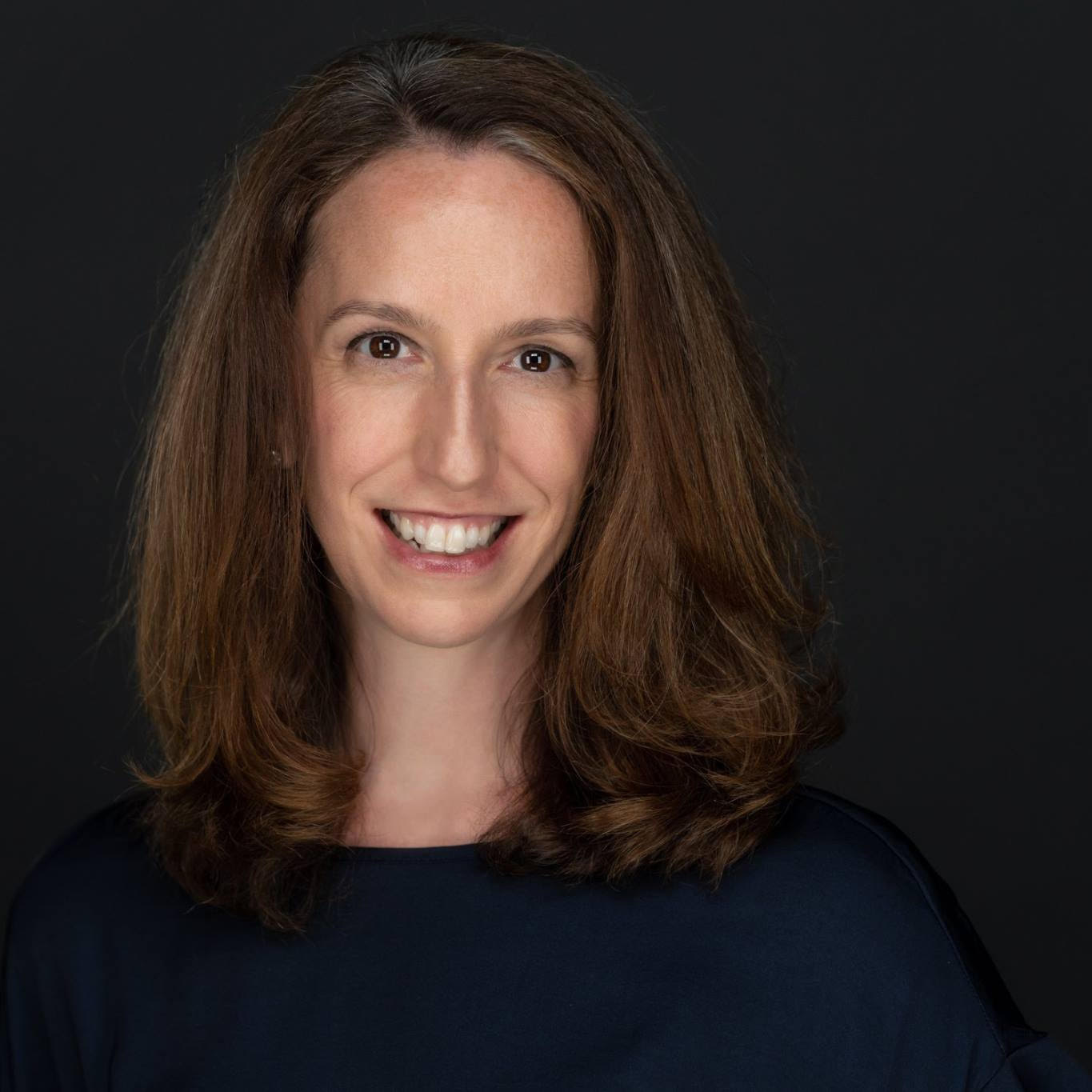
Dr. Jessica Drummond
Founder & CEO
The Integrative Women’s Health Institute
At the Integrative Women’s Health Institute, we’ve dedicated 17 years to crafting evidence-driven, cutting-edge programs that empower practitioners like you to address the complexities of women’s health.
Dr. Jessica Drummond’s unique approach focuses on functional nutrition, lifestyle medicine, movement therapies, nervous system dysregulation, trauma, and mindset – essential elements often overlooked in traditional health education.
In addition, your training will be fully evidence based, personalized, and nuanced (this is not a cookie cutter approach) in functional nutrition, exercise, recovery, cellular health, and all other lifestyle medicine tools.
You’ll learn to support your clients with cutting edge tools safely and effectively.