Follow Us for Free:


About the episode
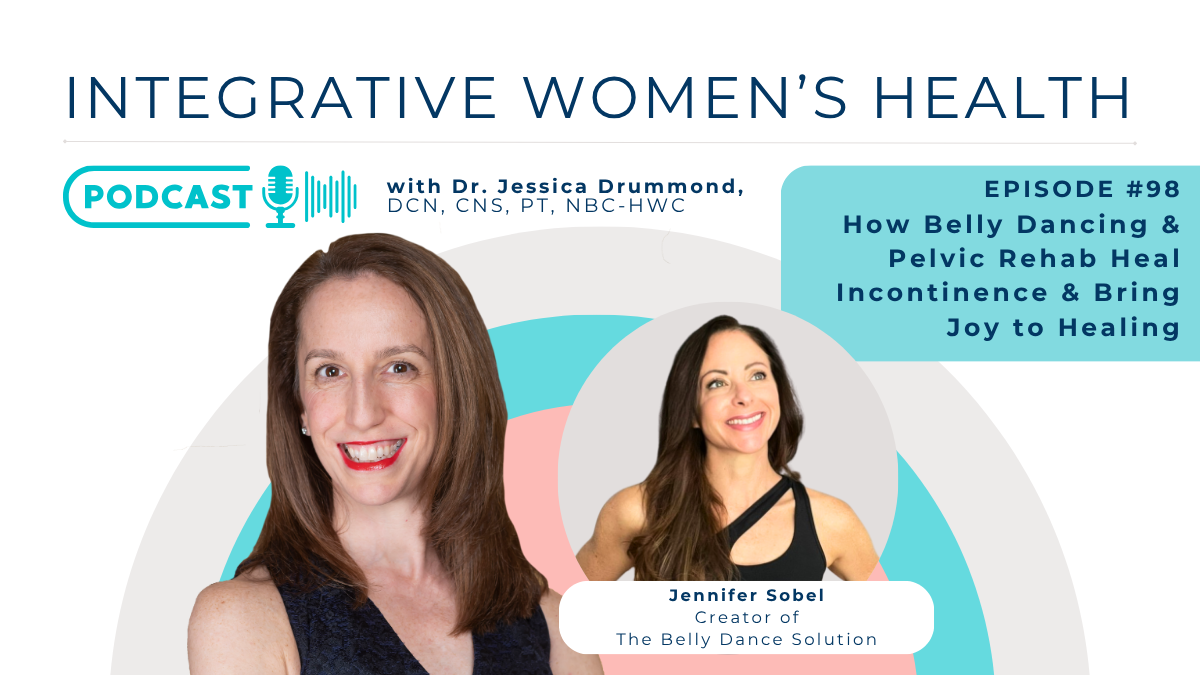
“Since I’ve been belly dancing, I don’t have bladder leaking anymore.”
There’s a growing conversation in women’s health around doing everything “right” when it comes to exercise. The right intensity, the right timing, the right protocol for your hormones, your nervous system, your stage of life. And while there’s value in understanding those nuances, when we get caught up in the details, movement becomes just another thing to optimize, measure, and get perfect.
Many women are navigating pelvic health challenges like incontinence, pain, or disconnection from their bodies, often alongside a deeper sense of tension, fear, or even shame around movement. And in that context, more precision and more perfection aren’t usually what’s needed. Sometimes what’s missing is a way to reconnect with the body that feels safe, intuitive, and even enjoyable.
Today, I’m joined by Jennifer Sobel, professional belly dance instructor and practitioner of Traditional Chinese Medicine, to explore how belly dance can be used as a therapeutic and accessible tool for pelvic health. We talk about how these movements naturally build strength and mobility through the pelvic floor, why they can be especially helpful for women who feel disconnected from their bodies, how clinicians can integrate this kind of movement into pelvic rehab, why consistency matters more than perfection, and how bringing joy back into movement may be one of the most important shifts we can make in women’s health.
Enjoy the episode, and let’s innovate and integrate together!
Highlights
- Discovering the connection between belly dance and pelvic health
- How belly dance supports pelvic floor function
- Why practicing belly dance at home can reduce fear and build confidence
- The role of joyful movement in improving consistency and long-term health outcomes
- Belly dance as a gentle, low-impact form of exercise that supports joint health and longevity
- How belly dance can be integrated into pelvic floor rehabilitation and clinical practice
- Why belly dance benefits the whole body without equipment
- How to begin incorporating belly dance into daily routines or professional practice
- The role of movement in healing trauma and supporting reconnection with the body
- How belly dance supports yin energy, grounding, and restoration from a Chinese medicine perspective
- Why letting go of perfection can make movement more sustainable and enjoyable
Learn more about Jennifer Sobel
About Jennifer Sobel
Jennifer Sobel is a professional belly dance instructor with over 21 years of experience and the creator of The Belly Dance Solution, a research-backed online program that’s been joined by over 30,000 women worldwide who are using specific belly dance movements to strengthen their pelvic floor and address bladder leaking – many experiencing relief or complete elimination of symptoms for the first time in decades.
Jennifer holds a Master’s degree in Traditional Chinese Medicine and practiced as a licensed acupuncturist for five years. This unique combination of credentials allows her to bring a holistic, healing-centered approach to her belly dance programs, integrating movement, body mechanics, and ancient wisdom.
She and her programs have been featured on NBC and in major publications, including Women’s World magazine (twice!) and First for Women. Jennifer believes belly dance is more than entertainment – it’s a powerful form of healing movement that helps women reconnect with their bodies, build confidence, and tap into their fundamental feminine energy and power, all while solving real physical challenges in a way that’s actually enjoyable.
Ready to revolutionize your career and grow your practice?
- The Integrative Women’s Health Membership
- What is the next step in your career in women’s health and wellness? Start here: https://integrativewomenshealthinstitute.com/start-here/
- Integrative Women’s Health Institute on Instagram | @integrativewomenshealth
- Integrative Women’s Health Institute on YouTube
Learn more about The Integrative Women’s Health Institute’s Programs.
Click here for a full transcript of the episode.
Dr. Jessica Drummond 00:00:03 Hi and welcome to the Integrative Women’s Health Podcast. I’m your host, Doctor Jessica Drummond, and I am so thrilled to have you here. As we dive into today’s episode, as always innovating and integrating in the world of women’s health. And just as a reminder, the content in this podcast episode is no substitute for medical advice, diagnosis, or treatment from your medical or licensed health care team. While myself and many of my guests are licensed healthcare professionals, we are not your licensed healthcare professionals, so you want to get advice on your unique circumstances. Diagnostic recommendations treatment recommendations from your home medical team. Enjoy the episode. Let’s innovate and integrate together. Hi there. Welcome back to the Integrative Women’s Health Podcast. I’m your host, doctor Jessica Drummond. And today we’re talking about something really fun. We are talking about belly dancing, Chinese medicine dance in general, and how all of that can improve pelvic health incontinence, continence and just that reconnection of women with being more in their bodies. And we’re also going to be debunking the myth that exercise has to be super difficult, super precise, to have any effect, because we know that all movement, all exercise is of benefit.
Dr. Jessica Drummond 00:01:43 Of course, there’s risks of overtraining. Of course there’s risks of injury. But the kind of exercise we’re going to be talking about today, which is super fun, belly dancing at home or with your pelvic rehab professional, really opens the door for us to take some pressure off ourselves and off women and just allow us to have fun and move in our bodies today. So let me introduce you to Jennifer Sobel. She’s a professional belly dance instructor with over 21 years of experience. She’s also a Chinese medicine professional and acupuncturist. She’s the creator of the Belly Dance Solution, a research backed program that’s been featured in Women’s World magazine twice and first for women. Over 30,000 women have joined her program to address bladder leakage incontinence with targeted belly dancing movement. With her masters in Traditional Chinese Medicine, Jennifer combines ancient movement wisdom with modern pelvic floor science to help women feel healthy and live healthy and move healthy in their bodies. And there are many pelvic rehab professionals who are also a part of her program and her community. So whether you are considering using this type of perspective in your work or in your life.
Dr. Jessica Drummond 00:03:06 This episode is for you. Let’s dive in and enjoy and I’ll see you on the other side. Welcome back to the Integrative Women’s Health Podcast. Hi there everyone. I’m your host, Doctor Jessica Drummond, and I’m thrilled to be here today with Jennifer Sobel. And she brings a really fun background of belly dance to pelvic health. And I want to start our conversation with you, Jennifer, asking you just how you got here. How did this become such an important part of your life, that so much so that it’s essentially your job now?
Jennifer Sobel 00:03:48 Yeah, and I feel so grateful for that. And I feel grateful to be here on the show. So thank you for allowing me to share this with women and let them know that this is an option for them that they may not even know about. So how I came upon this. I like to joke that it was a happy accident, not of the leaking pines, but I have. I’ve been a professional belly dance belly dancer instructor for over 20 years, and my background is actually in Chinese medicine as an acupuncturist, and I started practicing acupuncture about the same time that I started to do belly dance professionally.
Jennifer Sobel 00:04:31 But it became apparent to me that belly dance was my passion, and I wanted to only do that. It took me a really long time to figure that out. But I had a student come up to me at her belly dance class one day. She was one of my regular students. I’m getting my stuff together. She comes up to me, she has a huge smile on her face, and she says, I have something to tell you. And I was like, what? And she said, Since I’ve been belly dancing, I don’t have bladder leaking anymore. And I was like, wow, fantastic. And I honestly forgot about it until maybe 2 or 3 years later. I was thinking, you know, I really want to create a belly dance program. I really want to make this my full time business. And I was like, what could I create? And I was at the gym and I was on the treadmill, and I remembered seeing a commercial for bladder reading. And in that moment I put the two together.
Jennifer Sobel 00:05:28 Like I said, it had been years prior and I thought, I wonder if there’s a market for this. And honestly, I didn’t know anything about the statistics, the bladder leaking at the time and how it’s one of the biggest problems that women have, and also one of the most thankful that women often don’t even talk about it with the closest people in their lives. So I tested the offer. There seemed to be interest, and I created it. And that was at the end of 2019. And then during Covid, it really picked up because not only were women looking for a solution to that problem, but they also wanted to have a great workout at home because nobody was league in that house. So that’s how it got started. And since then, I’ve had over 30,000 women doing this program called the Belly Dance Station. And it’s yeah, it’s so rewarding to me because for women to relieve their bladder weakness sometimes completely eliminate it is life changing because they they feel back in control of their life and their body.
Dr. Jessica Drummond 00:06:33 That’s awesome. So if you’re thinking about belly dance as a pelvic floor and pelvic in general, core strengthening, core stability, hip strengthening, hip stability as this almost like a therapeutic exercise strategy. What’s some of the science about how that’s helpful? And is it helpful even if women have more up regulated pelvic floors so that they’re chronically gripping. How does it help for either the chronically super weak pelvic floor or the chronically upregulated gripping pelvic floor, or both? Some women have both.
Jennifer Sobel 00:07:11 Speaking of the research, there was a research study that was published in the Journal of Physical Therapy Science, and it was a small sample, but it did show that belly dancing. I couldn’t even believe that I that they actually did a research study on it when I found it, that they studied the effectiveness of belly dance movements in strengthening the pelvic floor muscles, then relieving incontinence, and found it to be quite effective. So it’s nice to have some research to back it up. But when you think about the anatomy and so many belly dance movements involve the pelvis and the hips, that you’re just using those muscles and doing the movements and what’s really cool about belly dance movements.
Jennifer Sobel 00:07:59 Going back to your question is that there’s in most belly dance movements, two phases. There’s the part where you’re really strengthening and contracting the muscles, and then the phase where you’re releasing and letting go. And I think because of that, there’s a natural balance in it so that you’re not as much at risk for having that gripping and the hypertensive because you contract and then you’re let go. And it helps also for women to have that greater awareness of what does that feel like when you’re really contracting. And what does it feel like when you’re really letting go?
Dr. Jessica Drummond 00:08:41 And I think in at home practicing program is a safe place for women to experiment and feel that as a pelvic floor PT, one of the things that I’ve seen with women with bladder incontinence who do struggle with that kind of chronic upregulation and hypotonia. But lack of mobility, lack of strength through the range is they’re afraid of relaxing the pelvic floor in standing and walking around. And so if they’re at home and they’re belly dancing, they experience a leak or they just experience no leaks while they’re in a relaxed position.
Dr. Jessica Drummond 00:09:18 Either way, when they’re first getting started, there’s less embarrassing or less fear of fear inducing than doing it in a public class initially.
Jennifer Sobel 00:09:27 Yeah, absolutely. And I think that’s a big appeal of this program or of women having the opportunity to belly dance at home in privacy, in comfort. No, there’s no risk that anybody’s going to see what they’re doing. And also that you were saying, there’s so much fear around relaxing because there’s the fear that they’re going to leak. And I think there’s also something really powerful for women to be doing these movements and start to connect joy with moving that part of their body that replaces that fear. And they start to feel they start to make this connection between joy and fun and freedom to moving that part of their body.
Dr. Jessica Drummond 00:10:14 I love that, and I think it could thus be amplified. So once they, let’s say, do it at home for three months, for six months now, they might have that confidence to go out to a class or to dance in general with friends, with family, at a wedding, whatever.
Dr. Jessica Drummond 00:10:32 It opens that confidence as they regain strength and mobility and that motor control, because they’ve had the opportunity to experience it and feel it. Because of course, belly dancing is a particular type of dance movement, but it bleeds into all different lots of other kinds of dance as well.
Jennifer Sobel 00:10:52 Absolutely. Yeah, absolutely. And it’s it really creates that neuro pathway. And every time they practice they yeah, they start to get more confidence, start to feel safer in their body.
Dr. Jessica Drummond 00:11:05 Yeah. I really like that because I think one of the things we do sometimes clinically with exercise is we get very specific in terms of looking at the research of like how many reps, how many. How much time in zone two, especially when women get into perimenopause. Right. There’s a lot of conversation around don’t over exercise. Don’t under exercise. Only lift heavy weights. Don’t do hit training. But this time of the month, I think what this program offers is an opportunity for women to just have fun exercising, doing movement.
Dr. Jessica Drummond 00:11:38 And one of the things we do know from the overarching literature around exercise is that all movement is better than no movement, and consistent movement is important to gaining everything from VO2 max to strength to cardiovascular fitness. Of course, there’s a risk for any woman of overtraining, but I think this is the kind of program that’s pretty low risk. Unless women are belly dancing hours and hours a day, they’re not going to. It’s going to be hard to over train. And even I think one of the reasons it’s low risk for overtraining is because of that nervous system regulation piece, that it’s fun, that it’s self-limiting, it’s very unlikely that you’re risking a serious overtraining situation. And it actually can help relax the nervous system with that dance aspect, which is one of the risks of like excessive heavy lifting or excessive high intensity training where we add too much physiologic stress to already stressed women. But generally speaking, dance like this is actually beneficial for the nervous system. True.
Jennifer Sobel 00:12:46 Yeah. And there’s so many. The belly dance movements are flowing and can actually feel like an internal massage, like you’re massaging your organs, your joints.
Jennifer Sobel 00:12:58 It’s no impact, not even low impact. There’s no impact. And so you have an exercise that’s very gentle. A lot of women tell me it either improves arthritis or things like that. And yeah, it’s fun. It makes it easy for women to stick with it, because that’s one of the biggest problems that anybody has is being consistent, because I think there’s become this association of exercise with punishment instead of enjoyment. We think of it as exercise or working out instead of just moving. And we need to especially be moving our pelvis, our hips, because we’re sitting most of the day. Yeah, that means all kinds of problems. So this is just great for making sure that part of your body stays healthy.
Dr. Jessica Drummond 00:13:56 Absolutely. So for the professionals that are in our community listening to this, how might they integrate a program like this into, say, pelvic floor rehab, rehab for incontinence, for sexual pain, hypertensive weakness? How are some ways of supporting the rehab therapy that they’re doing in the clinic?
Jennifer Sobel 00:14:20 Yeah, I’ve had quite a few pelvic floor physical therapists during my program, and I’ve had conversations with them, and they see it as a way to compliment what they’re doing in the clinic with a home exercise that’s really fun, that will enhance the results of their getting, because really, it doesn’t even take five, ten minutes a day of doing these belly dance movements for strengthening the pelvic floor can make a huge difference.
Jennifer Sobel 00:14:50 And I’ve seen it in students just a few weeks of that. So for a physical therapist to be doing what they’re doing in the clinic and then doing this at home, I think their results are going to be really optimized.
Dr. Jessica Drummond 00:15:04 I think plenty of women are bored to death of doing like Kegels and standing, even if they’re doing them well and appropriately. It’s like certainly not nearly as much fun as belly dancing. And I think the other nice thing about belly dancing at home is there’s no, like, special equipment needed. There’s no special clothing needed. And so for your women who, you know, sure, certain kinds of pelvic floor strengthening exercises, we have lots of different ones beyond Kegels, but this is a very functional movement that can be integrated into just daily life.
Jennifer Sobel 00:15:43 That is the that’s a great word because it’s like we’re not just trying to isolate one particular muscle. The way the human body loses in an orchestra of muscles. And the cool thing is, yeah, you want to try to be activating those muscles, but even if you do it only 10% right in air quotes, you’re still going to get a benefit.
Jennifer Sobel 00:16:07 Like that student that came up to me after class. She wasn’t trying to strengthen her pelvic floor. She didn’t even know that it would have this side benefit. Joy is healing. You just have fun doing something in those movements are working that part of your body. You’re going to have a benefit and you’re also going to have a great workout because it’s an incredible core workout cardio. You actually use your arms and your legs a lot, so you’re going to work your entire body at the same time that you’re strengthening your pelvic floor.
Dr. Jessica Drummond 00:16:39 That’s amazing. If someone is listening to this and they’re curious about integrating it into their practice or into their own daily life. Any suggestions where to begin? Anything else you want to share with us about this?
Jennifer Sobel 00:16:54 Yeah, definitely can check out my program, The Belly Dance Solution. See how it works? Try it for yourself. Always. I welcome anybody in your community to send me an email if they have any questions, and I can support them in any way. But I think the program is a good place to start to see how it works and then go from there.
Jennifer Sobel 00:17:15 I also have a teacher certification for people who want to use it in their practice, but I think just starting with that program, seeing how it works is a good place to start.
Dr. Jessica Drummond 00:17:24 I love that, I think it reminds me a lot. One of our graduates, Brian Grogan, is a public PT who has talked in just her social media outreach around. I don’t know if it’s I wouldn’t I don’t know that she’s formally calling it belly dancing, but this idea of just integrating full hip movement, a very intuitive practice and I think more pelvic rehab professionals could really benefit from integrating that, because I think to some extent, some of these things have become over clinical, as we’ve talked about or over precise in ways that aren’t necessary. And I think bringing that sense of joy, but also that sense of like internal connection with women’s bodies, because we often have a lot of trauma stored in the pelvis or traumatic experiences that keep women in a nervous system. State of freeze. Just starting to re-engage with movement can help bring back a sense of safety and connection.
Dr. Jessica Drummond 00:18:25 And I think the fact that your program allows women to do that at home or in collaboration with their pelvic rehab, professional or in small community, I think creates that level of safety that’s so needed when the movement practice itself, as women are reestablishing that safety and connection with their own bodies. It can open up reminders of that past trauma that sometimes they need to process with their health care team.
Jennifer Sobel 00:18:53 Absolutely. And I am aware of that. When I’m teaching is past traumas, negative associations, even just general culture media view of that? Oh, I shouldn’t move my hips that way. What does that mean? Or even just that is so pervasive. And being able to for a woman to move her body as she chooses is something so powerful. So that’s really a tool today. Oh, I oh, look at that. I can move in this way. I get to use that. I have control over my body actually, and I can really enjoy within myself through my body.
Dr. Jessica Drummond 00:19:38 Yeah. So not just connection but that empowerment, that autonomy.
Dr. Jessica Drummond 00:19:43 You know, I think that’s one of the things our students see about themselves. And women stepping into perimenopause and menopause there becomes less. I don’t know, I would say less like heaviness around having to do everything well, which we get a lot in this culture. Being the best, having to do it perfectly, and more about rediscovering activities that they might. Maybe they were a competitive dancer in high school or something, but it’s like now they don’t have to have that level of drive and perfection, and they can actually circle back to some activities that they enjoy in a way that’s just about enjoyment and health, not about the need to do everything. Like you said, 10%, 20% still gives you a lot of great results. And I think that can be very healing for women as they get to the age where they realize they don’t have to do everything at an A+ level for it to be just really a great part of their lives.
Jennifer Sobel 00:20:46 And one of the things that we learned in Thai medicine is actually the first thing that we learned is that the yin yang symbol we call taiji, that’s actually the foundation of Chinese medicine.
Jennifer Sobel 00:20:58 Yin and yang and that drive that you’re talking about doing everything at a ten out of ten, it burns your yang and it burns your yin energy, because that energy is very yang. And what happens with women as we get older is we’re losing that yin anyways. And to have some sort of movement practice that’s very yin and flowing helps to replenish that, you know, especially at a time in our life, I can relate. I’m in that stage myself. It’s a challenge and you can feel like your body’s being hijacked. So to be able to have a movement where you’re like, oh, okay, I can ground it in my body again, like I do have some power and control. It’s so necessary at this time.
Dr. Jessica Drummond 00:21:48 Yeah. And nourishing, I think, in a very similar way as some of the Chinese medicine movement patterns, like Tai chi or qigong. So the pacing may be different, the specific movements might be different, but there’s a lot about it, I think, that nourishes that restorative energy, yin energy, the sense of recovery and that sense of reconnection.
Dr. Jessica Drummond 00:22:12 For women to just have pleasure, just living in their bodies without it having to be some standard of perfection. Thank you so much for sharing this. Thank you for creating this program. I think it came at exactly the right time. When women need more and more of this joyful connection without just layers of stress on top of it.
Jennifer Sobel 00:22:33 And the one thing I forgot to say that is really important is that this is something I teach my students. Don’t think of it as I am belly dancing because I don’t know, somehow put some kind of pressure on it. Oh, I couldn’t possibly be bellied, you know what I’m saying? Oh, I can’t do that. I’m not a belly dancer. I can’t don’t think of it like that. You’re just learning some movements. That’s it. It’s not. I’m belly dancing. No, you’re just letting some cool moves.
Dr. Jessica Drummond 00:23:07 Yeah, and, hey, if you want to, if you want to go all out, put a costume on. Do it. Do that too.
Jennifer Sobel 00:23:14 You know, you get a coin scarf because it does make it a lot more fun to belly dance when you’re when you’re done playing. It’s it’s important. It really. It really helps.
Dr. Jessica Drummond 00:23:22 I love that. I love that. Thank you so much for being here with us today, Jennifer. I really love that you created this, that you’re sharing it with the world, with professionals, with women themselves, I think is a really fun sense of rediscovering that positive energy in our hips and our pelvic floor and our lower abdomen, and just reconnecting with kind of being in our bodies more at any age.
Jennifer Sobel 00:23:48 Absolutely. Yeah. Thank you.
Dr. Jessica Drummond 00:23:56 That was such a fun conversation with Jennifer, because as we talked about many times in this episode, I really believe that it’s time to bring the fun back into living and moving, being a part of the world for women. I think it’s gotten very heavy in the world of social media that you have to be doing things perfectly and 100% aligned with the research and 100% aligned with, you know, gosh, the time of day, the season, your cycle.
Dr. Jessica Drummond 00:24:32 And while I understand the benefits of thinking in some of those ways, and how for some women that can feel really nourishing For some women, I think that can feel really overwhelming. And so let’s bring the joy back to women’s and pelvic health. And one of the things that many women can naturally tap into grow their skills into loved doing as kids were things like, you know, just dancing, like, remember all the shows you put on for your parents, right? Dancing, gymnastics, ice skating, jumping. Like just the fun part of movement. And of course, not every woman feels this way. Some women have had really terrible experiences in dance or sport, even as children, and this can feel somewhat triggering. Maybe this is an opportunity to step away from that perfection. You know, I remember even my when I took my five year old, it was, gosh, was she even five? My youngest daughter, when she was like somewhere between 3 and 5 to like a super strict ballet class.
Dr. Jessica Drummond 00:25:40 And I was just like, this is ridiculous. We’re not doing this. And there can be a lot of trauma around movement and perfectionism and how we’re supposed to do everything, everything from those kind of traumatic childhood experiences to today when women in their 30s, 40s, 50s and older just feel unsafe in their bodies. And I really love belly dancing as a fun way to reconnect with finding that pleasure of movement in our own bodies, and then collaborating with our health care teams. Or if you are the health care professional, collaborating with your clients and the other members of her team to bring in some kind of movement like this that feels nourishing and empowering and connected and just fun beyond maybe the sort of more strict therapeutic Exercise prescription. So I hope you enjoyed this episode, and I’m going to challenge you this week to think of just one way you can make movement in your work, in your practice, and your life for just even one of your clients. More fun and less stressful because women need less stress and a lot more fun.
Dr. Jessica Drummond 00:27:00 Have a great week! I’ll see you next week. Thank you so much for joining me today for.
Multiple Speakers 00:27:08 This episode of the Integrative Women’s Health Podcast. Please share this episode with a colleague and if you loved it, hit that subscribe or follow button on your favorite podcast streaming service so that we can do even more to make this podcast better for you and your clients. Let’s innovate and integrate in the world of women’s health.
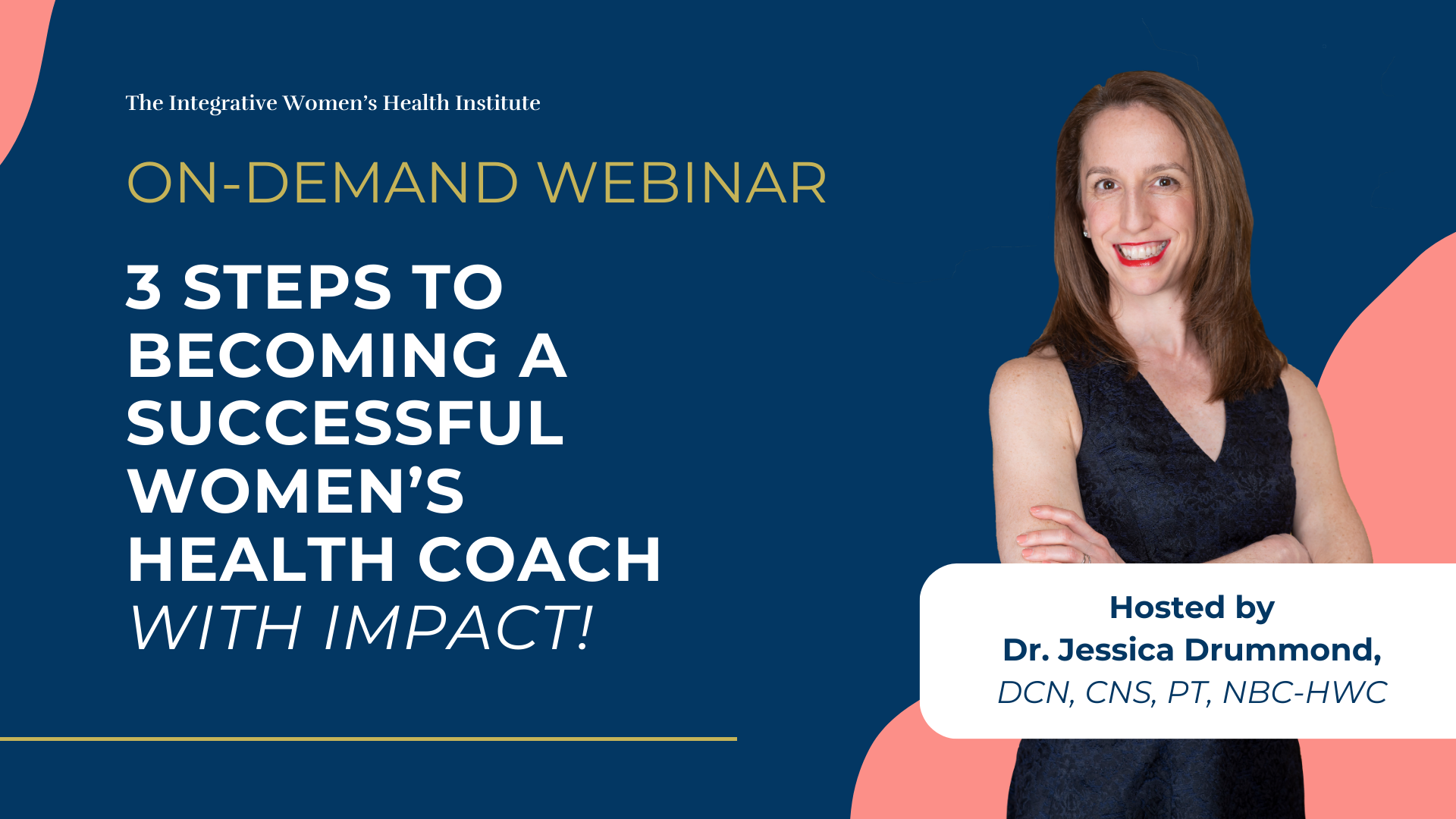
Join Dr. Jessica Drummond to learn the three key steps to becoming a successful, board-certified Women’s Health Coach who leaves a lasting positive impact on their clients.
Learn how utilizing health coaching skills in your practice is crucial to your success, leaving a lasting impact on your clients, and shifting the paradigm of women’s healthcare.

Dr. Jessica Drummond
Founder & CEO
The Integrative Women’s Health Institute
At the Integrative Women’s Health Institute, we’ve dedicated 17 years to crafting evidence-driven, cutting-edge programs that empower practitioners like you to address the complexities of women’s health.
Dr. Jessica Drummond’s unique approach focuses on functional nutrition, lifestyle medicine, movement therapies, nervous system dysregulation, trauma, and mindset – essential elements often overlooked in traditional health education.
In addition, your training will be fully evidence based, personalized, and nuanced (this is not a cookie cutter approach) in functional nutrition, exercise, recovery, cellular health, and all other lifestyle medicine tools.
You’ll learn to support your clients with cutting edge tools safely and effectively.