Follow Us for Free:


About the episode
“Focus on the skill of listening to your specific body, your specific symptoms, and figuring out what your system is responding to.” – Cait Van Damm
If you work with women navigating chronic illness, you’ve probably seen the “Doctor Roadshow” up close. These women have seen multiple practitioners without resolution and arrive at your practice exhausted and overwhelmed, with a list of protocols, supplements, and instructions that could fill a binder. They’ve done everything they were told, but still don’t feel better. Instead of clarity, they’re drowning in noise.
This is the moment we have to recognize that what they need from us is to help them step back. What looks like resistance or burnout is often a dysregulated nervous system trying to protect you. Clients who have lived with chronic conditions for years tend to lose connection to pleasure, internal cues, and trust in their bodies. They stop listening inward and start chasing external solutions, which only deepens the overwhelm. Rebuilding safety, awareness, and sustainable self-regulation is the foundation they need to optimize their health.
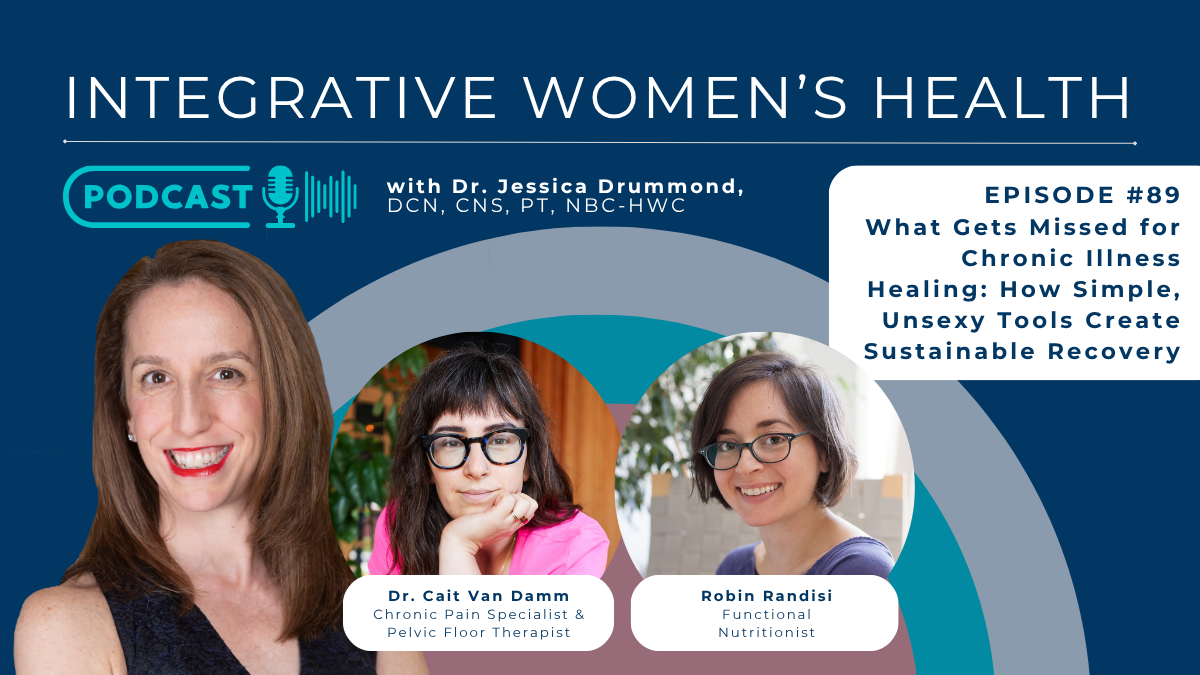
Today, I’m joined by Functional Nutritionist Robin Randisi and Pelvic Floor Therapist and Nervous System Coach Cait Van Damm to explore how we can help our clients to overcome the long haul of chronic illness. We talk about stripping back complex protocols, rebuilding interoceptive awareness, creating spaciousness for the nervous system, helping clients experiment with what works for their specific bodies, how they help clients to reconnect with pleasure, shifting away from checklist-style protocols, and more.
Enjoy the episode, and let’s innovate and integrate together!
About Robin Randisi & Cait Van Damm
Dr. Cait Van Damm is a nervous system coach, chronic pain specialist, and pelvic floor therapist. Her approach to coaching blends somatic integration, body awareness, and pain reprocessing therapy to help create a foundation of safety for folks experiencing pain or chronic illness.
Robin Randisi is a functional nutritionist specializing in digestive health, autoimmune conditions, and women’s health, including pelvic pain and endometriosis. Robin has a virtual practice where she offers highly personalized nutrition support with an emphasis on the mind-body connection.
Cait and Robin both work 1:1 with people from around the country and share a love of supporting clients with complex challenges and chronic illness. They’ve recently teamed up to offer group coaching in their Ground Nourish Breathe online membership community, where they’re thrilled to offer somatic and nutrition support in an accessible, inclusive format that goes beyond what they can each offer individually in their 1:1 practices.
Highlights
- How Robin and Cait collaborate to support chronic illness clients with a grounded, foundational approach
- Why patients are often overwhelmed by the time they come to us
- How returning to basic health habits can help
- Robin and Cait’s focus on simple, sustainable habits and the program they created
- Why nervous system regulation is undervalued and often difficult for clients to practice consistently
- The importance of personalized, body-based self-regulation instead of checklist-style protocols
- How reconnecting with pleasure and using sensory practices helps make self-care more enjoyable and sustainable
- Redefining movement by shifting away from exercise rules
- How chronic pain relates to safety and why rigidity can worsen symptoms
- Why adaptability, resilience, and self-inquiry are essential as clients’ bodies and needs shift over time
- How deep listening helps clients understand their specific needs
Connect with Robin Randisi & Cait Van Damm
- Ground Nourish Breathe | Cait & Robin’s online community for somatic & nutrition coaching
- Ground Nourish Breathe | Free Substack
- Ground Nourish Breathe on Instagram
- Cait Van Damm’s Website | CaitVanDamm.com
- Robin Randisi’s Website | RobinRandisi.com
Free Resources
FREE Training | How To Build A Flexible and Fulfilling Perimenopause and Menopause Career
FREE Workshop | How to Build a Thriving Perimenopause and Menopause Health Coaching Practice
Ready to revolutionize your career and grow your practice?
- The Integrative Women’s Health Membership
- What is the next step in your career in women’s health and wellness? Start here: https://integrativewomenshealthinstitute.com/start-here/
- Integrative Women’s Health Institute on Instagram | @integrativewomenshealth
- Integrative Women’s Health Institute on YouTube
Learn more about The Integrative Women’s Health Institute’s Programs.
Click here for a full transcript of the episode.
Dr. Jessica Drummond 00:00:03 Hi and welcome to the Integrative Women’s Health Podcast. I’m your host, Doctor Jessica Drummond, and I am so thrilled to have you here. As we dive into today’s episode, as always innovating and integrating in the world of women’s health. And just as a reminder, the content in this podcast episode is no substitute for medical advice, diagnosis, or treatment from your medical or licensed health care team. While myself and many of my guests are licensed healthcare professionals, we are not your licensed healthcare professionals, so you want to get advice on your unique circumstances. Diagnostic recommendations treatment recommendations from your home medical team. Enjoy the episode. Let’s innovate and integrate together. Hi there. Welcome back to the Integrative Women’s Health Podcast. I’m your host, doctor Jessica Drummond, and I’m thrilled to introduce you today to our graduate, Robyn Randi. I can’t wait for you to see what she’s up to, working in integrative and functional medicine. But leading with what we’re going to talk about today is nervous system regulation. We’re going to talk about nutrition and nourishment as nervous system regulation.
Dr. Jessica Drummond 00:01:30 If you’re in any of our programs, you know that this is a huge subject, a really important topic in my heart, because I really think people do not heal with more and more and more restriction. I’ve seen this over and over again in my nutrition practice that people do not heal with more and more restriction. We are also going to meet Kate. She is in Integrative pelvic health physical therapist who? Same thing, same lens, that if we do more and more strict prescriptive exercise, you know, you have to hit these number of reps and sets and it becomes just another stressful to do for people. They actually have more nervous system regulation disruption, even when they’re doing things that are sort of on paper good for them. So let me introduce them. I’m going to read their official bios. Doctor Kate Van Damme is a nervous system coach, chronic pain specialist and pelvic floor physical therapist. Her approach to coaching blends somatic integration, body awareness, and pain reprocessing therapy to help create a foundation of safety for folks experiencing chronic pain or chronic illness.
Dr. Jessica Drummond 00:02:49 This episode is so for you if you work with any patients with chronic pain, complex chronic illness, people who have been on that as we’re going to talk about what my friend Issa Herrera calls the Doctor Road show. They’ve been from practitioner to practitioner. They’ve tried everything, but it’s been through a lens of prescription, of another thing on their to do list. And this is something we’re so careful to avoid in our practice because, as I always say, step one of the healing seven step healing system is nervous system regulation. But even that can’t be a chore of breathwork X number of times a day. All right, I’m going to step off my soapbox and finish introducing you to Robyn Randi C. She is a functional nutritionist specializing in digestive health, autoimmune conditions, and women’s health, including pelvic pain and endometriosis. Robyn has a virtual practice where she offers highly personalized nutrition support with an emphasis on the mind body connection. Kate and Robin both work one on one with people around the country and share a love of supporting clients with complex challenges and chronic illness.
Dr. Jessica Drummond 00:04:04 They’ve recently teamed up to offer group coaching in their Nourish Sorry Their Ground Nourish Breathe Online membership community, where they’re thrilled to offer somatic and nutrition support in an accessible, inclusive format that goes beyond what they can each offer individually in each of their one on one practices. So just listen and enjoy and start getting curious with yourself about where in your practice you can bring in these little nuggets of nervous system regulation opportunity without even having to add another to do to your clients list.
Dr. Jessica Drummond 00:04:48 Hi everyone. Welcome back to the.
Dr. Jessica Drummond 00:04:50 Integrative Women’s Health Podcast. I’m your host, Doctor Jessica Drummond, and I am so excited to be here today with Robin and Kate. Robin is one of our grads, and they work together to help people overcome the long haul of any and every chronic illness that we now see so commonly today. So welcome to you both. Thanks, Jessica. Great.
Cait Van Damm 00:05:16 Thank you for having us.
Dr. Jessica Drummond 00:05:17 So we were just talking before we got started about how common it is for people with any kind of chronic illness to go through what my friend Lisa has called the doctor road show.
Dr. Jessica Drummond 00:05:32 You’ve seen eight, ten practitioners, and you might even be as the professional, like the fifth person this person seen, or the 20th person this person seen. And it can feel overwhelming of like, what do I have to add? How can we help? The first thing I really do is take a moment to step back and think about what can I strip away And where have the foundations been missed those sort of day to day health behaviors. So talk me through what you guys do when you first meet with a client or colleague who has been through the Doctor Road show.
Cait Van Damm 00:06:10 This is really what brought me and Robin together. Robin’s a functional nutritionist. I’m a pelvic floor therapist specializing in chronic pain, and we both have this love of treating clients who they’ve done all the things and they kind of come exhausted and beleaguered, and they’re like, what can you do? And Robin and I just started out as social friends. We were chatting and we were like, all of our clients should just see each other, right? And we wanted to create a space where all of those foundations, the really unsexy stuff, could be the focal point, because I think when we get into the doctor road show, what comes to mind for me is a lot of very flashy and specific protocols.
Cait Van Damm 00:06:57 Do my alphabet soup protocol take different supplements nine times a day? Do this specific breathing exercise four times a day and like you will be healed. And that actually ends up creating an incredible amount of overwhelm and burnout in people’s systems. And I also think my experience has been that people tend to then outsource their inner awareness and knowledge of their own bodies and actually become more dissociated, whether that’s around food, whether that’s around movement. It really doesn’t matter because we’re looking for someone to fix us. Instead of using self-awareness and deep listening of the self to work on those foundational self-regulation skills.
Robin Randisi 00:07:51 Yeah. I mean, I think what Jessica pointed to is like, often the starting place for those folks who’ve been through the ringer is really drilling back down into foundations. And less is more. What can we take away? What can we take off of your plate to create more spaciousness, mostly for your nervous system? And so when Kate and I met and her as a nervous system coach, as a nutritionist, I don’t have that much time in my sessions.
Robin Randisi 00:08:14 I usually meet with people once a month to really do the deep dive that Kate does. And so that’s where we kind of why we created our group program was like, we want to have a space where our one on one clients could go and where anyone from the public could come and access these really basic stuff that we just all need to be constantly reorienting to. Like even ourselves as professionals, we always laugh about it like it’s true for us as well.
Dr. Jessica Drummond 00:08:40 Absolutely. And you know, what’s interesting is you say really basic, but in reality, it’s not to say that these things are difficult, cult, but because they don’t give a kind of quick return. You know, I was just working with a client this morning and I asked, are there any regular nervous system regulation practices that you’re already doing at all? Like, do you like breathwork? Do you like nature walks? Do you like certain kinds of music? And she almost immediately glazed over and was like, that stuff doesn’t work for me.
Dr. Jessica Drummond 00:09:16 Like I’ve meditated. It doesn’t work for me. I’ve done all of that. And because I think it is framed by medicine, the overarching system of medicine as being sort of nice to have fluffy, it’s not actually basic, it’s not difficult and it’s not expensive, and it doesn’t have much marketing around it, and it doesn’t require a lot of special manual training. But the implementation of doing nervous system regulation day in and day out, I think, is actually one of the most difficult but most valuable tools. So when you guys have people do this as a part of your work with them, what’s one of the ways you sort of get over that initial hump of like, this is super boring and is not working for me?
Cait Van Damm 00:10:10 One thing I like to say to folks is like, listen, I went to graduate school because I love evidence based medicine. Let’s use the evidence of your body. Has what you’re doing worked for you? You’ve been through the Doctor Roadshow. If you’re doing all of the other stuff and you’re still here, can we come to an agreement that there’s something missing? There could be something here.
Cait Van Damm 00:10:37 And I also think, like to your point around, like the client that you were talking about earlier, and I have clients like this all the time. They’re like, will I do nervous system regulation? I doo doo doo doo doo doo doo doo doo doo. And the way that they’re talking about it is like a checklist. It’s this very kind of like, well, I did what the doctor said, but what we’re missing and what I think Robin and I really try to really hone in on in ground, nourish, breathe is it is exactly what you just said. What works for you. I don’t care what works for me. I don’t care what I think is best. I don’t care what a paper said was helpful. Can we focus on the skill? And this is, I think, what we really mean by like sustainable skills for the long haul. Can we focus on the skill of listening in to your specific body, your specific symptoms, and figuring out what is your system responding to? And I think that is profoundly difficult for a lot of folks, because that’s just not the way that our medical system or really our society is oriented around.
Dr. Jessica Drummond 00:11:40 Yeah, I think that’s such a valuable point because it’s not ever taught. And really, this should be kind of almost like a childhood skill to take a moment and understand when and how you feel really well in your body. One of the first questions we always ask is like, when is the last time you felt really well? And again, that can be very difficult for some people to ever even touch. So another challenge that I sometimes come across in our practice is when they do get to a level of like deep, calm and deep peace, they immediately they’re nervous. System is like panics a little bit. They can’t really stay there. So what are some of your thoughts when I say that? What comes up for you?
Robin Randisi 00:12:31 I just know that this comes up so much like in our group coaching sessions that Kate and I do. It’s so common to see. And if you’re someone who’s been dealing with chronic pain or chronic illness for a long time, your body may not feel like a safe space.
Robin Randisi 00:12:43 Or maybe that hasn’t been available to you. Kate is very good at holding space around this and offering lots of options, so I’ll let her talk more. But I mean, my first thing that I always say to clients is like that is not uncommon. You’re not doing anything wrong. It’s just about finding the right tools that work for you right now.
Dr. Jessica Drummond 00:13:02 And I think even practicing, like you said, it’s normalising it. And then it’s okay to just stay there for a little while. You don’t have to like.
Robin Randisi 00:13:11 Yeah.
Dr. Jessica Drummond 00:13:11 Sometimes or.
Robin Randisi 00:13:12 Whatever. Growing our capacity for sitting with discomfort is really kind of at the core of it for like what I often end up working with, with clients. And sometimes we start totally in a different place with the nervous system. It’s like, well, what lights you up? Like what doesn’t feel like a health chore that makes you feel like happy and alive and in your body. And sometimes that’s a great place to start to. But, Kate, I’m sure you want to say things.
Cait Van Damm 00:13:36 So first of all, I absolutely agree with everything both of you just said. And something that I often lead with is like, hey, this is not like a problem specific to Jessica or Robin Wright. Like this is a patriarchy and late stage capitalism problem. This is not a personal failing of yours. But the other thing that I think is really important, because a lot of people who have, I’m just going to keep using Ben through the Doctor Roadshow because I really like it. People who have been through that experience and who have been unwell for a long time, have really lost a connection to pleasure such that often even like the things that we think are good for us. Right? Like the breathwork and the movement and all of the stuff, it becomes a chore. It becomes another task. And so what I frequently try to work with my clients and with our folks in our program is, hey, can we, like, lean into hedonism for a second? You know, what is actually genuinely healing sometimes is like take out on the couch with crappy TV.
Cait Van Damm 00:14:37 Like, that’s okay. And obviously there are balances and there’s a lot to say, right? But like, it’s okay to be like, I’m just going to absolutely give myself permission for so much positive sensation. And so frequently I run folks through like a sensory checklist, like, what can you take with you? Are you attracted to specific scents? Are there tastes that feel really good to you? Sometimes if people have office jobs, I’ll have them create like a small kit or like something in their work bag or whatever. You know that they can carry with them or albums on their phone or playlist that they can just have as default. And generally what I say is like, if it feels so good that it feels like you don’t deserve it. Like it’s almost like too good, keep going. That’s the direction we’re going in.
Dr. Jessica Drummond 00:15:31 That’s so interesting, because this is something I’ve just learned sort of tangentially. But when they were doing the original studies on like women’s orgasm, basically they had women using clitoral vibrators and they were like, when it starts to feel too good that you want to stop, you have to keep going because they weren’t really comfortable with women having any pleasure.
Dr. Jessica Drummond 00:15:51 And so you could see how that could be like it would be like the intensity of the sensation is too much. And I think we can feel the same way in the kind of opposite direction and actually in any direction. So initially it’s like a discomfort with feeling good because there was something negative associated about that. Just any kind of feeling good. Feeling calm, feeling. Quote unquote unproductive. Feeling at peace. Almost like triggers a rebound anxiety. And then on the other end of the spectrum, as you said, like, oh, it’s safe and okay to actually feel well and happy and kind of a deep sensation of good when you quote unquote, didn’t deserve it. That’s why I think there’s so many layers to this that are so important for us to address in people who have chronic pain. So let’s say someone has had chronic pain for 20 years and they come to you and they say, okay, I’m on a laundry list of pain management medications that aren’t really doing much anymore. And then we integrate that with functional nutrition.
Dr. Jessica Drummond 00:17:04 Talk about how nutrition can actually be potentially a source of nervous system regulation when framed correctly.
Robin Randisi 00:17:13 Yeah. I mean this is a my favorite topic, right? This is how I approach nutrition in my practice, especially in the beginning of working with someone, I usually don’t have to do too much convincing of them. They kind of know their nervous system is a part of their picture, even if they don’t really know what that means. So they’re on board for exploring that more. And we talk about how nutrition really sets the stage for whether your body feels safe or not on a lot of levels. So are you eating breakfast? Are you skipping meals? How’s your blood sugar? Are you drinking enough water? Because all these subtle signals, even just being slightly dehydrated, is a stressor on your body. And if your body’s already prone to being on high alert, that’s going to compound that. So nutrition is a really lovely doorway to just start nourishing yourself at the level of both physically and the nervous system.
Robin Randisi 00:18:06 It’s like I find just a really nice way in. That opens the door. Oftentimes people will have emotional reactions once they start nourishing themselves better. I mean, the number of times I’ve had people have like tears come up when they’re like, I didn’t realize how much I was under eating or under fueling myself. And I’m like, actually grieving that. Like, I didn’t know any better. It’s like a huge nervous system, like emotional release that probably needed to happen for them. So that’s kind of the beginning of the nervous system nourishment piece with nutrition, but it often just branches out into many other areas of life, and we start to tune in better to the body. Like when your nervous system and your nutrition are more in line, you’re more hydrated, your blood sugar is more stable, it is easier to tune in to your body’s signals for most people. And then they start to we start to have conversations about like, what do you think your body really needs right now? And that coaching paradigm that I know you’re so a fan of is like, usually the client has the answers and it’s not what I would assume, and it could be something totally out of left field.
Robin Randisi 00:19:08 And it’s really beautiful to see when that comes up. And they do harness it, how profound it is for their health and their body.
Dr. Jessica Drummond 00:19:16 Yeah, we can say the same thing about movement, about sleep. Any insights, Kate, that you see from other domains of foundational health?
Cait Van Damm 00:19:29 Often folks have this kind of like picture perfect understanding of, I call it capital E exercise versus little M movement. I stole that from Katie Bowman. If you know her work. It’s phenomenal. People think they have to do, like, the 3 to 5 paradigm, 3 to 5 days, 3 to 5 exercises, 3 to 5 reps. Like whatever, whatever. Very Huberman s we hold ourselves to this intensive paradigm, I would say. And what I frequently ask folks is like, okay, but can we just integrate more movement into your day to day routine? So if you are a parent, what does it look like to just move joyfully in that role? Whatever role you have? I think a lot about joy.
Cait Van Damm 00:20:20 What brings you joy, right? Is it a walk in nature? And that’s the thing. Like to Robbins point, it’s like I don’t always have those answers. I’m more interested in the experience of having a lens of curiosity, kindness, and care, both as a clinician and giving that same lens to our clients. Instead of I’m in pain, I have to fix this. And I come from a movement rehabilitation background where in my early years it was like, okay, well you have X diagnosis. These are the three things I want you doing every day. And they like feel like crap to the client or they do it and it’s like, that’s the checklist. And now I’m much more interested in here’s a panacea of options. Let’s start exploring what feels good to you, and let’s start exploring what feels sustainable for you. And also like if we’re working on breathwork, right, which is a common one that comes up across a number of different, I would argue all of humanity needs more breathwork, right? It’s a rare person that actually loves to do a formalized breathwork practice, but could you do it during movement? I know for me personally, that feels a lot more connected to my body or what I frequently sell a lot of clients is like, hey, you know that moment when you first get into the car and you’ve like, just dropped off your kids or you’ve just finished the grocery shopping or like you’re about to get home from work or like whatever it is for you, that’s the moment.
Cait Van Damm 00:21:52 That’s the interstitial moment to just take like two breaths and like breathe into your space. And that can be life changing for people and have like dramatic physical impact. So.
Robin Randisi 00:22:04 And can I add something to you about nutrition, like listening to Kate talk reminded me like one way I like to frame the nutrition piece, because these are often people who are used to white knuckling it through everything. And we say we just we don’t want your nutrition like we don’t want your nourishment to have that energy. Imagine how that feels for your nervous system. So where can we start? That’s manageable. Rome wasn’t in a day. We’re going to do like, one thing at a time and build on that. And you know what? Do you already like to eat for breakfast? Let’s start there. This usually blows people’s minds. They came in, thought, well, I’m going to have to do AP. I mean, you know, and it’s like, actually, no, that feels very stressful for your nervous system.
Robin Randisi 00:22:41 I think that will be at cross purposes right now. So just listening to Kate talk reminded me also, like we can take some of the pressure off with nutrition. And I always tell people the good news is you can’t get an F, like, you can’t mess this up. The bad news is you can’t get an A because I see you, my overachievers, my autoimmune personalities, and some of them have a hard time being like, either nutrition has to be perfect or what’s the point? And it’s also like, again, another entry for working with our nervous systems.
Dr. Jessica Drummond 00:23:09 I think that’s a really important point, because so many people come to this place of long term chronic illness, because how they frame their whole lives is around doing things in a particularly, well, perfect way. You know, I think it’s really valuable to initially collect some data, just kind of see where we are. But I also think that over time, if we’re constantly collecting data and trying to optimize, two things happen.
Dr. Jessica Drummond 00:23:43 People lose the connection with feeling how their own body feels like they wake up feeling great, and then they look at their like overnight data and it’s not too good. And they’re like, oh, actually, I guess I am really tired. I’m just like, no, you might be fine. You can tolerate that level of one night of slightly disrupted sleep or whatever. Or there’s a tendency to need to like optimize, optimize, optimize. And I’m all for people being as wildly healthy as they want to be. However, I do think it starts to circle back in the wrong direction of what you guys are saying and that the nervous system becomes more fragile. So talk a little bit about that. What is some of the signs that maybe people are actually building fragility while they’re trying to Actually optimize.
Cait Van Damm 00:24:35 Oh my gosh. I talk about this all the time. So for chronic pain, which I think becomes relevant in terms of what you’re asking. You know, we talk about the neuroscience of chronic pain, which I’m sure a lot of listeners are familiar with, which at brass tacks is this concept that your brain is a smart entity and wants to protect you and keep you alive.
Cait Van Damm 00:24:56 And so we end up in a state of chronic pain when we do not feel safe at some level. And what I frequently tell clients is like, listen, for a lot of us, control helps us feel safe. And so when we find that one supplement or that specific protocol or those specific exercises that shift for us, that feels very safe. But then here comes the problem, right? Like then there’s the rigidity around it. There is a rigidity and a fragility that can occur in long term because again, we’re disconnecting from the evolution that is every single body on this planet, right? Like we are all aging as we speak to one another and our needs are shifting over time. Our bodies are shifting over time. Our hormones are shifting over time. When we disconnect from our specific needs and the ability to tap into our needs in real time, and we cling to a specific protocol or doing it right, that actually creates an incredible sense of rigidity that will absolutely fail you. But what cannot fail you is resilience.
Cait Van Damm 00:26:11 And this understanding that you are with your body. I think a lot about like, can you actually inhabit and be with yourself as we change through life? I frequently say to folks, let’s keep going, to keep on life, in going, to keep on happening. So let’s build the skills for that.
Dr. Jessica Drummond 00:26:31 Yeah. I often say, you know, I could have 100% of my clients just quickly better if I could just take them out of their life and, like, stick them on a private island and everybody’s cooking for you, and, you know, someone’s watching your kids who’s also a great teacher or whatever. You don’t have to worry about any of that. But the problem is, as soon as you got home, it would all come back. So I really think your expression of that as a skill set within your actual life is very, very important distinction. So one final question I want to ask you both is I think the world of wellness is really starting to evolve in a way that’s a little bit excessive in this regard of what we’re exactly talking about now.
Dr. Jessica Drummond 00:27:19 Like if you do x, Y, and z and take x, y, and z, you will have perfect health. If you don’t, it’s your fault and you are going to be sick. It’s a very individualized perspective, and it’s based in absolutely no data, certainly not personalized data. But I do think more and more and more and more, because all of our news and information comes from certain algorithms. That’s what people are hearing. How do you help them unravel that?
Robin Randisi 00:27:53 I think it’s important to frame that as a very large, systemic failing of health that comes from neoliberalism, capitalism, patriarchy. Yeah, it’s much more convenient if we just have everyone blame themselves, rather than our access to resources and health care and green space and quality food. And that helps maybe also take the pressure off. Like once again, the whole goal. And it also becomes a way to filter information. I think the problem is not that people don’t have information nowadays, it’s that they don’t know how to implement it.
Robin Randisi 00:28:26 They don’t know how to apply it. They don’t know how to filter what’s BS from what’s actually useful. So when we bring it back to that lens that Kate was talking about earlier, well, what’s going to be useful and doable in your life right now? It kind of helps us quiet that noise and bring us back to center. I think it’s a huge problem, and I think we have to like very explicitly, as practitioners, reject the kind of individualization of health and wellness. And often when working with people with chronic illness. I know Kate and I’ve talked about having this experience. People feel like they’re a failure if they haven’t put their chronic illness into remission. Just realistically, that may not always be possible, and it’s more about successfully managing it so that you can live your life. The point is to live your life, not have perfect health on a desert island by yourself. Right? Everyone agrees about that when you phrase it like that. So sometimes we get to a certain point with clients and I’m like, you got it, you got it down.
Robin Randisi 00:29:22 I have to kick you out of the nest and go live your life like go do basket weaving. And you can see there, like the wheels turn and then they’re like, yeah, like, I am fine, I can go do basket weaving now, you know, or whatever. I think that’s great for you. So being realistic about how it can often be more about riding the waves of resilience is, again, just a huge weight off people’s shoulders. They don’t feel like they’re failing. A lot of people come into it that they just need to be more extreme. Like if it’s not working, I need to go harder. And it’s actually like, no, no, usually it’s the reverse.
Dr. Jessica Drummond 00:29:56 I think that’s a really important point because as you said, the messaging is harder, more try something else when almost always it’s pulling back.
Cait Van Damm 00:30:08 What you just said right there made me think about. So in my practice and in nourish, breathe, I do a practice called Deep Listening where I ask folks to tune in to their physical, but also energetic and emotional sensations.
Cait Van Damm 00:30:24 I recently had a client who doesn’t have glasses ever and didn’t get this right. But like when you go to the eye doctor and they click a new prescription in front of you, right? Like it’s like a new reality. If you think about your physical, emotional and energetic sensations right at baseline and then you click in, okay, I have to do all these protocols or I’m a failure. What does that bring in for you? Conversely, if we can take that out of the picture and then just check in with physical, emotional and energetic sensations, whatever comes up, it comes up. Right. We’re not fishing for anything. We’re just getting curious and then ask the really simple question, what do you need? I feel like Robin and I both feel as facilitators, as clinicians, right? Our job is to shepherd folks through their options because oftentimes people are like, I don’t know what I need, right?
Speaker 5 00:31:20 Like, I don’t know.
Cait Van Damm 00:31:21 It’s like, well, yeah, that’s why I’m here.
Cait Van Damm 00:31:23 Here are some options. And then what I encourage folks to do, which I think is a little bit more like the linear thinking process that we’re all kind of used to, that can be a little bit more accessible is like, okay, run the experiment, run the experiment. You are an N of one. See what works for you. And then that is the data that you need. You don’t need a randomized control trial although they can be useful. Right. What you need is the trial of you. And I think that really, really centering with where are we at as humans in our bodies is really, really profound when it comes to what we’re talking about in terms of like the individualization of health.
Dr. Jessica Drummond 00:32:08 Yeah, yeah. Well, I absolutely love everything you are doing. I was having dinner with some colleagues a couple of weeks ago, and we were talking about the same challenge for everyone, I think, and who’s not focused on building an influencer platform, but who is really in the weeds working with people that you know? Everyone is looking for the magic bullet.
Dr. Jessica Drummond 00:32:32 And I’m always saying, like, look, if this existed, I would absolutely give it to you. Like, I would be one of the big options. I would just hand over if something like that exists. To me, it’s nervous system regulation, which I think is very difficult for people. And so I love that you’ve created this program to help people really access it, to access it in a way that’s very personal to them. It’s not another prescriptive activity. It’s built on their own data collection and their own intuition and their own assessment and tracking. And, you know, all the stuff that takes a little time and commitment. But that’s where we need people like you who are just really skilled at holding space and having good coaching communication skills. So where can people find you and learn more about your work and Can refer clients to you.
Robin Randisi 00:33:25 So our group program is called nourish. Breathe. So it’s just ground, nourish, breathe. Kate and I do joint somatic and nutrition coaching there, and we have even an online course built in and a somatic library of on demand movement practices and recipe resources and all kinds of stuff, just to kind of give you the tools that you can use.
Robin Randisi 00:33:44 And then we’re also there for you to help you find them and use them. And co regulate, as we like to call healing happens in community is one of our favorite catchphrases, because we really do believe that we also have a free Substack where we share really bite size somatic practices and nutrition tips for your nervous system. And then we each have our one on one private practices. And the group program is not really necessarily meant to replace one on one work. So if someone is working with someone one on one, it’s still an awesome place to come. And if you’re not working with someone one on one, it is also still an awesome place to come. We’ve kind of designed it to like be that as well.
Dr. Jessica Drummond 00:34:20 Excellent. Well, we will put all of the links and notes about those resources in the show. Notes. Anything else you would love to add before we wrap up today?
Robin Randisi 00:34:29 I don’t think so. Just thanks again for having us.
Cait Van Damm 00:34:32 Yeah, we’re so grateful to be here. Thank you.
Dr. Jessica Drummond 00:34:34 Thank you so much for being here. This was wonderful and I think so necessary in our current environment. So I hope your work continues to grow. It’s very needed and so important. Thank you so much.
Cait Van Damm 00:34:47 Thanks, Jessica.
Robin Randisi 00:34:47 Take care. Thank you.
Dr. Jessica Drummond 00:34:52 I absolutely loved that episode and could talk about that topic all day, every day. I think it’s so, so important that we begin to think about exactly how we can use our clinical sub specializations in a way that’s more joyful, more nourishing, more calming to the nervous system without it being so prescriptive. And that requires a mindset shift. One of the things I am certain that I learned in all of my graduate work, my training, my clinical and licensure training in physical therapy and nutrition is it is my job to fix the client by offering the right checklist of activities, or doing the right manual therapy techniques, or giving them the right exercises, or the right nutrition plans or supplements, when in fact, so much of healing is a collaboration and conversation between the nervous system and the immune system, and then all of the other systems the digestive system, the musculoskeletal system, the cardiovascular system, et cetera, etc. and to access and unlock our own internal healing mechanisms, we will do our best healing work when we do it in the context of regulation, joy of nervous system connection and collaboration Shen of connection with nature, of connection, with breath, of connection, with movement, of connection, with nourishment.
Dr. Jessica Drummond 00:36:28 So think about the things. This is what I want you to do. This is your homework this week. Look at your own practice day to day with your clients. When you are making recommendations which are probably great like aligned, highly skilled, collaborative, can we take it one notch stronger and connect with the client’s capacity to really, like, make that a thing that is more calming and more nourishing to their nervous system, and then have them journal a bit how that makes them feel more in control. Less in control. Safer. Less safe. Do they feel confused? Disconnected? Anything that bubbles up for them. Open that lens of curiosity because then anything prescriptive from nutrition to supplementation to medication, whatever it is, can be an opportunity for nervous system regulation. No need to add a lot of extra stuff. Okay. Get curious about that this week. I hope you enjoyed this episode and I will see you next week.
Speaker 6 00:37:47 Thank you so much for joining me today for this episode of the Integrative Women’s Health Podcast.
Speaker 6 00:37:53 Please share this episode with a colleague and if you loved it, hit that subscribe or follow button on your favorite podcast streaming service so that we can do even more to make this podcast better for you and your clients. Let’s innovate and integrate in the world of women’s health.
Join Dr. Jessica Drummond to learn the three key steps to becoming a successful, board-certified Women’s Health Coach who leaves a lasting positive impact on their clients.
Learn how utilizing health coaching skills in your practice is crucial to your success, leaving a lasting impact on your clients, and shifting the paradigm of women’s healthcare.
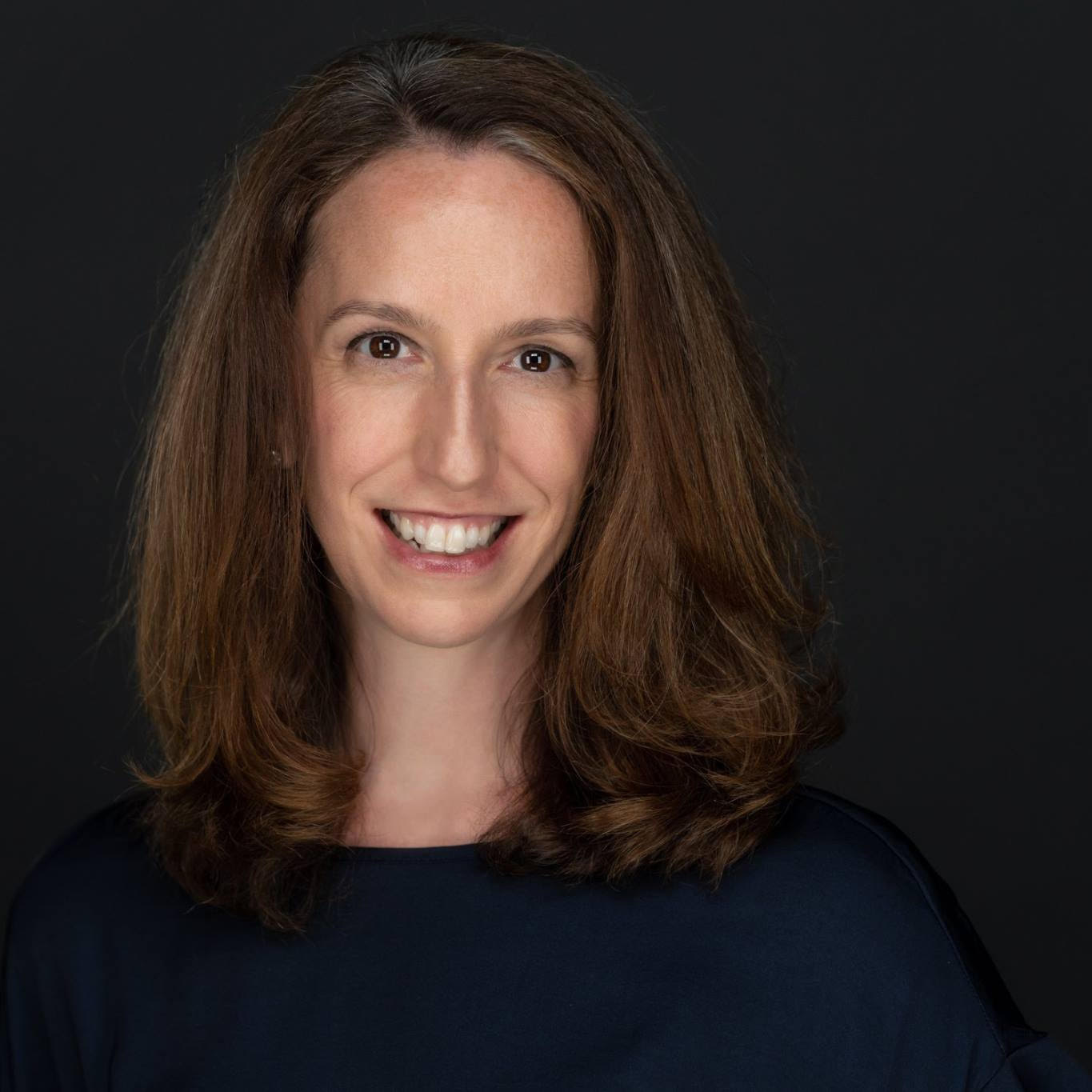
Dr. Jessica Drummond
Founder & CEO
The Integrative Women’s Health Institute
At the Integrative Women’s Health Institute, we’ve dedicated 17 years to crafting evidence-driven, cutting-edge programs that empower practitioners like you to address the complexities of women’s health.
Dr. Jessica Drummond’s unique approach focuses on functional nutrition, lifestyle medicine, movement therapies, nervous system dysregulation, trauma, and mindset – essential elements often overlooked in traditional health education.
In addition, your training will be fully evidence based, personalized, and nuanced (this is not a cookie cutter approach) in functional nutrition, exercise, recovery, cellular health, and all other lifestyle medicine tools.
You’ll learn to support your clients with cutting edge tools safely and effectively.