Follow Us for Free:


About the episode
“We’ve learned so much. Now, as PTs, we not only look at musculoskeletal and neuromuscular systems but also at pain science.” – Amy Stein
Pelvic pain is never just one system. It sits at the intersection of musculoskeletal function, nervous system regulation, hormonal shifts, immune activation, and lived experience. And for practitioners working with complex pelvic pain, endometriosis, bladder conditions, or postpartum and perimenopausal clients, progress often comes not from a single intervention, but from curiosity, collaboration, and a willingness to keep learning.
Clinicians need to evolve alongside their patients. As our understanding of pain science, movement, nervous system regulation, and supporting therapies continues to expand, so does our ability to help people who have been dismissed or misdiagnosed. Staying innovative isn’t about chasing every new tool. It means knowing when to turn the dial up, when to pull back, and how to individualize care in a way that truly supports healing.
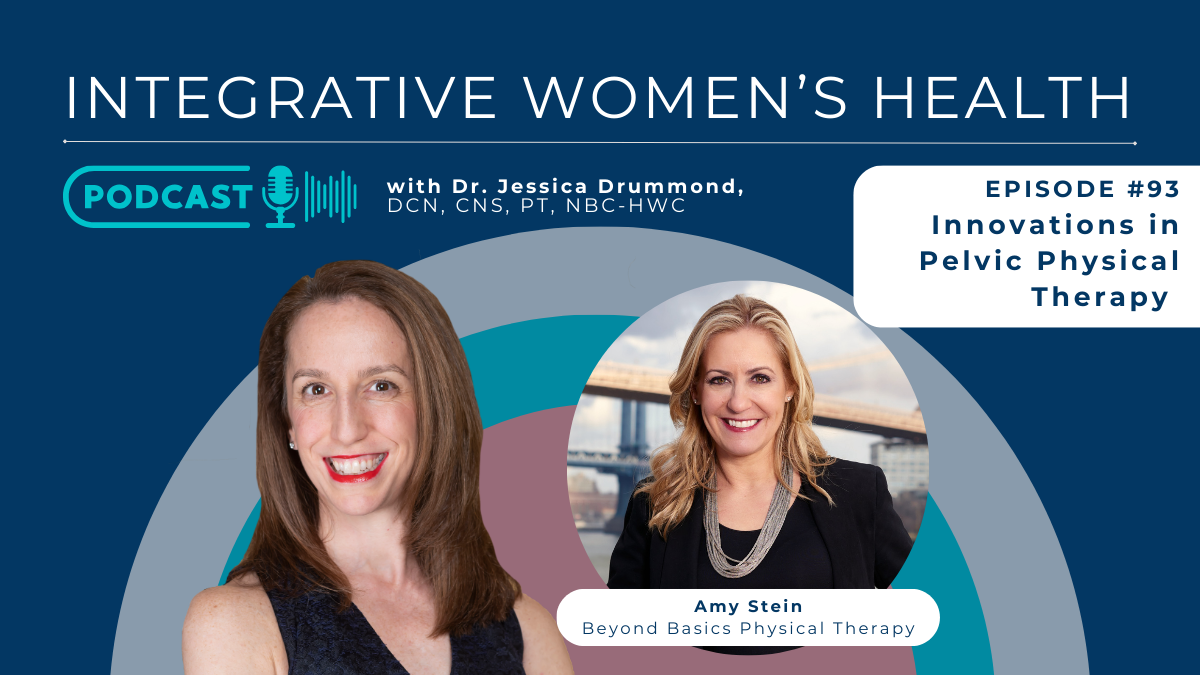
Today, I’m joined by Dr. Amy Stein, physical therapist and founder of Beyond Basics Physical Therapy. Amy and I discuss her journey into pelvic pain care, how the field has evolved over the last two decades, the role of physical therapy within multidisciplinary care, how pain science has reshaped movement and rehab strategies, innovative tools like shockwave therapy, red light therapy, and neuromodulation, what to look for when referring to pelvic physical therapy, how to avoid common pitfalls in complex cases, why personalization is essential, and more.
Enjoy the episode, and let’s innovate and integrate together!
Highlights
- How pelvic health physical therapy has evolved beyond symptom relief to include pain science, whole-body assessment, and functional movement
- Why individualized movement, rather than rest or immobility, is central to treating chronic pelvic pain and complex presentations
- How tools like biofeedback, TENS, and SoftWave are used to support nervous system regulation and tissue healing
- What SoftWave therapy does at a cellular level, where it fits clinically, and why dosing and settings must be individualized
- How frequency-based therapies, including red light therapy, are being explored as part of a broader pain and recovery strategy
- Why complex pelvic pain cases require experienced clinicians with strong multidisciplinary referral networks
- A postpartum case illustrating how overlapping pelvic, musculoskeletal, and systemic factors demand coordinated, patient-centered care
- Why long-term functional goals and ongoing reassessment matter more than short-term symptom relief
- How stalled progress with musculoskeletal tools can signal deeper systemic drivers that need broader evaluation
Connect with Amy Stein & Beyond Basics Physical Therapy
- Website: BeyondBasicsPhysicalTherapy
- Instagram @BeyondBasicsPT
- TikTok @BeyondBasicsPT
- YouTube @BeyondBasicsPT
About Amy Stein
Premier physical therapist, founder, and pioneer – Dr. Amy Stein is at the forefront of treating pelvic floor dysfunction and pelvic pain, specializing in functional manual therapy for all people, including children.
In addition to being the founder of Beyond Basics, Amy has served as the President – and is currently on the advisory board – of the International Pelvic Pain Society. Amy also lectures internationally, has been featured in documentaries, and interviewed on critically-acclaimed TV shows like Dr. Oz, ABC’s 20/20, and Good Morning La La Land.
As an award-winning author, Amy has written books on pelvic pain (Heal Pelvic Pain) and endometriosis (Beating Endo: How to reclaim your life from Endometriosis) and created a video on pelvic pain (Healing Pelvic Pain and Abdominal Pain). Amy is also a co-editor of Healing in Urology as well as a featured author in many medical textbooks, including Pelvic Pain Management, Female Sexual Pain Disorders: Evaluation and Management, Management of Sexual Dysfunction in Men and Women, and The Overactive Pelvic Floor.
Her award-winning books and videos help people heal from pain, improve function, and take back their lives. She is a tireless educator and advocate, working closely with patients, caregivers, and healthcare providers everywhere to raise access and awareness, so more people get the care they need.
Amy recently founded her own line of healing CBD products, Wellness x Nature, that aims to further assist and inspire those on their mission to good health and healing.
Mentioned in this Episode
The Integrative Women’s Health Membership
Ready to revolutionize your career and grow your practice?
- The Integrative Women’s Health Membership
- What is the next step in your career in women’s health and wellness? Start here: https://integrativewomenshealthinstitute.com/start-here/
- Integrative Women’s Health Institute on Instagram | @integrativewomenshealth
- Integrative Women’s Health Institute on YouTube
Learn more about The Integrative Women’s Health Institute’s Programs.
Click here for a full transcript of the episode.
Dr. Jessica Drummond 00:00:03 Hi and welcome to the Integrative Women’s Health Podcast. I’m your host, Doctor Jessica Drummond, and I am so thrilled to have you here. As we dive into today’s episode, as always innovating and integrating in the world of women’s health. And just as a reminder, the content in this podcast episode is no substitute for medical advice, diagnosis, or treatment from your medical or licensed health care team. While myself and many of my guests are licensed healthcare professionals, we are not your licensed healthcare professionals, so you want to get advice on your unique circumstances. Diagnostic recommendations treatment recommendations from your home medical team. Enjoy the episode. Let’s innovate and integrate together. Hi everyone. Welcome back to the Integrative Women’s Health Podcast. I’m your host, doctor Jessica Drummond. And today we have my dear friend Doctor Amy Stein, physical therapist. She has been the founder and leader of Beyond Basics Physical Therapy in Midtown and downtown in New York City for, gosh, 25 years, almost 30 years. she and I started in this industry and around the same time in the late 90s.
Dr. Jessica Drummond 00:01:30 And here’s what I want you to think about. First of all, let me introduce you really quick to Amy. She’s the author of two award winning books, Heal Pelvic Pain and Beating Endo How to Reclaim Your Life from Endometriosis. Plus, she’s created videos, she’s created products. She is the founder and owner of Beyond Basics Physical Therapy. She’s been the past president of the International Pelvic Pain Society. She’s one of the founders of the Alliance for Pelvic Pain, which is a patient owned educational retreat. Gosh, I could go on and on about her accolades. She’s been on popular television shows. She’s been in magazines, from Prevention to Women’s Health to Elle magazine, New York City News. She’s done a lot in the field of pelvic rehab, medicine, pelvic physical therapy, and occupational therapy. She’s really a trailblazer. But what I think you’re going to love about this interview is that despite her depth of experience and her leadership of her team, she is always learning. And she thinks of each and every client and patient as an individual, and she supports them in a very personalized way.
Dr. Jessica Drummond 00:02:54 So she’s always learning about new and innovative tools. We talk a lot about everything from shock wave and soft wave therapy to red light therapy. If you want to dig into that even more. Dive into the course in our membership on Red Light Therapy. But you’ll see that despite the fact that Amy deeply understands pelvic health and pelvic pain, she’s been educating colleagues and the public. She’s been leading organizations in pelvic pain for decades. And yet she stays curious. She takes everything she’s learned. She’s a graduate of our perimenopause and menopause certificate program, and she’s taken all those little nuggets, and you’re going to see exactly how she’s applying it in a pelvic rehab practice, and how it helps her to expand and think Collaboratively in a multidisciplinary way, where she gets referrals from other providers in the space, and she refers to them and she really helps her clients from a whole person care perspective. So I really think curiosity is a wonderful theme curiosity and innovation. And so listen to this lovely conversation with me and my dear friend Amy, and let’s chat about what you should do with what you learn here today in your practice.
Dr. Jessica Drummond 00:04:29 This week, right after our conversation. So I’ll see you on the other side. Hi and welcome back, everybody to the Integrative Women’s Health Podcast. I’m your host, doctor Jessica Drummond, and I’m here with my good friend and colleague, Doctor Amy Stein. Physical therapist Amy, we all know you’ve been specializing in chronic pelvic pain for over 20 years, which is basically before basically, you and I are sort of among the second generation of women’s health physical therapists and pelvic pain specialists. It was very new even then, especially things like painful bladder syndrome, Virginia, the pain of endometriosis. So give us a little background on why you decided to focus on this area of practice. Was it your own experience? Was it your education? Was it a patient story? And what’s drawn you to this work? And staying in this very niche based practice for a long time now? Yes.
Dr. Amy Stein 00:05:37 Thank you for having me on this show. First of all, I really appreciate that we’re doing this, and it’s been a really long time since we’ve done stuff together.
Dr. Amy Stein 00:05:47 We’re just trying to figure that out before like 20, maybe 20 years That’s right.
Dr. Jessica Drummond 00:05:52 Well, I think a little before in between 20 years between that. But a while for sure. Yeah. Yeah.
Dr. Amy Stein 00:05:59 Yeah. So how I got started was it was a patient story. It wasn’t my patient. It was a friend. And she just had she had had a hysterectomy. Had severe bladder bowel sexual dysfunction, pelvic pain. Looking back on it now, I was a student at the time. I was a PT student. And looking back on it now, I’m like, they probably aggravated the pudendal nerve and that caused all her symptoms. And at the time they couldn’t figure out what it was because they ruled out bladder infection. They ruled out it was an acute GI on a set and she hadn’t changed it. It was like right after the surgery that, you know, constipation set in and back was ruled out as well. So they had done like all the scans in the back and they couldn’t find anything.
Dr. Amy Stein 00:06:48 And being in PT school at the time, I was like, okay, well, let me ask my professors. My professors said, well, what do you think it is? Because I went to a problem based learning school. And I was like, well, I don’t know. That’s why I’m talking to you. so one professor did say, like, look down on the chain from the lumbar spine since they ruled that out. And sure enough, like I then I started to look at the sacral nerves and the pelvic nerves and the pudendal nerve, and that’s how I got interested. And then when I moved to New York City, I met her urologist, and this was in 1999. I met her urologist and she was like, oh my gosh, there’s such a need for this. At the time, she was talking more about incontinence, but also like urgency, dysfunction as well. And yeah, that’s kind of how I got started. I moved to New York thinking I was going to be here for a year and 20.
Dr. Amy Stein 00:07:48 Almost 26 years later, 27 years later, I’m still here and I just saw the need for looking into pelvic health more because she was so desperate. This one person. And you could just imagine how many more patients there were out there, and not hardly anything was known about pelvic pain at the time. Obviously. Incontinence, yes, but pelvic pain was so, so misunderstood, misdiagnosed and just not cared for at the time.
Dr. Jessica Drummond 00:08:22 Yeah, absolutely. I think that specialty level focus was so important then. And I think the reality is it’s still important because there’s still a lot of holes in the system, especially when we’re talking about all of these overlapping factors. So this idea that after hysterectomy you could have constipation or you could have bladder dysfunction, that it’s not all related to reproductive health because there’s such an overlap in the pelvis. And for me, that’s what’s always been so interesting about pain and other chronic symptoms in the pelvic is because it’s it’s almost this meeting place of a lot of different organ systems.
Dr. Jessica Drummond 00:09:02 And so, you know, we still need that specialist lens. So in our audience, we have a lot of professionals who work with people in chronic pelvic pain, chronic pain in general, but not always from a musculoskeletal, biomechanical, neuro musculoskeletal perspective. We have nutritionists. We have clinical functional medicine practitioners and naturopaths and clinical nutrition specialists who focus on using supplementation. We work with gynecologists, nurse practitioners, and Pas who are hormone experts. But a lot of times, those more systemic approaches. There are almost always a part of healing pelvic health issues. But what’s the lens that physical therapists and pelvic health physical therapists in particular bring to that conversation?
Dr. Amy Stein 00:09:57 Yeah, so that’s also evolves over the years, because when I first started and I first started seeing my, my first handful of pelvic health patients, it was around 19, 2000, there was still so much unknown. They were still giving opioids, which was not a good solution. I understand there’s a time and a place, but for our patients, it would just it seemed to just like exacerbate them more because of the constipation.
Dr. Amy Stein 00:10:30 And I at that time was like scared to have them move. I was scared to have them do like a abdominal contraction. I was scared to have them do any strengthening. And now I’m like, okay, there’s this. We’ve learned so much. Now, as a party, we not only look at the musculoskeletal. Neuromuscular, but also at the pain science. Pain science is huge. I’ve learned a lot about pain science over the years and then also the nutritional component to it. That’s also huge. Really looking at the body as a whole versus just the musculoskeletal system, just the like, can you contract the muscles? Can you relax the muscles? Yes. That is so important. And a lot of people do it wrong and they need to learn how to do it correctly because between bladder and bowel function going through those muscles, if you can’t relax them, then you’re not going to be able to empty them efficiently. Also childbirth. I think it is something that has to be taught before the baby comes so that they know understand how to use those muscles correctly.
Dr. Amy Stein 00:11:38 But then also it’s like your nervous system is your nervous system overactive and the muscles are protecting the area, you know. Is your nervous system assisting and protecting your your organs? And thus the musculoskeletal system comes along with that. So it’s really you really have to look at it as a whole body. You have to look at behavioral modifications with the patient. Are they going to the bathroom every ten minutes even when their bladder is not full? Or are they constipated and straining the muscles. So definitely have to really look at all the components of the pelvic health. And it’s really evolved over the years, which has been exciting. I think we still have some ways to go with certain diagnoses, but there’s definitely been a wonderful shift in this field.
Dr. Jessica Drummond 00:12:33 Yeah. And so people who are thinking about referring some of their patients to collaborate with pelvic physical therapists, you know, obviously that stress related myofascial tension. So people who are kind of chronic, chronically upregulated tension tension in the pelvic floor as you’re talking about the neuromuscular and also just the nervous system.
Dr. Jessica Drummond 00:12:56 So if there’s a lot of pain signaling to the brain generally, or from the brain generally around inflammation, that will also play a role. That’s something that, as you said, we didn’t know about 25 years ago when the therapies were combined to a lot of like limited movement. Be careful how much people move. Be much more mindful. And now we understand that using pain science, we have to help people actually move more and be less stuck in kind of a fear based tension mode because as you said, the opioids weren’t super helpful. So your practice beyond manual therapies and behavioral therapies and neuromuscular education and pain science education, your practice uses some innovative techniques. Soft wave therapy is one of the newer ones that I just learned about. Maybe earlier this year, maybe it was last year at the combined section’s meeting, but I haven’t used that since. I haven’t been hand on in practice, hands on in practice for a little bit. So what is software therapy and when are you deciding to utilize this therapy and any other sort of innovative therapies that you might be using in your practice now, beyond our hands and our movements?
Dr. Amy Stein 00:14:20 Yeah, yeah.
Dr. Amy Stein 00:14:22 I do want to just mention about the movement. So that’s as you’ve just wonderfully explained that has shifted, by the way. Yeah, I am very much into because I mentioned in the beginning of my career, I was like.
Dr. Amy Stein 00:14:36 Oh don’t move.
Dr. Amy Stein 00:14:38 Now it’s like, move right away. Move to your tolerance. Not everyone can move the same amount. Not everyone can do deadlifts and these other exercises. And then I’ve learned a ton from you about like the editors and mast cell activation. All these other things that could be flared when you do too much movement or not the right movement. So that’s evolved as well. I think there we have a far way to go, but I did want to just reiterate that movement is super important within your your specific body. So everyone’s different. Everyone does different can do different things. But that’s really important.
Dr. Jessica Drummond 00:15:18 Well and I think that’s one of the core reasons that we really need individualized care from physical therapists and occupational therapists who are specialists in pelvic health. Because as you said, there’s a bit of a spectrum.
Dr. Jessica Drummond 00:15:31 We want to be very careful to, like, not go back to what we were doing in the late 90s of like, don’t move. Don’t get out of bed. You know, people would have back surgery and they’d be in bed for two weeks, which is crazy. Now, when you think about it, or there’s a lot of Instagram conversation about heavy lifting always only has to be 4 to 6 rep max, like very heavy. And again, that’s really appropriate in certain situations when we’re building bone or building muscle. But if someone has a chronic pain condition, we that’s where the skill comes in. That personalization of like turning the dial up, turning the dial down, getting people prepared to move more or tolerate sitting still longer. Like if they have to be on a long haul flight or sitting more, maybe not totally frozen to their seat, but sitting longer or moving more, lifting heavier weights. So I do think that’s a really key place for physical and occupational therapy referrals, because the kind of generalized Instagram information can be really problematic individually.
Dr. Amy Stein 00:16:48 Yes, you really have to know what you’re reading, what you’re looking at, and really understand that how your own body works. So that’s what we specialize in figuring that out, helping you to figure that out.
Dr. Jessica Drummond 00:17:02 Absolutely. So let’s talk about some of the fun new stuff.
Dr. Amy Stein 00:17:06 So I still.
Dr. Amy Stein 00:17:08 Feel very strongly about what we’re already doing and what I’ve already mentioned. But there are certain things like so we know that biofeedback can be helpful for learning the muscles, but we also know biofeedback has quite a bit of limitations with some of our patients. It doesn’t show actual shortened muscles, it only shows it when they’re spasming, which not a lot of patients when they’re lying down, have spasming muscles. And then so we still use things like biofeedback. We do use e stim sometimes depending on the patient more for weakness. And then we are like trying to experiment a bit more with tens because we are finding that I’ve used it forever, but now I’m like, okay, well maybe we should try it for like bladder frequency on the on the posterior tib nerve area.
Dr. Amy Stein 00:18:00 And you know, it’s it’s it’s mixed. Some people it helps some people. Just the manual therapy and neuromuscular rehab and the pain science like so again same with exercise. It’s so individual. It really depends on the patient. So the soft wave caught my eye because it’s also called shock wave therapy. But shock wave on a pelvic area.
Dr. Amy Stein 00:18:23 Doesn’t.
Dr. Amy Stein 00:18:24 Sound very it sounds scary. So yeah. Yeah. So we use the brand. It’s called Soft Wave and it’s a type of shock wave. And there’s so many. I’m learning all this right now too, because this is new in our practice that there’s so many different brands. there’s so many different types. There’s also so many different settings, but also function. So you could have like the I don’t they use this term like you could have the Cadillac of shock waves and then you could have the Toyota. That’s works, but maybe not as well as the Cadillac or I’m not. I don’t drive a car in New York City, so I don’t I’m like, what? What cars? Which ones? Or.
Dr. Amy Stein 00:19:09 Yeah. So we did end up getting the higher end shock wave because we’re using it on the pelvic area. We’re using it. There’s been research on erectile dysfunction in men. There’s been research on pudendal some research on pudendal neuralgia. There was recently research on dyspnea and bladder symptoms. Any type of scar tissue, it can help with all of these things. So what we’re finding is it doesn’t replace the PT. It enhances the results and speeds up the recovery. That’s probably the biggest thing that it does. It just speeds up the recovery. And we’re actually trying to do a study with them regarding that, like PT with soft wave versus PT alone. I do see that the benefits I also like. Yesterday I had one of my pelvic pain patients came in and she just sprained her ankle and her ankles like blown up. And I did the soft wave on her ankle. And I saw the reduction in swelling as I was doing this off way. But I’m like, well, I don’t know all.
Dr. Jessica Drummond 00:20:22 Yeah, yeah.
Dr. Amy Stein 00:20:23 so pelvic ys, it’s harder to see. But even like so our patients with dyspnea I’ll palpate those muscles and the tissue that’s the sensitive tissue before I do the soft wave. And I’ll palpate it palpate meaning touch and I’ll palpate it afterwards. And it reduced their pain scale. We use a one out of ten pain scale. Their pain scale reduces just from the soft wave. Some of it could be a bit placebo. But the research is showing on all musculoskeletal, all the research that Moscow skeletal injuries, not just pelvic, that there is a positive benefit to it and the one that the machine that we have helps with. It does make a sound that some patients, especially if their central nervous system is overactive, that they’re not thrilled about because it does do like a beep, like a clicking sound. but we have them feel it on their hand first, and it doesn’t have to be painful at all. You don’t have to feel it at all if you don’t want to. and there’s settings for inflammation, there’s settings for regeneration.
Dr. Amy Stein 00:21:38 So we actually have a physician that’s coming in and he works for the mess. And he they took their machine to Florida for, for training season. So he asked if we he could use our machine because he has chemo induced neuropathy. So it helps with all these things. And that setting is different than the setting for just inflammation. So there’s it’s pretty cool. I’m still learning to be honest. But the soft wave therapy which again is the brand they have like all these educational videos that you can watch for each body part, including the pelvic including Ed, erectile dysfunction, vulvar, tinea. So all these things that it can help with it’s scar tissue is a big thing too, that it really can help with scar tissue. So it’s exciting. I think, you know, it’s fairly new to our office, but I do see quicker results.
Dr. Jessica Drummond 00:22:39 So do you have any insight yet to the mechanism.
Dr. Amy Stein 00:22:42 So the mechanism.
Dr. Amy Stein 00:22:44 It’s it’s it’s so funny. I just did a video I know her on our social media and it’s like supersonic supersonic hydraulic sound waves like hydraulics.
Dr. Jessica Drummond 00:22:57 So it’s sound waves. Interesting.
Dr. Jessica Drummond 00:22:59 Yeah.
Dr. Amy Stein 00:23:00 Using water though. So it’s sound waves with the water and I it’s funny because it’s they say it’s supersonic. So I was like oh super like the songs.
Dr. Jessica Drummond 00:23:13 Great. Wait, wait.
Dr. Amy Stein 00:23:14 You and I know that song or newer generations may not. Yeah. So it’s hydraulic. I actually could have shown it to you, but. And then yeah, it’s sound waves as well. So it’s using the combination of the two to help with they so they use it for kidney stones to break up kidney stones. And I think my guess is if I looked into the history, is they were using it for kidney stones to break the kidney stones up, but then they started finding that like, oh, my back pain feels better and like, oh, let’s try it on this area too. And I think from there they, they realize that there’s a lot more you could do with the, with the, with shock wave. Soft wave.
Dr. Jessica Drummond 00:23:58 I think what’s so interesting about those kinds of kind of biomechanical tools, like whether it’s micro current or tens or wave therapies, sound waves, water waves, we do understand and I don’t think we understand this very well, but there’s more research into kind of the frequency.
Dr. Jessica Drummond 00:24:22 So we’ve got also things like frequency medicine for for example, you can listen to five 28Hz music, which is calming to the autonomic nervous system and HPA axis. And it actually lowers cortisol levels. So I think that idea that there are sort of resonant frequencies that are cellular systems, since we are strongly made up of water and waves, and we have that impact related to things like the moon shifts and stuff like that. I think when we think about kind of energetic support of cellular communication, that it does make sense that these some of these different frequency tools would have that sort of anti-inflammatory effect, because you’re continuously bringing the cellular communication back into frequency. And that’s a very I would say like high level conversation about it. It’s not getting into the very detail of what the level of frequency is. If there’s a variety of frequencies, I don’t know. But we have seen with endometriosis, we I taught a course on we have a course actually right now in our membership about red light therapy and particularly around pain management.
Dr. Jessica Drummond 00:25:43 What that’s been used for from an orthopedic standpoint and how deep it can go, depending on the the power and the frequency utilized in the red light therapy. I was collaborating with a pelvic practice in Louisiana, and we were both sort of testing this much more powerful red light therapy. That’s a larger panel, and it goes a little bit deeper because of the strength of it, to try to help people with endometriosis. We don’t have a randomized controlled trial, but these are sort of like earlier cases. Looking at cases often, I think in combination with physical therapy, when we think about getting the body back into a positive frequency, you know, and it might be as simple as the data that we have from Japan around things like forest bathing. Right? Because if you’re spending all day in negative frequencies, like us, surrounded by all these computers and, you know, emfs, and you’ve got your phone on you all the time and things like that, we do have data that people who have diabetes or fragile diabetes, and then they run on a treadmill versus running outside that treadmill actually further dis regulates their blood sugar.
Dr. Jessica Drummond 00:26:57 So that’s kind of a negative frequency. And then if we have positive frequency tools of a lot of different, you know, essentially these are all grounded in light water waves, tens, which is like electro frequencies or micro current. I would imagine there’s a lot of similar mechanisms across these kinds of tools that we’ve used throughout history in physical therapy.
Dr. Amy Stein 00:27:24 Yeah. And this the the soft wave has these different frequencies. So you put it on a lower frequency for inflammation. You put it on a higher frequency for nerve regeneration, for scar tissue to try to break up some scar tissue. So it has a different set and then a set setting for pain. So it’s pretty cool in that way. And I’m I’m still trying to figure it. Also the depth it goes pretty deep. And like so for example any pelvic nerve irritation pudendal neuralgia. Let’s just use that. Like if you go along the sacral the C border where the nerve roots come out. The idea is that you’re supposed to have it on a light setting, lighter setting, because the nerves are so also so superficial, so you don’t want to go too deep.
Dr. Amy Stein 00:28:17 So it’s very interesting. Definitely learning a lot. Still learning and always trying to advance the field and see what what works best for the patients.
Dr. Jessica Drummond 00:28:28 Absolutely. So if you were talking to some of your colleagues in other disciplines who were helping their clients choose, like how to find a skilled or just a high quality pelvic physical therapy practice? Because that’s one thing that I do think generally for the better has evolved since you and I started working in this field. There are more pelvic and physical and occupational therapists, pelvic rehab professionals, and but yet finding a good one, finding someone who really is supportive of innovation and root cause healing. What are some of the questions they might ask to find a practice like yours?
Dr. Amy Stein 00:29:07 That is a good question, because in. So what we’re seeing in New York City is a lot of these like orthopedic practices that are more mills, you know? They don’t treat as long, but they do accept some insurances. They’re saying that they do pelvic and then they hire someone that has only had like 1 or 2 courses.
Dr. Amy Stein 00:29:31 And it’s not the it’s not the best scenario with that because then they’re then the patient may try it. And I would say with easier cases not complex cases, they would probably do okay. But when it comes to the complex, more complex overlapping pain condition or even just complex cases, then they may feel like they tried PT at a place at some with someone that’s only hasn’t seen a lot of patients and hasn’t taken a lot of courses. They may say that they tried it and it failed, which we do hear quite a bit, So I’m not sure what the answer is, but I do know that when you are looking for a practitioner, definitely look up their credentials. First of all, I would call the practice and see how much pelvic pain, how many pelvic patients they they see. Because if it’s a small amount there is a good chance that they’re it’s not their specialty. And again, for more complex cases, you have to be careful because you also don’t want to hurt the patient. You don’t want the patient go in the wrong direction either.
Dr. Jessica Drummond 00:30:48 Yeah.
Dr. Amy Stein 00:30:49 so yeah, asking the questions I would probably referral base is is good to I do know some physicians that even they just have like a long list of pelvic floor physical therapists. And I would still ask the patient to or the practitioner to do their homework and try to find the places that really specialize in pelvic health and ideally for years, not just a couple a couple months.
Dr. Jessica Drummond 00:31:19 Yeah, yeah.
Dr. Amy Stein 00:31:21 So it is great that it’s expanding, but we definitely want to make sure that the patients are being treated and having the best their care that they can.
Dr. Jessica Drummond 00:31:32 Well, and so I think this is where some of that even personalization can come in with the other providers. Say the surgeons or, you know, gynecologists or urologists. There are cases that are relatively simple stress incontinence or things like that, where maybe referring to an earlier stage therapist helps that person grow. And also sometimes it’s more accessible and that they take more insurance options. And then being really clear, not to say that a more complex pelvic pain center couldn’t handle that really well, and sometimes less expensively because it could be more efficiently managed, but then also having that awareness that depending on what else is going on with that client.
Dr. Jessica Drummond 00:32:18 And increasingly we see a lot of overlap between pelvic pain and endometriosis and painful bladder, but also histamine issues and hypermobility. Like, we want to make sure that we’ve got someone who has that comprehensive understanding because how they move makes a big difference to their recovery. And I want I think that’s a really important point you made, that we don’t want to scare people off from having physical therapy if they’ve had one bad experience, because just like physicians, just like nutritionists.
Dr. Jessica Drummond 00:32:49 Like.
Dr. Jessica Drummond 00:32:50 There are people that are really well aligned with your case and there are people who aren’t.
Dr. Amy Stein 00:32:55 Yeah. And I do see also a benefit of seeing someone that does have more experience, that then we get to know the the other practitioners to refer to so that you don’t feel like you’re on that medical maze. Trying to find that nutritionist. I referred a ton of patients to Jessica because I know that she understands it. She’s she’s in it. She teaches it. And, you know, results are great. Whereas if I just referred to a, a nutrition practice, then they may not get the benefits that that they would.
Dr. Amy Stein 00:33:33 From talking to Jessica who understands the pain conditions and inflammation etc.. So that’s important too because the patients already feel overwhelmed. Like which way do I go? So that’s another thing that we help with okay. Priority is your we need to have you see a nutritionist because that’s that’s your biggest issue or priority is we need to have you see a CBT, a cognitive behavioral therapist or someone that really understands mindfulness and pain because your system so upregulated. And I’ve learned this from Jessica that if your system is so upregulated, your hormones are from the perimenopause course that I took from Jessica, that your hormones are going to still be all over the place, that if your system is on overdrive, your hormones are going to be like, wow.
Dr. Jessica Drummond 00:34:29 So yeah, so.
Dr. Amy Stein 00:34:31 We need to work on the the nervous system as well as hormones. And then maybe, you know, the physical therapy along the way and the nutrition along the way. Let’s look at your exercise routine like all these things. It can be very overwhelming for patients.
Dr. Amy Stein 00:34:51 So we more experienced therapists and physicians in this area like like Jessica, they can be your quarterback until I Tel suggests what to do first or suggest like small things that they can implement immediately, like the five 28Hz that I learned from you and Alex.
Dr. Jessica Drummond 00:35:15 Who is oh yeah.
Dr. Amy Stein 00:35:16 CBT specialist like I heard over both of you. And I’m like, all right, I’ll start listening to that too.
Dr. Jessica Drummond 00:35:23 Yes.
Dr. Jessica Drummond 00:35:24 Well, and I think you make a really important point, that there are people that have a depth and breadth of complexity in their in their practices and their levels of experience, but also in their network, which can actually shortcut for the patient, you know, not having they can build a pretty deep and expansive team that implemented appropriately, can help the person get to their goals so much faster. Without such a kind of like traveling across, testing this doctor, testing that doctor, and everyone sort of speaking the same language, even if it’s a Multidisciplinary team that’s not all in the same facility, but that speaks a lot of the same language.
Dr. Jessica Drummond 00:36:07 And that’s one of the things I really like about your practice. It’s local but very connected. So you have a couple of offices in New York, and you really have a strong network globally of people who are everything from endometriosis, excision, surgeons to mental health professionals. And I think as each of us are building out our practice or expanding our practice, having those networks to help people build their team is actually part of the care. So I love that. So before we wrap up, I’d love to hear about a case that really sticks with you in terms of like someone who is suffering for a long time and then they found a practice like yours, your practice, you know, someone you worked with. And maybe by pulling together a multidisciplinary team or adding physical therapy where no one had thought of that before. Made a big difference.
Dr. Amy Stein 00:37:03 That’s hard because there’s been so many cases, but one that sticks out. I would say, I think actually, I sent her I eventually sent her to you because she came with bladder dysfunction after she had her kiddo.
Dr. Amy Stein 00:37:22 But when I delved into the history, it was like, oh, she’s had GI issues for like at least ten, 15 years prior to this, to constipation. And then she traveled a ton. So sleep was always off her gi was she definitely had some parasites because of the places that she had been. And when I saw her, she was at she was at rock bottom and she had had her child. She was in severe pelvic pain, bladder retention, constipation. And on top of that, she couldn’t even get out of bed, so she was bed bound with an infant. A very high stressful job. And I know you talk about this in your podcast too, and in your courses like the you know that that mom that’s doing all the things and and just having like all the weights on her shoulders and or not all but a lot and then has this an episode like this. I wouldn’t be surprised if this patient also at the time was in perimenopause too, because she had her child much older.
Dr. Amy Stein 00:38:38 but that I’m just like, again, from your course. I was like, oh, looking back, I think she probably was. Now she’s in perimenopause. But, like, she probably also was in perimenopause at this time. So her case was really challenging because she was the someone that was flying to Africa, flying to Asia for her job, and now she was bed bound with an infant. Her husband worked like 100 hours a week as well. So fortunately for her, she was able to get full time help and we just slowly had to work on all the things. So obviously, musculoskeletal health wise, I worked on all the areas that she needed not. And it wasn’t just pelvic, it wasn’t just bladder. She definitely, you know, has some pudendal neuralgia as well as some hip and back dysfunction. You know, even a year ago she starts we oh she had an episode of TMJ and tonight tinnitus. So we know it’s all connected. And we started from there. And she’s also seen the ten physicians.
Dr. Amy Stein 00:39:49 Then no one was able to point her in the right direction. She definitely had some Pots and Marcus type symptoms. She was afraid to leave. First it was the bed, then it was the apartment. Because what if she needed to use the bathroom? So the mental health part had to come into that and working on that, her diet was pretty good because she had already had all these GI issues in the past. But I what I mentioned at some point, not right away, because that’s overwhelming too. At some point, I do want you to reach out to Jessica because she she’s the expert in this area and you’ve already talked to nutritionists, you’ve already talked to them. So let’s try to hone in and and fine tune what you’re doing. She was already very thin, so I was like, let’s just let’s start adding things. So I started her on the diet and then I referred her to you, you know, giving her those tools. You need to drink more. You need to Eat more healthy fats.
Dr. Amy Stein 00:40:55 We need to get the constipation under control because that was still an issue. And now I’m happy to say her kiddo is older. She is able to run after him. She is back to traveling. She started working full time pretty immediately. Even with all this going on, which you know, I had already.
Dr. Jessica Drummond 00:41:16 Met her help. But yeah, yeah, but I.
Dr. Amy Stein 00:41:20 Had started to seeing her about six months into it, so I wasn’t in the end, she had already started working. So I was like, okay, that’s not a problem. Let’s just let’s see what we can do in the time that you have. And with the research, you know, the resources you have. She couldn’t exercise at all. Now she is back to the, you know, stair stepper and the, the different class. I don’t know the names of them anymore for the different classes along with her yoga, along with her Mindfulness practices. I recommended the red light therapy for her because I believe in that too.
Dr. Amy Stein 00:41:58 And that that is a tool that is a resource. And then we’ve just continued the PT, you know, now we addressed the other areas. She definitely has a version of hypermobility. So she has all the things. And we’re just still slowly getting her back to. I mean she’s she’s good. She’s good. She’s almost like on a maintenance program just to keep up with adding new exercises and, and traveling further. She went to London. Now let’s let’s see how she could travel further for sure.
Dr. Jessica Drummond 00:42:34 Yeah, I really love that because it shows that through this physical therapy lens, we’re always thinking about the client’s goal and the function, and that they really can start from zero and it’s absolutely fine. I mean, she had a lot of things stacked against her. Postpartum, perimenopause, Potts MCAS, chronic pelvic pain posts, you know, the postpartum physical injury of the pelvis or the vulva, vaginal or the pelvic floor muscles or all of it. And I think what’s so encouraging about a case like that is when we’re patient and we work with the client to sort of prioritize what they have going on, what pace they can heal, their nervous system can heal, you know, and having a team like yours.
Dr. Jessica Drummond 00:43:26 And one of the things I’m always encouraging of our students is just like you’re talking about in your practice, as you learn these things, sort of deepen the level of support that your practice offers. So you’re like this real home base for clients because there truly are about seven diagnoses going on there, right? Like her hormones, her immune system, her nervous system. Autonomic nervous system, for sure. Orthopedic injury to the pelvis and pelvic floor. Neuromuscular injury to the bladder. You know, GI issues. Like every system was involved. Plus, as one of my earliest mentors, Fatimah Hakim always says, you know, a C-section or any birth is the only time you go through, like either major abdominal surgery or a huge orthopedic injury, and then they just give you, like a newborn to take care of and send you home. So the mental health piece of that, on top of being perimenopausal, which is really common. I mean, perimenopause is 10 to 15 years. If you have a baby anytime after 35, you know you’re in the red zone, which is almost everyone now.
Dr. Jessica Drummond 00:44:35 So I do think that how we build our practices to be collaborative, multidisciplinary and then just be really patient and Committed to our clients over time, which is one of the things I think we just don’t see enough in kind of corporate medicine. Right. So your practice is committed to people over months, years, helping them, just continuing to expand their goals. It’s not like you’re sticking to them because you know, you want to use this as a revenue driver. It’s like these people have very clear goals from the bed to the apartment to the neighborhood to back to work to walking her kid to school, to flying to, you know, Atlanta, then flying to London. Like, these are very specific, functional goals that can expand over time when we’re patient and committed versus if I thought about sending someone to more of a corporate medicine based, kind of profit focused only practice that.
Dr. Jessica Drummond 00:45:41 That the.
Dr. Jessica Drummond 00:45:42 People working there don’t have that autonomy. The professionals there don’t have the autonomy to say, I’m going to commit to working with you over the next three years, if that’s how long it takes to get you to London.
Dr. Jessica Drummond 00:45:56 It’s a very different level of commitment back from the patient as well to their own goals.
Dr. Amy Stein 00:46:03 Yes. And it’s you know, we’re learning along the way. Even with you know, I tell my patients, one, I’ve learned so much over the years from experts like you. And then we’re just we’re still learning, like even the editor’s hypermobility. It’s like it was like very specific diagnoses. Now we’re like, oh my gosh, there could. It’s such a spectrum. There’s such a spectrum even with this one diagnosis. And you know, and now we are learning how to treat it better and how to understand it and treat it better. So we’re all still growing. And that’s what I really like about what we do because we’re still learning and growing and, you know, we learn from our patients. That’s our biggest resource. And what works for this patient, what didn’t work for this patient? This patient didn’t like the shock wave. The soft wave. She didn’t like it. It was to the noise.
Dr. Amy Stein 00:47:01 It’s not crazy noise, but it isn’t like a clicking noise. And she’s just like, no, I’m doing well. I don’t want to mess with it.
Dr. Jessica Drummond 00:47:10 Yeah, well, and sometimes.
Dr. Jessica Drummond 00:47:12 You know, sometimes those tools can be too aggressive to a sensitive nervous system. And that’s where we go back to our gentle cranial sacral and our visceral mobility. And, you know, just breathwork like some of the most powerful tools are the, the real foundations.
Dr. Jessica Drummond 00:47:32 So yeah.
Dr. Amy Stein 00:47:33 Yeah. And this the woman who taught us the soft wave, she said, you will you should notice a difference within a, within the session, but also within a couple sessions. If you aren’t, there is something else going on that you need to address, whether it’s central nervous system, whether it’s diet, whether it’s an autoimmune disorder or something else. If they’re not improving from because the shock waves off wave is very musculoskeletal based. so if you’re not seeing or, or muscular, but if you’re not seeing improvement, then there’s something else going on that you need to address.
Dr. Jessica Drummond 00:48:13 So yeah. Yeah.
Dr. Jessica Drummond 00:48:15 As with almost everything.
Dr. Jessica Drummond 00:48:16 Right. That’s so true.
Dr. Jessica Drummond 00:48:18 Well, thank you so much for being here today, Amy. if people want to learn more about your practice, refer their clients to you. Collaborate with you. Learn from you. I know you and your team host a lot of awesome workshops and webinars for patients and also for practitioners, because a lot of us are learning collaboratively, How can they find you?
Dr. Jessica Drummond 00:48:41 Yes.
Dr. Amy Stein 00:48:42 So, the website is beyond basics physical therapy, and our tag is at Beyond Basics Pte for. And we’re on all social media and YouTube. And then I do have a couple books. So if your patient can’t get to a PT or wants to start with just understanding more, heal pelvic Pain is one book and then beating and know how to reclaim your life from endometriosis. That’s another book. And Jessica wrote a chapter in there.
Dr. Jessica Drummond 00:49:16 So yes, it’s a.
Dr. Amy Stein 00:49:17 Very multidisciplinary book and it has all the things. so yeah, those are how you can find us.
Dr. Amy Stein 00:49:25 And, we do do 15 minute free consults. So that’s an option for patients and practitioners. We love talking to you. So if you ever have questions, I want to speak to any of us. We are more than happy. Happy?
Dr. Jessica Drummond 00:49:41 Yeah. Thank you so much, Amy. It was great to have you here today. Thanks, everyone for being with us today.
Dr. Amy Stein 00:49:46 Thank you. Have a great day.
Dr. Jessica Drummond 00:49:53 All right. So I hope you enjoyed that conversation with Amy Stein. She is so brilliant in the field of pelvic health and pelvic pain, particularly complex pelvic pain. And yet she has all this experience. She has worked with tens of thousands of patients over her career. She’s mentored dozens, if not hundreds, of physical and occupational therapists and pelvic rehab. And yet, here’s the nugget I want you to take from this conversation. Did you hear, as a graduate of one of our programs, and she’s taken many trainings and courses over the years. She has all these little pearls of wisdom she’s learned and implemented in her practice.
Dr. Jessica Drummond 00:50:40 So it’s always innovating. It’s always staying curious. And thus, year after year after year, she’s growing, her team is growing, and her patients and clients are the benefit from that growth and that personalization. She has so many tools. She can see depths of complexity, and so she has multiple ways to address even the most complex cases. A perimenopausal postpartum woman with birth injury and birth trauma and chronic illness on top of it, not to mention hypermobility. Marcus Potts, who is every year expanding her goals because she keeps learning and she keeps applying and keeps learning from her patients as well. You know, that’s what I want you to think about. If you’re a graduate of any of our programs here at the Integrative Women’s Health Institute. If you’re a current student in our Perimenopause and Menopause certificate program or endometriosis certificate program or our membership, what’s one little nugget that you’ve learned or you’re going to commit to learning this week and then apply it in your practice in your life? Stay curious, stay innovative, and keep not just learning, but learn and apply.
Dr. Jessica Drummond 00:52:02 Learn and see what that learning brings about for your day to day work. And if you’re super curious about red light therapy, it’s a great time to jump into our membership. Spend a couple hours this week learning about the ins and outs of that and applying it to your work, to your own case, to your self, your friends, your family. Right? Start taking all the nuggets you’re learning and all the different ways that you’re learning. You’re reading. You’re listening to this podcast. Listen to this episode. Take one little nugget from hear from one of the other episodes. Stay curious and begin to apply one little pearl at a time. All the things that you’re learning. And by the time you’ve been in this career for ten, 20, 30, 40, 50 years or whatever career you transition to next, your ability to care for people that are navigating deep complexity gets stronger and stronger, and your practice will be the home base for which ten other practitioners just threw their hands up and didn’t know what to do.
Dr. Jessica Drummond 00:53:20 You’ll be that safe space. So let Amy and her practice at Beyond Basics inspire you. And if you’re anywhere in the New York area and you need pelvic rehab. If you have pelvic pain, if you have patients or clients to refer for pelvic pain, rehab, Beyond Basics is one of the best in all of New York, and I strongly recommend reaching out to Amy to collaborate. Thanks so much for being here today for the podcast. I’ll see you next week. Stay curious.
Dr. Jessica Drummond 00:53:59 Thank you so much for joining me today for this episode of the Integrative Women’s Health Podcast. Please share this episode with a colleague and if you loved it, hit that subscribe or follow button on your favorite podcast streaming service so that we can do even more to make this podcast better for you and your clients. Let’s innovate and integrate in the world of women’s health.
Join Dr. Jessica Drummond to learn the three key steps to becoming a successful, board-certified Women’s Health Coach who leaves a lasting positive impact on their clients.
Learn how utilizing health coaching skills in your practice is crucial to your success, leaving a lasting impact on your clients, and shifting the paradigm of women’s healthcare.

Dr. Jessica Drummond
Founder & CEO
The Integrative Women’s Health Institute
At the Integrative Women’s Health Institute, we’ve dedicated 17 years to crafting evidence-driven, cutting-edge programs that empower practitioners like you to address the complexities of women’s health.
Dr. Jessica Drummond’s unique approach focuses on functional nutrition, lifestyle medicine, movement therapies, nervous system dysregulation, trauma, and mindset – essential elements often overlooked in traditional health education.
In addition, your training will be fully evidence based, personalized, and nuanced (this is not a cookie cutter approach) in functional nutrition, exercise, recovery, cellular health, and all other lifestyle medicine tools.
You’ll learn to support your clients with cutting edge tools safely and effectively.