Follow Us for Free:


About the episode
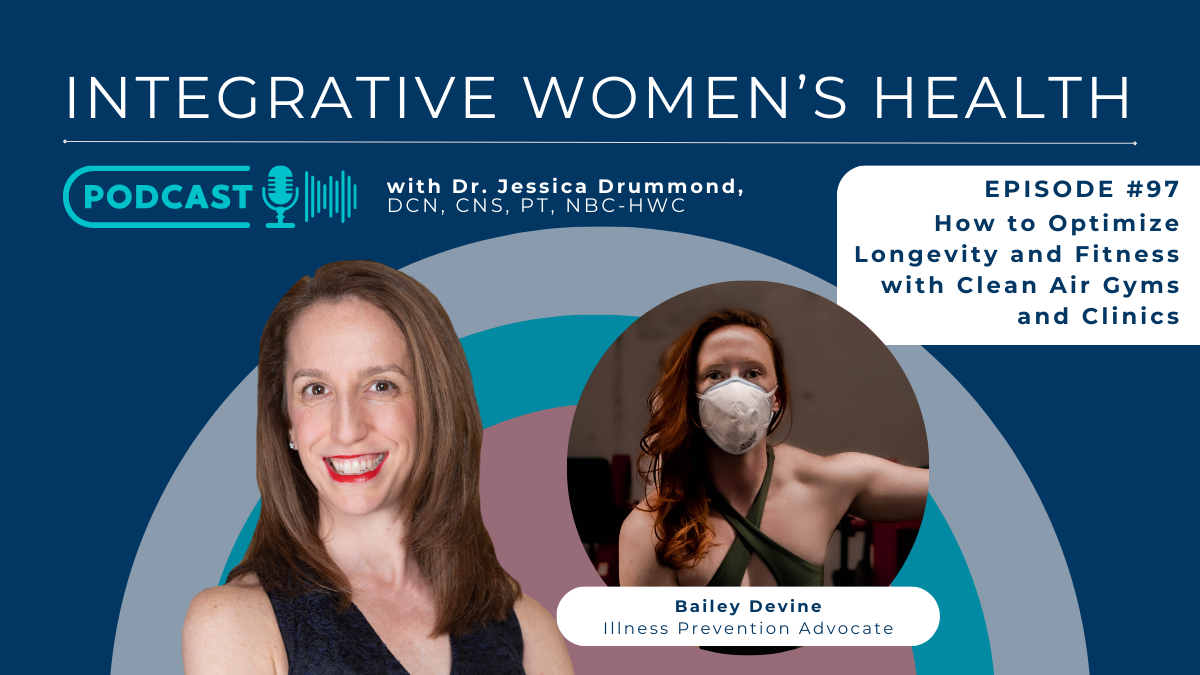
“Spaces where people go to optimize their health and longevity should have clean air.” – Dr. Bailey Devine
One of the most fundamental influences on health that’s often overlooked is air quality. In clinics, gyms, studios, and rehabilitation settings, air quality shapes the environment in which healing and performance are supposed to occur.
The pandemic forced us to look more closely at viral transmission and long-term health risk and what became clear is that peak fitness doesn’t always protect someone from the long-term effects of viral illness. For athletes and highly active people, repeated infections can affect cardiovascular health, endurance, recovery capacity, and overall longevity. Clean air, better ventilation, and thoughtful prevention strategies are ultimately part of the same conversation we’re already having about sustainable health and performance.
In this episode, I’m joined by Dr. Bailey Devine, clinician, athlete, and founder of Clean Air Athletics. Bailey shares how her early research during the pandemic led her to advocate for cleaner air in athletic and healthcare environments, why viral illness can have lasting impacts on performance and long-term health, why messaging around masking became so confusing, how tools like high-quality masks and CO₂ monitors help people better understand the air they’re breathing, why clean air may be one of the most important public health conversations happening in fitness and clinical spaces today, and more.
Enjoy the episode, and let’s innovate and integrate together!
Highlights
- What led Dr. Bailey to focus on clean air advocacy
- How messaging around masking evolved during the pandemic
- Why high fitness levels don’t necessarily protect athletes from COVID-19 or long COVID
- The risks associated with returning to intense training too quickly after infection
- How economic and policy pressures shaped changing isolation guidelines during the pandemic
- Why COVID-19 recovery should be approached like injury rehabilitation
- The practical challenges of exercising in masks and strategies to make it more manageable
- Unexpected physiological benefits athletes may experience from training while masked
- How living with chronic illness shaped Dr. Bailey’s perspective on empathy and clean air advocacy
- Why clean air should be treated as a public health standard
- How CO₂ monitors can help individuals assess indoor air quality and infection risk
Learn more about Dr. Bailey Devine
- Vote for Bailey to be featured on the cover of Muscle & Fitness HERS https://mshealthandfit.com/2026/bailey
- Dr. Bailey Devine on Instagram @cleanairathletics
About Dr. Bailey Devine
Dr. Bailey is an advocate for illness prevention in sport who is passionate about promoting healthier, more sustainable approaches to athletic performance. With a background in psychology and behavior science, their work focuses on raising awareness about how training culture, nutrition, and recovery practices affect long-term athlete health. They are dedicated to promoting prevention-focused approaches that help athletes and coaches protect health while still pursuing high performance.
Ready to revolutionize your career and grow your practice?
- The Integrative Women’s Health Membership
- What is the next step in your career in women’s health and wellness? Start here: https://integrativewomenshealthinstitute.com/start-here/
- Integrative Women’s Health Institute on Instagram | @integrativewomenshealth
- Integrative Women’s Health Institute on YouTube
Learn more about The Integrative Women’s Health Institute’s Programs.
Click here for a full transcript of the episode.
Dr Jessica Drummond 00:00:03 Hi and welcome to the Integrative Women’s Health Podcast. I’m your host, Doctor Jessica Drummond, and I am so thrilled to have you here. As we dive into today’s episode, as always innovating and integrating in the world of women’s health. And just as a reminder, the content in this podcast episode is no substitute for medical advice, diagnosis, or treatment from your medical or licensed health care team. While myself and many of my guests are licensed healthcare professionals, we are not your licensed healthcare professionals, so you want to get advice on your unique circumstances. Diagnostic recommendations treatment recommendations from your home medical team. Enjoy the episode. Let’s innovate and integrate together. Hi there. Welcome back to the Integrative Women’s Health Podcast. I’m your host, doctor Jessica Drummond. And this week you have a job to do. We have a very special guest, doctor Bailey Devine. They are a clean air advocate but more importantly, a rock star athlete. And we want to get them on the cover of Muscle and Fitness, Hearst Magazine, because this advocacy is so important to up leveling the standards.
Dr Jessica Drummond 00:01:37 And absolutely every fitness facility, every gym, every physical therapy or occupational therapy clinic, every nutrition clinic, every mental health clinic, every physical health clinic. Because where people go to get healthy, where are they going to be fit? Where they go to exercise Also matters how clean the air is. Now we don’t have. Well, actually, we have far more tools than we’re using right now. So let’s look around and see how we can use these tools. And stay tuned, because I’m going to be doing an episode in a few weeks with my dear friend Doctor Isabella Wentz, and we go deep into why these clean air tools are so important for parents, for health care professionals, for kids. Today, we’re talking about why they’re so important for athletes. So meet Doctor Bailey Divine. Doctor Bailey is an advocate for illness prevention in sport, just like the German Olympic team. Just like many Winter Olympians in 2026 who actually want to stay have longevity in their sport, doctor Bailey is passionate about promoting healthier, more sustainable approaches to athletic performance with a background in psychology and importantly, behavior change, behavior science.
Dr Jessica Drummond 00:03:04 And we’re going to talk about how you can start talking to your community, to your colleagues, to your clients, to your fitness colleagues, to really make a difference in clean air. How we talk about this is important to actually getting the results that we want. So without further ado, let’s meet Doctor Bailey Divine. This is such a powerful conversation. I’ll see you on the other side. Hi. Welcome back, everyone, to the Integrative Women’s Health Podcast. I’m your host, doctor Jessica Drummond, and I’m here today with Doctor Bailey Devine. And she has a really interesting thing to share with us. And as I mentioned briefly in the intro, I want you guys to get active and engaged, because we can help support something really important. By helping Bailey reach her goal of being a magazine cover girl from a fitness perspective, which I think is really we’ll send a really important message to the fitness community. So welcome, Bailey, and share a little bit more with us, how you became so passionate about clean air in athletics.
Dr Bailey Devine 00:04:27 Yeah, thank you for having me. Early on in the pandemic, when everybody was just terrified and didn’t have much information and didn’t know much, I started doing as much research as I could and really trying to understand what the risk was. I provide in-person clinical services. So I really wanted to make sure that for the place I worked and was managing and running, that we were doing things as safely as possible. And then what I started to notice fairly early is that this was a virus that could take down a very young, healthy person. And when I say very young and healthy marathon runner athlete, we just kept seeing all of these stories about people who were at the peak of their physical fitness and were dying as they crossed finish lines just suddenly out of nowhere. So I would say that to me, that seemed pretty divergent from our experience with a lot of other viruses. And I just honed in on this is getting athletes. Of course it was harming everyone, but it just seemed like it didn’t make sense that someone was such a healthy heart that was so much conditioning could just stop working suddenly.
Dr Bailey Devine 00:05:45 And so I would say that’s where my interest really came from. I consider myself an athlete, and I didn’t want that to happen to me. Just to be frank.
Dr Jessica Drummond 00:05:56 Yeah, yeah, I think we do often start with something really personal.
Dr Bailey Devine 00:06:01 So from there we started to get information about wearing masks. But back then it was really the recommendation was cloth masks so that we could save the high quality PPE for healthcare professionals who had to go do their work in person and save people. And so, just like everybody else, I didn’t know what an N95 was back then. I was just wearing a cloth mask, but I was doing it diligently. And so luckily I became more informed and learned about the differences in the types of masks and how they function. And now my goal, really with my platform is to help encourage athletes in particular. But I’m happy if anybody makes this change. But I really want athletes to understand because they are already so focused on health and performance, so it just seems right in line with that that they would really care about preventing viral illness, because now we know the long term effects of viral illness and it can be any virus, but the more you have and the more infections you have, the worse your long term outcomes.
Dr Bailey Devine 00:07:08 So with respect to that, I have entered this contest to basically try to bring a positive portrayal of masked athletes or masked people in general in the media and in particular in the health and fitness industry, because there really seems to be this idea that I’m healthy and fit. Nothing bad will happen to me, and that does not bear out in the data. And I want people to know that those of us who choose to mask, to protect our health and others, it’s not because we’re afraid. It’s not because we’re crazy. It’s not because we’ve, you know, had some Kool-Aid that we’re convinced we can’t have air in our lungs. It’s because we look at the data and we recognize that this is a real risk to everyone. And if you care about your performance, your longevity, your quality of life, which most, most athletes really do, then it makes all the sense in the world to use prevention strategies.
Dr Jessica Drummond 00:08:10 Yeah, absolutely. You mentioned something that I think is an important point to bring up, that why people are so confused about masking and why people are so confused about Covid and other viral viruses in general.
Dr Jessica Drummond 00:08:24 I think the reality is I posted recently and on my Facebook, my personal Facebook page celebrating that actually quite a number of the Olympic athletes this year were masking at least partially, at least when they were in high exposure situations. The whole German ski team I think was like really pro masking. And I was saying, this does make a lot of sense in this state that we currently are in our knowledge. And most people were very appreciative. Really thought that was interesting, super positive. But I did get, as you might expect, a couple of negative. One really interesting comment that was basically like, oh my God, good Lord, I can’t believe we’re still doing this in 2026. And then they were and I said, look, if you have other evidence that there is something better right now in 2026, like I would love that I’ve been amassing since 2020. And it’s it’s sometimes fatiguing, it’s socially painful. There’s some challenges that we’ll get into, but the data is so clear about N95 masking, N95 masking as a secondary option.
Dr Jessica Drummond 00:09:39 But she pointed me to a very propagandized sort of video that was like blah blah blah. This works. This doesn’t work. It was a lot of politicians saying different things on both sides. And I think what’s important about that is the reality that we have to acknowledge is that the earliest messaging on masking was stand on Covid. Vaccination was politicized and was super confusing. Yes. And the reality is that a cloth mask generally doesn’t do very much. And so when we were like at home, like sewing, things like that really didn’t matter. And I think it’s important that we are open to updating our knowledge as we have more evidence now. Had someone in the very beginning said, look, this is a virus that we don’t know a lot about. It is dangerous. We don’t 100% know how to protect people. We don’t know how dangerous it is. We don’t know who it’s most dangerous for. So we’re going to on the side of protecting. We don’t have millions and millions of masks because we weren’t prepared to do this from an N95 perspective.
Dr Jessica Drummond 00:10:58 So we’re going to on the side of giving the match that we do have to the healthcare professionals. We hope that works like just being much more clear about the uncertainty of the messaging. I do think that would have been helpful.
Dr Bailey Devine 00:11:13 Absolutely. Yeah. And the messaging still isn’t clear. Cracked yours in. So I think it would have been helpful and I wish it had occurred the right way. And I can still wish that every day moving forward. But it just seems people are not going to get the information that they need unless they have someone in their life who’s exceptionally science literate who is combing through the research and sending things to them, and then they’re open minded enough to actually read it and learn about it. And I find that most people don’t respond very well when you’re like. Here’s a peer reviewed article for you to read. So you understand it just doesn’t it’s not an effective strategy. So yeah, I think what I can do with my platform is talk to people on a level that hopefully they can understand and help synthesize that data and just talk about my personal decision to do it, because I think that sometimes those personal anecdotes actually get us farther with helping behavior change than does.
Dr Bailey Devine 00:12:22 Look at the data. Look at the data. If someone sees an athlete they really admire, like what I’m hoping happened with the Olympics this year. Who has the biggest event of their lifetime? Every single day. They have worked toward this goal and they’re not going to ruin it at the last second by getting Covid on the plane on the way there and not just ruin that event, which is so important, but also potentially any competitive career after that. I think we need more representation of look. The celebrities you admire, the athletes you admire, the people you look up to. They care about their health and they’re protecting it in this way. And maybe you should too.
Dr Jessica Drummond 00:13:05 Yeah, I 100% agree. I think that’s a way in. So for the professionals who are listening, one of the first things you can do is just model this yourself. Let’s circle back to something. You mentioned that in some wellness communities, many of which that I have been a part of for the last 15 years, the thought, the mindset, and even things that they’re still actively sharing from when we talk about the messaging not being very clear, Is that by staying fit? You’re likely not to get Covid at all, not to get long Covid.
Dr Jessica Drummond 00:13:44 But the reality is that doesn’t pan out in the data. Because Ace2 receptors where Covid enters the body, especially in the cardiovascular system, are actually increased in highly fit cardiovascular athletes. Now, it’s interesting because the data that we have since 2022 does show that while those receptor levels are increased, the you’re still at less risk of having severe Covid, like dying from Covid or being hospitalized by Covid because you are more cardiovascular fit, but you’re actually not less likely to get to just get Covid in general or to have long Covid sequelae, which can ruin a fitness career, as we certainly know Now, so what do you say when people give you that line of I’m fit and healthy? It’s very unlikely that I’m going to have to deal with Covid or long Covid.
Dr Bailey Devine 00:14:44 Yeah, because I am a psychologist, experimental psychologist, and then I have another clinical certification. It’s irrelevant, but my job is to help with behaviour change. And one thing that we know about humans and behaviour change is that it can be difficult for a lot of humans to think about long term consequences, as opposed to short term consequences.
Dr Bailey Devine 00:15:07 And so they may have a point when they say, I’m not as at risk of getting really sick. What they’re saying is my short term consequence risk is lower than others. And so I think there’s this constant comparing between myself and other, and there’s this sort of other group where they see someone feeble, someone who doesn’t exercise, someone who’s hospitalized regularly or needs a lot of care from doctors. And first of all, it’s not only those two types of people for sure.
Dr Jessica Drummond 00:15:41 Yeah, there’s a lot of rain. This isn’t black and white. We talk about this all the time. You’re not, like, sick or there’s a huge range of that.
Dr Bailey Devine 00:15:50 And I’m. I’m an athlete who has health conditions, and I balance the two very well. You might not know by looking at my Instagram page that I have health conditions that require daily medication and ongoing maintenance from specialists. So that’s I think the first misunderstanding is just the idea of healthy or not healthy as a baseline. But then the second is they’re concerned about that acute infection period.
Dr Bailey Devine 00:16:18 You know, limiting what they can do. I won’t be able to go to work. I won’t be able to go out with my friends. I won’t be able to go to the gym. I’m not even sure that the idea of a secondary part of the infection enters the equation for people, which are those long term consequences. And so as a behaviorist, really what I have to help people understand is that the long term consequence, if you’re an athlete, could even potentially be a higher risk. And that is counter to what they find for acute infections. So I just want to say this is anecdotal. I am not doing a longitudinal study on athletes and long Covid, but what I have seen is that because athletes approach their health and fitness so rigorously, they tend to get back to very stringent exercise as soon as the symptoms start to just decrease. They’re not even waiting for them to go away. So they are raising their heart rate into zones four and five, sometimes days after the initial symptomology has started.
Dr Bailey Devine 00:17:23 And what we do know about the development of long Covid is that there is a very important rest period after the acute infection. If you really want to stave off the chances of developing long term complications. And so what I’ve seen just on social media, from following influencers and people in the health and wellness space, is that I think athletes are more at risk of long Covid because of the lifestyle, because of their need to push themselves, and this virus just does not clear quickly in a few days. Just because you’re feeling better symptomatically doesn’t mean that it’s safe for your body to return to that level of work.
Dr Jessica Drummond 00:18:07 Yes, that’s a very important point. I’ve seen the exact same thing. The data is very clear that post acute infection, a few weeks to even a few months of even assuming you have a normal immune system or the health. I wouldn’t even say a normal immune system. I would say the healthiest possible immune system.
Dr Bailey Devine 00:18:28 But you can’t know.
Dr Jessica Drummond 00:18:29 Which you can’t know. The testing to do that is not common, but let’s assume you did.
Dr Jessica Drummond 00:18:35 You have an optimal immune system. You have a Covid infection. Now, I think the other thing people don’t aren’t aware of because of a lot of economic reasons that changed the messaging. Covid is not you are not recovered from Covid in five days. You are still contagious in most cases. For the original 14 days like that didn’t change. What did change is that our politicians and economists realized that would crash our economy if we kept workers out of the workforce for two full weeks. So they just said, and in fact, it only happened. It started from a lobbying by the airline industry.
Dr Bailey Devine 00:19:15 I remember.
Dr Jessica Drummond 00:19:15 That. And so basically, the five days is just a random number of what our economy could have sustained and where most people or I wouldn’t even say most people, some people start to have symptom abatement. Yeah, they feel better. And so it’s oh, okay, I guess I’m good now. But the reality is you are very likely contagious and still acutely sick for 14 days. And then for an additional three weeks to three months, you need to recover.
Dr Jessica Drummond 00:19:44 What I say to my students when we’re thinking about Covid infection, and we can circle back to some other infections, because I think we’ve learned a lot about that through this lens. But for Covid specifically, I think of it, an acute infection is like having a concussion and a vascular injury like you got in a car accident, you injured your entire vascular system and your and you have a brain injury. And so as physical therapists, as physicians, as nutritionists, as health coaches, as fitness professionals, if you have a patient with that degree of injury, you are not going to get them as quickly as possible. Back to activity. There is a restorative recuperative phase. That’s roughly 3 to 6 months long. And I think if we start thinking about it that way, as like the need for injury recovery, it starts to land a little bit cleaner for people that are used to dealing with sports injuries, that might take 3 to 6 months to recover.
Dr Bailey Devine 00:20:41 I think that’s such a smart framing for it, and just thinking about all the athletes I follow who have had Covid infections, I can’t think of a single one, not one who has taken three months to recover.
Dr Bailey Devine 00:20:55 They really are returning to their sport just as quickly as they can. And even if they think they’re doing less, that may not be the case for their vascular system during those workouts.
Dr Jessica Drummond 00:21:08 Yeah. So that’s a really important point that people need to keep in mind. So let’s go into details a little bit about masking. Let’s talk about some of the data on the benefit of wearing an N95 or N95 mask, like in a crowded indoor space, like a gym and any favorite mask brands you have. How are you thinking about fitting it to your face? Things like that?
Dr Bailey Devine 00:21:34 Yeah, this is the stuff I like to nerd out on and people will have my handles for social media, but I do have a lot of content there. About what masks I’ve tried, why I like them, why I don’t. What I say about masking is that it’s just as individual as trying to buy a pair of pants. It’s really so unique to every person’s face shape, their head size. Unfortunately, there’s no one size fits all miracle for masking.
Dr Bailey Devine 00:22:00 I wish there was, but just like there’s no clothing item that’s one size fits all, except maybe a Snuggie. I don’t know, we, at least in the US, the classification system that we use for masks. We say that something called an N95 is the top tier in terms of protection. So those masks provide the best filtration efficacy and also have to perform to rigorous fit standards, meaning the way the mask is constructed. When worn, it has to, under testing conditions, show that it’s not gapping anywhere, that it’s fitting that face, it’s filtering all the air that comes in and out. K and 95 are just a step below that. A lot of people think of the difference as being just ear loop mask versus head strap. But that’s not all that the difference is. There are some other we don’t have to go into details. It’s really nerdy stuff. But in general, my feeling is Kn95 or N95 are both great options. Ultimately, it’s going to come down to what fits your face the best.
Dr Bailey Devine 00:23:08 And when we talk about fit, we’re not like, oh, does it look cute on you? Unfortunately, like you would want with pants, right. It’s more Does it conceal your entire nose and mouth such that there are no gaps in the seal? It is sealed to your face so that all of the air that you inhale is filtered through the filter material. And so, like we talked about earlier, cloth masks, if you have nothing else, a cloth mask can help reduce basically spit and things that come out of your face which are vectors for infection. But the thing about Covid and many other viruses is that it’s airborne. So it’s the air itself that needs to be filtered, not just spit or mucus. So that’s in other countries they have different classification system for masks. But I’m just focusing on the US because that’s where I live. And so for me personally, I have done fit testing with all of the masks that I wear, which means I put them on and I don this little like thing over my head where I am spraying a bitter solution into the air to see if I can taste the bitter solution when I’m wearing my mask, doing different things with my head and neck and mouth to make sure that bitter solution is not getting in around the mask.
Dr Bailey Devine 00:24:36 So that’s how I know if it fits me. And I have both N95 and N95 masks that pass that fit test for me, so I feel comfortable using both depending on context.
Dr Jessica Drummond 00:24:50 Yeah, and I haven’t done actual fit testing with my mask, but I’ve learned so many different kinds. Now it begins to become a little bit obvious of what is tighter around your face. And I agree, like some of the ear loop masks have a tighter and in fact you could even add one to it. Yeah, if you’ve got some demo. That’s awesome.
Dr Bailey Devine 00:25:14 So I brought a whole package of the masks that I’ve been wearing to the gym lately. Now, what I also tell people is if you look at my Instagram, you’ll see how my mask preference has changed over time. And that’s because I’m getting more data. I’m working out in it more. I’m doing more fit testing. And just like the science evolves, so does what I recommend and what I prefer. So this is called a zoom air mask.
Dr Bailey Devine 00:25:38 And the one that I’m wearing right now is a K and 95. So it has ear loops, but it has this little rubber adjustable feed. So you can make the ear loop as small as you need. And what I love about this mask is that inside it has this face bracket. So it keeps the filter material from touching your nose or mouth and you’re going, oh, you’re not sucking this material into your mouth or against your nose. I also just want to shout them out because this filter material is the most breathable I have found. It really does not feel difficult to breathe in for me at all. You just are going to get sweaty behind the mask. That is just a real thing that happens. Condensation and sweat. Just like wearing pants in the summer. Yeah, yeah, just like anything in life. So this is what I’m wearing to the gym these days. But it may not be a fit for everyone. It’s so important to try different masks and see what works best for your shape.
Dr Bailey Devine 00:26:43 And like you said, if you don’t have access to a fit test, you can get your mask on and then you really just take your hands and you do a hot, hard exhale while you hold your hands at the different points of your mask, where contact would be broken from that hard exhale. And as long as you don’t feel hot, moist air on your hand, then you can. That’s a way of testing at home.
Dr Jessica Drummond 00:27:08 Yeah. And so to describe this just a bit for people who are listening, rather than viewing this on YouTube or on our website. The mask you just mentioned repeat the name of it.
Dr Bailey Devine 00:27:19 For me it’s called a semi air.
Dr Jessica Drummond 00:27:21 Okay, the semi air a.k.a 95 has the filtration of the mass that you would notice on any mask. And then underneath there’s a little plastic cage that kind of allows you to keep that filtration material away from your face. And it has, as I said many different brands before, is another one that has the little sliding thing to tighten up the ear loops.
Dr Jessica Drummond 00:27:45 You can also just add that little slide y thing, like if you save it from 1 or 2 of the other ones and use a Bobby pin, there’s a cheat sheet. Just there’s different people that will show you how to do that. You can Google it or over the head. My husband prefers that because he’s bald and it’s just much he hates the ear thing. Yeah, I prefer the ear thing a lot of times because then you can still wear a hair down.
Dr Bailey Devine 00:28:09 So this brand makes a head strap version as well. They also make a black mask. I know a lot of people want a black mask instead of a white mask actually. In fact, they have a sister company that makes different filters with beautiful patterns flowers, butterflies. So really, the world is your oyster in terms of the look of your mask. You can really cater it to your style. But yes, I do often wear n95s lately I’m wearing ear loops because like I said, the fit is the same for me and they both pass fit testing.
Dr Bailey Devine 00:28:42 And sometimes when I go to order masks, if they’re out of head straps, I’m still going to get my mask. So I take whatever is available for the mask that I know fits.
Dr Jessica Drummond 00:28:51 Yeah, and I think when I go on planes, which is where I really focus on the tightest possible seal, I use the three M aura almost exclusively. For me, that really fits because there’s a lot of padding around the nose and it is the over the head straps versus if I go to my daughter’s high school theater performance, I might wear something that’s not quite as tight. It’s a high ceiling. There’s more ventilation. There’s fewer people. We’re already exposed to those people because she’s going to high school. So thinking about each situation, I don’t want to encourage people to like, worry, overthink that any mask is better than no mask, but definitely thinking about the best possible mask you can wear. If you just want to pick one and wear it all the time, perfectly fine. So I do want to ask you a couple of questions about exercising in the mask, because I have to say, this is one thing that’s been a personal struggle for me.
Dr Jessica Drummond 00:29:50 So I do have long Covid, especially early in my course of this recovery. The first 2 to 3 years were extremely rough, and I went from one day of like hiking, ski, mountains, doing hit classes, heavy strength training, heavy lifting. For my entire life, since I was probably ten years old until I was 46. I was a gymnast as a kid. I was like a level nine gymnast. So like, I was an athlete my entire life. And I got Covid and I immediately couldn’t stand in the shower, couldn’t walk down my street, was sick, sick for three years.
Dr Bailey Devine 00:30:31 Oh my gosh.
Dr Jessica Drummond 00:30:32 But then slowly, I did a lot of things that we’ve talked about at various times on this podcast, still on a lot of medications, like you’re still managing some underlying health issues, one of which one lovely thing that that Covid has left me with is a very mild asthma. That’s exercise strained. And I absolutely have Pots, dysautonomia and MCAS, which is stress which is stressed by the exercise.
Dr Jessica Drummond 00:30:59 So what I have personally decided to do is most of my workouts are done at home or outside. I do a lot of walking. I do my heavy lifting at home, and in the last year I’ve hired a personal trainer who’s awesome about she 100% of the time will wear the N95. We work out in a place that has a big open garage door at most. There’s ever 5 or 6 other people in the gym, usually zero, so that she has really nicely created an environment for me where I don’t have to wear a mask, which does for sure make it easier for me to exercise. But I must say I deeply miss going to Pilates or hot yoga, or just regular yoga. I understand the sweat of hot yoga might be a little too much, but I really do miss fitness classes. And I’m curious, just your experience of how you’ve maybe optimized wearing a mask in a crowded gym, sweating like what works the best for you?
Dr Bailey Devine 00:32:02 First of all, I’m so sorry to hear about that experience.
Dr Bailey Devine 00:32:05 And you know that that to me is what we’re working to prevent. So I’m sure you wish you could go back in time all the time.
Dr Jessica Drummond 00:32:15 Hundred percent.
Dr Bailey Devine 00:32:16 To prevent this. And I hope that other people who may be under the impression that they’re immune, really listen to your story and start to question that belief. If it happened to you, it can happen to anyone. So that sounds very challenging, and it’s really why I take the precautions so seriously, because I know if that happened to me, my mental health would just take a huge nosedive. Movement for me is my everything I like need it to survive.
Dr Jessica Drummond 00:32:47 Same. It was. It was a real challenge.
Dr Bailey Devine 00:32:49 Yeah, yeah.
Dr Bailey Devine 00:32:50 So, you know, I have some additional strategies on my page. So one thing I tell people is do not shower and do not put on moisturizer right before you don a mask, or even in the few hours before you don a mask. I don’t know if you’ve ever noticed this, but if you put on lotion and then you go to the gym, you’re going to sweat so much more than usual.
Dr Bailey Devine 00:33:15 So I think that how you kind of time things can be really helpful. So when I wake up in the morning, I go to the gym in the morning, I will just as many hours ahead as I go as I can. I will just rinse my face very quickly and dry it very thoroughly. And I put nothing on. No makeup, no product, no nothing. Because anything you put on top of your skin as another barrier and then the mask on top of that is just going to create more condensation and more sweat and more discomfort.
Dr Bailey Devine 00:33:46 Yeah. That’s just one.
Dr Bailey Devine 00:33:48 Small strategy that I learned through trial and error. I would say just like anything in life you have to adjust to something new. So later today I’m going to try for the first time wearing a £70 weight vest. And I know I’m going to learn to adjust to this, but it’s going to be very challenging for a while. And my goal is to do lunges all the way around the gym wearing this £70 weight vest.
Dr Bailey Devine 00:34:16 And I’m going to complain and I’m not going to like it. And it’s going to be good for me.
Dr Bailey Devine 00:34:21 Yeah.
Dr Bailey Devine 00:34:21 And I think about masking during your workout the same way there is an adjustment period. But athletes are used to adjusting to new pieces of equipment and raising the bar on the standards for their workout. So this is just a different way of thinking about it. Masks do not actually decrease the oxygen that you’re getting. They’re not filtering out air. They’re only filtering out particles. So the gases come and go just as easily through the mask as they do without it. So even if you feel like you can’t breathe, you actually can. That is probably just your brain kind of playing a trick on you, because it’s getting used to something feeling different. So I encourage people to try it in small doses. Don’t just go thinking, I’m going to wear this N95 and do my two hour workout full of cardio like it’s no big deal. You probably need to work up to that, and I’m happy to chat with anyone if they want to reach out to me on my socials for kind of steps they could take.
Dr Bailey Devine 00:35:25 But the long story short here is that just like anything new, you have to allow yourself time to get used to it and don’t expect that you’re just going to be super comfortable right away.
Dr Jessica Drummond 00:35:39 Yeah, that’s really great advice. And I think in my experience having when I exercise in a mask, it does feel physically harder, which I’ll occasionally do, like even if I’m going to that workout and I had a cold like I’ve been lucky masking and really consistently for the last three years now, knowing what we then knew about the benefit of specifically N95 and Kn95. I’ve actually almost never gotten sick. I’ve had one cold.
Dr Bailey Devine 00:36:07 Excellent.
Dr Jessica Drummond 00:36:08 And so that’s fantastic. And it’s really key to the fuller recovery, because if you keep getting Covid, of course the negative effects are cumulative. But not having had it now for about three years has made a dramatic difference to and not having anything. No flu, no no cold. But every once in a while, if I feel like maybe I even have a little cold, I’ll mask to protect my trainer and we’ll always test it before I would go in to work out with her.
Dr Jessica Drummond 00:36:36 Because she’s especially because she’s been so good to us. But I would do that for anyone. But I do find so especially standing because of the Autonomia standing. Heavy strength training in a mask does is challenging. And so what I’ve done is I just go outside After a set or two and just take the mask off. And I think, like you said, it’s adaptability. When you have pots, it’s also easier to exercise in like a parallel position. So Pilates may actually feel easier than doing the standing strength training. Yes, we’ll have to test it out and see. So any positive side effects you said, adding of course those £70 weight vest is going to give you some positive side effects, even though you’re going to complain about it later today. Any positive side effects to wearing the mask?
Dr Bailey Devine 00:37:23 Yeah.
Dr Bailey Devine 00:37:23 So something that was really interesting to me is that a few years ago, I just got a Garmin watch which can track all kinds of metrics for what’s happening inside your body that you can’t see.
Dr Bailey Devine 00:37:34 And it’s not a perfect VO2 max measure. For official VO2 max testing, you would have to go to a specialized place where they have really fancy equipment to do that. That requires wearing a big, heavy mask on your face that has tubes coming out of it. They typically put you on a treadmill and you’re hooked up to monitors, and they’re looking at all of your vitals and all of your respiration and all kinds of things. But Garmin has the ability to get some data, maybe not as great as that data, but to basically tell you if your cardiovascular health is improving as a result of what you’re doing. And I didn’t have much of an interest in being a cardio athlete. I’m really more interested in strength. But a few years ago, when I started looking at that data, my workouts did involve, I will say they were not. They were not powerlifting workouts like what I do now. They involved more jumping and running, and I was really preparing for ice skating. So it was a mixed combination workout.
Dr Bailey Devine 00:38:42 And I noticed that once I started wearing the mask to work out in, my VO2 max, score started increasing fairly steadily, and I’d been working out for years before that without seeing any change in that number, because, like I mentioned, I wasn’t targeting that as a part of my workout regimen. But there appear to be natural benefits to wearing a mask while working out hard. I don’t think this will be the case for everyone. I think it’s highly dependent on the type of workout that you’re doing and what your goals are. But what I saw is that my cardiovascular and respiratory health appear to improve as a result of working out in a mask.
Dr Jessica Drummond 00:39:24 That’s interesting, I wonder. This would be a great study, because it could also be that if you’re masking that consistently, you haven’t had any infections in years, which also could increase your cardiovascular health.
Dr Bailey Devine 00:39:37 Absolutely.
Dr Jessica Drummond 00:39:38 Yay. A lot of good side effects there. Now, you’ve mentioned to me and shared publicly that you also struggle with stage four endometriosis.
Dr Jessica Drummond 00:39:47 And we know that people with endometriosis have a 41% increased risk of long Covid. We talked about how there’s this spectrum from zero to like. Health is not black and white. You can be highly fit and have endometriosis. You can be Katie Ledecky and have pots. You can be Simone Biles and have mental health challenges. Or I would even say she probably really had dis autonomia plus mental health challenges. So how does your chronic illness aligning with your fitness goals and your performance goals and your professional athlete goals? Is that does that play a role in your decision to focus on clean air as well?
Dr Bailey Devine 00:40:28 I want to say something that might be unique here, which is that I think for a lot of people that would be a huge consideration. But I was taking this level of precaution before I knew I had stage four endometriosis. Okay, I say that because sometimes I feel like I need to talk directly to people who have long Covid or have me, CFS or any immune condition where they are more at risk than the general population for getting colds and then getting very sick from them.
Dr Bailey Devine 00:40:59 And I’ve said this on another podcast, but it’s like I don’t have to care about you because I have health issues. I can care about you and protecting you regardless of my health status. And there are people out there, maybe not that many of us, but who just don’t want to spread illness, period. Regardless of what we have going on personally, regardless of what you might have going on personally, I think the idea that because you are disabled or less healthy, you have to take more precautions is really outdated and needs to change. So I completely support people who have health conditions that they are aware of and because of that, have changed their entire lifestyle and take a lot of precautions and are very careful who they spend their time with. I think that’s smart, but I also think someone who has empathy can understand that they don’t have to be experiencing the negative effects of a health condition right now to also still care about not spreading illness.
Dr Jessica Drummond 00:42:05 I love that so much.
Dr Jessica Drummond 00:42:07 Because it’s hard for me to to find the right messaging in the right way to connect with my colleagues who are often working with people in.
Dr Jessica Drummond 00:42:20 They are the fitness professionals teaching those classes. They are the physical therapists working with injured athletes or people in the wellness and longevity space who are just trying to help people be healthy, be in prevention, stay healthy. And I think that mindset, I think, is probably the most important shift that all of us could make. I was watching a little Instagram video from someone. I thought about going to their concert in New York because they’re creating a very. I haven’t been to like an indoor concert in six years. And this person was is extremely committed to having a fully masked venue, having far UV light, having the help of filtration. And he said, and he’s not sick at all. And he said, the reason I want to do this is because I believe that clean air should not be a luxury. And that because I also he also works with people in his life who are disabled, whether they know it or not, who are more vulnerable, whether they know it or not, and whether he knows it or not.
Dr Jessica Drummond 00:43:30 He just has chosen to create environments around him that are safer for everyone. And I do think what I really like about your platform is that you’ve framed this around a conversation simply about clean air. And what’s frustrating to me is that just like clean water, we actually have a lot of tools to keep the air clean for absolutely everyone, whether they’re vulnerable or not, whether they know they’re vulnerable or not, whether they’re wealthy, whether they’re impoverished, like whatever the situation is we have. And we can add to gyms and physical therapy offices and hospitals and nutrition clinics and primary care physician practices, far UV lighting, Hepa filtration, ventilation, anything else if you had your dream. In fact, I went to the dentist this morning, which is a very challenging thing for people with long Covid because you can’t mask, right? And I absolutely hate doing it because you just you’re in a room with 15 other people that are all getting their teeth done. And if you had if you could go in and design that space or even your perfect gym, what would it look like from a clean air standpoint?
Dr Bailey Devine 00:44:54 That’s a great question.
Dr Bailey Devine 00:44:55 And I just want to also highlight something that you said about clean water, because people take for granted things that have been in place for so long. Because for you and I, in our lifetime, we’ve always had access to clean water. And this goes back a long time. So people may not realize that we have access to clean water, because at some point people got together and had to determine, okay, the water seems to be a problem. People are getting sick and dying from dirty water, and this still happens in other parts of the world all the time.
Dr Jessica Drummond 00:45:27 And it honestly still happens in parts of the US, so we need to be fair about that. But yeah, so most places you can get water you’re not going to acutely die from in the US.
Dr Bailey Devine 00:45:38 Right.
Dr Bailey Devine 00:45:39 And so I believe that clean air should be just as accessible as clean water. You need both to survive. So why haven’t we yet figured out? And I think we will. I think in time, we will understand the importance that this invisible thing we can’t see, but we must consume to survive needs to be cleaned as well.
Dr Bailey Devine 00:46:00 We don’t ask people to, like, just prepare your stomach. Like you should just work harder on getting your stomach able to accept that dirty water, which is how we’re treating air right now.
Dr Jessica Drummond 00:46:12 It’s like we’re not saying, oh, don’t wash your vegetables. If it has listeria, you should be strong enough for that.
Dr Bailey Devine 00:46:19 That’s what we do with air right now. So there are things that you can do other than wear a mask, which is why I chose to call my social stuff clean air athletics as opposed to daily wears a mask. Or you should wear a mask. Some simple things are that there are Hepa filters and air filtration devices. You can even build some very cheaply. There’s something called a Courcy Rosenthal box, which is basically just some air filters smacked together in a cube with a fan on top. And so if you’re in a place where you can plug in a small, small fan, you can filter the air. There are lots of fancy things if you want to buy something fancy as well, but every place that I know of also has a ventilation system and an AC system, and you can get higher quality filters for that system, something called a Merv 13, which is the highest filtration efficacy that you can get if you work out in a place like it sounds like you do, where there are big garage doors that can open, so you have that fresh air circulating and it’s not everybody’s hot breath just condensed on top of one another, which is what happens at mini gyms.
Dr Bailey Devine 00:47:32 So, you know, for me, my ideal situation would probably be an outdoor gym that had shade. So we don’t bake in Texas in the summer.
Dr Jessica Drummond 00:47:43 For sure that would be tough working out outside in Texas.
Dr Bailey Devine 00:47:45 In the.
Dr Jessica Drummond 00:47:45 Summer.
Dr Bailey Devine 00:47:46 Yeah, fans.
Dr Bailey Devine 00:47:47 And some misters, but I think a problem that we face just as a population is that as the climate changes were forced more and more into indoors and small spaces with each other, and we just need to keep updating our technology and allowing for just it’s just not great to have a bunch of people in close proximity breathing very hard on each other, which is what can happen in gym settings. So that’s why I wear my mask at the gym, because in my videos you’ll see I have a coach who does not mask, and he’s often standing right over the top of me if I’m bench pressing and he’s spotting, and if I didn’t have that filtered medium over my face, whatever he breathes out is right in my face.
Dr Jessica Drummond 00:48:33 Yeah. And I think that when we think about clean air, indoor clean air standards, I’ve recently on this podcast interviewed a, an architect, and I know that there’s some awesome research going on in the engineering department at the Virginia Tech that they have now developed a essentially a sensor to know when there is Covid and other viruses in the air, and then the Hepa, the HVAC system, the air conditioning system will adapt and change how it filters it.
Dr Jessica Drummond 00:49:05 I was like, can I.
Dr Jessica Drummond 00:49:06 Have one of those? I would love to carry it around.
Dr Jessica Drummond 00:49:08 I think we have a market for that. It doesn’t exist to my knowledge yet, but if you’re an engineer working on that, there’s a whole community that would love something like that.
Dr Bailey Devine 00:49:17 I’ll be a tester for you.
Dr Jessica Drummond 00:49:18 Yeah. Many people would raise their hands, and I know, so.
Dr Bailey Devine 00:49:21 I.
Dr Bailey Devine 00:49:22 Should have talked about CO2 monitors. I didn’t think to mention that, but I have one and I’ve made some videos about it. For me, it’s a small wearable device where I can clip it to my backpack or something else. I don’t think I have it in this room, but it basically measures how much particulate in the air is exhaled particulate. So it’s a good way of thinking about it. Can’t identify virus in the air per se, but it can tell you how much of that air your breathing is re breathed air, which is also just gross, frankly, from it. Yeah, not even from a contagion perspective.
Dr Bailey Devine 00:49:56 It’s I don’t want the air that was in your lungs, directly in my lungs.
Dr Jessica Drummond 00:50:00 And those are really good because essentially if it’s below 600 to 400 to 600, I love it when it’s less than 400, but 400 to 600 parts per million of CO2, it’s equivalent to being outdoors with, well, circulating air. And the likelihood of getting any infection with that lower level of exposure is much lower. Yeah. Yeah. Absolutely. All right. So we’re about at the end of time. But is there anything else you want.
Dr Jessica Drummond 00:50:33 To.
Dr Jessica Drummond 00:50:33 Add?
Dr Jessica Drummond 00:50:34 Before we wrap.
Dr Bailey Devine 00:50:35 Up.
Dr Bailey Devine 00:50:35 I just want to remind people that they can vote for me every 24 hours to be on the cover of Muscle and Fitness. Her’s. All the links for that are in my bio and in my page. There’s a lot of posts about it. You do have to have a Facebook account that you can log into to verify your identity for that, but right now we’re in the quarterfinals. And so I think next week on Thursday.
Dr Bailey Devine 00:50:59 What is that. The 19th is when we will know if I’ve made it from the quarterfinals to the semifinals. I have to be in first place in order for that to happen. So if you care about health and longevity and mass representation, please vote for me. That would be very helpful. And the last few points I want to make are just that. Athletes already have to adapt all the time, and if you’re really pursuing athletics at a high level, you are used to challenging yourself more intensely over time. I want you to be open minded about the idea that a mask could also serve that function for you. And the second thing is that gyms in the fitness industry in general are always spending money on new equipment, supplements, upgrades, gym, workout where like it’s a.
Dr Bailey Devine 00:51:51 Huge.
Dr Bailey Devine 00:51:52 Industry and tons of money is spent in the pursuit of health and fitness. So for those gym owners out there who want to really think about how they can improve their offering, consider consulting with someone about how you could improve the air quality in your gym because although that’s not visible, it will have a measurable impact on people’s outcomes.
Dr Bailey Devine 00:52:17 So, you know, all those excuses I hear about, it’s so expensive or it’s so cumbersome or I don’t have time and like but you researched that squat rack for months before you bought it, and then you saved to buy it. So, you know, the same can be done for tools that help us clean the air, keep our gym members healthier. And again, for athletes who are interested in health and longevity. The data are just so clear that quality of life and longevity are going to be better with the less viral infections that you have over time.
Dr Jessica Drummond 00:52:54 Yeah, the data is.
Dr Bailey Devine 00:52:55 So.
Dr Jessica Drummond 00:52:56 Clear on that, and I do want to encourage people who own these spaces, who run and manage these spaces that, look, you and I are not like, we don’t want to wear masks just for the fun of it. That’s not our.
Dr Bailey Devine 00:53:10 Goal, right?
Dr Jessica Drummond 00:53:11 Our goal is actually to have spaces where that’s unnecessary because there’s so clean, there’s so filtered, there’s so committed to that. And I really think this is a could be a very strong marketing proposition, not just for people in a long Covid or disability community, but I think for anyone who cares about a lot of airborne pathogens mold, mycotoxins, pollution.
Dr Jessica Drummond 00:53:43 Exactly. Because as you said, there are many things increasing over time that are going to be problematic in our environment. Everything from forest fires to being too hot. So exercising more indoors. I think this is something that if the fitness industry and the health care industry in person, health care industry begins to take the lead on and uses it as marketable, you are walking into a clean air, clean water space and talk about the longevity benefits of that for literally everything from gut health. If anyone’s running around talking about gut health and longevity, which are like the two biggest wellness keywords. Every time you don’t get a Covid infection, every time you do get a Covid infection, your life expectancy decreases. Your risk of gut dysbiosis increases 10 to 12%. It’s over time, year after year. The less you get exposed to flu, you get EBV reactivation. You get any infection that is airborne. I think equating these things, having a space that’s super clean should be as hot as like having a red light sauna or something cool in your gym.
Dr Bailey Devine 00:55:03 Absolutely.
Dr Jessica Drummond 00:55:04 I think you should make it marketable. I also think it should be widely available like any YMCA should have this. Any community gym should have this. It shouldn’t just be like luxury gyms, but I think we’re really people are missing an opportunity. There’s a huge community that is looking for this.
Dr Bailey Devine 00:55:20 Yes, absolutely.
Dr Jessica Drummond 00:55:21 All right. Thank you so much for being here, Bailey. Thank you everyone, and I will see you next week.
Dr Bailey Devine 00:55:28 Thank you. Bye.
Dr Jessica Drummond 00:55:33 Okay. If you haven’t done it already, go to Instagram at Clean Air Athletics and go to Doctor Bailey’s profile. Click on the links and vote for her to be the cover athlete on Muscle and Fitness. Hers. Because we need to have representation of masking in sport and fitness as a symbol of clean air. Look, masking long term is not the goal. The goal long term is clean air. Just like the goal was back in the, I don’t know, 1800s when we were trying to get cholera out of our water.
Dr Jessica Drummond 00:56:16 We needed activists to do that work, and you are now a part of the Clean Air Team. And when people start to see the athletes, people who care the most about their health, understand the full body health risks of chronic infections, including Covid, but not just Covid. If we can start to take the political sting off of this conversation and transition this conversation into advocacy for clean air in all spaces, in schools and offices, but especially in fitness spaces and dance spaces and gymnastics spaces and, you know, weightlifting spaces and Pilates spaces and physical and occupational therapy spaces and health care spaces. Spaces where people go to optimize their health and longevity should have clean air and the strategies that clean the air. Of Covid clean the air of so many other infections, airborne pathogens, but also things like mycotoxins. And if you care about longevity, you care about the toxic load of mycotoxins. There are many things in the air, you know, even pollution from forest fires and any other form of particle pollution that we know is higher in indoor air than outdoor air.
Dr Jessica Drummond 00:57:52 So clean air needs to be the advocacy, energy in all spaces. As much as we care about clean water, but particularly in spaces that promote health, that promote fitness, that promote longevity. So go vote for Doctor Bailey. I hope you will make just one change in how you work with people In terms of increasing clean air in the space where you work, where you exercise. Just make one change this week. I really appreciate that. We are the Clean Air Advocacy Team and follow Doctor Bailey on Instagram at Clean Air Athletics. See you next week.
Dr Jessica Drummond 00:58:43 Thank you so much for joining me today for this episode of the Integrative Women’s Health Podcast. Please share this episode with a colleague and if you loved it, hit that subscribe or follow button on your favorite podcast streaming service so that we can do even more to make this podcast better for you and your clients. Let’s innovate and integrate in the world of women’s health.
Join Dr. Jessica Drummond to learn the three key steps to becoming a successful, board-certified Women’s Health Coach who leaves a lasting positive impact on their clients.
Learn how utilizing health coaching skills in your practice is crucial to your success, leaving a lasting impact on your clients, and shifting the paradigm of women’s healthcare.

Dr. Jessica Drummond
Founder & CEO
The Integrative Women’s Health Institute
At the Integrative Women’s Health Institute, we’ve dedicated 17 years to crafting evidence-driven, cutting-edge programs that empower practitioners like you to address the complexities of women’s health.
Dr. Jessica Drummond’s unique approach focuses on functional nutrition, lifestyle medicine, movement therapies, nervous system dysregulation, trauma, and mindset – essential elements often overlooked in traditional health education.
In addition, your training will be fully evidence based, personalized, and nuanced (this is not a cookie cutter approach) in functional nutrition, exercise, recovery, cellular health, and all other lifestyle medicine tools.
You’ll learn to support your clients with cutting edge tools safely and effectively.