Follow Us for Free:


About the episode
“Years ago, someone decided that the male was the default and the female was the outlier.” – Abbie Clary
When we think about improving the healthcare experience for women, the focus tends to be on treatments, protocols, or new technologies, but the physical and virtual care environment is just as important. The lighting, acoustics, air quality, privacy, and overall design of a space all influence how safe, regulated, and supported someone feels when they seek care. And for patients navigating vulnerable or intimate health concerns, those details can shape the entire clinical experience.
These factors don’t only matter to our clients. The spaces we work in affect our nervous systems, our ability to focus, and the kind of presence we bring to patient care as practitioners. Despite these facts, most healthcare environments weren’t designed with women’s needs in mind. In fact, much of modern design and safety research was historically based on the “reference man,” a standardized model that shaped everything from building codes to temperature settings. When we begin to question those assumptions, we open the door to designing healthcare environments that are more inclusive, supportive, and healing for everyone.
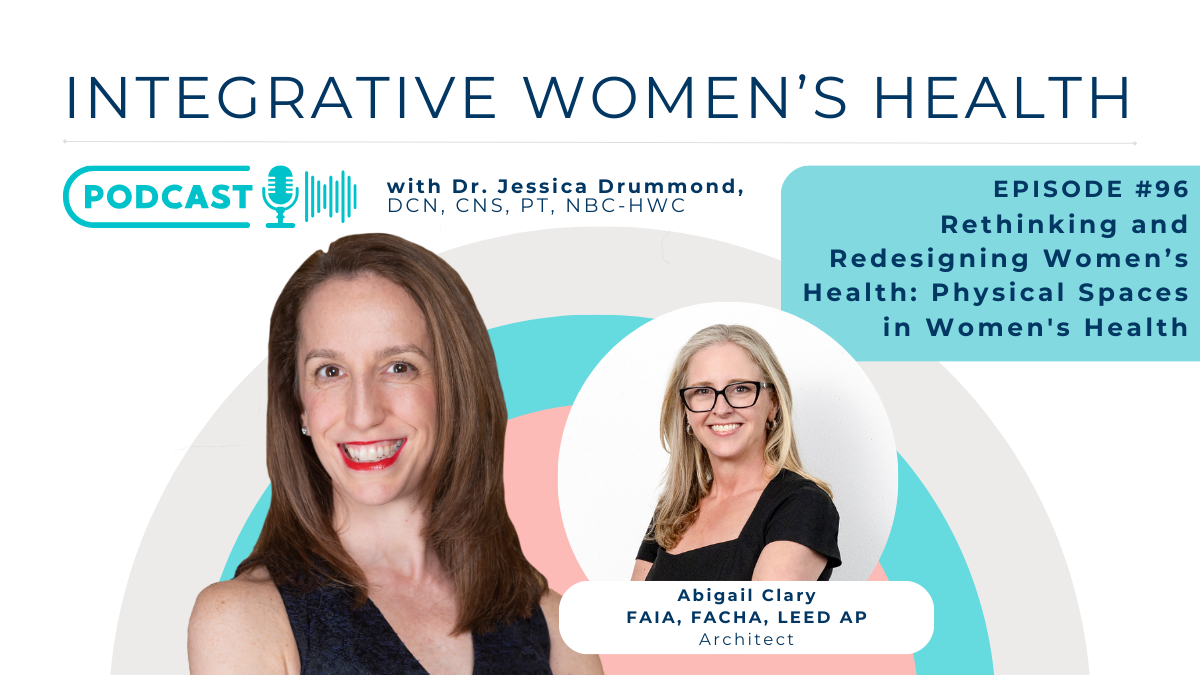
Today, I’m joined by Abbie Clary, architect and Executive Director of Market Strategies and Growth for the Health practice at CannonDesign. Abbie shares how her work in healthcare architecture has evolved from simply responding to clinician requests to conducting deep behavioral research about how patients, families, and staff actually experience care environments. We explore how the concept of the “reference male” has influenced healthcare design, why patient experience is about more than efficiency, how thoughtful design choices can transform care, practical ideas you can apply in your clinic or telehealth environment to create spaces that better support both healing and human connection, and more.
Enjoy the episode, and let’s innovate and integrate together!
Highlights
- Abbie’s path into healthcare architecture and the experiences that shaped her perspective
- How physical and virtual care environments influence patient experience and practitioner wellbeing
- Why healthcare design is shifting from a focus on clinician preference to a more holistic, research-informed approach
- How human connection, nervous system regulation, and communication are shaped by the care environment
- The “reference man” concept and how it has shaped research, building standards, and patient experience
- Why ethnographic and lived-experience research is essential for more inclusive healthcare design
- Simple design changes that can improve care and practical design ideas for small practices
- How circadian lighting can support both practitioners and patients
- Designing cancer centers not just for treatment, but for survivorship and long-term wellness
- How healthcare spaces can better support lifelong wellness, self-care, and individualized goals for women
- A new model for cancer care that brings early services to the patient to reduce overwhelm
- Where women’s care design can fail patients’ dignity and needs
- Abbie’s recommendations for better women’s health spaces
Learn more about Abbie Clary & CannonDesign
- Abbie Clary on LinkedIn
- Abbie Clary on Instagram @abrundage
- CannonDesign on LinkedIn
- CannonDesign on Instagram @cannondesign
About Abbie Clary
With millions of square feet of healthcare space in her portfolio, Abbie’s work spans some of the sector’s most ambitious and forward-looking health projects. From new models for academic medical centers, to reinvigorated business planning, to innovative modular delivery systems and user-focused solutions, Abbie is tireless in her pursuit of design work that becomes a vehicle for long-term impact —social, clinical, operational and human. Abbie approaches every project she touches as an opportunity for design to be a catalyst for healthy change — across an organization, a community and even society. Uniting strategic clarity and deep empathy, Abbie drives meaningful impact across the full spectrum of health — from hospitals and clinics to public health, academic medicine, wellness, mental health, survivorship, healthy communities and more.
Ready to revolutionize your career and grow your practice?
- The Integrative Women’s Health Membership
- What is the next step in your career in women’s health and wellness? Start here: https://integrativewomenshealthinstitute.com/start-here/
- Integrative Women’s Health Institute on Instagram | @integrativewomenshealth
- Integrative Women’s Health Institute on YouTube
Learn more about The Integrative Women’s Health Institute’s Programs.
Click here for a full transcript of the episode.
Dr. Jessica Drummond 00:00:03 Hi and welcome to the Integrative Women’s Health Podcast. I’m your host, Doctor Jessica Drummond, and I am so thrilled to have you here. As we dive into today’s episode, as always innovating and integrating in the world of women’s health. And just as a reminder, the content in this podcast episode is no substitute for medical advice, diagnosis, or treatment from your medical or licensed health care team. While myself and many of my guests are licensed healthcare professionals, we are not your licensed healthcare professionals, so you want to get advice on your unique circumstances. Diagnostic recommendations treatment recommendations from your home medical team. Enjoy the episode. Let’s innovate and integrate together. Hi everyone. Welcome back to the Integrative Women’s Health Podcast. I’m your host, Doctor Jessica Drummond. And today I.
Dr. Jessica Drummond 00:01:09 Have a lovely and really kind of expansive interview for you. As I’ve mentioned, this season of the Integrative Women’s Health podcast is all about thinking about women’s health with a broader perspective. And one of the ways that we can do that is think about the environment in which someone is actually receiving their women’s health care.
Dr. Jessica Drummond 00:01:34 So today I get to talk to Abby Cleary, and she is the Executive Director of Market Strategies and Growth of the health for all practice at Cannon Design architecture Firm. Abby approaches every project she touches as an opportunity for design to be a catalyst for healthy change across an organization, across the community, even society as a whole. Using strategic clarity and deep empathy. And you’ll see they do a lot of research on what practitioners need to do their best work, to what patients need to get their best care. And she has really participated in building new and unique and innovative environments in women’s healthcare and cancer care, from hospitals and clinics to public health, academic medicine, wellness, mental health, survivorship, so important, healthy communities and all with millions of square feet of healthcare space in her portfolio. Abbie’s work spans some of the sector’s most ambitious and forward thinking healthcare projects. One of the things I want you to think about as Abby and I are having our conversation is, no matter what setting you work in, even if your practice is via Telehealth.
Dr. Jessica Drummond 00:02:55 How is the environment for your client and for you when you are meeting in physical space? Because even if you’re on telehealth, in your relatedness, your relationship where you are sitting impacts your energy. Where your client is sitting impacts their energy and their whole experience. And then, of course, if you have an in-person practice, we talk about big and small ways to make that experience better for you and your client or patient. And if you have influence over a larger hospital system. Academic medical center, a department of your system. There’s some really good ideas here that I want you to get curious and start thinking about. I really love this conversation because Abby thinks so outside the box and so differently about the patient care Experience at all levels. And so I really think as practitioners we need to start thinking this expansively. So enjoy this conversation and I will see you on the other side. Hi and welcome back to the Integrative Women’s Health Podcast. I am excited to be here with a really unique guest for our podcast.
Dr. Jessica Drummond 00:04:18 This is Abby Cleary. Welcome, Abby.
Abbie Clary 00:04:21 Thank you. Happy to be here. Yeah.
Dr. Jessica Drummond 00:04:24 So glad to have you. So what I’m really curious about you have a journey as an architect, but also as a person who’s navigated women’s health issues and health care giving issues in your own life that really, I think being an architect, not the first thing you think about, is the design of health care and healing spaces and how they actually impact the care. So tell us a little bit about your story and what brought you to this place.
Abbie Clary 00:04:57 When I got out of graduate school, I couldn’t find a job with an architecture firm, and so I landed at a place that I would go overnight and measure hospitals and then draw them. It was not a great job. I got paid time and a half. That was great, but otherwise it was a little bit mind numbing just to be drawing as built. That was back in the day when everybody’s all the hospitals drawings were actually hand drawings. Wow.
Abbie Clary 00:05:23 I’m really dating myself. And so we were putting it into AutoCAD so that they could have actual electric drawings. But during that period of time, because I was doing that, I ended up doing a lot of work around codes and providing information to the hospitals and how to fix code deficiencies. And so when I finally, 8 or 10 months later, got a job with an architecture firm, they said, oh, you have health care experience, that’s great. You could do health care and. Okay, I have no idea what I’m getting myself into. So for the longest time, I was a project manager and then I was lead led clients and all that. And for the first 13 years of my career, the way we worked was we said to the physician or the clinician or the nurses, what do you want? And then we would put it in a program and then we would draw it. And we weren’t really bringing the health care expertise to the table. But then over time, I took a new job and I was pursuing this project called the Shirley Ryan Ability Lab, which is in Chicago.
Abbie Clary 00:06:22 Are you familiar with it?
Dr. Jessica Drummond 00:06:23 I’m not.
Abbie Clary 00:06:23 No. Okay. It’s the number one rehabilitation institute in the world. And this is their, like, their flagship hospital in downtown Chicago. And it was a 27 story hospital. But what was what changed for me was the CEO. So her name was Joanne Smith. And she had this vision where she was going to put researchers, therapists and patients all together because she was really seeing the patient and wanted the researchers to have empathy and connection to the people that they were doing research for. She didn’t want to play the game of telephone, where the therapist tells the researcher what happened with the patient, and it opened my eyes to a different way of thinking about space and experience and really what creates an experience. And I would say also how important it is to design for the people who are in the building and not just ask, what do you want? Because at that point in time, that means whoever I’m asking physician, nurse, owner, whoever is presuming they understand what that patient needs.
Abbie Clary 00:07:28 And that’s not, in my opinion, today, the right way to go about it. The other thing that I learned during that period of time, then further along in my career, is that a lot of institutions, when they think about patient experience, they’re really thinking about efficiency and they’re really just trying to make it faster, get the throughput. It’s good obviously for the business too, but they also feel like getting the patient in and out will satisfy that patient, right. Because they don’t really want to be there, but they are ignoring really all the behavioral aspects of going to see a physician or going to get a treatment or whatever it is, because we’re humans and all of that change, all those, like becoming aware of that, really is what changed my way of thinking about how we should go about designing space in healthcare. Really, I would say in everything. But since I’m in healthcare, that’s where I focus.
Dr. Jessica Drummond 00:08:21 And I think that’s very important because now we’re seeing this conversational shift around, like how much of healthcare can be done by AI or systems, especially because people are more comfortable with sometimes things are really efficient in telehealth, which is fine, but it doesn’t mean that you don’t need the human.
Dr. Jessica Drummond 00:08:41 And also that even if you’re human, experience is only 7 or 15 minutes long, as there are a lot of like, physician visits, there’s still the the experience of people who are going in afraid or uncomfortable, and how someone receives health care is very important to their nervous system, and how the provider communicates with them is very important to their nervous system. And so one of my very first jobs, like 25 years ago, was in a women’s hospital, and we did pelvic and women’s health rehab, and the hospital was primarily around prenatal postnatal. We delivered like one baby an hour around the clock forever and not that organized. Sometimes there were four at a time. Yeah, yeah. But my work was in the outpatient setting where women had pelvic pain issues, pregnancy pain issues, incontinence, things like that, that are very intimate issues. And our boss, who was a real pioneer at the time, Fatima Hakim, said to us, because we were we had the opportunity to design our clinic within like an area of the outpatient building that had like a gym, like a fitness center, which we did need for some of the rehab.
Dr. Jessica Drummond 00:10:00 But most of our rehab was taking place in like small patient rooms. And she was very clear about we weren’t going to use the terrible paper sheets we had, like real sheets. She was clear about the music in the room and the the posters or pictures that we would put up on the wall weren’t all just like skeletons. So I think that makes a big difference when people, especially in women’s health, are coming in such a vulnerable position. But I think that happens in anything in, in, in rehab where people have had traumatic brain injuries or spinal cord injuries and cancer. So when you think about the larger physical space, and I know there’s a lot of distinctions. I don’t know this well, but I know there’s some distinction between like interior design and structural design. And what are you thinking about in a larger organization kind of hospital like that rehab hospital you were talking about?
Abbie Clary 00:10:57 Yeah. If you don’t mind, before I answer that, I do want to tell you a little bit about why spaces aren’t designed for women today, if you wouldn’t mind.
Abbie Clary 00:11:05 yeah. And then I’ll get to. So then how do we change that? Have you ever heard of what’s called the default male?
Dr. Jessica Drummond 00:11:10 Yes.
Abbie Clary 00:11:11 So for your listeners, a million years ago, someone decided that the male was the default and the female was the outlier. And that has been embedded in our society forever. Examples of that are like, even in language. So if you think about, you’re called an actress. But if we put all the people together, there are actors like that male female aspect of even the Latin language. And over time that has caused lots of interesting things to happen in society. I do think it influences unconscious bias and sexism, but it also has influence space, which people don’t even notice. Like it’s so baked in that you don’t even know it’s there. In the 60s, the United States government created what they called the reference man. Are you familiar with the reference man? Okay, so I hope everyone knows that women have not been part of research forever. Like we’ve been talking about that a lot recently.
Abbie Clary 00:12:06 So in the 60s, the US government created this reference. Man who was a five foot nine, like £145 able bodied white man in his like 20s or something. And this was the standard they used for safety and science research, which is why a lot of people other than white men have been not in research, because this is how they started doing that. That reference man became the standard for a lot of other things. Crash test dummies and building codes. The height of the rungs on a ladder in construction. The length of a corridor for an exit based on how far the gate of a man. The 72 degrees that we talk about for rooms is set to a man’s metabolic rate. So we’re always cold because our metabolic rate is different. So this ultimately affects all of the spaces that we design. And you think about like when we eat. To your previous question and when we as women go to have such a personal treatment done, if someone like your previous boss isn’t thinking about that, the spaces are unconsciously set up to react and support that sort of default person.
Abbie Clary 00:13:26 And it’s no longer about man, right? It’s about proportion and it’s about assumptions. And that is even. And I’m sure you’ve seen this that has even seeped into how women are treated during treatment because there’s so much unconscious bias. And the other thing that I see is even like the treatment you were talking about that is female specific. A man’s never, ever going to understand what that is because they can’t. And so designing a space for that is even more difficult unless you’re a woman designing the space, or you’re a man asking the questions and unlearning and learning. Those are the things that that I’ve learned over time, is that we have to listen to people’s stories. We have to listen to their lived experiences in order to do what your boss was doing. And what she was doing was great, and that was likely based on her lived experience. Right. So those patients were lucky to have a female doctor. So today when we design spaces, we do that behavioral research we speak. It’s almost like ethnographic research.
Abbie Clary 00:14:31 We speak to patients, we speak to staff, we speak to loved ones. At Memorial Sloan-Kettering, we did it in five different languages, all to understand the community that they want to serve or are serving. What are their expectations? What are their barriers? What are their fears? What are their cultural norms that that we need to pay attention to? A great example, which I haven’t solved yet, but we need to figure out how to do this, was around security. So different cultures. We need security obviously in our major institutions. But how we do it can affect people’s, I guess, stability as they come in the door. Right? So some cultures want to see a security guard in a uniform, but other cultures that will they’ll walk back out the door and will lose a patient because of the intimidation factor. And so how do we design an experience around security alone that embraces all those cultures in a way that they all are seen. Right. And so it’s that kind of thing.
Abbie Clary 00:15:34 And so we need to do the same for women in their spaces. And I think that’s through acoustics like some simple things. Acoustics. How many times have you been in an exam room where you can hear the people next door? Easy fix. Right. Obviously air quality, the ability to control the environment. So one thing that that we have found that we hear from a lot of patients, especially patients that are being treated for something, is that they they’ve lost control, like they don’t have control of this outcome. They’re relying on you. They’re relying on nurses and their caregivers, but they don’t know what the output is going to be. And so if we give more control in how the space, how they can use the space, or how they can adjust the lighting or the heat or simple things, even the window shades, it gives them some sense of control so that they can focus on treatment instead of on the bigger issues at hand.
Dr. Jessica Drummond 00:16:29 Yeah, I think that’s very important because when we when you talk about that kind of like ideal human, one of the things that I think is most interesting about that is that human is ideally in also really healthy physical shape.
Dr. Jessica Drummond 00:16:44 And obviously, one of the things I wanted to ask you about is I know there’s some research going on at Virginia Tech talking about what we’re not talking about, but creating an engineering device that essentially assesses for viral pathogens that are airborne. So we know like flu and Covid and measles, and obviously in some in hospitals, some rooms are negative pressure for people that have known illnesses. But one of the biggest causes of ongoing pandemic Covid spread right now, which is really important to women’s health because women have a much higher risk of having long Covid, is just even being able to have clean air in the hospitals, and it’s really controversial and challenging to have masking in hospitals. That would be ideal. But it’s hard. It’s hard on the people who work there. It changes a little bit what you’re talking about, like this sense of safety or so air quality, I think, is becoming an increasingly important thing to talk about. And how are some of the more innovative organizations thinking about that right now? Is there any kind of updates to the HVAC systems or anything like that?
Abbie Clary 00:17:56 Not being an engineer? Maybe there is, but I have not.
Abbie Clary 00:17:58 I don’t think that’s the case, but I do think that institutions are trying to take more novel ways of setting up the HVAC, right? Because we have to follow codes that say, this is how the HVAC system has to work. Now, the client can do more, right? But there is filtering and all the types of things that you need to do to get as much clean air as possible. There’s the cost. Also, we have to bring in a certain amount of fresh air. Certainly we could bring in more fresh air, but what some institutions are doing is they are, I guess you’d say they’re like in a patient unit. They’re able to shut down half of the patient unit and separate it from an air perspective, or half of the emergency department in response to what was happened in Covid. So if there is an issue that is more than one person and then they can’t use the negative pressure room, they can separate the emergency department into two separate zones, basically a negative pressure zone and then not.
Abbie Clary 00:18:55 And those who are ill with the virus can go into one side, and they can still continue to treat people that don’t have the virus without fear of that cross-contamination. So that’s one positive thing that I’m seeing. The other thing that I’m seeing, and this is not in healthcare, but it’s good for people’s health, is upgrading of air quality in schools.
Dr. Jessica Drummond 00:19:16 Yes, I think that’s key.
Abbie Clary 00:19:18 That’s a huge deal because that is important. We talk a lot about designing for like longevity or designing for your whole life and making sure that what we do for children is setting them up for health in the long term, and air quality is a number one priority to make sure that they’ve got good air quality because they learn better for their health. So that was just an add beyond yeah, health environment but about health.
Dr. Jessica Drummond 00:19:43 Yeah. Yeah. No I think that’s fantastic. We’ve seen some really good data out of Finland that even in daycares where kids are like literally snorting all over each other, we can reduce all like the rates of any kind of viral infections by something like 40%, which I think is great.
Dr. Jessica Drummond 00:20:00 Now, if you’re talking to a lot of the practitioners who listen to our show have like small businesses, private acupuncture or physical therapy clinics or health coaching practices, what are some of your suggestions for if they maybe are renting a space but they’re modifying it, or what have you learned about that? We could possibly apply to a smaller solopreneur or small group practice?
Abbie Clary 00:20:28 Air quality and ventilation is obviously important. I do think thinking about the materials, like we can do little things in in small renovations, but making sure that we’re using materials that are obviously mold resistant but also low toxicity or no toxicity. We’re working on a project at University of Chicago Cancer Center, which we put no cancer, no materials in the building that have cancer causing chemicals in it.
Dr. Jessica Drummond 00:20:55 That’s hard to do.
Abbie Clary 00:20:56 In those materials exist, right? Like it’s just you have to know that they exist and that you can tap them and put them into your space. I do think respite space for staff is really important. One of our research studies showed that nursing and clinicians, they need an opportunity to what we call take the badge off and do that with dignity and privacy Today at hospitals, they’re doing that like in the bathroom or in the stairwell or in the respite room or the break room, I should say, with all the other staff.
Abbie Clary 00:21:27 So I do think it’s really important to give. It can be a small cocoon space, but someplace that a staff member can take the second they need it, they can control light levels and the sound attenuation and just give them that moment so that they can be better for all the patients. They’re going to say be better for their family, that type of thing. So I do think it’s important. And it can’t be just like a closet that wasn’t used. And then I also think just thinking about how to create as much flexibility as possible, because even in primary care, practice is changing pretty quickly. And if you can build flexibility into how you might be able to use rooms by by sizing them a certain way, if we size an exam room a certain way, it can then also become a consult. It could become a small procedure room, like thinking about how to lay it out so that you don’t have to change everything as your care model changes.
Dr. Jessica Drummond 00:22:19 I think that’s really wise. And I think that idea of thinking about that the profession.
Dr. Jessica Drummond 00:22:23 So it’s about design for patients. But as the professionals are less burned out if you will, just by having, I remember when I was working in that hospital setting, I was talking to you about before, I was in my like early, late 20s, early 30s. So I was me and many of my colleagues were pregnant or postpartum half the time, and we would just be breastfeeding and like at our desk or not breastfeeding, but pumping when we were trying to write notes and they had one room in the hospital, but it was like a 30 minute walk from our office. So I think things like that, or even just processing emotionally some difficult news you might have had to give. Or I really think that thinking around those sensory inputs like what is the noise level? We know a lot about nervous system regulation using things like five 28Hz. Music like you could create and lower lights or brighter lights in the morning so that we wake everybody up.
Abbie Clary 00:23:27 That’s a great one too, that I didn’t mention that you could do as a smaller practitioner is circadian light rhythm.
Abbie Clary 00:23:33 That’s a huge deal. Think about staff who work overnight, like in an Ed or in a nursing unit. Having that circadian rhythm helps one. It does help bring this. If we’re an evening circadian rhythm, it helps bring the noise level down because staff naturally talk not as loudly when the light is dimmer. It also connects with their own rhythm, which is obviously good for their health. And it’s great. It’s really good for patients. So that’s definitely something that is very easily done in a smaller practitioner office for sure.
Dr. Jessica Drummond 00:24:06 Now, when you’re thinking about if you had like the luxury of designing, say, a women’s hospital like that again from scratch. How would you be thinking about it when you, if you had the opportunity for a larger scale project that you could build from the ground up, knowing what we know now?
Abbie Clary 00:24:23 One I would not make it about babies. I think babies can be born there, but we are. Every time someone talks about a women’s hospital, it’s usually around women having babies.
Abbie Clary 00:24:33 And as we are much more than baby makers. So I would love to see a women’s hospital that has services from like age 18, maybe even from when you get your period all the way till hospice for women, your neurology, cardiology we present with symptoms differently. We react to illness differently. Our bodies do things differently. And so having that continuum of care at one place would be incredible. And the other part about that too would be camaraderie among other women patients, other families that are going through the same thing. There’s I hate to say this to the men, but there is something about women helping women. And and I think that it would create really a it takes a village atmosphere. One thing that we talked about, we just are under construction for this Ohio Health Women’s Hospital in Columbus, Ohio, which is doing some of that due to constraints and budgets and all that. We couldn’t get to the ideal, but they’re really doing a great they’re really doing a great thing there and doing that continuum of all those things.
Abbie Clary 00:25:38 And at one point we, as we did our research around what patients needed. We were talking about what to do with the, I guess you’d call it the gift shop, which we didn’t want it to be a gift shop because we thought that was that. The research was saying, that’s not what women wanted. Women wanted a place where they could discreetly try on nursing bras and work with somebody who could help them size the right bra and test it with their baby to see if you know it’s going to work easily wherever they are at, or looking at different types of pumps and testing them, or getting education around if your baby’s not latching or showing you how to. Which formulas are the best? Like that’s the gift shop that we need in a women’s hospital because that’s what the women are asking for. Not balloons and stuffed teddy bears, right?
Dr. Jessica Drummond 00:26:28 Right. That is so valuable because and even that idea of you’re going to need a village if you’re either caregiving for or, or as a patient yourself when you used to be the caregiver.
Dr. Jessica Drummond 00:26:42 Like this idea that we see a lot of our professionals in our programs are being trained, whether no matter what their discipline is, in health coaching and sometimes group coaching, particularly around perimenopause, menopause, like what is normal, what is happening? How do I need to shift my self-care? Even just like my how I’m exercising when I’m sleeping, what foods I’m eating to promote prevention and longevity can be done really successfully in small group models, in the same way that we would do. Like back when I was at that hospital doing like mother baby exercise classes, which were really for the mother, and it’s just that you could bring your baby. And so I think creating these spaces of small groups helps people navigate those situations. And so if you have physical spaces that are safer, maybe there’s some childcare there, or maybe you could bring your person or maybe, like you said, you could bring, by the time these women are in perimenopause and early menopause, they often have teenage daughters. So come and talk about birth control.
Abbie Clary 00:27:57 Yeah, yeah, that’s my life.
Dr. Jessica Drummond 00:27:59 Yeah. So it’s like now you’re starting to talk about other things like birth control and cancer prevention And even just learning about doing preventative care like mammograms and things like that.
Abbie Clary 00:28:11 Can’t you change the mammogram?
Dr. Jessica Drummond 00:28:13 Oh, God.
Abbie Clary 00:28:14 I think of something that was not made with us in mind. It’s the mammogram. Like I just and I know it’s been the same thing forever, but I just feel like there’s got to be a better way.
Dr. Jessica Drummond 00:28:25 And this is where I think it’s so important to have these conversations between clinicians and designers. Like we we’re just looking at what we can see, because half the time you only really see like the final image, right? It’s the maybe the mammogram tech sees the terribleness. And you see it once a year when you’re going for your own mammogram. But you’re right. Like I don’t thinking like a designer is going to help you make that more comfortable.
Abbie Clary 00:28:49 Exactly. Exactly. And something else we’ve talked about is even the plastic bags that you get to put your belongings in, and they’re clear plastic bags.
Abbie Clary 00:28:59 Women have said they do not want clear plastic bags. They don’t want people to see their underwear and their bras and their intimates. And that’s design, right? That is part of an experience that is happening to a person in a hospital that is so easy to change. Experiences are not just the built environment they’re made up. Of course, the built environment, but also the operations workflow processes that happen. They’re made up from the culture of that organization and then enabling technology. We’re talking about technology earlier. How is that technology supporting the experience that we are trying to create? So if someone’s not thinking about all of those pieces as one thing, you end up with plastic bags that are clear that people don’t want. And so that’s a really important way for clinicians, practitioners, designers to think about when you say, okay, I want to create the best experience for my for my patients. The other thing that you brought up that I wanted to say was you said something about the caregivers. Our research, at least in cancer care, has told us that caregivers want to be part of the care team.
Abbie Clary 00:30:02 They don’t want to be just the partner to the person who’s ill. They don’t like. They want to be that, but they also they want to be treated like they’re part of the care team. So we think about like, how do we put together spaces adjacent to a patient room where they can be part of the care team with their physician and nursing and whatever the group is of people who are helping them with their loved one. So just another little tidbit.
Dr. Jessica Drummond 00:30:25 And I think in cancer care, there’s so much intense in person care. Like a person often will have to come in several times a month for chemo infusions or things like that, that there’s a sort of a lot of downtime, if you will, for the caregiver or even like better scheduling of all the different tests and follow up. And so that the person who is receiving cancer care doesn’t have to make it their entire personality their entire life, but also the caregiver who’s often driving to appointments, or there’s this downtime that maybe could be used productively so that we’re there minimizing the outside of the care.
Dr. Jessica Drummond 00:31:04 Time to just live their lives. Yeah, I think that’s valuable.
Abbie Clary 00:31:08 You’re absolutely right. And we do when we are doing today, when we’re talking to our clients about new cancer hospitals or new cancer institutions, one of the things we show them is this diagram of here’s like the regular patient visit, like an acute care adult patient. And they visit here. And then we show them the cancer patient. And there’s like dots all the way along that line. And so we want to and again this is something I want to do. So maybe I can find a client who’ll do it. But these people are coming back for years at the first first part. Yeah. They’re coming back every week, every month. But then they’re coming back for years. So we need to design not just for reactive medicine, but really designed for survivorship. And how does this cancer destination become not a cancer hospital. Over time, a family, a village. A place that that you want to go to. You trust like it’s.
Abbie Clary 00:32:05 How do we make the cancer hospital more of a destination as you go into survivorship and give you the things as a survivor that you need without it being clinical? And so it’s like, how do we morph an organization within a built constraint to be able to change for those patients?
Dr. Jessica Drummond 00:32:21 I think that’s a really important question. And to start thinking about, in a sense, all health care like that. So whether we’re talking about women’s health, let’s say breast cancer, an overlap between the two where a person may be intensive cancer care for a period of months or years. And then one of our graduates is a breast cancer surgeon. And she started in her own hospital. This idea of now you’re living, but maybe you’re in an abrupt menopause at 30 or 35 or something like that. And now but now you also really have to make sure you’re caring for your bones and your brain. And so when we talk in health coaching, and especially in the perimenopause and menopause timeframe, we’re thinking about changing the language from like your sick, if you will, to how do we now forever.
Dr. Jessica Drummond 00:33:17 Because whether this person had cancer or not, she really should lift weights three times a week. Based on the literature that we have in 70 and 80 year old women. And so maybe that hospital also becomes a gym. You want to almost think in like athlete language, like maintenance or spa language. There should be this lifelong self-care for a particular goal. And for some women, that’s going to be golf, and for some women, that’s going to be traveling, and for some women, that’s going to be working until they’re 70 because they love their career or they have to financially. For some women, it’s being an active grandma. It doesn’t really matter what the goals are, but there have to be people and spaces that make it much more of a kind of a workout spa wellness. Like just feel. I think women want that anyway, even if they’re just going to the gynecologist.
Abbie Clary 00:34:13 Yeah, I agree, it’s a great point. And to your point, like when women cannot take estrogen, their bone density reduces.
Abbie Clary 00:34:19 Right. And so not. I love that point because now we’re thinking about what happens after treatment and what are the other things that happen to a woman’s body because of the treatment. And how can we bring their them back closer to where they are? So I couldn’t agree with you more. We had come up with this concept called launch, which is. So again, another research outcome from our research and cancer is when a patient has found out that they have cancer and they’re coming for the first time to create their treatment plan. Their arrival is blinding, right? It’s anticipation. Right. And fear. And so there. They cannot take the time to figure out where to go, right? Because they can’t. There’s so much emotion and so much fear, like in that first visit, that we thought it would be better. And typically someone comes in, they meet with their physician and they have to go get an MRI and that’s in a different building. And then they have to go see a nutritionist and that’s upstairs.
Abbie Clary 00:35:20 And I find that maddening for someone who is so vulnerable. So we talked about, why can’t we bring all of that to the patient and develop a platform on the first level or wherever in this cancer hospital that we would call launch? This is the launch to your survivorship, and everything is going to come to you. And there is sometimes resistance to that because that makes that gets the physicians moving more, which is less efficient for them. So we have to figure out ways to actually develop workflows and care models that will support that launch concept, but also support physicians that need to be 12 places at once. So it’s very complicated. It can’t just be about the patient, as much as I’d like it to be.
Dr. Jessica Drummond 00:36:04 That reminds me one of my youngest daughter was born. She had some issues and we like the day after she was born. We had to bring her back to a different hospital to go into the NICU. And it was very stressful, of course, because you’re like, one day old baby is having all these tests and then she goes into the NICU.
Dr. Jessica Drummond 00:36:21 But what I forgot about in the midst of all that was that I had had a baby the day before. Oh, what? And there was.
Abbie Clary 00:36:30 You should.
Dr. Jessica Drummond 00:36:30 Rest. And so, like you said, I was, like, running all over this hospital. And we were taking her to this test and that test. And at one point I was like, I cannot walk right now. And I was just like, hits you out of nowhere. So somebody, like, brought me a wheelchair, but until I, I had to use the restroom at one moment and I saw my face in the mirror and it was like, so swollen. And I thought, oh, wait a second, I like, just had a baby too. And nobody was like thinking about that. Now, of course you went into more emergent situation. You want them to focus on the more emergent situation. But I think if in a less dramatic fashion, we could do the exact same thing anytime there’s a transitional moment in women’s healthcare or healthcare in general where you know pregnancy to postpartum or trying to conceive to pregnancy, or you’re 35 now, sometime soon you’re going to be in perimenopause.
Dr. Jessica Drummond 00:37:27 Let’s like have it be a part of the I think this idea of conversation. Yeah care plan and workflows make sense because as of right now, literally that’s not at all how it works. Like it’s really just if you think of it, make an appointment and then we’ll excuse us.
Abbie Clary 00:37:45 So true. That’s so true. And then you go to a place that’s not set up for you. I need to I have to tell you a personal story about a space not set up for you. So I my my heart, I can feel it. Skip beats in my chest and it like it’s flutters and flutters and then it like stops. And that starts again. And it scares me to death. I’ve gone to the cardiologist three separate times. Every time they’re like, there’s nothing wrong. I can just apparently feel it. But. So I was going to get a cardiac echocardiogram, which is I had to run on the treadmill, and then I had to get to whatever rate, heart rate I needed to.
Abbie Clary 00:38:20 And then I had to quickly jump off the treadmill and lay down on my side. And then they would ultrasound and watch my heart recover. So when I went for the test, I arrived in my oversized gown, but I had on like running pants at a sports bra, and I would go into the room and the technician says, oh, you can’t wear that sports bra. And I was like, And I’m a double D, like, this is a serious deal, right? And I said, what do you mean I can’t wear this sports bra? And she said, because the nodes, the bra gets in the way of us putting the nodes on or whatever. And, and she then said that this male technician, I don’t remember his name, is going to come in and tell you more. And I was standing there. I couldn’t have felt more humiliated. I literally started crying and the female tech was there and she understood. I said, I’m thinking I’m going to be running as fast as I can on a treadmill in a gown that doesn’t cover up anything, and this guy is going to be there, you know what I mean? Like it was like, how can this be happening to me? And so she luckily understood and she brought it.
Abbie Clary 00:39:26 Instead of a male tech, she brought in a female tech and there was still no choice. I still had to do it the way that they told me. But we talked to the whole time while I was doing it, about how that procedure or test wasn’t set up for me, how that gown wasn’t set up for me, how that room was too cold for me. And they’re totally agreeing because they were female texts. And it’s it was one of those moments in my architecture life that I said, I don’t want to do this anymore. That’s we got to do something different.
Dr. Jessica Drummond 00:39:55 Yeah, absolutely. That’s so true. Thank you for sharing that story, because I think so many women have found themselves in situations like that, and they just don’t when even the professionals are like, what do we even do about this? Because we don’t. Yeah, we don’t have the resources before we wrap up. Is there any other thing you want to share with us about this idea of the built environment, or the interior space? That could just spark some ideas.
Dr. Jessica Drummond 00:40:22 If anyone listening is has any say over the design of their own hospital. And I think all of us as clinicians should be starting to speak out, whether that’s writing letters to our hospital administration or going to those kind of boring staff meetings. Like, I think we do have the opportunity to start slowly but surely making these changes because a lot more than half of our patients are women.
Abbie Clary 00:40:45 I definitely think that the concept of we called it a cocoon, but the concept of a place to take the badge off is super, super important and giving full control of that space, whatever it is for all like the senses, for dignity, and that I think we need access to nature. This is really is for everybody. We need access to nature. We need acoustics. So we know that we have privacy. We need choice. Choice is huge. To be able to choose whether you go into the quiet room or if you want to be in a brighter room. And I think divergence is really important. We’ve done a lot of research around different space types for different types of people.
Abbie Clary 00:41:26 Some people need to have a space that has a low ceiling and is set back and quiet. Other people can sit out in the open. Even how you arrive to the waiting room. There are neurodivergent people that if the walls don’t show the room, they’re like, you can’t see through the walls. They don’t want to go in the room. So we do need to design for all sorts of people’s like, behavior or, or just the way they live and who they are. So I think probably my closing statement would be if as a practitioner or an institution who is going to do something new, you need to work with a designer or design company or firm that will do the right the do the research to understand who your staff is, to understand the community you’re serving. We can no longer just rely on like community assessments, which is all quantitative data. We’ve got to sketch the qualitative data around these people that we’re serving to really do it right.
Dr. Jessica Drummond 00:42:24 Absolutely, absolutely. Thank you so much, Abby.
Dr. Jessica Drummond 00:42:27 Thank you for sharing that. Thank you for bringing such a unique perspective to our conversation. And thank you for the work that you do.
Abbie Clary 00:42:35 Yeah. Thank you. I really had fun. Appreciate it.
Dr. Jessica Drummond 00:42:37 And everyone listening. I’m going to include all of Abby’s information in the show notes. Where can they find you if they have a project or want to work with your team?
Abbie Clary 00:42:48 So the company that I work for is called Cannon Design, and we have offices all over the country. So depending on where you are, we’re probably there. We have about 1500 people and we do a ton of all sorts of healthcare. So you can find us all over the country.
Dr. Jessica Drummond 00:43:02 That’s great. Excellent. And I’ll include their contact information and all of that in our show notes. So thanks again.
Abbie Clary 00:43:07 Yeah. Thank you.
Dr. Jessica Drummond 00:43:12 I hope you loved that conversation with Abby as much as I have. I think one of the hallmarks of this season of our podcast here at the Integrative Women’s Health Institute is that I’m really thinking about talking with thought leaders outside of just clinical practice, because I think those of us in clinical and coaching practice can get so many new ideas.
Dr. Jessica Drummond 00:43:35 So your job this week is to take that conversation and think about in your perimenopause menopause practice. I’m assuming that you’re in our Perimenopause menopause certificate program. If you are not yet, absolutely schedule your call with our our career coaching team and see if it’s the right next step for you. But no matter what kind of physical health challenges or mental health challenges are both that your client and patient care population are struggling with. What are 1 or 2 minor shifts in their environment or go big? Let’s say you have influence over an entire rehab department or an entire, you know, women’s health practice or an entire breast cancer healing department. How could you bring on thought leaders like Abby, or others who have insights beyond your perspective as a clinician or health coach. Start thinking bigger. And for this week, what’s one change in the sound, in the lighting, in your telehealth environment? So your nervous system feels more supportive that you could make right now to have a better experience for both you and your client? I’ll see you next week.
Dr. Jessica Drummond 00:44:55 Thanks for being here. Thank you so much.
Abbie Clary 00:45:00 For joining me today for this episode of the Integrative Women’s Health Podcast. Please share this episode with a colleague and if you loved it, hit that subscribe or follow button on your favorite podcast streaming service so that we can do even more to make this podcast better for you and your clients. Let’s innovate and integrate in the world of women’s health.
Join Dr. Jessica Drummond to learn the three key steps to becoming a successful, board-certified Women’s Health Coach who leaves a lasting positive impact on their clients.
Learn how utilizing health coaching skills in your practice is crucial to your success, leaving a lasting impact on your clients, and shifting the paradigm of women’s healthcare.

Dr. Jessica Drummond
Founder & CEO
The Integrative Women’s Health Institute
At the Integrative Women’s Health Institute, we’ve dedicated 17 years to crafting evidence-driven, cutting-edge programs that empower practitioners like you to address the complexities of women’s health.
Dr. Jessica Drummond’s unique approach focuses on functional nutrition, lifestyle medicine, movement therapies, nervous system dysregulation, trauma, and mindset – essential elements often overlooked in traditional health education.
In addition, your training will be fully evidence based, personalized, and nuanced (this is not a cookie cutter approach) in functional nutrition, exercise, recovery, cellular health, and all other lifestyle medicine tools.
You’ll learn to support your clients with cutting edge tools safely and effectively.