In This Post
Key Takeaways
- The uncomplicated perimenopausal patient represents only 13% to 23% of women seeking care. Real complex perimenopause training is what prepares practitioners for the other 77 to 87%.
- Perimenopause is a physiological stress test that unmasks and amplifies vulnerabilities already present in the body. It is not just a hormonal event.
- Post-viral illness shows up at a rate 42 to 45% higher in perimenopausal and menopausal women than in the general population, producing a symptom cluster nearly indistinguishable from perimenopause itself.
- Hormone therapy is powerful and often life-changing. It is not sufficient for the 77 to 87% without skillful lifestyle, nutritional, and nervous system support alongside it.
- The MAPS framework organizes complexity by body system so practitioners are not trying to hold everything in their head at once when a complex case walks in.
- The question is not whether complex cases are showing up in your practice. They are already there. The question is whether your complex perimenopause training is built for them.
The Patient Most Certifications Are Built For

There’s a version of the perimenopausal patient that most menopause trainings are built around. She’s in her late 40s. Her periods have become irregular. She’s having hot flashes, some sleep disruption, maybe some mood changes. Her labs are largely normal. She has no significant chronic illness history. She starts a low-dose estradiol patch, progesterone at night, makes some adjustments to her sleep hygiene and exercise routine, and within a few months she feels substantially better.
That patient exists. She walks into practices, and when she does, the standard training handles her care reasonably well.
Research from the Study of Women’s Health Across the Nation, the longest-running study of women’s health through the midlife transition, and more recent multimorbidity data put the proportion of perimenopausal women who present with at least one significant underlying chronic condition somewhere between 77% and 87%. Which means the woman I just described, the uncomplicated case that most certification curricula are built around, is somewhere between 13% and 23% of the women actually seeking care.
The other 77 to 87%? They’re the ones practitioners keep referring out, losing sleep over, or quietly dreading when they appear on the schedule. And they’re the ones who have been failed by the healthcare system over and over.
What Perimenopause Actually Does to a Body That Is Already Managing Something
The hormonal transition of perimenopause isn’t just a hormonal event. It’s a physiological stress test that unmasks and amplifies vulnerabilities that were already present, and in many cases, accelerates the progression of conditions that were previously stable. Plus, perimenopause and menopause increase risk for new onset conditions, such as post viral illness, burning mouth syndrome, migraines, and stroke.
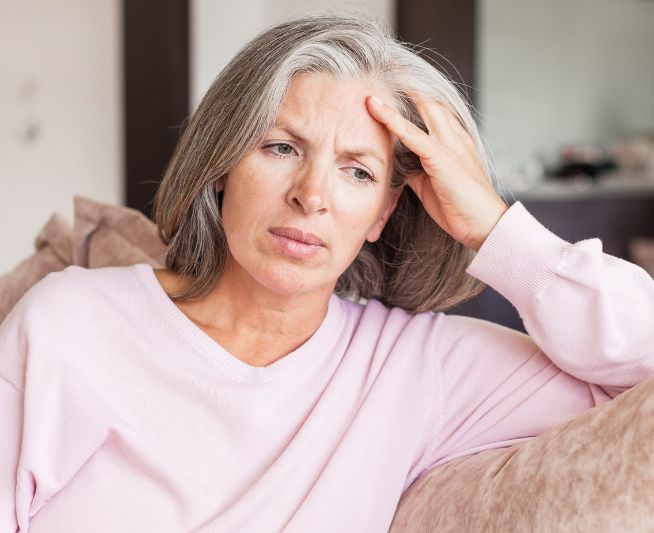
Estrogen decline affects vascular stiffness, insulin sensitivity, lipid balance, and fat distribution simultaneously. The shift away from visceral fat protection that estrogen provided means women who had no metabolic concerns in their 30s can develop insulin resistance, central adiposity, and elevated cardiovascular risk in their 40s within a span of a few years. Progesterone loss affects nervous system regulation, sleep architecture and blood pressure variability. The combined hormonal shift accelerates cardiovascular risk trajectory in women aged 45 to 60 in ways that aren’t always visible in standard annual labs.
Now layer that onto a woman who already had autoimmune disease. Or endometriosis. Or a decade of disrupted sleep from a previous chronic pain condition. Or a nervous system that has been running on cortisol dysregulation since her second pregnancy. Or, and this is increasingly common, post viral illness, which in perimenopausal and menopausal women shows up at a rate 42 to 45% higher than the general population and produces a symptom cluster that is nearly indistinguishable from perimenopause itself: deep fatigue, brain fog, new onset food sensitivities, joint pain, dysautonomia, and mast cell activation.
When the hormonal shift collides with any of these underlying conditions, the clinical picture gets complicated fast. Symptoms that look hormonal may not be primarily hormonal. Interventions that work for the straightforward case may not work here, and may actively make things worse.
A woman with MCAS whose symptoms flare on a new estrogen formulation isn’t having a standard hormonal response. A woman with POTS whose dizziness worsens in perimenopause isn’t just having hot flashes.
A woman with endometriosis history asking about HRT safety for her condition has a legitimate clinical question that “start with a low dose and monitor” doesn’t answer.
These are not edge cases. They are the mainstream of what practitioners in this space are actually seeing. This is exactly why complex perimenopause training goes beyond hormones.
Why Hormone Therapy Alone Does Not Resolve Complexity
To be clear about something that sometimes gets lost in the current enthusiasm around HRT: hormone therapy is a powerful, evidence-supported, often genuinely life-changing intervention for many perimenopausal and menopausal women. For a significant percentage of the patients who come through the door, getting the hormonal piece right is the most important clinical move available.
But it is not sufficient for the 77 to 87%, and without skillful lifestyle interventions, new health habits, and sometimes other medications, it can make your client’s health worse.
A woman whose cortisol pattern has been dysregulated for years will not sleep well on progesterone alone if the underlying nervous system dysregulation or insulin resistance is never addressed.
A woman with insulin resistance and central adiposity needs targeted lifestyle, nutrition and metabolic support that goes significantly beyond standard “eat well, exercise more” guidance. Plus, the interaction between her metabolic picture and her estrogen decline has specific clinical implications that require specific knowledge to navigate.
A woman with MCAS who reacts to standard HRT formulations needs a practitioner who understands mast cell physiology and knows how to adjust the approach, not one who concludes that HRT isn’t appropriate for her and sends her away.
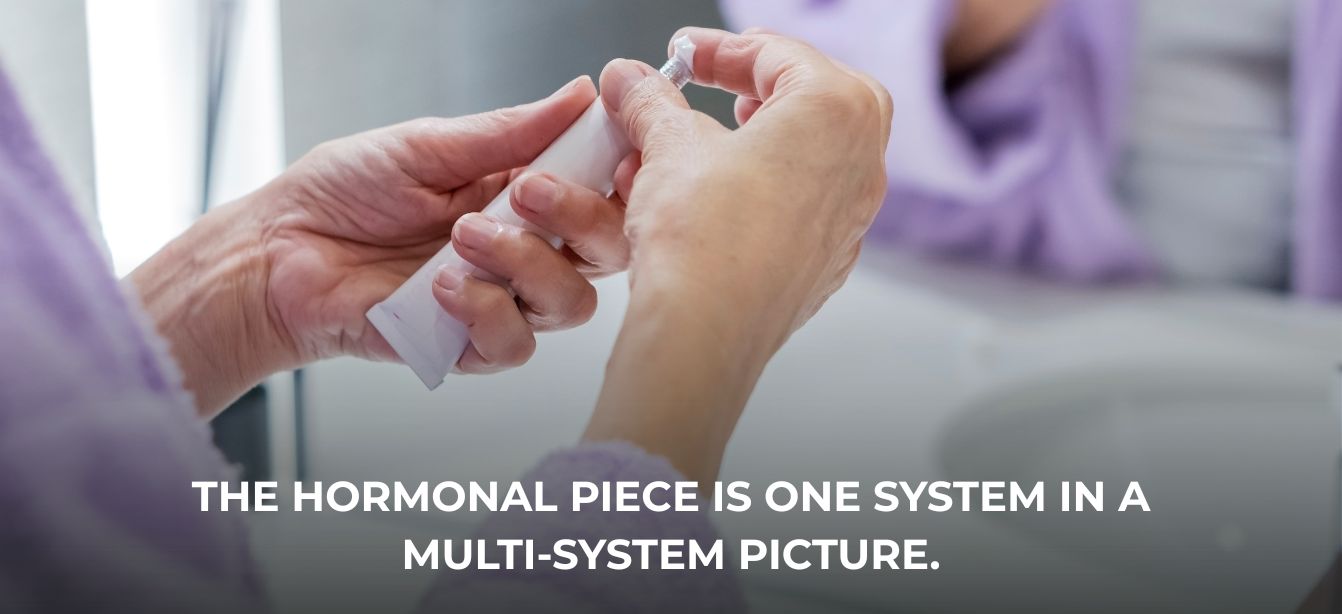
The hormonal piece is one system in a multi-system picture. Practitioners who only understand the hormonal system will keep hitting the ceiling of their training every time a complex case walks in.
What Practitioners Actually Need to Feel Confident with the Hard Cases
The honest answer is: a framework that organizes complexity rather than hiding from it.
What we see happen to practitioners who complete The IWHI Perimenopause and Menopause Certificate Program is not that they suddenly know more facts. It’s that they develop pattern recognition. The ability to look at a complicated clinical picture and identify which systems are driving which symptoms, what to address first, and what to do when the first intervention doesn’t produce the expected result. That pattern recognition is the direct result of complex perimenopause training, and it is what distinguishes a practitioner who is useful to the complex patient from one who refers her out into an uncoordinated system, and hopes for the best.
“I loved this course. It exceeded my expectations in terms of being grounded in research and science.”
Karli Andrew
“That is invaluable information.”
Julie Parana
The MAPS framework, 14 clinical maps organized by body system, each one providing mechanism overlaps, assessment priorities, and intervention sequencing, is the structural tool we built specifically for this. The point isn’t that the MAPS are protocols to follow. The point is that when a practitioner is sitting across from a woman with hot flashes, fatigue, a history of endometriosis, new onset food sensitivities, and a cortisol pattern that suggests years of nervous system dysregulation, she has a way to hold all of it systematically rather than chasing the loudest symptom.
Barbara Horsley, an LMT, lauded the systems approach and the scientific backing, two things that are genuinely rare in the certification landscape for this population.
The complexity isn’t going away. The women who are 77 to 87% of your practice are already there. The question is whether your complex perimenopause training is built for them.
If you want to understand what complex perimenopause training actually involves, and whether it makes sense for your specific clinical, coaching, or wellness practice or other goals, schedule a clarity call with our career coaching team. That is the right starting point.
The Perimenopause and Menopause Certificate Program is a 12-month integrative training built for the complex cases: the women with layered chronic illness, the histories that don't fit a standard protocol, the patients other practitioners refer out.
If you're ready to practice with that level of confidence, start with a free clarity call with our career coaching team.
No pressure. Just clarity.
Learn More About the Program
Frequently Asked Questions
What is the 87% statistic and where does it come from?
The figure refers to research from the Study of Women’s Health Across the Nation (SWAN) and more recent multimorbidity data documenting that between 77% and 87% of perimenopausal women have at least one significant underlying chronic condition complicating their hormonal transition. The range reflects differences in how significant comorbidity is defined across studies.
What conditions most commonly overlap with perimenopause?
The most frequently encountered overlaps include autoimmune conditions, endometriosis, mast cell activation syndrome (MCAS), postural orthostatic tachycardia syndrome (POTS), hypermobile Ehlers-Danlos syndrome (hEDS), post-viral illness, insulin resistance, and nervous system dysregulation from chronic stress or trauma. Post-viral illness in particular presents at rates 42 to 45% higher in perimenopausal women than in the general population.
How does the MAPS framework help practitioners navigate complex presentations?
The MAPS framework organizes clinical complexity by body system rather than by symptom. Each MAP provides mechanism overlaps, assessment priorities, and intervention sequencing for a specific clinical picture so that when a practitioner is looking at a woman with hot flashes, MCAS, and a decade of nervous system dysregulation, she has a structured guide for what to assess first and what to layer in when, rather than starting from scratch every time.