In This Post
Key Takeaways
- The IWHI perimenopause certificate program is built around 16 modules structured in deliberate sequence: foundation first, complexity layered in, business integrated throughout, not added at the end.
- Three live calls per week is deliberate. Case consult calls on Wednesdays are where clinical confidence compounds fastest. Recordings are available but showing up live is where the real shift happens.
- The MAPS framework is the structural tool that changes how practitioners hold complexity. By month 3 most graduates stop seeing complex cases as one-off emergencies and start seeing the underlying patterns.
- By month 12 the shift is not just clinical. Graduates describe fewer clients at higher rates, waitlists, and saying yes to cases they used to refer out.
- The 4,000+ alumni network across 62+ countries is functionally useful: referral partners, co-launched programs, podcast guests, and practitioners to think through complex cases with at 9pm on a Tuesday.
- This program is not a shortcut. Real mastery takes time, implementation, and the willingness to do the work. It is designed to support your pace across a full year.
If you’re considering the Perimenopause and Menopause Certificate Program, you’ve probably wondered: what am I actually signing up for?
Fair question. There are a lot of certifications out there that promise a lot and deliver a video library and a PDF checklist. So let me just show you what 12 months inside The IWHI Perimenopause and Menopause Certificate Program actually looks like.
No hype. No vague promises about “transformation.” Just the real structure, the real cadence, and what graduates consistently say happens to their practice, and their confidence, along the way.
How the Curriculum Is Built: Foundation First, Always
The IWHI Perimenopause and Menopause Certificate Program is structured around 16 modules: 7 core clinical modules and 9 advanced modules, and the sequencing matters. This isn’t a random collection of topics thrown together. Each module builds on the last, so by the time you’re navigating complex cases, you have a framework underneath you.
Here’s how it unfolds.
Module 1: Orientation and Confidence in Complexity

Before we get into any clinical content, we get clear on why you’re here and what you need to build. Your first assignment is deceptively simple: identify your career vision and one to three concrete goals for the next 3 to 12 months. What does success actually look like for you? That clarity shapes everything that follows.
Module 2: Perimenopause and Menopause Foundations

Here’s where most programs start, and stop. We cover the foundational physiology of the hormonal transition: what’s actually changing, why it matters, and why most practitioners and most women are working with an incomplete picture. This isn’t a quick overview. It’s the groundwork that makes everything else make sense.
Module 3: Hormone Shifts, Chronic Illness, and the MAPS Framework

This is where The IWHI Perimenopause and Menopause Certificate Program diverges sharply from every other program you’ve taken. We introduce the MAPS framework, a structured, visual system for navigating complexity. Each MAP covers: symptom clusters and overlaps, likely mechanisms, assessment tools, foundational steps, 12-week milestones, and where to go next.
In module 3, you’re working with hormone maps and chronic illness maps simultaneously. You’ll understand, for example, why the hEDS/POTS/MCAS triad is so commonly missed in perimenopausal women, and why hormone therapy alone won’t resolve it. You’ll see how endometriosis, autoimmunity, migraines, and post-viral conditions overlap with the perimenopause transition in ways that look confusing on the surface but follow clear, trackable patterns.
The subtitle of this program, Confidence in Complexity, becomes real here.
Module 4: Women’s Health Coaching Communication Skills

This is consistently one of the modules graduates say changed their practice most. Not because of the clinical content, but because of what it does to how you show up.
This is the module that will heal your burnout, while getting your clients and patients far better results.
Mindful listening, powerful questions, holding space, working with values and vision, navigating barriers to change: these are the skills that make your clients actually implement what you’re recommending.
If you’ve come from a clinical background and felt like something was missing from your patient interactions, this is usually what was missing.
Module 5: Functional Nutrition Through a Systems Model

We go deep into functional nutrition across the physiological systems: the gut microbiome, digestive health, immune function, nervous system, and more. This is systems-level thinking applied to nutrition, not a meal plan, not a protocol, but a way of understanding why food behaves differently in a 47-year-old with MCAS versus a 52-year-old managing metabolic syndrome.
Module 6: Lifestyle Medicine Foundations

Nervous system regulation. Sleep and circadian rhythm. Nutrition and hydration. Exercise foundations. These four sub-modules go much deeper than “eat well and sleep more.” You’ll learn why it’s nearly impossible for clients to make consistent behavior changes if their nervous system is chronically dysregulated, and what to do about it before adding anything else to their plate.
This is the piece most providers miss. Health professionals are usually trained to skip the foundations and go straight to complex protocols. Module 6 exists to fix that.
Module 7: Building a Sustainable Business

Clinical mastery without business clarity keeps practitioners burned out, overworked, and underpaid. Module 7 covers the business model, sales as service, practice design, and the sustainable structures that let you do this work for decades without running yourself into the ground.
Advanced Modules 8 through 16
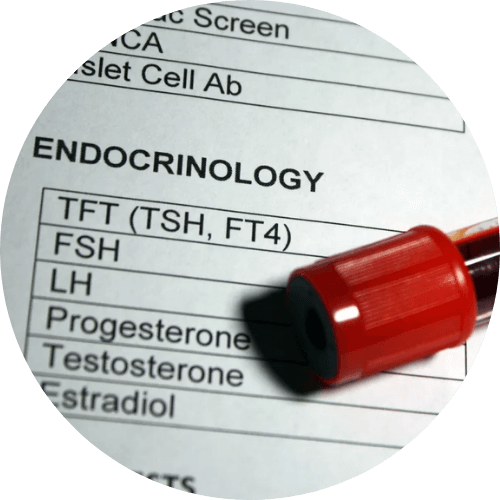
From here, the curriculum expands into the clinical depth that makes this a genuine mastery program. Advanced modules cover mitometabolic health and functional labs (including how to interpret a CMP for perimenopause-specific patterns, DUTCH test, gut microbiome testing, and other functional testing, and how to get access to this testing for your clients), cardiometabolic risk, hormone testing, caregiving and chronic stress, sexual health and vulvovaginal care, bone and muscle health, immune complexity, AI-supported practice tools, sales systems, and team design.
Each advanced module adds another layer of clinical precision you can deploy with your clients.
Plus, in the advanced modules, you’ll learn how to integrate scaling systems into your practice, work with AI models, and build portfolio careers with innovative companies.
The Live Call Cadence: Three Times a Week, on Purpose
This isn’t a self-paced video library you open when you have 20 minutes between patients. Three live calls per week is deliberate, and here’s why it matters.
Weekly calls are dedicated to real-world case consults. You bring your hardest cases. You present what you’re seeing, what you’ve tried, where you’re stuck, and you leave with a plan. These aren’t theoretical discussions. They’re the clinical equivalent of having a knowledgeable colleague sitting next to you, looking at the same case.
Graduates consistently say this is where their confidence compounds fastest. You stop seeing complexity as a problem and start seeing it as a pattern. The triad MAP. The cortisol-circadian MAP. The sexual health MAP. After enough Wednesdays, the patterns start clicking into place.
The other two weekly calls provide coaching skills and mentorship, expert guest faculty presentations, business training and support, and the kind of ongoing accountability that makes implementation actually happen. These calls are where we specifically give you feedback on your website copy, help you figure out why you’re not making any money from your Instagram platform, or how to design your business model so that you make more money working fewer hours.
Can’t make a call live? Recordings are available. But there’s something different about showing up live and putting your real case or business in front of the group to get direct, personalized feedback, ideas, recommendations, and accountability.
The Case Study Format: You Bring the Hard Case, You Leave With a Plan
Every student brings a real case into the program, either a client they’re working with or themselves, if they’re navigating their own perimenopause transition. This isn’t hypothetical homework. It’s applied clinical practice with a structured feedback loop.
The case study format maps directly to the MAPS framework: where are we starting on the map? What are the mechanisms? What have we tracked and tested? What foundations are already in place, and what needs to be built first? Where do we go next?
By the end of the program, you’ve worked through a real case from initial complexity to measurable progress. That experience lives in your body differently than reading about a protocol, or watching 100 videos on functional lab testing.

The Community: What 4,000+ Alumni in 62+ Countries Actually Provides
The global peer network isn’t just a nice-to-have. It’s functionally useful in ways that matter for your practice.
Graduates co-launch courses together. They refer clients to each other. They invite each other onto podcasts. They collaborate on group retreats. If you want to connect with a pelvic floor PT in Canada, a nutritionist in Australia, or an NP building a telehealth practice in rural England, those practitioners exist in this network and they’re actively looking for referral partners.
More practically: when you’re sitting with a complex case at 9pm on a Tuesday, you have a community of practitioners who’ve seen similar cases and are willing to think it through with you. That’s not something you can put a dollar value on.
Month 3 vs. Month 12: What the Change Actually Looks Like
Here’s what graduates consistently report:
| Milestone | What is shifting |
|---|---|
| Around Month 3 | The shift is mostly internal. The MAPS framework is clicking. Complex cases stop feeling like one-off emergencies and start revealing underlying patterns. The language shifts: from chasing symptoms to assessing and supporting systems. Confidence is there but still being tested. |
| Around Month 12 | Clinical fluency is present and so is the business shift. Fewer clients at higher rates. A waitlist for the first time. Saying yes to complex cases that used to get referred out. Building group programs. Getting asked by colleagues for guidance. The practitioner at month 12 is not the same one who enrolled. |
The Bottom Line
The perimenopause certificate program is designed to take you from foundation to mastery in 12 months. If you’re an all-in learner with cleared bandwidth, you could move through the core modules in three months. If you need to pace across the full year, that’s completely fine. The program is designed to support your schedule and your pace.
Most of our students are busy, working professionals. Many are caregivers. You can absolutely go at your own pace and be very successful.
What this program is not designed to be is a shortcut. Real mastery takes time, implementation, and the willingness to do the work. We’re here to support you every step of the way. We have students who have been very active in our community for over 15 years.
If you’ve been carrying complex perimenopausal cases, including your own, and feeling like you’re piecing things together from articles and webinars, this is what filling that gap looks like.
Ready to see if The perimenopause certificate program is the right fit for your goals? Book a free clarity call with our career coaches. Zero pressure, zero pitch, just an honest conversation about where you are and what would actually help.
The Perimenopause and Menopause Certificate Program is a 12-month integrative training built for the complex cases: the women with layered chronic illness, the histories that don't fit a standard protocol, the patients other practitioners refer out.
If you're ready to practice with that level of confidence, start with a free clarity call with our career coaching team.
No pressure. Just clarity.
Learn More About the Program
Frequently Asked Questions
How long does it take to complete the IWHI Perimenopause and Menopause Certificate Program?
The program is designed for 12 months, but the pace is flexible. All-in learners with cleared bandwidth can move through the 7 core modules in approximately three months. Busy working professionals and caregivers can pace across the full year. The community and live calls support both approaches, and recordings mean you never fall permanently behind.
Can I join the live calls if I am in a different time zone?
Yes. Calls are scheduled to accommodate a range of time zones, and all calls are recorded and available within 24 hours. The global community of 4,000+ graduates across 62+ countries includes practitioners in every major time zone. Many international graduates attend calls live; others primarily use recordings and engage asynchronously in the community.
What happens in the program if I get stuck on a complex case?
You bring it to a live case consult call. Every week there is a dedicated call where students present real cases and leave with a plan. You can also submit cases to the IWHI support email between calls. The MAPS framework gives you a structured starting point for any case, and the community of graduates who have seen similar presentations is available both on calls and in the community group.